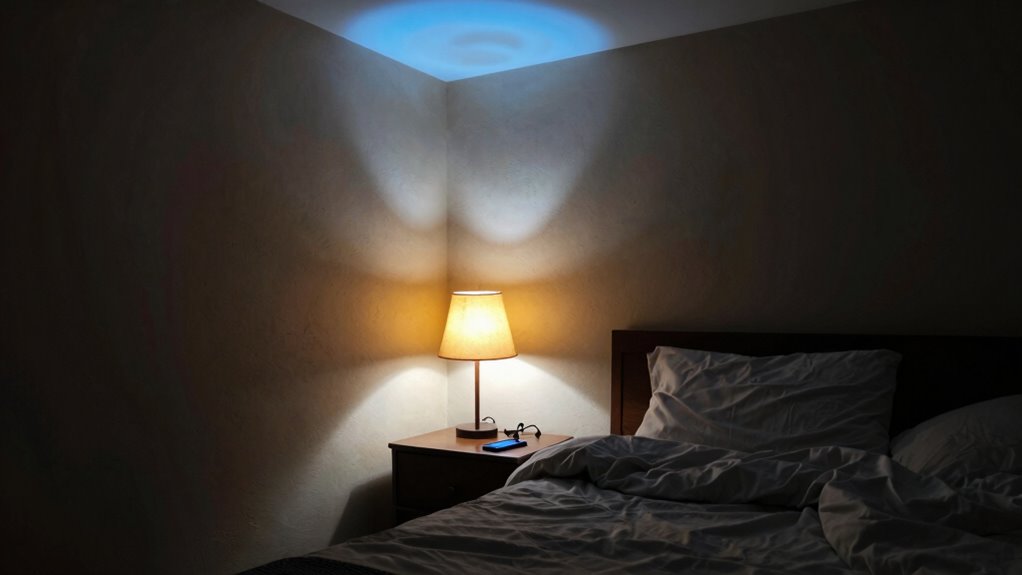

Poor bedroom lighting choices, like exposing yourself to bright, blue, or cool white light in the evening, send signals to your brain that it’s still daytime. This suppresses melatonin, delaying sleep and making your brain think it’s still awake. Using warm, dim lighting and avoiding screens before bed helps your body wind down naturally. Keep exploring ways to improve your lighting setup, so you can enjoy restful sleep every night.
Key Takeaways
- Using bright overhead lights or high-brightness bedside lamps before bed signals daytime, suppressing melatonin production.
- Exposure to blue light from screens confuses the circadian rhythm, making the brain think it’s still daytime.
- Improper light placement, such as lamps directly over the bed, causes glare and prevents relaxation.
- Lack of dimmable or adjustable lighting options keeps the environment too stimulating for sleep.
- Keeping lights too bright or cool in the evening mimics daytime, delaying sleep signals to the brain.
![ROOTRO Touch Bedside Table Lamp, [Sleek Design & RGB Mode] 3 Way Dimmable Small Lamp for Bedroom, LED Lamp with Warm White Lights, Multi-Color Smart Nightstand Lamp for for Living Room Home Gifts](https://m.media-amazon.com/images/I/31HBCOIqHyL._SL500_.jpg)
ROOTRO Touch Bedside Table Lamp, [Sleek Design & RGB Mode] 3 Way Dimmable Small Lamp for Bedroom, LED Lamp with Warm White Lights, Multi-Color Smart Nightstand Lamp for for Living Room Home Gifts
Versatile RGB Touch Lamp: The table lamp create a cozy and inviting atmosphere with the gentle, flicker-free light….
As an affiliate, we earn on qualifying purchases.
As an affiliate, we earn on qualifying purchases.
How Does Bedroom Lighting Affect Your Sleep Rhythm?
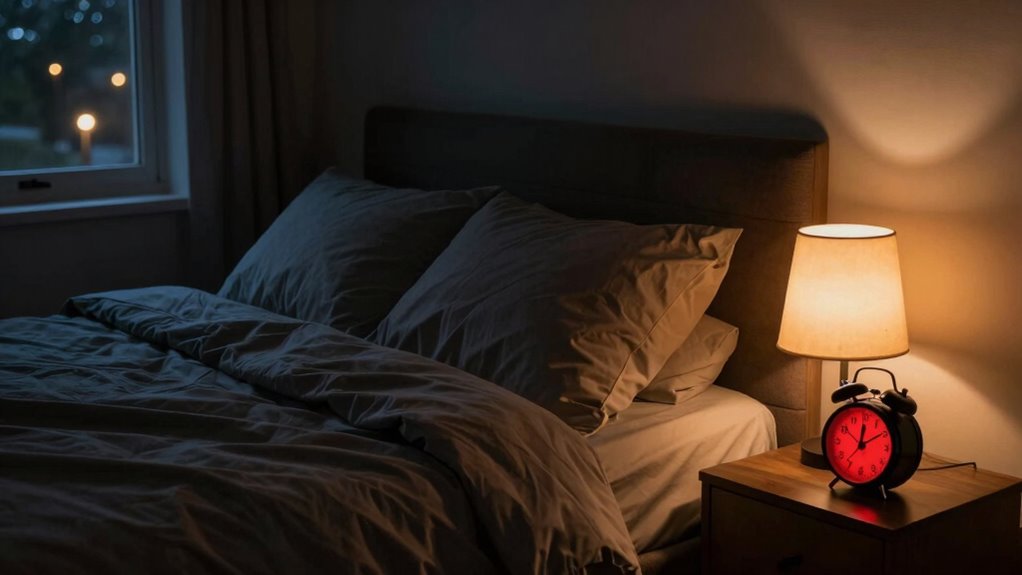
Your bedroom lighting plays a crucial role in regulating your sleep rhythm, and when it’s off balance, it can disrupt your ability to fall asleep and wake up refreshed. Light exposure affects your circadian rhythm, the internal clock that guides your sleep-wake cycle. Bright or blue light before bed suppresses melatonin production, the hormone responsible for signaling sleep. When melatonin levels stay low, you may find it harder to fall asleep and experience lighter, less restful sleep. Conversely, dim lighting in the evening encourages melatonin release, helping you feel sleepy naturally. Ensuring your bedroom lighting aligns with your circadian rhythm supports better sleep quality and easier mornings. Proper lighting choices reinforce your body’s natural signals, making it easier to fall asleep and wake up refreshed. Additionally, understanding the impact of light spectrum on sleep can help you choose the best lighting options for a restorative night’s rest. Using natural light patterns during the day can also strengthen your circadian rhythm and improve overall sleep health. Paying attention to light intensity can further optimize your sleep environment and support your body’s natural clock. Being mindful of light duration in the evening can also prevent disruptions to your sleep cycle. Incorporating timing of light exposure strategies can further enhance your sleep quality and overall well-being.

DALUXshop Amber Sleep Light Bulbs, Blue Light Blocking, A19 9W(60 Watt Equivalent) Dim Light Bulbs for Lamp, 1800K Warm Light Bulb, E26 for Healthy Sleep Bedroom Kids Room, 4.30X2.35X2.35 Inch, 2 Pack
Blue Light-Free: The DALUXshop sleep aid soft light bulb is 99.9% free of blue spectrum light, promoting the…
As an affiliate, we earn on qualifying purchases.
As an affiliate, we earn on qualifying purchases.
Common Mistakes That Disrupt Your Sleep Environment
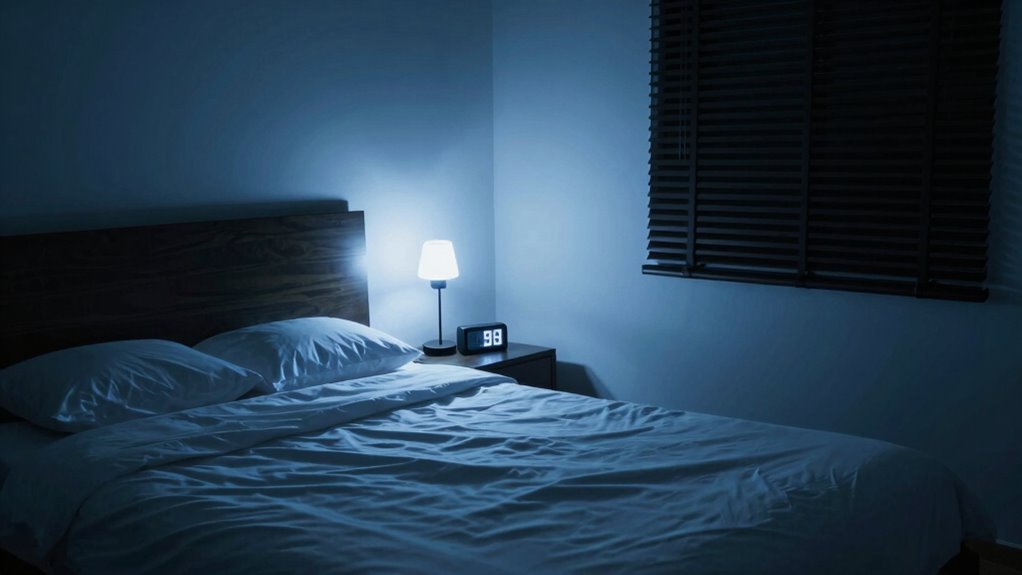
Many common mistakes in setting up your sleep environment can considerably interfere with restful sleep. Poor bedroom lighting choices often lead to sleep disruption, making it harder for your brain to wind down. Here are four mistakes to avoid: 1. Using bright overhead lights before bed, which can signal daytime and delay melatonin production. 2. Keeping bedside lamps on at high brightness, creating unnecessary light exposure. 3. Using screens or electronic devices with blue light, which mimics daylight and confuses your circadian rhythm. 4. Having inconsistent lighting levels, causing your brain to stay alert instead of relaxing. Additionally, incorporating smart lighting that adjusts brightness and color temperature can help signal to your brain that it’s time to wind down. Proper lighting control not only improves sleep quality but also strengthens your circadian rhythm, making it easier to fall asleep and wake refreshed. Adjusting your lighting environment to promote darkness and uniformity can significantly improve your sleep quality. Correcting these issues by dimming lights, avoiding screens, and creating a darker sleep space can markedly improve your sleep quality and help your brain recognize it’s time to rest.

Glocusent 38 LED Clip On Light: 5W Eye Caring Book Lights for Reading at Night – 5 Color & 5 Brightness with a Remote, 30-Min Auto Off Timer, Multi-Purpose Clip Lamp for Bed Reading/Studying/Working
[38 Premium LEDs in Dual-row Design] This clip on lamp features 38 high-performance LED beads that deliver even…
As an affiliate, we earn on qualifying purchases.
As an affiliate, we earn on qualifying purchases.
Why Blue Light at Night Keeps You Awake: And How to Avoid It
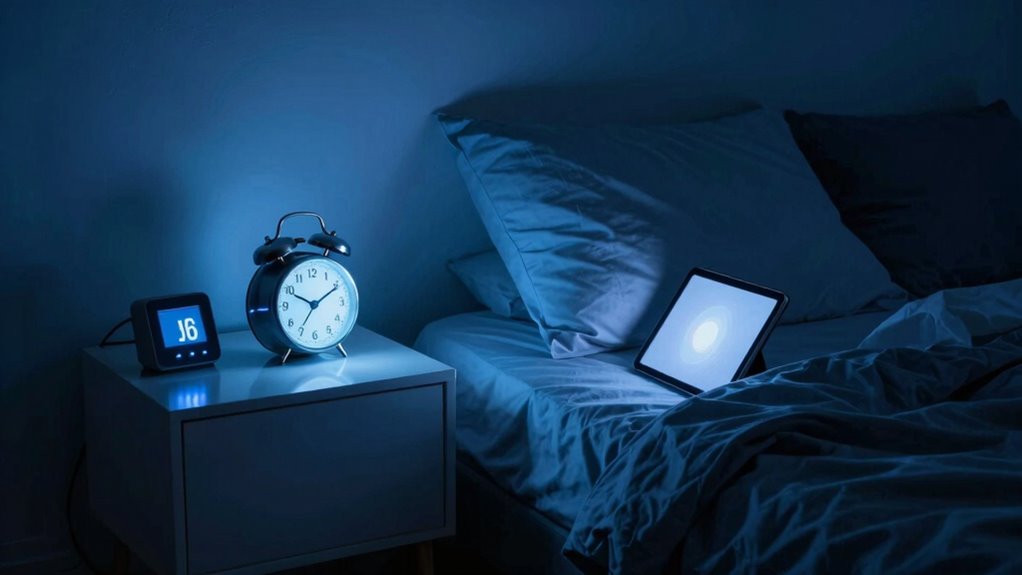
Blue light emitted from screens and electronic devices at night can profoundly disrupt your sleep. It suppresses melatonin production, the hormone that signals your body it’s time to rest. Exposure to blue light causes circadian disruption, throwing off your natural sleep-wake cycle and making it harder to fall asleep or stay asleep. When you use your phone, tablet, or laptop before bed, you send signals to your brain that it’s still daytime, confusing your internal clock. To avoid this, limit screen time at least an hour before bed, use blue light filters or glasses, and opt for dim, warm lighting in your bedroom. These steps help maintain your circadian rhythm and promote better sleep quality. Incorporating home‑care techniques like installing dimmable lighting or using smart lighting systems can further support healthy sleep patterns. Additionally, ensuring your bedroom has appropriate lighting conditions can help reinforce your body’s natural sleep signals and improve overall sleep quality.

Smart Red Light Therapy Lamp & Sleep Sound Machine for Bedroom with Alarm Clock, 32 White Noises Sound Machine, Night Light with App Control, 5-Level Red Light (620–690nm), 2600mAh Battery(Large)
5-Stage Red Light Therapy (620-690nm): Struggling to unwind after nighttime screen use? Blue light from devices disrupts melatonin…
As an affiliate, we earn on qualifying purchases.
As an affiliate, we earn on qualifying purchases.
How Overly Dim or Warm Lighting Impacts Sleep Quality

While avoiding blue light at night helps protect your sleep, the type and brightness of your bedroom illumination also matter. Overly dim or warm lighting can send your brain mixed signals, making it harder to wind down. Here’s how it impacts your sleep environment:
- It reduces overall alertness, signaling your brain that it’s still daytime.
- Warm lighting can suppress melatonin production less effectively than cooler light.
- Insufficient brightness may cause your body to stay alert, delaying sleep onset.
- An overly dim room can make you focus more on your worries, disrupting rest.
- Proper lighting setup, including lighting controls, can help establish a sleep-friendly environment.
- Using appropriate color temperature lighting encourages relaxation and aligns with natural circadian rhythms.
- Incorporating nighttime lighting strategies can further enhance your sleep quality by creating a more conducive environment.
- Understanding youngster choice and how it influences perceptions of comfort can help you select the best lighting options for your sleep space.
- Selecting appropriate lighting fixtures that emit softer, warmer light can also support a restful environment.
Choosing appropriate brightness and color temperature guarantees your sleep environment promotes relaxation and signals your brain that it’s time to sleep, not stay awake.
How to Choose Sleep-Friendly Light Bulbs for Your Bedroom
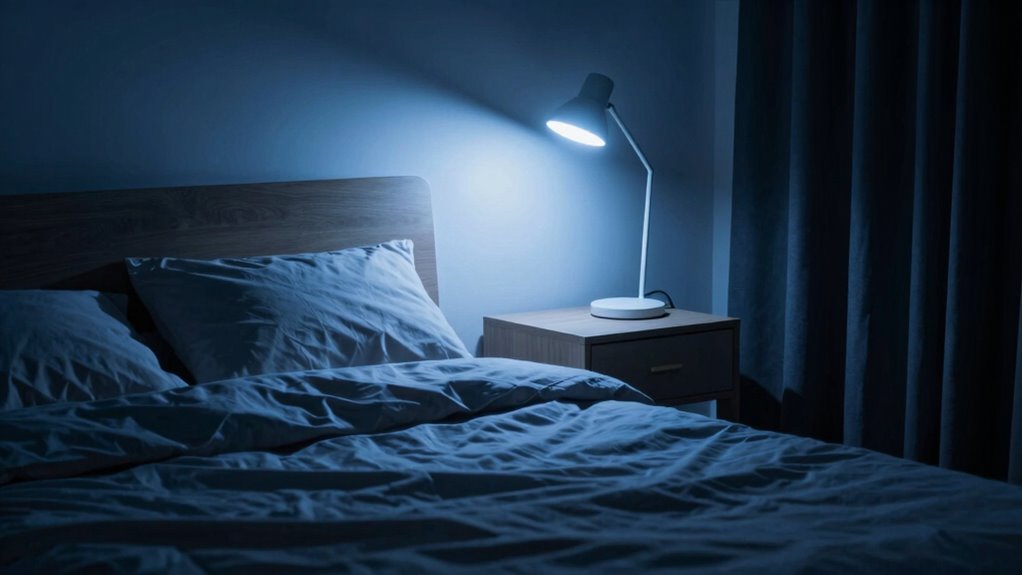
Choosing the right light bulbs can make a big difference in your sleep quality. Pay attention to light color, as cooler tones can be disruptive, while warmer hues promote relaxation. Also, consider brightness control options to create the perfect, sleep-friendly environment.
Light Color Matters
Have you ever noticed how the color of your light bulb can affect your ability to relax or fall asleep? The key is understanding how color temperature and light wavelength influence your brain’s perception of daytime or night. To choose sleep-friendly bulbs, consider:
- Opt for bulbs with a warm color temperature, around 2700K, which emit a softer, amber glow.
- Avoid cool white or daylight bulbs over 3000K, as they have shorter light wavelengths that mimic daylight.
- Look for bulbs labeled “low blue light” or “red spectrum” to reduce stimulating light wavelengths.
- Use dimmable bulbs to gradually adjust the light color and intensity, signaling your brain it’s time to wind down.
- Being aware of the impact of light spectrum on sleep can help you make more informed choices for your bedroom lighting.
Selecting the right light color helps your brain produce melatonin and promotes restful sleep.
Brightness Control Tips
Adjusting your bedroom lighting to support restful sleep involves more than just choosing the right color; controlling brightness levels is equally important. To do this, consider lamp placement carefully—position lamps away from your bed and avoid bright overhead lights before sleep. Use dimmable bulbs or lamps with adjustable brightness to create a calming environment as bedtime approaches. Lower light levels signal your brain it’s time to wind down, supporting your sleep cycle. If you need lighting during the night, opt for low-intensity, warm-toned bulbs to prevent disrupting melatonin production. Remember, controlling brightness isn’t just about comfort—it’s about signaling to your brain that it’s time to sleep, helping you fall asleep faster and enjoy more restorative rest. Incorporating smart lighting controls can further enhance your overall sleep environment and promote a tranquil bedroom atmosphere. Additionally, understanding how light intensity influences your circadian rhythm can help you make better choices for a healthy sleep pattern. Being mindful of light exposure in the evening can also improve your ability to fall asleep naturally, especially when considering how light pollution impacts sleep quality.
When and How to Dim Your Lights for Better Sleep
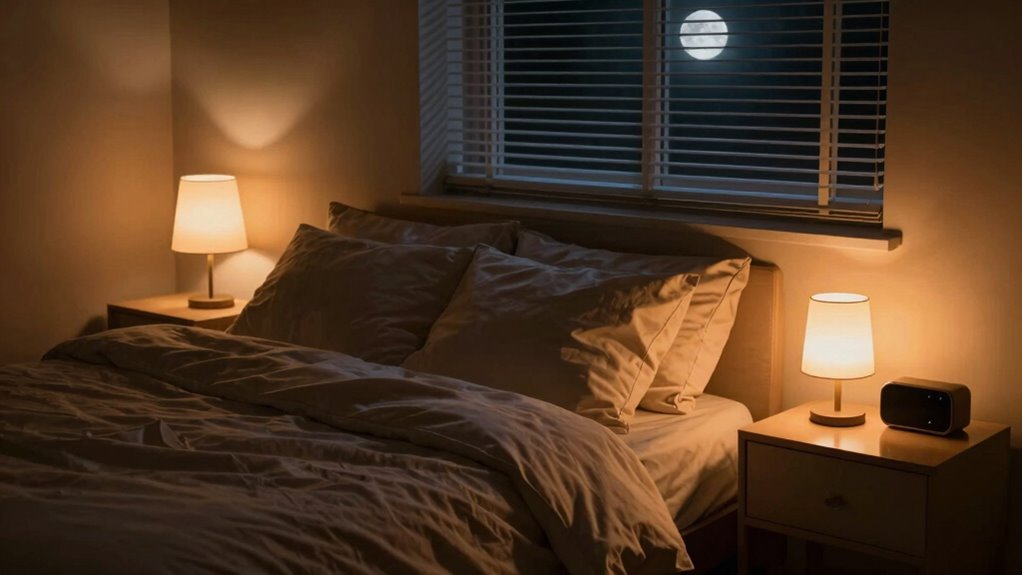
To improve your sleep quality, dim your lights about an hour before bed to signal to your body that it’s time to wind down. This helps create ambient shadows that relax your mind and reduce exposure to blue light. Adjust your lighting by:
- Lowering brightness gradually to avoid sudden changes.
- Using warm color temperature bulbs (around 2700K) to promote melatonin production.
- Avoiding harsh, direct lighting that creates stark shadows.
- Incorporating dimmable lamps or smart bulbs to control light levels easily.
How Smart Lighting Can Help You Sleep Better
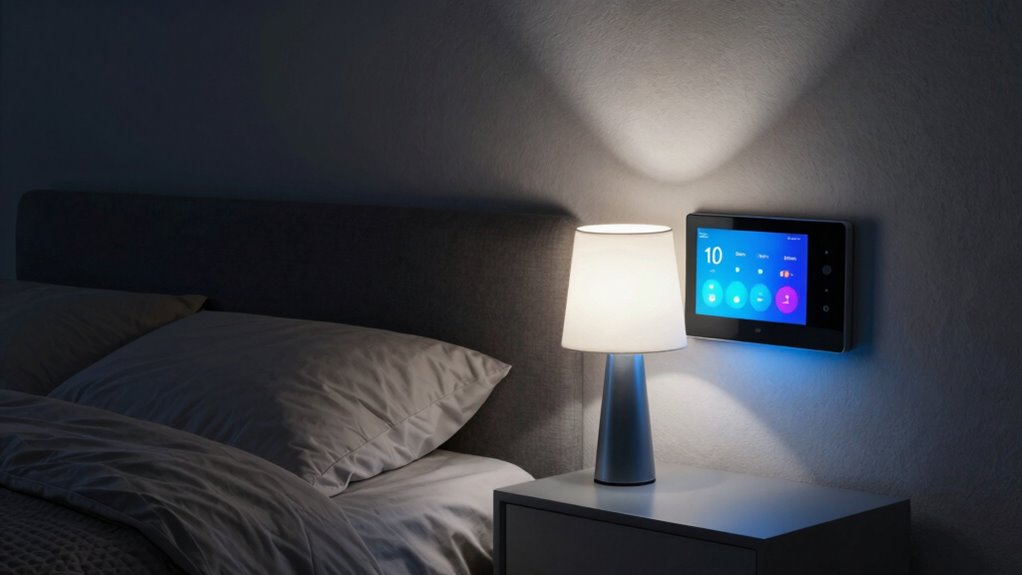
Smart lighting systems can considerably enhance your sleep quality by allowing you to customize your environment effortlessly. By adjusting brightness and color temperature, you support your circadian rhythms, signaling your brain when it’s time to wind down or wake up. During the evening, warm, dim lighting mimics sunset, helping your body prepare for sleep. In the morning, bright, cool light mimics daylight, boosting alertness and signaling your brain to wake up. Smart lighting also offers effective light therapy, which can regulate your biological clock if it’s out of sync. This personalized control reduces exposure to disruptive blue light and ensures your environment aligns with natural light cycles, ultimately helping you fall asleep faster and enjoy more restorative sleep. Fundamentals of good home lighting design emphasize the importance of creating a balanced environment that supports your natural rhythms. Incorporating light exposure management strategies can further optimize your sleep environment for better overall health. Additionally, understanding light spectrum can help you select the most beneficial lighting for your needs.
Mistakes to Avoid When Setting Up Your Bedside Lighting
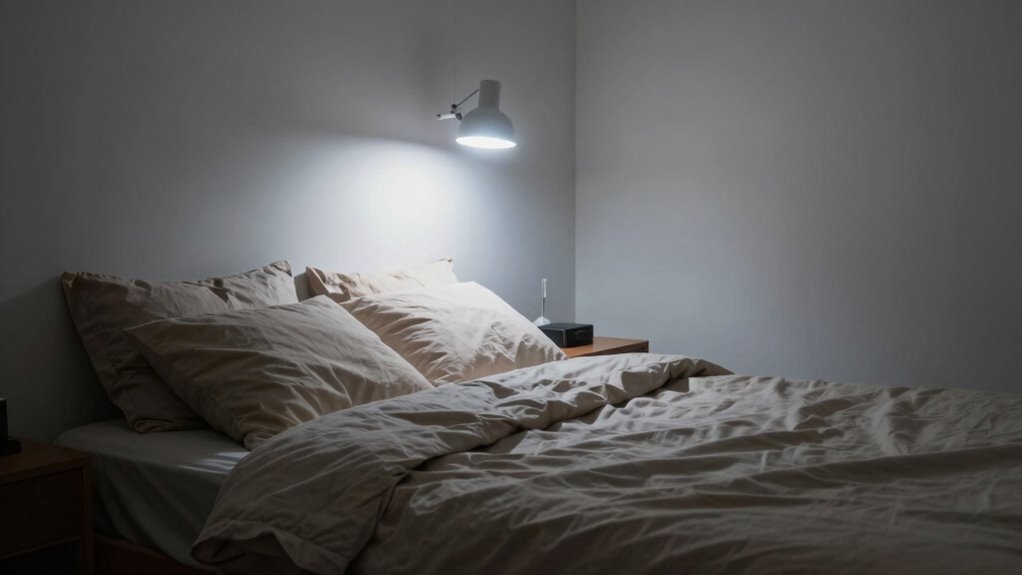
One common mistake is choosing the wrong brightness level for your bedside lighting, which can disturb your sleep or make it difficult to read comfortably. Proper light placement and choosing suitable bedside lamps are essential. To avoid this, consider:
- Placing lamps at eye level to reduce glare and direct light away from your eyes.
- Using adjustable lamps or dimmers to control brightness easily.
- Avoiding placing lamps directly over your bed, which can create uneven light and disrupt sleep.
- Ensuring light sources are positioned so their brightness doesn’t spill into your eyes when lying down.
Tips for Creating a Relaxing, Sleep-Conducive Lighting Atmosphere
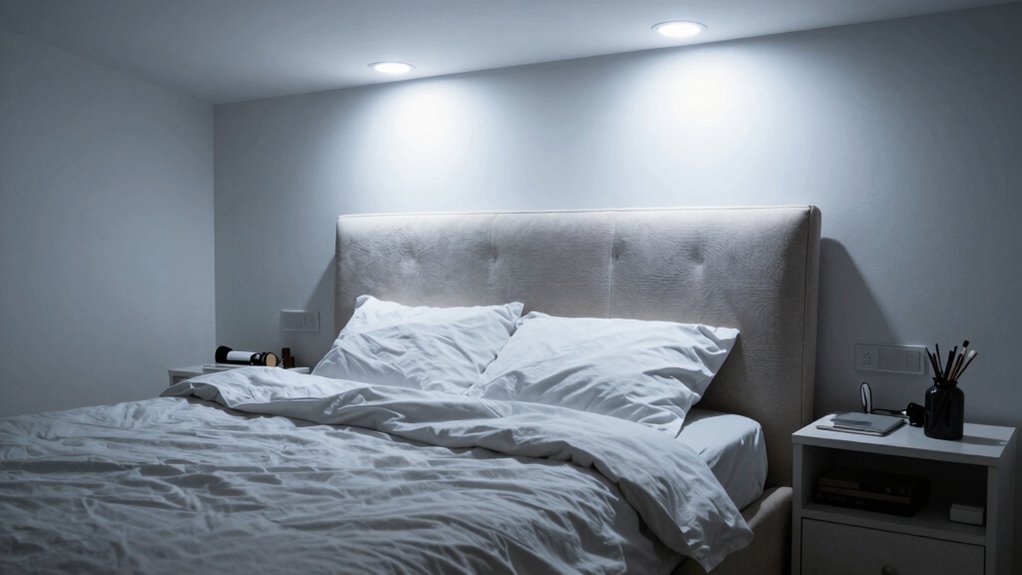
To create a calming, sleep-friendly atmosphere, start by choosing warm light tones that promote relaxation. Installing a dimmer switch allows you to adjust lighting levels easily for bedtime. Also, limit screen exposure before sleep to avoid disrupting your natural sleep cycle.
Choose Warm Light Tones
Choosing warm light tones can instantly transform your bedroom into a cozy, calming retreat. Warm lighting, with a lower color temperature, mimics natural sunset hues, signaling your brain that it’s time to wind down. To create the perfect atmosphere, focus on light layering—combining different light sources for depth and comfort. Here are four tips:
- Use bulbs with a color temperature around 2700K to 3000K for a soft, inviting glow.
- Incorporate bedside lamps with warm-toned bulbs for localized, relaxing light.
- Add accent lighting that emphasizes warm hues, avoiding harsh, cool tones.
- Keep main overhead lighting dim or warm to prevent disrupting your circadian rhythm.
This approach helps your brain associate warm tones with bedtime, making it easier to relax and prepare for sleep.
Dimmer Switch Benefits
Dimmer switches are a simple yet powerful tool for creating a relaxing, sleep-friendly bedroom environment. They allow you to easily adjust light levels, promoting sleep environment optimization. By lowering the brightness, you reduce harsh glare, helping your brain wind down. Imagine the soft glow of a dimmed light, casting gentle shadows and calming your mind.
| Brightness Level | Atmosphere |
|---|---|
| Full Brightness | Energizing, alert |
| Mid-High | Functional, slightly relaxing |
| Medium | Calm, inviting |
| Low | Cozy, tranquil |
| Very Low | Restful, perfect for sleep |
With dimmer switch benefits, you control your lighting to support better sleep and a peaceful bedroom ambiance.
Limit Screen Exposure
Since screens emit blue light that can interfere with your body’s natural sleep cycle, it’s important to limit your exposure before bed. Too much screen time from digital devices can trick your brain into thinking it’s daytime, making it harder to fall asleep. To create a relaxing, sleep-friendly environment, consider these tips:
- Set a device curfew at least 30 minutes before bedtime.
- Use features like night mode or blue light filters on your devices.
- Replace screen time with calming activities like reading a book or listening to music.
- Keep digital devices out of the bedroom or turn them off completely.
How Fixing Your Bedroom Lighting Can Help Your Brain Wind Down
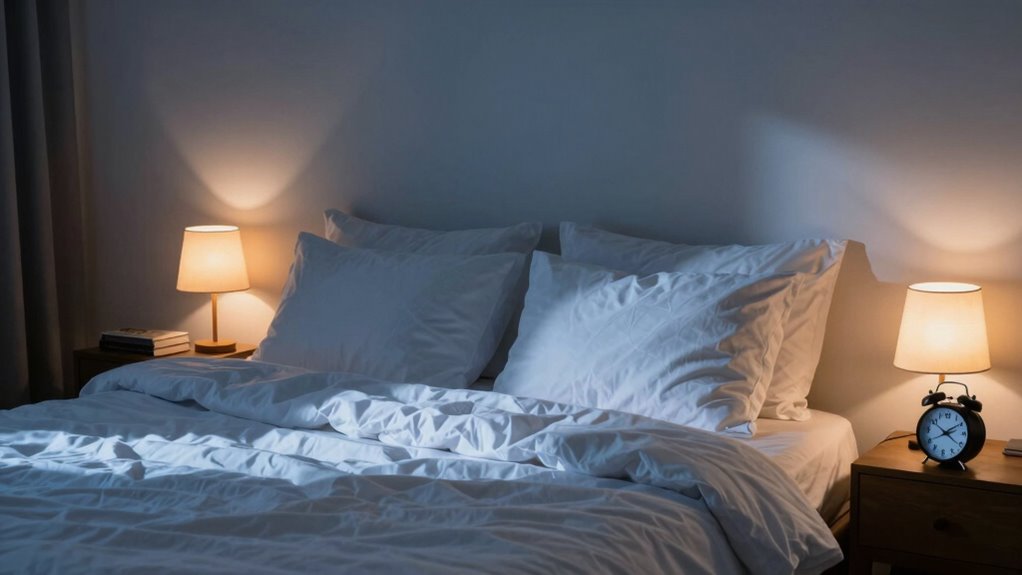
When your bedroom lighting is too harsh or inconsistent, it can interfere with your brain’s ability to relax and prepare for sleep. Bright or blue-toned lights suppress melatonin, the hormone responsible for signaling your body it’s time to wind down. This disruption hampers your circadian regulation, making it harder to fall asleep naturally. By switching to dim, warm lighting in the evening, you signal to your brain that it’s time to relax. Reducing brightness and avoiding screens before bed helps restore your body’s internal clock. Proper lighting creates an environment that encourages melatonin production, letting your brain wind down effectively. Small changes, like using lamps instead of overhead lights, can make a big difference in aligning your circadian rhythm and improving your sleep quality.
Frequently Asked Questions
Can Incorrect Bedroom Lighting Cause Long-Term Sleep Disorders?
Yes, incorrect bedroom lighting can cause long-term sleep disorders. Light pollution from artificial lights disrupts your circadian rhythm, making your brain think it’s still daytime. This circadian disruption hampers your ability to fall asleep and stay asleep, leading to chronic sleep issues. Over time, these disturbances can contribute to serious health problems. To avoid this, use dim, warm lighting at night and minimize exposure to blue light before bed.
What Lighting Colors Are Most Effective for Promoting Sleep?
You should opt for warm lighting colors with a low color temperature, around 2700K to 3000K, to promote sleep. Keep the lighting intensity soft and dim as bedtime approaches. This combination signals your brain that it’s time to wind down, helping you relax and fall asleep faster. Avoid harsh, bright lights, and instead, choose warm, gentle hues to create a calming environment conducive to restful sleep.
How Does Bedroom Lighting Influence Melatonin Production?
Your bedroom lighting directly affects melatonin production by causing melatonin suppression, which can delay sleep onset. Bright, blue-rich lights, especially in the evening, disrupt your circadian rhythm and contribute to circadian disruption. To promote healthy melatonin levels, avoid harsh, cool-toned lights before bed and opt for dim, warm lighting. This helps your brain recognize it’s nighttime, supporting natural melatonin release and a restful sleep cycle.
Are There Specific Light Levels Recommended for Pre-Sleep Routines?
Research shows that low light intensity, around 30-50 lux, is best for pre-sleep routines, helping your body prepare for sleep. Bright lights can disrupt your sleep hygiene by delaying melatonin production. You should dim your lights at least an hour before bed to signal to your brain that it’s time to wind down. Keeping lighting soft and warm creates an environment conducive to relaxation and better sleep quality.
Can Bedroom Lighting Impact Mental Health and Daytime Alertness?
Your bedroom lighting can markedly impact your mental health and daytime alertness. Poor lighting may disrupt mood regulation, leading to feelings of depression or anxiety. It also affects cognitive performance, making it harder to concentrate and process information. By optimizing your lighting—using warmer, dimmer lights in the evening—you support better mood regulation and improve alertness during the day, helping you feel more energized and focused.
Conclusion
By fixing your bedroom lighting, you help your brain recognize night from day, fostering better sleep. It’s easy to think bright lights keep you alert, yet they actually trick your mind into daytime mode. When you create a calming, sleep-friendly environment, you embrace rest instead of resistance. Remember, the right lighting isn’t just about visibility—it’s about signaling your body that it’s time to wind down, turning your bedroom into a sanctuary for true restorative sleep.