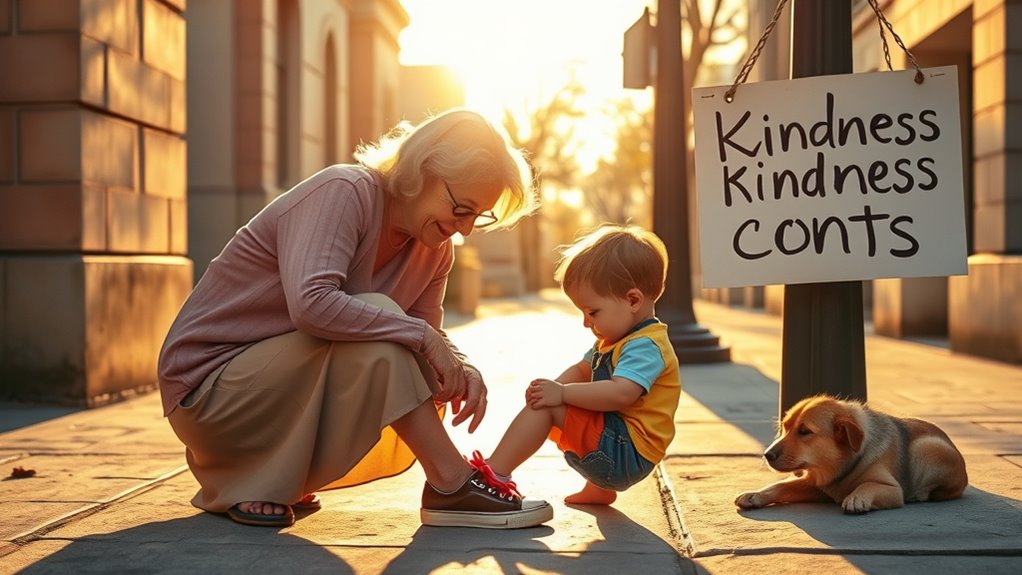

Small acts of kindness, like offering a smile or holding the door, can have a powerful impact on others and your community. These simple gestures cost little but can brighten someone’s day, foster connection, and inspire others to share kindness. Over time, consistent small efforts build empathy and trust, creating a more caring environment. By embracing these everyday actions, you can make a big difference—continue exploring to discover how even the tiniest acts matter.
Key Takeaways
- Small acts of kindness, like smiling or holding doors, can significantly brighten someone’s day and foster community.
- These simple gestures are free but carry powerful emotional and social value, encouraging others to reciprocate.
- Consistent kindness helps build trust, reduce loneliness, and create a more empathetic, connected society.
- Small acts can spark a ripple effect, inspiring larger community improvements and lasting societal change.
- Incorporating kindness into daily routines promotes a caring environment, reminding us that compassion is always accessible.

Have you ever wondered how a simple act of kindness can change someone’s day? It’s incredible how small gestures—smiles, holding the door open, or paying for someone’s coffee—can create ripples far beyond what you might expect. These random acts of kindness, performed spontaneously without expecting anything in return, have the power to brighten lives and foster a stronger sense of community. When you choose to act kindly, you’re not just helping one person; you’re contributing to a larger community impact that can inspire others to do the same. It’s like lighting a spark that can ignite a chain reaction of goodwill, transforming neighborhoods and social spaces into more compassionate places. The beauty of these small acts lies in their accessibility—they cost nothing but carry immense value. Whether it’s offering a sincere compliment, volunteering your time, or simply listening attentively, each act reinforces the idea that kindness is contagious. When you make kindness part of your daily routine, you set an example that others can follow, creating a collective momentum toward a more caring society. Incorporating mindfulness and self-awareness into your actions can enhance the authenticity and impact of your kindness efforts.
These random acts often catch people off guard, making them feel seen and appreciated in a world that can sometimes feel overwhelming or indifferent. When you perform an act of kindness, you’re not only impacting the recipient but also shaping the atmosphere around you. People tend to mirror the kindness they experience; your actions can encourage others to pay it forward. This creates a cycle where kindness becomes a shared value, strengthening community bonds and fostering trust. Over time, these small gestures accumulate, leading to tangible community impact—less loneliness, increased cooperation, and a more positive environment for everyone. It’s easy to underestimate the power of these acts, but they serve as reminders that caring is within your reach at any moment. When you take the initiative to do something kind, you’re reinforcing the idea that everyone deserves compassion and respect. This, in turn, helps break down barriers and build bridges between people from diverse backgrounds.
Ultimately, kindness isn’t just about grand gestures or monumental efforts; it’s about consistently choosing to do good in everyday situations. Each random act contributes to a broader movement of compassion that can reshape communities and improve lives. So, next time you’re tempted to overlook a small opportunity to help or uplift someone, remember that your simple act has the potential to create lasting change. Small acts may seem insignificant on their own, but collectively, they form the foundation of a more empathetic, connected world. Your kindness matters, and it counts more than you realize.
Frequently Asked Questions
How Can Schools Promote Kindness Effectively?
You can promote kindness effectively by encouraging student engagement through activities that foster empathy and teamwork. Implement peer mentorship programs where students support each other, creating a culture of kindness. Recognize and celebrate acts of kindness regularly, and involve staff and parents to reinforce positive behavior. When students see kindness modeled and are actively engaged, they’re more likely to adopt these behaviors themselves, making a lasting, positive impact.
What Are Some Unexpected Benefits of Practicing Kindness Daily?
When you practice kindness daily, you’ll find unexpected benefits like increased gratitude journaling, which boosts your overall happiness. Performing random acts of kindness can strengthen your relationships and reduce stress. You might also notice improved mood and a greater sense of fulfillment. These small acts create a ripple effect, enhancing your well-being and inspiring others to follow suit, making kindness a powerful tool for personal growth and community connection.
How Does Kindness Impact Mental Health?
Think of kindness as a gentle rain nourishing your mental garden. When you practice kindness daily, it boosts your emotional resilience and reduces stress. You’ll find it easier to handle setbacks, as kindness fosters positive feelings and connections. This simple act acts like a shield, strengthening your mind and helping you bounce back faster from life’s challenges, making your mental health more robust and balanced.
Can Acts of Kindness Influence Community Cohesion?
Yes, acts of kindness can markedly influence community cohesion. When you support your neighborhood through small gestures or participate in volunteer networks, you foster trust and unity. These acts encourage others to get involved, creating a ripple effect that strengthens neighborhood bonds. By showing kindness, you help build a supportive environment where everyone feels connected and valued, ultimately making your community a more inclusive and resilient place to live.
What Role Does Social Media Play in Spreading Kindness?
Imagine social media as a shining mirror, reflecting kindness across the world. It plays a essential role by amplifying acts through viral campaigns, inspiring others to join in. You can harness digital empathy, showing genuine concern and understanding online. This interconnected web spreads positivity rapidly, turning small acts into global movements. Your posts and shares become powerful symbols of compassion, making kindness contagious and creating a ripple effect that reaches far beyond your immediate circle.
Conclusion
Remember, your small acts of kindness are like ripples in a pond—each one spreading outward, touching lives you may never see. When you choose compassion, you plant seeds of hope that grow into a forest of change. Never underestimate the power of a simple smile or kind word; they’re the gentle hands shaping a brighter world. Your kindness isn’t just a drop in the ocean—it’s the wave that can move everything.