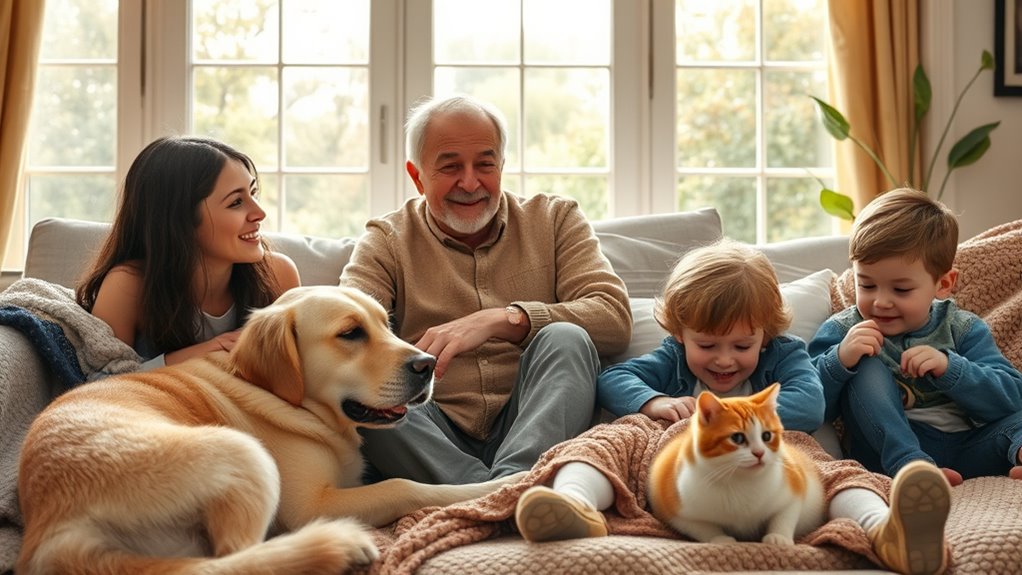

The way you see family has evolved to include friends, pets, and partners, highlighting a flexible, emotional connection rather than just biology. Today, family isn’t limited to traditional roles; it’s about relationships built on trust, support, and shared experiences. You may create bonds that nurture and sustain you in meaningful ways. If you want to explore how this broader view continues to change, there’s more to discover beyond the usual definitions.
Key Takeaways
- Family now includes chosen relationships like close friends and community members, beyond traditional biological or legal ties.
- Pets are increasingly recognized as family members, providing emotional support and companionship.
- Romantic partners are considered central to family units, emphasizing emotional bonds over societal expectations.
- Modern families prioritize shared values, support, and nurture, regardless of blood relations or marriage.
- Personal choice and emotional connection define contemporary family structures, broadening the traditional concept of kinship.
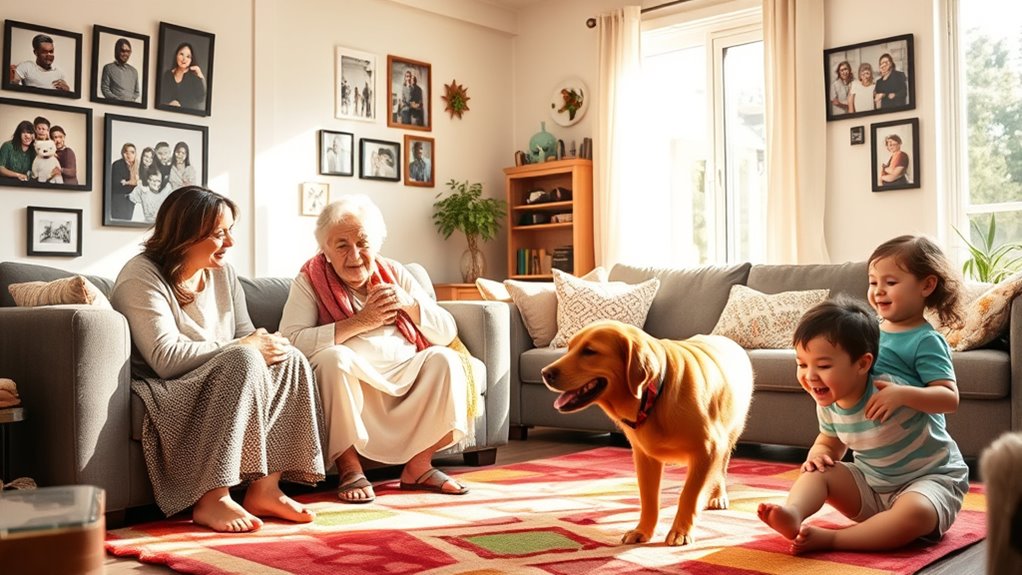
Have you ever wondered how the idea of family has changed over time? Today, family isn’t just about blood ties or traditional structures. Instead, it’s about the connections you choose to nurture, the relationships that fulfill you, and the communities you build around shared values. This shift reflects a broader understanding of kinship, where chosen family plays a crucial role in redefining what it means to belong. You might find your family in close friends who support you unconditionally or in pets that provide companionship and comfort. These relationships challenge the conventional notions of kinship, emphasizing emotional bonds over biological ones.
Family today is about chosen bonds, shared values, and emotional connections that redefine traditional kinship.
In the past, family was often seen as a fixed, biological unit—parents, siblings, and extended relatives passing down traditions and responsibilities. Today, however, many people actively redefine kinship by forming chosen families that suit their needs and lifestyles. This process involves intentionally selecting individuals who offer love, support, and stability, even if they aren’t related by blood or marriage. Whether you’re part of a community of friends who share a home or a group that considers each other family, these bonds can be just as meaningful as traditional ones. You’re creating a new form of kinship—one that’s flexible, inclusive, and rooted in mutual care.
This redefinition allows for a more personalized approach to family, recognizing that emotional connections often hold more significance than biological ties. It’s about fostering relationships based on trust, respect, and shared experiences. You may find that your chosen family includes a partner, close friends, or even your pets—each offering unique forms of companionship and emotional support. These connections often help people navigate life’s challenges and celebrate its joys, proving that family is as much about who you surround yourself with as it is about who you’re born to. Additionally, understanding the different types of paint sprayers and their uses can help you better appreciate the variety of tools available for your projects.
In many ways, redefining kinship broadens the scope of what family can be. It moves beyond traditional roles and expectations, allowing you to craft a support system that truly resonates with your life. Whether you’re creating a household with friends, embracing pets as family members, or simply fostering deep friendships, you’re participating in a modern evolution of kinship. This shift affirms that family is what you make it—built on chosen bonds that nourish your well-being and reflect your authentic self. Ultimately, this new understanding empowers you to find belonging wherever you feel most supported and loved.
Frequently Asked Questions
How Do Legal Systems Recognize Non-Traditional Families?
Legal systems recognize non-traditional families through policies like same-sex marriage, domestic partnerships, and adoption rights, granting them legal recognition. You can benefit from protections and benefits once recognized, but inconsistencies remain. These policy implications influence social acceptance and access to services. As laws evolve, you’ll see increased acknowledgment of diverse family structures, promoting equality and reducing discrimination against non-traditional families.
What Are the Psychological Impacts of Redefining Family?
You might find that redefining family unexpectedly boosts your emotional resilience and strengthens your sense of identity affirmation. As societal norms shift, you could experience greater acceptance and belonging, helping you cope better with life’s challenges. This change encourages you to embrace diverse relationships, fostering confidence and emotional stability. Recognizing your chosen family can profoundly impact your mental well-being, making you feel more affirmed and resilient in an ever-evolving world.
How Do Cultural Differences Influence Family Definitions Worldwide?
You’ll notice that cultural differences shape how people define family through unique cultural norms and family rituals. In some cultures, extended family and community ties are central, while others emphasize nuclear or chosen families. These variations influence your understanding of kinship, responsibilities, and emotional bonds, making family feel personal and diverse. Recognizing these differences helps you appreciate how culture molds your family identity and practices worldwide.
What Role Do Social Media and Technology Play in Family Evolution?
Think of social media and technology as a bridge connecting distant islands of your life. They enable you to build digital connections and join virtual communities, transforming how you define family. You can share moments, offer support, and stay close regardless of physical distance. This digital landscape broadens your understanding of family, making relationships more flexible and inclusive, ultimately shaping a more interconnected, evolving family identity.
How Is Aging Within Non-Traditional Families Addressed Legally and Socially?
You find that aging within non-traditional families is increasingly recognized through legal protections like adoption rights and elder care policies. Laws are evolving to guarantee non-traditional family members, such as chosen family or same-sex partners, receive proper support and recognition. Socially, there’s growing acceptance, encouraging you to advocate for inclusive policies that protect everyone’s aging needs, regardless of traditional family structures.
Conclusion
As you’ve seen, family isn’t just about blood or marriage anymore—friends, pets, and partners all play essential roles. You realize that love, support, and connection define family best. Remember, “Home is where the heart is,” no matter who fills it. Embrace these evolving bonds, and cherish the diverse ways you find belonging. After all, family is what you make of it, and every meaningful relationship enriches your life in unique ways.