
You may feel safer texting because it gives you more control over what you say and how you say it. You have time to think and craft your responses, which reduces anxiety and avoids immediate judgment. Texting also removes the pressure of facial expressions and body language, making social interactions less overwhelming. If you want to understand more about why this happens and how it can help your social skills, keep exploring this topic.
Key Takeaways
- Texting allows careful message crafting and editing, reducing fear of immediate judgment or mistakes.
- Virtual communication provides a sense of control and safety, minimizing social anxiety triggers.
- The absence of real-time reactions decreases pressure and stress during interactions.
- Having time to reflect before responding boosts confidence and reduces social hesitation.
- Texting creates a buffer that helps individuals gradually build social skills and comfort.
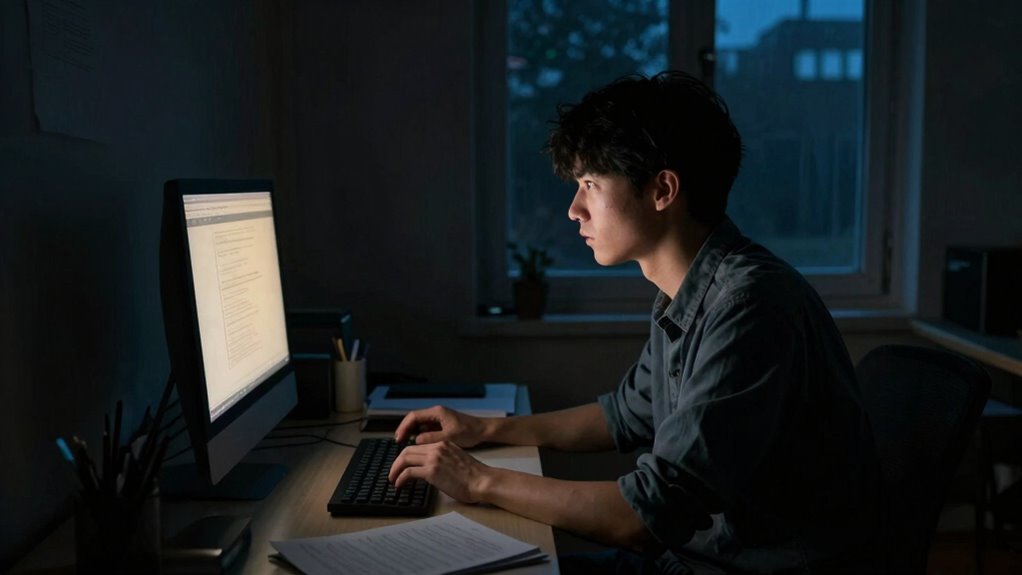
For many people, texting offers a sense of safety that face-to-face interactions can’t provide, especially when emotions or social anxieties are involved. Virtual communication allows you to craft your words carefully, giving you control over what you say and how you say it. When social anxiety kicks in, the thought of speaking in person can feel overwhelming—your heart races, your mind goes blank, and you worry about making a mistake. Texting removes those immediate pressures, letting you take your time to respond without the fear of being judged in real time. You can edit your messages before hitting send, which gives you a sense of security and confidence that’s often missing in direct conversations.
This layer of separation helps you manage your emotions better. In face-to-face settings, social cues like facial expressions and body language can be intense or confusing, making it harder to interpret others’ reactions and increasing your anxiety. But in virtual communication, you’re mainly focused on words and tone, which you can control more easily. You’re not exposed to the immediate reactions of others, so you don’t have to worry about feeling judged by your facial expressions or nervous gestures. This distance creates a buffer that makes social interactions feel safer and more manageable. Additionally, digital content can be tailored to suit individual comfort levels, providing a customizable experience that enhances feelings of safety. Recognizing the importance of visual cues can help you gradually become more comfortable with real-life interactions over time. Understanding how to interpret and use social cues effectively can also help bridge the gap between virtual and face-to-face communication.
Moreover, texting gives you time to think about your responses, which can be a game-changer if social anxiety makes you hesitant or self-critical. Instead of rushing to reply, you can pause, reflect, and craft your message carefully. This control over timing helps you avoid the awkwardness of real-time exchanges and reduces the risk of saying something you might regret or that could be misunderstood. It’s easier to communicate your thoughts clearly when you aren’t under pressure, and that sense of mastery can boost your confidence in social situations.
While virtual communication isn’t a perfect substitute for face-to-face interactions, it offers a safe space for you to connect without the immediate fear of judgment. If social anxiety makes you feel overwhelmed by in-person conversations, texting provides a way to maintain relationships, express yourself, and build social skills at your own pace. It’s a tool that, when used thoughtfully, can help you feel more comfortable, allowing you to gradually build confidence and eventually navigate real-world interactions more easily.

Digital Strategies for Powerful Corporate Communications
As an affiliate, we earn on qualifying purchases.
As an affiliate, we earn on qualifying purchases.
Frequently Asked Questions
Can Feeling Safer in Texts Impact Real-Life Relationships?
Feeling safer in texts can impact your real-life relationships by creating a sense of virtual intimacy and emotional safety. You might find it easier to open up and share feelings online, but this can lead to misunderstandings or reliance on digital communication. Over time, it may make face-to-face interactions feel more intimidating or less fulfilling, potentially causing distance if you don’t balance virtual connection with real-world engagement.
Do Personality Types Influence Comfort Levels With Digital Communication?
Think of your personality traits and communication styles as the keys to your digital comfort zone. If you’re introverted or shy, you probably find texting like a safe harbor, shielding you from face-to-face waves. Conversely, extroverts may thrive in social interactions. Your personality shapes how you navigate digital spaces, influencing your ease and confidence. So, yes, your unique traits directly sway how comfortable you feel with digital communication.
How Do Cultural Differences Affect Comfort in Texting Versus In-Person?
Cultural differences greatly influence your comfort with texting versus in-person interactions. In some cultures, communication styles favor indirect, respectful exchanges, making texting a preferred, less confrontational option. In others, direct, face-to-face interactions are valued, so you might feel more at ease in person. Cultural norms shape how open or reserved you are in each setting, impacting your confidence and comfort levels across different communication channels.
What Psychological Factors Contribute to the Preference for Texting?
Ironically, you prefer texting because it grants you digital anonymity and emotional distance, making social interactions feel safer. This psychological comfort allows you to control your responses, avoid immediate judgment, and suppress vulnerability. The detachment shields you from real-life anxiety, enabling a sense of mastery over conversations. It’s a paradox: the very features that separate you from others also make communication easier, even if it’s less genuine.
Are There Long-Term Effects of Relying on Texts for Social Interactions?
Relying on texts for social interactions can lead to long-term effects like increased digital dependency and a preference for emotional safety. You might find it harder to connect face-to-face, feeling more comfortable behind a screen. Over time, this can weaken your social skills and make real-life conversations more stressful. It’s important to balance digital communication with in-person interactions to maintain healthy relationships and emotional well-being.

Breathing Lamp Guided Visual Meditation Tool for Mindfulness,Anxiety Relief&Calm Your Mind for Stress&Visual Relaxation and Restful Sleep,478 Seconds Breathing Rate Change 3 Colors,Gift for Kids
Breathing Lamp Function: A mindful breathing lamp is a powerful and effective tool that can help you reduce…
As an affiliate, we earn on qualifying purchases.
As an affiliate, we earn on qualifying purchases.
Conclusion
You might find comfort in texting because it gives you time to craft your thoughts and avoid face-to-face anxiety. Notably, a study shows that 70% of teens feel more confident communicating through texts than in person. This highlights how digital communication can provide a safe space, but it also reminds you to balance it with real-life interactions. Embracing both can help you feel more secure and develop stronger, genuine connections.

Therapy Games for Teens: 150 Activities to Improve Self-Esteem, Communication, and Coping Skills
As an affiliate, we earn on qualifying purchases.
As an affiliate, we earn on qualifying purchases.

Body Language: The Ultimate Self Help Guide on How To Analyze People And Learn Negotiation, Persuasion Skills For Dating And Influence People In Business
As an affiliate, we earn on qualifying purchases.
As an affiliate, we earn on qualifying purchases.