Choosing the right workspace colors can boost your focus and motivation. Cool shades like blue and green help you stay calm and concentrate, while warm tones like red or orange energize you and spark creativity. Neutral colors provide balance and reduce stress, creating an environment that aligns with your goals. Incorporating color psychology guarantees your space supports productivity and mood. Continue exploring to discover specific palettes that push you forward and optimize your workspace.
Key Takeaways
- Blue hues promote calmness and focus, enhancing concentration and reducing stress in the workspace.
- Green shades support relaxation and reduce anxiety, fostering sustained attention and mental clarity.
- Bright colors like yellow energize the environment, stimulate creativity, and boost motivation.
- Warm tones such as orange increase energy levels and enthusiasm, encouraging proactive work habits.
- Neutral colors like soft gray and beige create balanced, non-distracting backgrounds that improve overall productivity.

FINATI Office Chair Ergonomic Desk Chair, Adjustable Lumbar Support Rolling Swivel Comfy Chair with Space-Saving Flip Up Armrests, Mesh Gaming Chair for Business Work Office & Home,Blue
Ergonomic Design for All-Day Comfort – Experience unparalleled support with our office chair's scientifically designed curved backrest and…
As an affiliate, we earn on qualifying purchases.
As an affiliate, we earn on qualifying purchases.
Why Workspace Colors Matter for Your Productivity
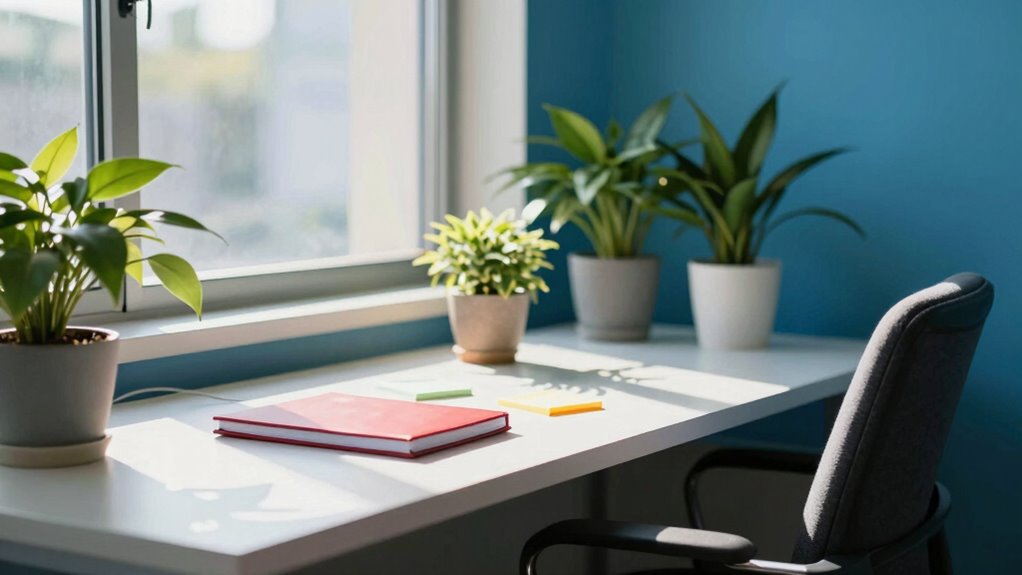
Colors in your workspace can profoundly influence your focus and motivation. Your brain associates certain colors with specific feelings and behaviors, known as color association. For example, blue often promotes calmness and concentration, while red can boost energy and urgency. However, cultural perceptions also shape how you respond to these colors; what energizes one person might cause stress in another. Recognizing these differences allows you to choose colors that align with your personal and professional goals. When your workspace reflects colors you associate with productivity, you’re more likely to stay engaged and motivated. Understanding the impact of color association and cultural perceptions helps you create an environment that enhances your efficiency and keeps you focused throughout the day. Additionally, considering neuropsychological responses to different shades can further optimize your workspace environment. By selecting colors based on their contrast ratio, you can improve visual clarity and reduce eye strain, fostering better concentration. Incorporating research-backed color psychology principles into your workspace design can help reinforce positive habits and boost overall productivity.

Janyortrenner Green Aventurine Crystal Tree,Harmony Office Desk Home Decor,Vitality Gift with Copper Wire in Ceramic Base
【Handmade Crystal Healing Bonsai Artistry】:Every Green Aventurine leaf on this Handmade Bonsai tree is carefully shaped, blending Zen…
As an affiliate, we earn on qualifying purchases.
As an affiliate, we earn on qualifying purchases.
How Color Psychology Influences Your Mood and Focus
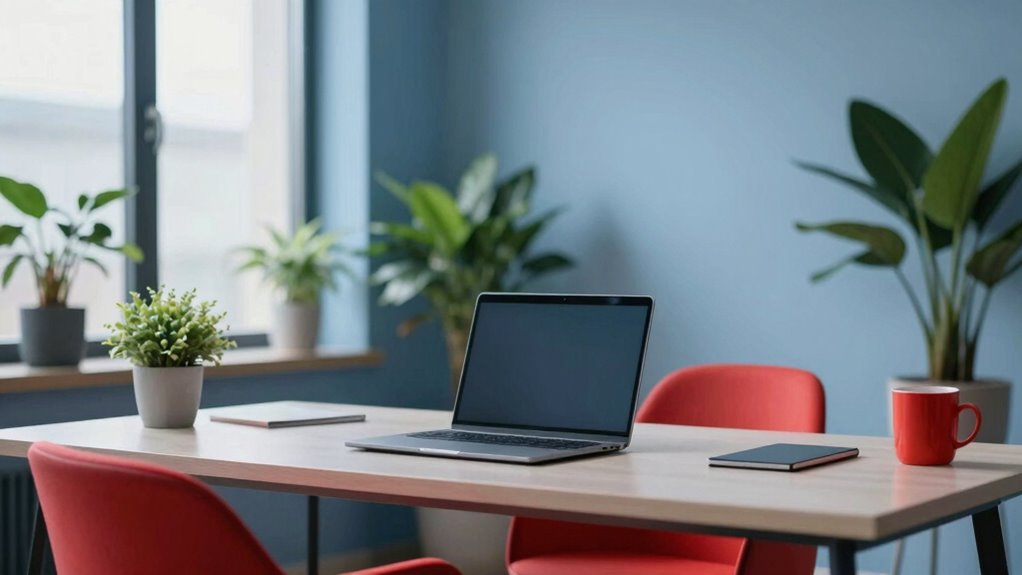
Since certain hues can directly affect your emotions and mental clarity, understanding how color psychology influences your mood and focus is essential for designing an effective workspace. Color associations shape your emotional responses, impacting how alert or relaxed you feel throughout your day. For example, blue often promotes calmness and concentration, helping you stay focused on detailed tasks. Green can reduce anxiety and refresh your mind, enhancing overall well-being. Conversely, warm colors like red or orange may energize you but also lead to overstimulation if overused. Recognizing these emotional responses allows you to select colors that foster the right environment for productivity. Additionally, understanding the Gold IRA Markets can help you make informed decisions about your investment strategies. By aligning your workspace colors with your goals, you can optimize your mood and maintain better focus throughout your workday. Incorporating color psychology principles into your workspace design can further enhance these benefits and create a more motivating environment, especially when considering water-inspired colors that promote tranquility and clarity. A thoughtful selection of tones based on psychological effects of color can also contribute to a balanced and inspiring atmosphere.

Yookeer Mental Health Reminders Wall Art Decoration Positive Psychology Affirmations Therapy Office Decor Occupational Therapy Gifts Wooden Hanging Wall Pediments Inspirational Gifts(Pastel Color)
What You Receive: you will receive 1 piece of therapy office decor, including 9 wooden plaques and flax…
As an affiliate, we earn on qualifying purchases.
As an affiliate, we earn on qualifying purchases.
Which Colors Help You Focus, Reduce Stress, or Boost Creativity
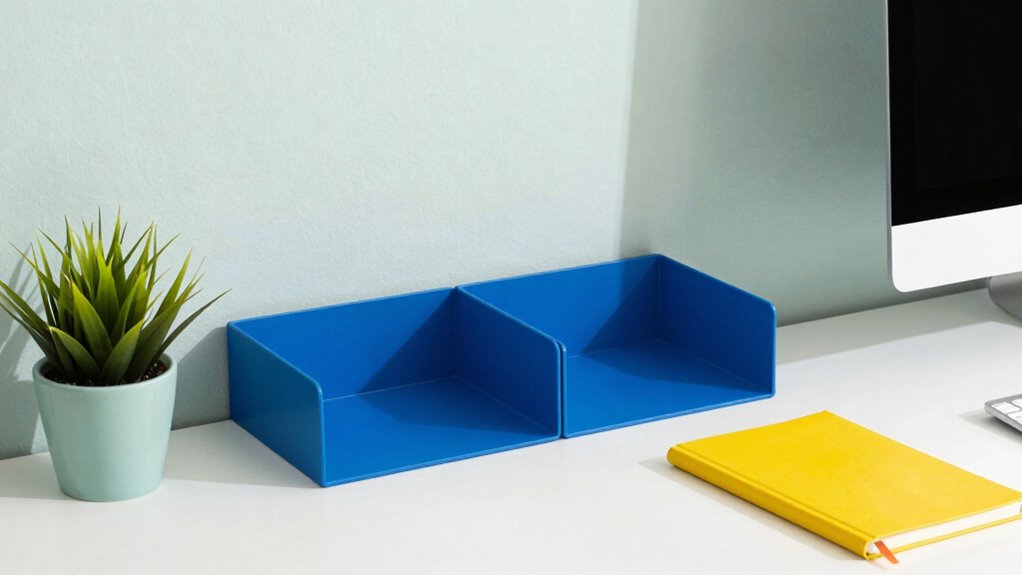
To enhance your focus, reduce stress, or boost creativity, choosing the right hues for your workspace can make a significant difference. Calm colors like blue and green foster focus and relaxation, making them ideal for reducing stress and encouraging steady concentration. Bright shades such as yellow stimulate creativity and energy, perfect for brainstorming or innovative tasks. Neutral tones like beige or soft gray support a balanced ambiance creation, helping you stay centered without distraction. Vintage design elements and retro accents can also influence the overall mood, creating a nostalgic yet inspiring environment. Combining these colors thoughtfully—like pairing blue with a splash of yellow—can optimize your environment for specific goals. The right color combinations influence the overall mood, helping you work more efficiently and comfortably. When selecting colors, consider how they interact and create a cohesive atmosphere that aligns with your productivity needs. Understanding how color psychology impacts your mood can help you choose hues that support your home office environment effectively. Additionally, being aware of passive voice usage can improve your writing clarity and engagement. Incorporating color contrast techniques can further enhance focus and visual interest within your workspace.

PHOENIX Skin Tone Acrylic Paint – 6 Neutral Colors x 2 Fl Oz / 59ml Flesh Colored Model Paint Set, Plastic Miniature Figures Paints for Adults, Brown Acrylic Paints for Canvas Painting
6 DISTINCT SKIN SHADES – This collection embraces a spectrum of 6 skin tones, ranging from the fairest…
As an affiliate, we earn on qualifying purchases.
As an affiliate, we earn on qualifying purchases.
How to Choose Workspace Colors That Match Your Goals
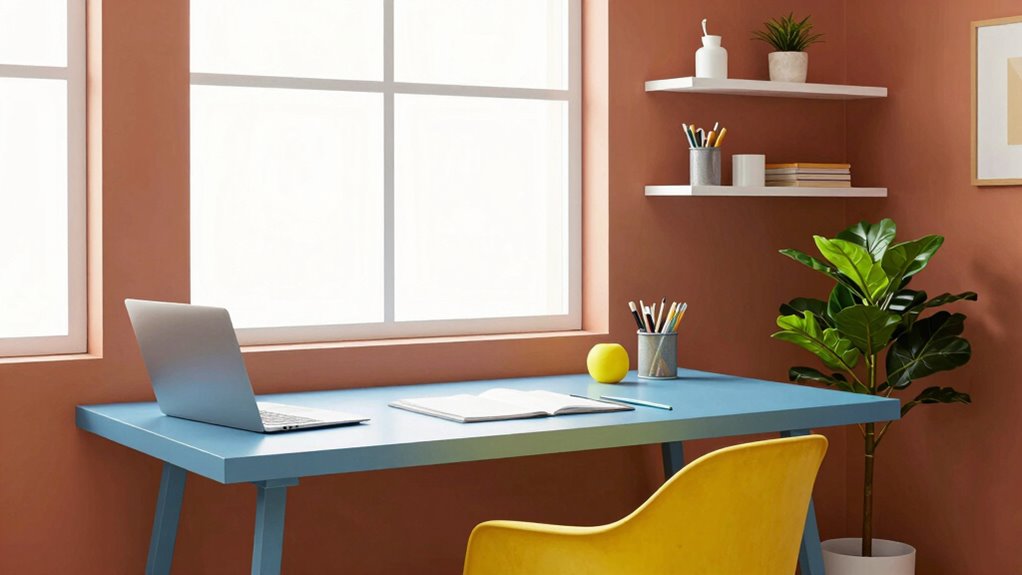
Choosing workspace colors that align with your goals starts with understanding what you want to achieve. Color theory guides you in selecting shades that evoke the right emotions and boost productivity. For instance, blue fosters focus and calm, while yellow sparks creativity. To create a cohesive environment, prioritize aesthetic harmony—ensuring your colors complement each other and support your intentions. Consider the mood you want to set: energizing hues for motivation or soothing tones for concentration. Think about how different colors interact and reinforce your objectives. Additionally, passive voice helps ensure your writing is clear and direct, making your message more impactful. Understanding the importance of quality assurance in your design process can help you identify potential issues early and maintain a high standard in your workspace environment.
Applying principles of color contrast can further enhance visual clarity and prevent strain during long work sessions.
Real-Life Workspace Color Schemes That Keep You Motivated
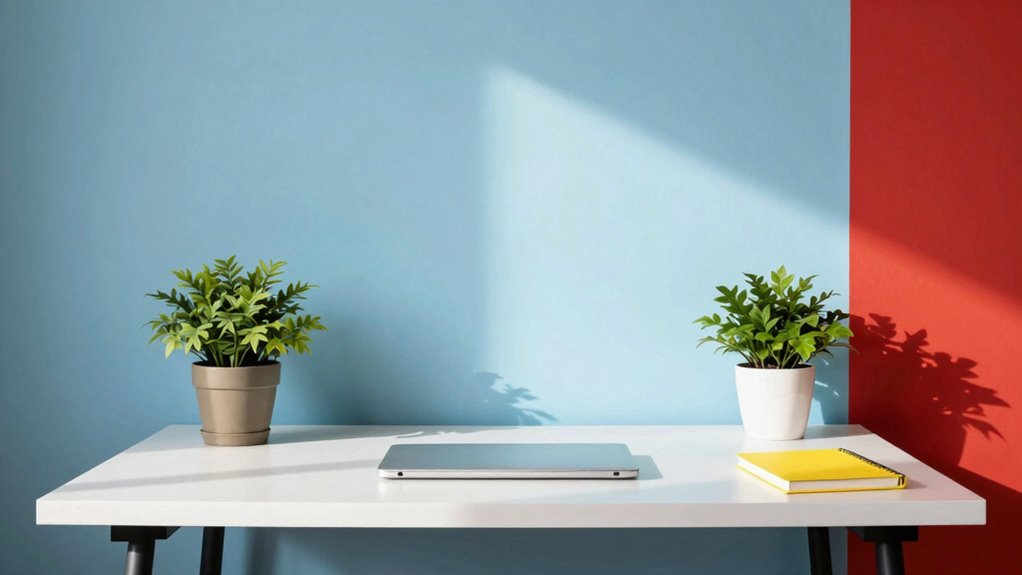
Real-life workspace color schemes demonstrate how intentional choices can boost motivation and enhance focus. A well-chosen color combination can create an environment that energizes you and keeps distractions at bay. For example, pairing vibrant yellow with calming gray provides motivational accents that spark creativity while maintaining balance. Incorporating pops of orange can stimulate enthusiasm and drive, especially in areas where you need a boost. Similarly, shades of blue foster focus and productivity, making them perfect for task-heavy zones. By deliberately selecting these motivational accents, you tailor your workspace to support your goals. Additionally, smart lighting options, such as adaptive lighting, can further enhance the mood and circadian rhythm, creating an optimal environment for work. Understanding color psychology can help you choose shades that align with your desired mental state and productivity levels. These real-life examples show that thoughtful color schemes aren’t just aesthetic—they actively influence your mindset, helping you stay motivated and engaged throughout your workday.
Frequently Asked Questions
How Do Cultural Differences Affect Workspace Color Preferences and Perceptions?
Cultural differences considerably influence how you perceive workspace colors, as cultural symbolism shapes your emotional reactions and preferences. For instance, red may symbolize luck in China but signify danger in Western cultures. Your understanding of color perception varies based on cultural context, affecting how you respond to workspace hues. Recognizing these differences helps you create an environment that resonates positively across diverse cultural backgrounds, fostering comfort and productivity.
Can Color Schemes Influence Team Dynamics and Collaboration?
Imagine your team dressed in mismatched colors, like a clown car crash—chaos reigns. Proper color schemes boost team dynamics by fostering color harmony and visual cohesion, making collaboration smoother. When everyone’s on the same vibrant wavelength, ideas flow seamlessly, and synergy blossoms. So, yes, choosing the right palette can turn your workspace into a collaborative masterpiece, rather than a circus of disjointed communication.
Are There Any Colors to Avoid in a Professional Workspace?
You should avoid color clashes and overly busy patterns in your workspace, as they can cause visual fatigue and distraction. Monochrome schemes may seem dull and limit creativity, so balance is key. Steer clear of harsh reds or overly bright yellows that might increase stress or agitation. Instead, opt for calming, harmonious colors that promote focus and productivity without overwhelming your senses.
How Do Lighting and Color Interplay to Affect Workspace Ambiance?
Imagine you’re in a vintage film, where lighting effects set the mood instantly. In your workspace, lighting and color interplay dramatically influences ambiance. Bright, natural light amplifies warm hues, boosting energy, while soft, dim lighting with cool colors creates calmness. Effective color contrast and strategic lighting choices help you stay focused and motivated. You can even mimic a classic noir scene to stimulate creativity, making your workspace both functional and inspiring.
What Role Does Personal Color Preference Play in Workspace Design?
Your personal color preference plays a key role in workspace design because it directly influences your comfort and motivation. By understanding your personal color psychology, you can choose shades that boost focus and creativity. Aim for workspace color harmony by selecting colors that complement your preferences, creating an environment where you feel energized and balanced. When your workspace aligns with your personal colors, you’re more likely to stay productive and inspired.
Conclusion
Just like a painter selects shades to bring a canvas to life, choosing the right workspace colors fuels your motivation and focus. Think of your environment as a garden—each hue nurturing your mood and productivity. When you surround yourself with the right shades, you create a sanctuary where ideas blossom and stress fades away. Embrace this palette of possibilities, and watch your workspace transform into a vibrant hub of creativity and progress.