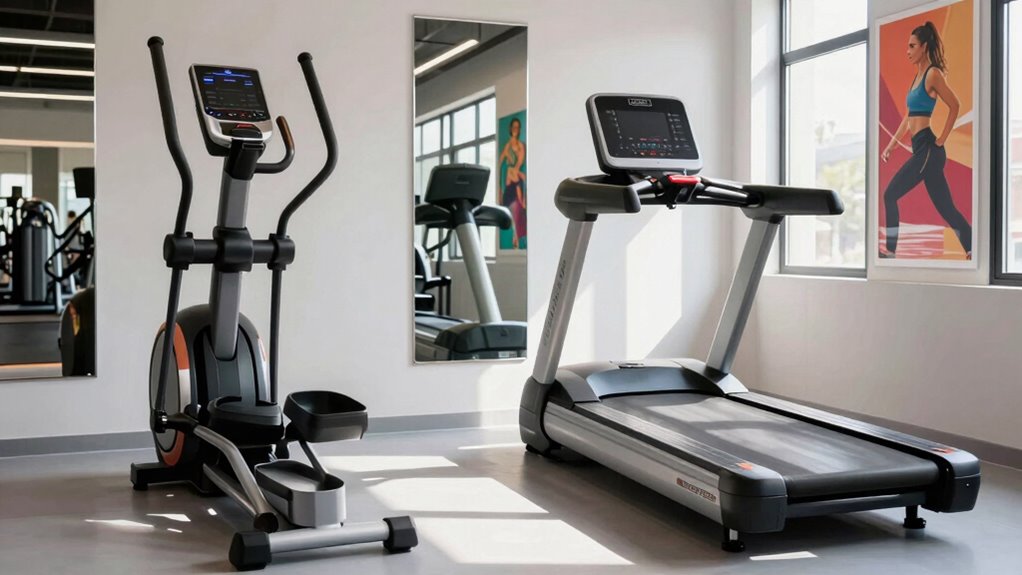

If your goal is to burn calories quickly and build endurance, a treadmill might suit you best, especially if you enjoy running or walking with adjustable speeds and incline! For low-impact workouts that protect your joints or if you prefer full-body engagement, an elliptical could be a better fit. Your body type and fitness preferences matter too—if you’re aiming for joint-friendly options or muscle balance, the elliptical could be ideal. Keep exploring to find your perfect match.
Key Takeaways
- Choose a treadmill for higher intensity workouts and faster endurance building, especially if weight loss is a primary goal.
- Opt for an elliptical to minimize joint impact and support low-impact, balanced cardio suited for joint concerns or injury recovery.
- Consider your body composition: higher muscle mass may benefit from treadmill’s muscle engagement; ellipticals suit sensitive joints.
- Match your fitness goals: for quick calorie burn and stamina, treadmills are ideal; for joint health and sustained low-impact cardio, ellipticals excel.
- Select equipment with features aligned to your fitness level, such as resistance options and programmable workouts, for personalized progress.
Which Cardio Machine Is Better for Weight Loss: Elliptical or Treadmill?
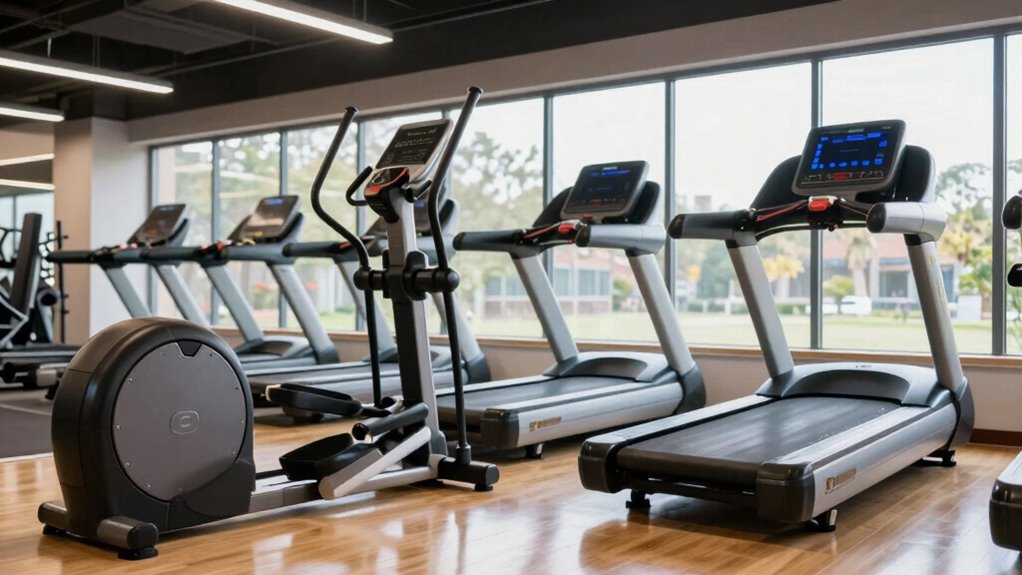
When it comes to weight loss, choosing the right cardio machine can make a significant difference. Both ellipticals and treadmills offer excellent calorie burn, but your choice depends on your preferences for workout variety. Treadmills typically provide a straightforward running or walking experience, allowing you to vary speed and incline easily. This flexibility can boost calorie burn and keep your workouts engaging. Ellipticals, on the other hand, combine upper and lower body movements, giving you a full-body workout that can be less monotonous. If you value diverse routines and lower impact on your joints, an elliptical might be better. Ultimately, both machines support weight loss goals, but your personal preference for workout variety and impact level will guide your best choice.
Are Ellipticals More Impact-Friendly Than Treadmills?

Ellipticals are generally considered more impact-friendly than treadmills, making them a popular choice for those with joint concerns or recovering from injuries. They provide low impact exercises that reduce stress on your knees, hips, and ankles. Because of this, ellipticals are ideal for creating joint-friendly workouts that protect your body during intense or frequent use. Unlike treadmills, which involve high-impact pounding with each step, ellipticals offer a smooth, gliding motion that minimizes joint strain. If you’re seeking a cardio option that’s easier on your body while still delivering effective workouts, an elliptical can be a safer, more comfortable choice. This impact-friendly design supports your fitness goals without risking unnecessary joint wear or discomfort. Understanding impact-friendly equipment is essential for making informed workout decisions that prioritize your joint health and overall safety, especially considering effective filtration and pump protection that can help maintain your equipment’s longevity and consistent performance. Incorporating joint-friendly exercises into your routine can further enhance your overall safety and comfort during workouts, and choosing equipment with impact reduction features can make a significant difference in your workout experience.
How Does Your Body Type Influence Which Cardio Machine Is Right for You?
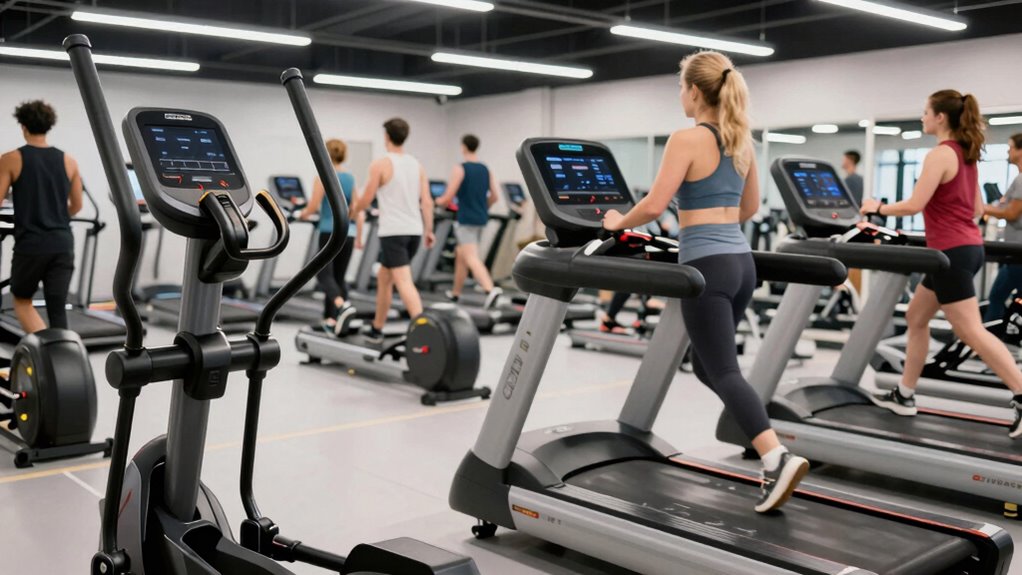
Your body type plays a key role in choosing the right cardio machine, affecting how comfortable and effective your workout is. Consider your body composition, joint health, and fitness goals when deciding between an elliptical or treadmill. Picking the right machine guarantees you stay motivated and avoid unnecessary strain. Additionally, understanding the science behind cardio devices can help you select equipment that aligns with your specific needs and maximizes your results. Recognizing how body mechanics influence performance may further refine your choice, ensuring a safer and more efficient exercise session. Knowing how contrast ratio impacts image quality can also help you appreciate the importance of suitable equipment and settings for optimal results, especially if you aim for a more immersive workout environment. Being aware of your piercing healing process can also guide you in maintaining proper hygiene and avoiding infections during your fitness journey, especially if you have recent piercings that require special care. Moreover, understanding ergonomic design in cardio equipment can contribute to reducing discomfort and preventing injury during workouts.
Body Composition Considerations
Body composition plays a significant role in determining which cardio machine might suit you best. If you have more muscle mass, you’ll benefit from a machine that maximizes muscle activation while offering a high calorie burn. The treadmill tends to engage your leg muscles more intensely, making it ideal for those with a higher muscle-to-fat ratio seeking a vigorous workout. Conversely, the elliptical provides a lower-impact option that still promotes effective calorie burning, especially if your body composition includes joint sensitivities or less muscle mass. Your body type influences how your muscles respond during exercise, so choosing a machine that aligns with your muscle activation needs guarantees you get the most efficient workout toward your body goals. Additionally, understanding your body composition can help tailor your fitness routine for better results. Recognizing how different machines impact muscle engagement can help you optimize your workout based on your specific body type, especially since exercise selection can significantly influence your overall progress. Incorporating personalized training strategies based on body type can further enhance your results and prevent injury. Being aware of your muscle-to-fat ratio can guide you in selecting the most effective cardio equipment for your unique needs.
Joint Stress and Comfort
Since joint stress varies based on body type, choosing the right cardio machine can considerably influence comfort and injury risk. An elliptical often provides better joint comfort because it offers a low-impact, smooth motion that reduces stress on knees, hips, and ankles. If you have joint sensitivity or arthritis, this machine can help you maintain exercise safety while minimizing discomfort. Additionally, understanding impact levels and how they relate to your body can help you select the most suitable equipment. Conversely, a treadmill may increase joint stress due to the impact of running or walking, especially on hard surfaces. If you’re prone to joint pain or have existing issues, you might prefer the elliptical to protect your joints. Selecting the machine that aligns with your body type ensures a safer workout, reduces the likelihood of injury, and promotes consistent exercise without joint discomfort.
Fitness Goals Alignment
Choosing the right cardio machine depends heavily on your fitness goals and how your body responds to different types of exercise. If your primary goal is calorie burning, the treadmill generally delivers a higher intensity workout, helping you burn more calories in less time. On the other hand, if you want balanced muscle engagement with lower joint impact, the elliptical might be better suited. Your body type also matters; those with joint sensitivities benefit from elliptical workouts, while individuals aiming for increased bone density might prefer the treadmill. Consider how each machine aligns with your goals—whether it’s fat loss, muscle toning, or endurance. Matching your body type and goals will ensure your workouts are effective, sustainable, and aligned with your overall fitness journey. Additionally, understanding how mammography guidelines can vary by age and individual health factors can be crucial when planning your overall health and wellness routines. Being aware of proper exercise techniques can further enhance your workout effectiveness and reduce injury risk. Tailoring your cardio choice to your specific body response will help you stay motivated and achieve long-term results.
What Features Should You Look for Based on Your Fitness Level?
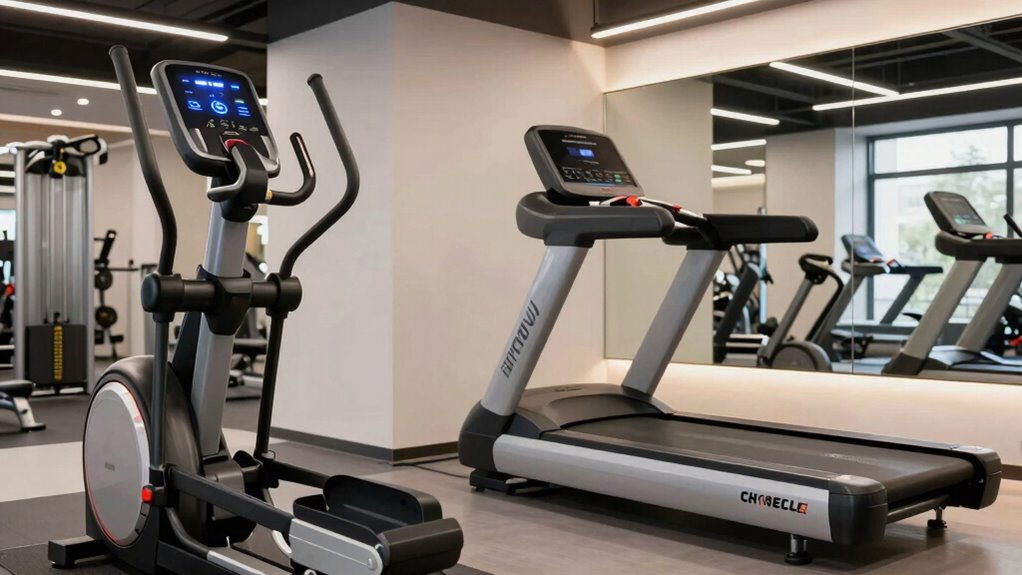
Your fitness level plays a crucial role in selecting the right elliptical or treadmill features. Start with a fitness assessment to identify your strengths and limitations, guiding you toward equipment that matches your current capacity. If you’re a beginner, look for machines with basic features, straightforward controls, and lower maximum speeds or incline options. More advanced users will benefit from equipment that offers customization, such as adjustable resistance levels, multiple workout programs, and data tracking. Consider your joint health as well; low-impact features are ideal if you have joint concerns. Equipment customization allows you to tailor workouts to your progress, ensuring sustained challenge and motivation. Matching features to your fitness level helps prevent injury, enhances effectiveness, and keeps you engaged.
Can Treadmills Help You Build Endurance More Than Ellipticals?
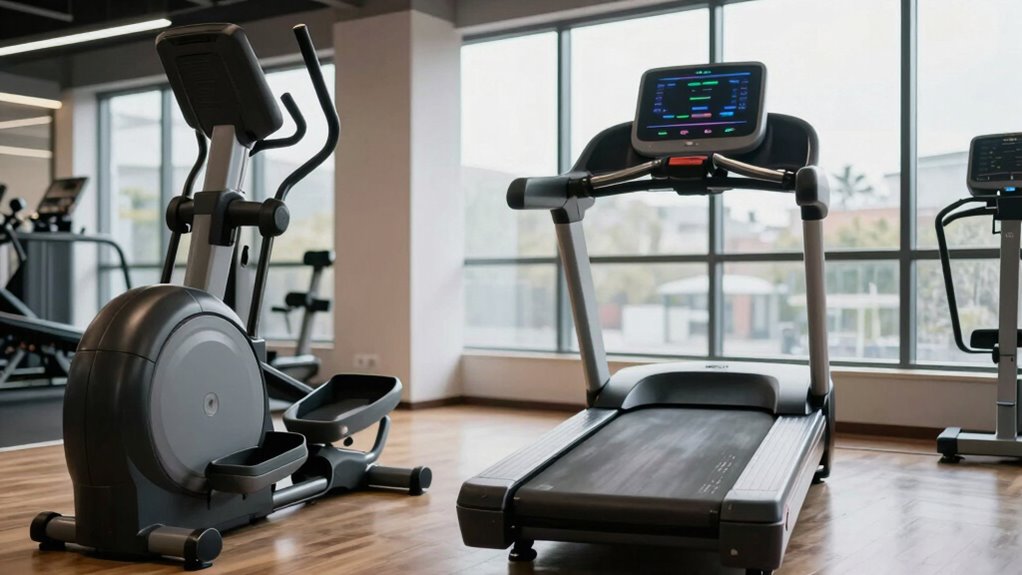
Treadmills often allow you to run at higher intensities and longer durations, which can boost your cardiovascular endurance more quickly. Their impact on your body can be more demanding, helping you push your limits over time. Ellipticals provide a lower-impact workout, but treadmills may offer greater potential for building endurance through sustained effort. Additionally, understanding safe installation practices and proper usage can help you maximize your workouts while minimizing injury risks. Incorporating connected fitness technology such as apps and wearables can further enhance your training by providing real-time feedback and personalized guidance. Exploring various exercise equipment options can help tailor your workout to match your endurance goals more effectively, especially when considering adjustable resistance features that can intensify your training as you progress. Recognizing the importance of emotional readiness can also motivate sustained effort and result in better endurance development over time.
Impact on Cardiovascular Endurance
While both ellipticals and treadmills provide effective cardiovascular workouts, treadmills often offer a more direct way to build endurance. Running or walking on a treadmill allows you to easily incorporate interval training, which pushes your heart rate higher and boosts cardiovascular capacity. Treadmills also promote greater muscle engagement, especially in your legs and core, which helps improve overall endurance. The ability to adjust speed and incline lets you challenge yourself progressively, making it easier to track improvements over time. Ellipticals, while lower impact, tend to focus more on low-impact cardio and muscle activation rather than pushing your endurance limits. If your goal is to enhance cardiovascular endurance quickly and effectively, treadmill workouts give you the flexibility and intensity needed to achieve those results.
Duration and Intensity Levels
Because treadmills allow for precise adjustments in speed and incline, they enable you to easily vary workout duration and intensity to challenge your cardiovascular system, often more effectively than ellipticals. This flexibility boosts calorie burning and enhances muscle engagement, helping you build endurance faster. You can increase intensity gradually by adjusting incline or speed, making workouts more challenging over time. To illustrate, here’s a comparison:
| Aspect | Treadmill | Elliptical |
|---|---|---|
| Calorie burning | Higher with increased speed | Moderate, lower impact |
| Muscle engagement | More lower-body muscle activation | Less muscle activation |
| Duration flexibility | Easier to extend workouts | Limited variation |
| Intensity control | Precise adjustments | Less precise adjustments |
| Endurance building | Better suited for progression | Suitable for moderate gains |
Is a Treadmill or Elliptical Better for Joint-Friendly Workouts?
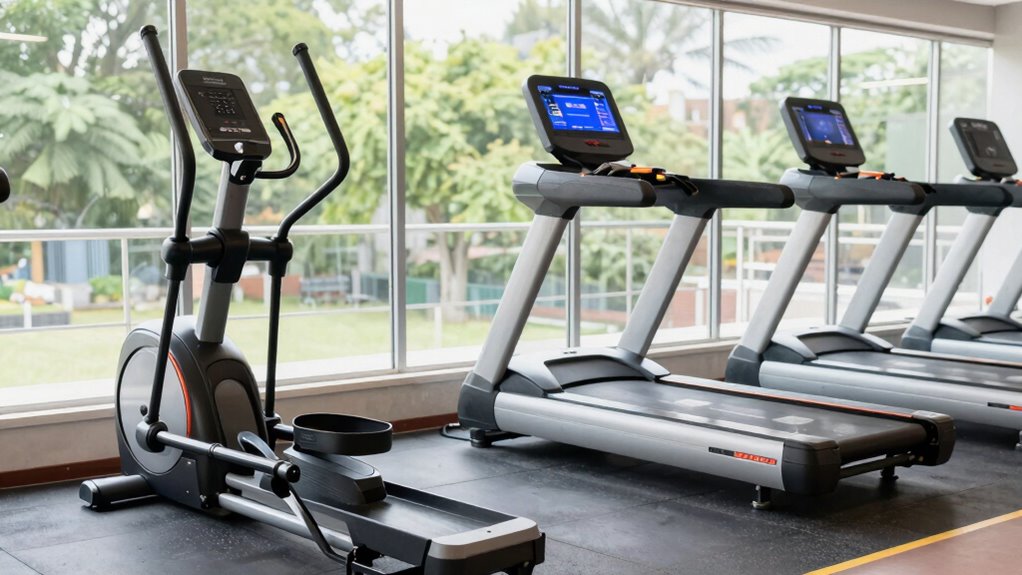
If you’re concerned about joint health during workouts, choosing the right equipment matters. The elliptical is known for offering a low-impact, joint-friendly workout because it minimizes joint stress compared to a treadmill. Its smooth, gliding motion reduces the impact on knees, hips, and ankles, making it ideal if you have existing joint issues or want to prevent them. On the other hand, treadmills involve more joint stress due to the high-impact nature of running or walking on a hard surface. If joint comfort is a priority, the elliptical provides a safer, more comfortable option. However, if you’re looking for weight-bearing exercise that can help strengthen bones, a treadmill might still be suitable, but with cautious use.
How Do Cost, Space, and Usage Frequency Affect Your Choice?

When deciding between an elliptical and a treadmill, your budget, available space, and how often you plan to use the equipment play crucial roles. Cost considerations are important—ellipticals generally cost more upfront but can offer better durability, while treadmills vary widely in price. Space requirements also matter; ellipticals tend to be bulkier, needing more room for safe operation, whereas treadmills often have a smaller footprint. If you plan to use the machine daily, investing in a sturdy, higher-quality model makes sense, even if it costs more. If space is limited, choose equipment that fits comfortably without feeling cramped. Your usage frequency helps determine whether a more affordable, space-saving model suits your needs or if a premium elliptical is worth the investment.
Frequently Asked Questions
Which Machine Burns More Calories per Workout Session?
You’ll burn more calories per workout session on the treadmill, especially if you increase workout intensity with running or incline walking. The treadmill’s higher-impact nature and ability to push your pace boost calorie expenditure. The elliptical offers a lower-impact alternative but generally results in fewer calories burned at the same effort level. To maximize calorie burn, choose the machine that allows you to work harder and maintain higher workout intensity.
Can Elliptical Trainers Improve Balance Better Than Treadmills?
Imagine you’re recovering from an ankle sprain; focusing on balance improvement, you might find elliptical trainers more effective than treadmills. Ellipticals require you to stabilize your body during movement, which enhances coordination and improves balance over time. Unlike treadmills, they engage your core and stabilizer muscles continuously, making them a better choice if your goal is to boost balance and coordination.
Are There Specific Health Conditions That Favor One Machine Over the Other?
If you have joint issues, the elliptical is better because it offers low-impact exercise that minimizes joint stress, helping protect your joint health. For cardiovascular benefits, both machines are effective, but the treadmill tends to provide a more intense workout that can boost your heart health faster. Choose based on your joint health needs and fitness goals, and consider consulting a healthcare professional for personalized advice.
How Do Machine Warranties Influence Long-Term Cost?
Think of machine warranties as your safety net—covering repairs and reducing surprise expenses. When you consider warranty coverage, you’re fundamentally protecting yourself from long-term expenses that can add up quickly. A solid warranty can save you money if your equipment breaks down, making your investment more budget-friendly over time. So, always check the warranty details before buying; it’s like having insurance for your fitness journey.
Is There a Recommended Duration for Using Either Machine Safely?
You should follow safety guidelines and limit your exercise duration to prevent strain or injury. For most people, 30 to 60 minutes per session is safe, but listen to your body and avoid overexertion. Incorporate rest days and vary your workouts. If you experience discomfort, reduce your exercise duration or intensity. Always consult a fitness professional if you’re unsure about what’s appropriate for your fitness level.
Conclusion
Choosing between an elliptical and a treadmill is like picking the perfect dance partner—each has its rhythm and style. Think of the elliptical as a gentle stream, soothing your joints, while the treadmill is a spirited trail, pushing your endurance. Your body goals are the compass guiding your journey. Whichever path you choose, make sure it energizes your spirit and keeps you moving forward, turning your fitness dreams into a vibrant, unfolding adventure.