
To get the most from your rowing workout, avoid three common mistakes. First, don’t slouch or lean too far back or forward, as poor posture wastes energy and risks injury. Second, rush through strokes without maintaining a steady, controlled rhythm—this reduces effectiveness. Third, overusing your arms early, instead of engaging your legs and core first, causes strain and less power. Keep these tips in mind, and you’ll make every stroke count—discover more to perfect your form.

Get the latest gadgets delivered free with Prime
- Fast, free delivery on millions of items
- Prime Video, Amazon Music and more included
- Member-only deals all year
Key Takeaways
- Rushing strokes without maintaining proper posture causes inefficiency and increases injury risk.
- Leaning or slouching during the drive reduces power and disrupts rhythm.
- Neglecting the recovery phase leads to wasted energy and poor technique reinforcement.
- Overusing arms early in the stroke diminishes leg and core engagement, lowering overall power.
- Breathing improperly, such as holding your breath, decreases stamina and affects form.
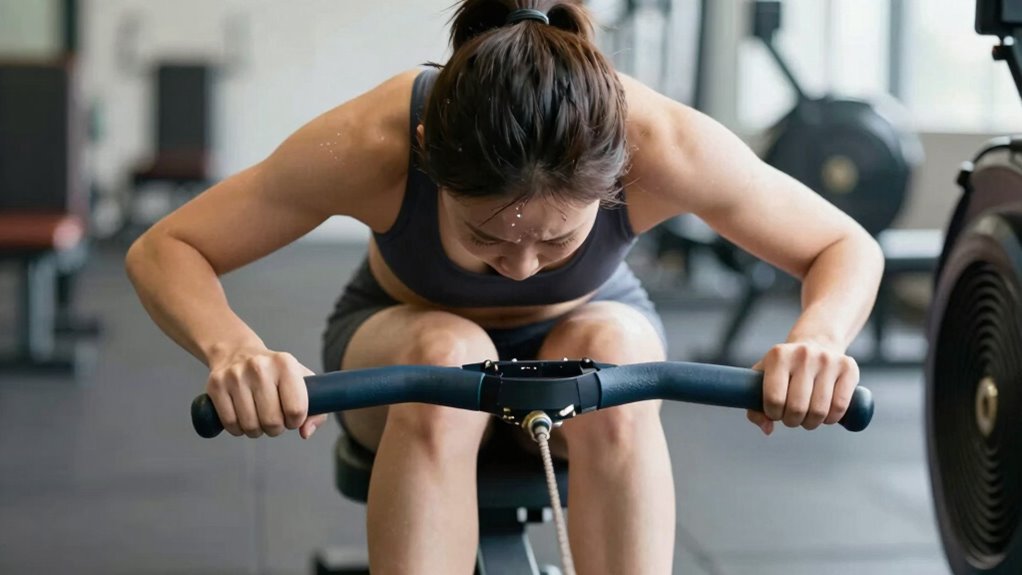
Using proper form on a rowing machine is essential to maximize your workout and prevent injury. When you maintain proper posture, you guarantee that your muscles work efficiently and reduce strain on your joints. Start by sitting upright with your back straight, shoulders relaxed, and chest slightly lifted. Avoid slouching or leaning too far forward or backward, as these positions can lead to unnecessary fatigue and potential injuries. Proper posture not only helps you engage the right muscle groups but also allows for smoother, more effective strokes.
Maintaining proper posture on a rowing machine ensures efficiency, prevents injury, and promotes smoother, more effective strokes.
Breathing techniques are equally important and often overlooked. Many people tend to hold their breath during intense exertion, which can cause dizziness and reduce oxygen flow to your muscles. Instead, focus on breathing rhythmically—inhale during the recovery phase as you extend your arms and prepare for the drive, and exhale as you push back with your legs and engage your core. Proper breathing keeps your energy levels steady and helps you sustain longer, more powerful strokes.
One of the most common mistakes is rushing through the stroke without paying attention to form. When you try to increase speed without controlling your movement, you tend to compromise proper posture. This can result in hunching your shoulders or leaning excessively, both of which diminish the effectiveness of your workout and increase injury risk. Instead, prioritize quality over speed, focusing on a controlled, fluid motion that emphasizes a strong leg drive, followed by a coordinated pull with your back and arms. Additionally, maintaining consistent tempo can improve your overall technique and efficiency.
Another mistake is neglecting the importance of a full recovery phase. Many beginners rush back to the starting position after each stroke, which cuts your workout short and wastes energy. Use the recovery to reset your body and prepare for the next powerful drive. During this phase, maintain proper posture, relax your shoulders, and breathe steadily. This not only improves efficiency but also prevents muscle strain and fatigue. Incorporating proper technique during each phase ensures consistent progress and reduces the likelihood of developing bad habits over time.
Finally, avoid overusing your arms early in the stroke. Your legs should do most of the work, with your arms pulling only once your legs have extended fully. Pulling with your arms prematurely puts strain on your shoulders and diminishes your power output. Concentrate on engaging your core and legs first, then smoothly transition into pulling with your arms, maintaining proper posture and breathing throughout. By focusing on these key elements—proper posture, breathing techniques, and controlled movement—you’ll get the most out of your rowing workouts while minimizing the risk of injury.
Additionally, understanding the contrast ratio of your machine can help you gauge the depth and clarity of your workout visuals, which can enhance your overall exercise experience.
As an affiliate, we earn on qualifying purchases.
Frequently Asked Questions
How Can I Tell if My Rowing Form Is Correct?
You can tell if your rowing form is correct by paying attention to your rowing technique—your back should stay straight, and your legs should do most of the work. Keep your arms relaxed and avoid hunching or overextending. Regular equipment maintenance helps guarantee smooth operation, so check for proper resistance and clean your machine. If you’re aligned and comfortable, your form is likely correct, maximizing workout efficiency and preventing injury.
Are There Specific Warm-Up Routines for Rowing?
You should do a specific warm-up routine for rowing, combining dynamic stretching and muscle activation. Start with arm circles and leg swings to loosen joints, then engage in light rowing or bodyweight exercises like squats to activate muscles. This prepares your body for the workout, prevents injuries, and boosts performance. Think of it as priming your engine before hitting the road—essential for an effective, safe rowing session.
What’s the Ideal Resistance Level for Beginners?
For beginners, an ideal resistance level is low to moderate, allowing you to focus on proper form and build endurance. Use resistance adjustment to keep the setting manageable, typically around the first few levels. Follow beginner tips by starting slow, maintaining a steady pace, and avoiding overexertion. As you gain confidence and strength, gradually increase the resistance to challenge yourself without sacrificing technique or risking injury.
How Often Should I Vary My Rowing Workouts?
You should vary your rowing workouts 2-3 times a week to keep challenging your muscles and avoid plateaus. Don’t worry about losing your rowing technique—mixing routines actually helps refine your form and boosts workout consistency. By changing intensity and exercises, you prevent boredom and overuse injuries, ensuring steady progress. Consistent variation keeps your workouts engaging, making it easier to stay committed and reach your fitness goals.
Can Poor Form Cause Long-Term Injuries?
Poor form can definitely cause long-term injuries if you don’t address it. You might develop issues like back pain or repetitive strain injuries. To prevent this, focus on proper technique, making ergonomic adjustments and practicing rehabilitation techniques if needed. Always listen to your body, and don’t ignore pain—correct your form early to avoid lasting damage and guarantee safe, effective workouts over time.
adjustable rowing machine for proper form
As an affiliate, we earn on qualifying purchases.
As an affiliate, we earn on qualifying purchases.
Conclusion
By fixing these common rowing form mistakes, you can maximize your workout and reduce injury risk. Did you know that improper technique can decrease your calorie burn by up to 20%? That’s a significant loss of effort and progress. So, take a moment to review your form, focus on proper posture, and engage the right muscles. Your body will thank you, and you’ll see better results faster. Keep rowing smart, and stay motivated!
rowing machine with heart rate monitor
As an affiliate, we earn on qualifying purchases.
As an affiliate, we earn on qualifying purchases.
compact rowing machine for home gym
As an affiliate, we earn on qualifying purchases.
As an affiliate, we earn on qualifying purchases.
Halloween Picks
halloween
As an affiliate, we earn on qualifying purchases.