
📊 Full opportunity report: VigilSAR: The Object That Isn’t Transmitting on ThorstenMeyerAI.com — validation score, market gap, and execution plan.
TL;DR
VigilSAR is a radar-based platform that detects ships not broadcasting transponder signals, crucial for maritime safety and law enforcement. It combines SAR imaging with data fusion to identify ‘dark’ vessels in any weather.
VigilSAR has confirmed its ability to detect ships that operate without transponders, a significant advancement in maritime domain awareness. The platform combines synthetic-aperture radar (SAR) imagery with data fusion techniques to identify vessels hiding their signals, offering a persistent, all-weather surveillance solution that works day and night.
The core capability of VigilSAR is its use of SAR technology to detect objects on the ocean surface regardless of weather or lighting conditions. Unlike optical satellites, SAR can operate in cloud cover, darkness, or smoke, making it a reliable tool for maritime monitoring. The platform pairs detection algorithms with neural classifiers to identify objects in radar images, focusing on vessels that do not broadcast AIS or other transponder signals.
VigilSAR’s distinctive feature is its ability to fuse radar detections with publicly available signals—like AIS and ADS-B—to identify vessels that are ‘dark.’ When a ship appears on SAR but has no corresponding transponder data, it raises an alert for potential illegal activity, sanctions evasion, or distress situations. This fusion process effectively subtracts explained signals, highlighting anomalies that warrant further investigation.
While the platform’s detection and classification techniques are based on established remote sensing methods, its value lies in the integration and fusion of multiple data streams. The demonstration relies on publicly available Sentinel-1 SAR data, with commercial and government deployments still under development or in the early stages of market positioning.
VigilSAR — the object that isn’t transmitting
Radar sees through cloud and darkness, when cameras can’t. Fuse it with transponder data and the signal is the one detection no transponder explains.
Independent commentary on public positioning, produced with AI assistance under human editorial oversight. The views are the author’s own and may change. This does not verify or endorse VigilSAR’s capabilities, contracts, or performance. Capabilities on Sentinel-1 / Copernicus reflect a free, public data foundation; commercial-constellation and air-gapped-deployment references reflect stated positioning, not independently demonstrated fact. ISR and related technologies may be subject to export controls and dual-use regulations — lawful, ethical use is solely the operator’s responsibility. Nothing here is an offer, pricing, or operational/safety/legal advice. AI detection and classification can err and require human verification. Product and company names are trademarks of their respective owners; mention does not imply endorsement.
Impact of Detecting Non-Transmitting Ships
VigilSAR’s ability to identify vessels that operate without transponders is a significant step for maritime security, safety, and law enforcement. It enhances the capacity to monitor illegal fishing, smuggling, sanctions evasion, and vessels in distress, especially in regions where weather conditions hinder optical surveillance. This capability can improve maritime domain awareness globally, supporting coast guards, fisheries regulators, and rescue operations.
Because the core technology is based on existing SAR and data fusion techniques, its broad application across civilian and defense sectors underscores its strategic importance. Detecting ‘dark’ ships helps enforce maritime laws and contributes to international security efforts, making VigilSAR a noteworthy addition to the surveillance toolkit.

X-Band Wideband Experimental Airborne Radar for SAR, GMTI and Maritime Surveillance
As an affiliate, we earn on qualifying purchases.
As an affiliate, we earn on qualifying purchases.
Background on SAR and Maritime Surveillance
Most satellite imagery relies on optical sensors, which are limited by weather and lighting conditions. SAR, however, uses microwave signals to produce images regardless of weather or darkness, making it ideal for continuous surveillance. The challenge has historically been interpreting SAR data, which appears as a radar map rather than a recognizable photo.
VigilSAR leverages this technology by combining SAR detections with other signals like AIS and ADS-B, creating a more complete picture of maritime activity. The concept of detecting vessels that go ‘dark’—i.e., turn off transponders—is not new, but integrating SAR with data fusion in a systematic, operational manner represents a significant advancement. The platform’s foundation is built on publicly available Sentinel-1 data, with commercial solutions still in development.
Previous efforts focused on either SAR detection or signal fusion separately; VigilSAR’s innovation is in their combined application, providing a more actionable intelligence product for maritime security stakeholders.
“The ability to detect vessels that turn off transponders using SAR and data fusion is a game-changer for maritime surveillance.”
— Thorsten Meyer, remote sensing expert
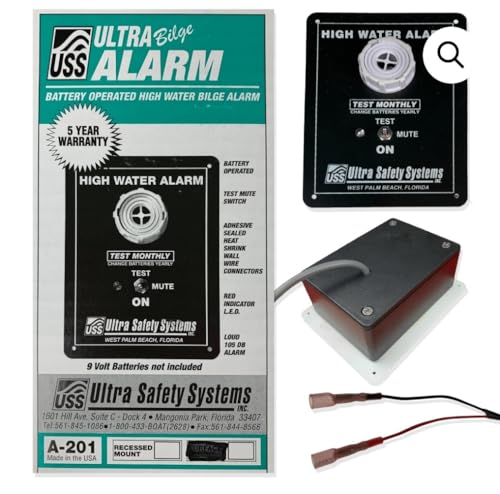
High Water Alarm Detection System for Boats, Marine Safety Monitor
MARINE SAFETY: Advanced water detection system designed specifically for boats to provide early warning of potential flooding or…
As an affiliate, we earn on qualifying purchases.
As an affiliate, we earn on qualifying purchases.
Unanswered Questions About VigilSAR’s Capabilities
While VigilSAR has demonstrated its detection and fusion capabilities using Sentinel-1 data, details about its performance in operational environments, scalability, and commercial availability remain unclear. The extent of its deployment across different satellite constellations and the specifics of its pricing and market rollout are still under development. Additionally, how well the system performs in complex maritime scenarios with dense traffic or high clutter is not yet publicly confirmed.

Lonestar Tracking Barra GPS – 4G & 5G GPS Tracker for Vehicles, Trucks, Trailers & Assets, Long Battery Life, Rugged IP68 Waterproof, Tamper Alerts, Adaptive Real-Time Tracking (Low Cost Subscription)
LONG-LASTING, USER-REPLACEABLE BATTERY POWER LoneStar Tracking’s Barra GPS includes two batteries, offers up to 8 years with daily…
As an affiliate, we earn on qualifying purchases.
As an affiliate, we earn on qualifying purchases.
Next Steps for VigilSAR Deployment and Validation
VigilSAR is expected to continue testing and refining its platform, potentially expanding its data sources beyond Sentinel-1. Commercial and government agencies are likely to evaluate pilot deployments, with broader market availability anticipated once operational performance and cost structures are finalized. Further transparency about capabilities and limitations will likely emerge through ongoing demonstrations and user feedback.

AirNav Radar ADS-B AIS Hybrid Receiver
Dual AIS & ADS-B Receiver
As an affiliate, we earn on qualifying purchases.
As an affiliate, we earn on qualifying purchases.
Key Questions
How does VigilSAR detect ships that are not broadcasting transponder signals?
It uses SAR imaging to detect objects on the water surface and fuses this data with signals like AIS and ADS-B. When a detected object has no corresponding transponder signal, it indicates a ‘dark’ vessel.
Is VigilSAR available for commercial use now?
As of now, VigilSAR is in the demonstration and development phase. It is not yet commercially available, with deployment plans and pricing still under discussion.
What are the main applications of VigilSAR?
The platform is intended for maritime security, law enforcement, fisheries regulation, and search-and-rescue operations, especially in conditions where optical surveillance is ineffective.
What are the limitations of VigilSAR’s current technology?
Its performance in complex, high-traffic environments and its operational readiness are still being tested. Details about scalability and cost are not yet publicly confirmed.
Source: ThorstenMeyerAI.com