
📊 Full opportunity report: Is Your Data Paying For Free AI? on ThorstenMeyerAI.com — validation score, market gap, and execution plan.
TL;DR
As AI models become increasingly abundant and cheap, the true value shifts from intelligence to physical infrastructure and human judgment. This raises questions about data monetization and regional sovereignty.
Recent industry insights reveal that as AI models become more affordable and commoditized, the true sources of value are shifting toward physical infrastructure and human judgment, not the models themselves. This development is critical for understanding the future of data economics and regional sovereignty in AI.
Thorsten Meyer, an industry analyst, argues that the core advantage in AI is no longer the models, which are rapidly becoming commodities, but the physical assets — such as data centers, chips, and power supply — that enable AI production. These assets require significant capital investment and time to build, creating a durable moat that cannot be easily replicated.
He emphasizes that regions or companies lacking these physical assets risk outsourcing the most valuable layer of AI value, which could threaten sovereignty and economic independence. Meyer also highlights that human oversight remains a critical, non-commoditized element. Despite advances in AI, people still prefer human accountability and judgment, especially in decision-making and creative tasks, which AI cannot fully replicate.
These insights suggest that the economic landscape of AI is shifting, with physical infrastructure and human judgment becoming the primary sources of sustained value beyond the rapidly commoditizing models.
The forecast is right: intelligence becomes a commodity, cheap and ambient like electricity. But “commodity” is a statement about where value leaves. The whole game is being early to where it goes instead.
▲ Opinion & analysis · not investment adviceWhen the crude is cheap, value moves to the refinery, the trusted name on the deal, and the buyer who can only drink so much. Same shape here.
When a capability becomes abundant and free, we stop exercising it. Some of that is fine. Some of it hollows us out.
knowing which wishes are worth making — and being a person who can still tell.
Implications for Data Monetization and Regional Power
This analysis underscores that the economic and strategic value in AI is moving away from the models themselves toward physical assets and human oversight. Countries and companies that do not control the physical infrastructure — data centers, chips, power — risk losing sovereignty over AI-driven economic power. Additionally, the enduring importance of human judgment suggests that the value of data will increasingly depend on its contextual and accountable use, not just raw information.
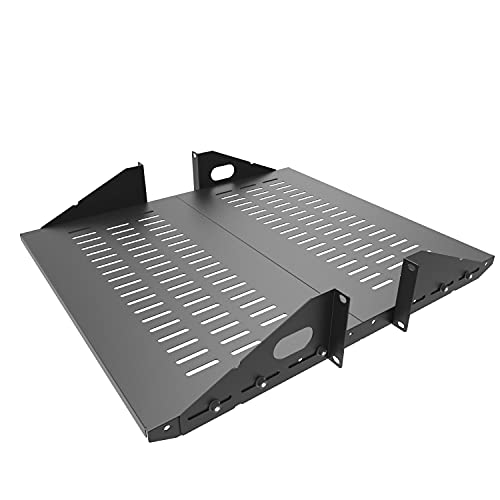
Jingchengmei 2U Cantilever Server Rack Shelf 2 Piece Set Center Weighted
- Compatibility: Fits all 19” racks and cabinets
- Dimensions: 19" W x 10" D x 2U H per shelf
- Set Includes: Two shelves in the set
As an affiliate, we earn on qualifying purchases.
As an affiliate, we earn on qualifying purchases.
Physical Infrastructure and Human Judgment as Core Assets
Historically, AI development has focused on improving models, but recent industry commentary indicates that the real barriers to sustained advantage are physical and human. Building data centers, manufacturing chips, and securing power supplies are costly and time-consuming, creating a natural moat. Meanwhile, despite the rapid improvement of AI models, human judgment remains irreplaceable for accountability, decision-making, and trust — aspects that are unlikely to be fully automated soon.
This shift aligns with broader industry trends where regions with robust physical infrastructure — such as the US, China, and parts of Europe — maintain strategic advantages, while those relying solely on AI models risk losing control over the value chain.
"The moat was never the intelligence. The moat is the means of production."
— Thorsten Meyer

AI Engineering: Building Applications with Foundation Models
As an affiliate, we earn on qualifying purchases.
As an affiliate, we earn on qualifying purchases.
Unclear Impact of Future Infrastructure Developments
It remains uncertain how rapidly physical infrastructure costs will decline or how innovations might reduce barriers to entry. Additionally, the pace at which human oversight can be automated or replaced is still evolving, making the future balance between physical assets and human judgment unclear.
uninterruptible power supply for data centers
As an affiliate, we earn on qualifying purchases.
As an affiliate, we earn on qualifying purchases.
Monitoring Infrastructure Investment and Policy Shifts
Next steps include tracking regional investments in data centers, chip manufacturing, and power infrastructure. Policymakers and industry leaders will also watch how AI companies prioritize physical assets versus model improvements, shaping the future competitive landscape and sovereignty considerations.
human oversight decision-making tools
As an affiliate, we earn on qualifying purchases.
As an affiliate, we earn on qualifying purchases.
Key Questions
Why does physical infrastructure matter more than AI models?
Because physical assets like data centers, chips, and power supplies are costly and time-consuming to build, they create a durable advantage that models, which can be quickly replicated or improved, do not provide.
How does human judgment remain relevant in an AI-dominated world?
Humans provide accountability, trust, and contextual decision-making that AI systems cannot fully replicate, making human oversight a non-commoditized, valuable asset.
What regions are most at risk of losing control over AI value?
Regions that do not invest heavily in physical infrastructure and rely solely on AI models risk outsourcing the most valuable layer of AI economics, potentially losing sovereignty.
Could future technological advances reduce infrastructure costs?
It is possible, but currently, building physical AI infrastructure remains costly and time-intensive, serving as a significant barrier to entry and a strategic advantage for established regions.
Will human oversight become obsolete?
While AI may automate many tasks, human judgment and accountability are likely to remain essential for decision-making, trust, and responsibility for the foreseeable future.
Source: ThorstenMeyerAI.com