
TL;DR
HackiOS, an independent research project, reports that it can run Apple’s open-source XNU kernel and an unmodified iOS 16.5 user space on a POCO X5 Pro 5G. The system is started from RAM rather than installed as a replacement for Android, and major features including cellular, Bluetooth, charging, and Apple ID sign-in do not work.
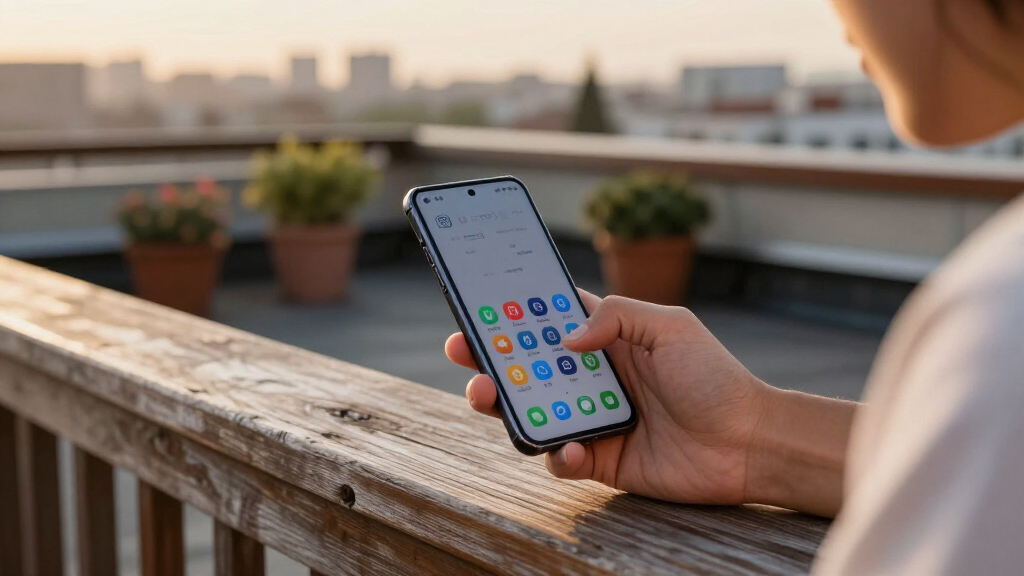
HackiOS, an independent research project, says it can boot Apple’s open-source XNU kernel and run the unmodified iOS 16.5 user space on a POCO X5 Pro 5G Android phone. The setup runs from memory rather than replacing Android on the phone, making it a technical demonstration of iOS components on non-Apple hardware, not a practical iOS installation or a usable replacement for Android.

Get the latest gadgets delivered free with Prime
- Fast, free delivery on millions of items
- Prime Video, Amazon Music and more included
- Member-only deals all year
According to the project’s GitHub repository, the phone is a POCO X5 Pro 5G, also identified by the project as “redwood,” with a Snapdragon 778G processor. HackiOS uses Apple’s open-source XNU kernel version xnu-8796.121.2, which the developers identify as the kernel for iOS 16.5. Above it, the project reports starting iOS services including launchd, backboardd and SpringBoard, as well as apps from the iOS user space.
The developers say they built an EFI loader and UEFI port and wrote replacements for closed Apple drivers. The phone is started using fastboot’s RAM-boot process; the project says its system image is loaded into memory and that the phone’s storage is not written. After a reboot, the device returns to Android. The repository also describes a QEMU version for Linux computers, which runs the system in an emulated ARM environment rather than on a phone.
The project lists a functioning touchscreen, multitouch, home screen, lock screen, some system gestures, Wi-Fi, sound, camera preview and photos, and a selection of apps such as Settings, Safari and Notes. Those are developer-reported capabilities, not an independent assessment. The same project lists cellular, Bluetooth, charging under its kernel, video and Live Photo recording, Apple ID sign-in and App Store content as unsupported. It also describes Metal support as in progress.
A Demonstration, Not an iOS ROM
The work matters as a hardware and operating-system research demonstration: it shows the project running Apple’s kernel and iOS user-space components on an Android phone, while adapting the boot process and device support for that hardware. It also gives developers a way to investigate how far Apple’s software can run outside the devices it was designed for.
For phone owners, however, the practical implications are limited. The documented phone setup requires a POCO X5 Pro with an unlocked bootloader, command-line tools and firmware taken from that device. The project describes sessions with a set time limit and says the phone’s own storage is left unchanged. Its list of missing services means it should not be confused with a complete, daily-use iPhone experience or a general method for installing iOS on Android phones.
Products Worth Considering

DJI Mini 5 Pro Fly More Combo with DJI RC 2, 1-Inch CMOS

Bose QuietComfort True Wireless Earbuds with Active Noise Cancellation, Bluetooth 5.3, USB-C Charging, and IPX4 Water Resistance

Apple AirPods Pro 3 Wireless Earbuds with Active Noise Cancellation
As an affiliate, we earn on qualifying purchases.
How HackiOS Reaches SpringBoard
Apple publishes XNU as open-source software, but a working phone operating system also depends on hardware-specific drivers and other components. HackiOS says its approach combines the kernel with project-written driver replacements, a UEFI-based boot path and compatibility work for functions such as Wi-Fi. The repository says required device firmware is obtained from the Android installation on the individual phone, rather than included in the project.
The GitHub page describes two related repositories: one for the kernel, loader and platform work, and another for user-space components, image building and related graphics work. It says the scripts download an iOS 16.5 IPSW from Apple’s CDN and extract files locally. The project states that Apple files are not included in either repository and that HackiOS is not affiliated with or endorsed by Apple.
““It runs in two places: POCO X5 Pro 5G (redwood, Snapdragon 778G) … [and] QEMU (virt, aarch64).””
— HackiOS project, GitHub repository
Limits of the Current Demonstration
The source material is the project’s own GitHub documentation; it does not include independent testing or a third-party verification of the listed features. It is not clear from the material how consistently the reported functions work across devices, software builds or longer sessions. The documentation names one supported phone model and does not establish compatibility with other Android handsets.
The project also does not provide a complete account of performance, reliability or the security implications of using the setup. Its own feature list identifies substantial gaps, including cellular service, Bluetooth, charging and Apple account services. The repository says some graphics support remains in progress, and describes the phone run as a time-limited session.
Further Work and Verification
The project points readers to its repositories for build instructions, feature notes and updates. Its stated next work includes graphics support: the documentation says 293 of 456 system shaders run on the Adreno GPU, while describing Metal support as in progress. That figure is a project-reported development status, not an independent benchmark.
Further progress would depend on the developers adding support for missing hardware and services and documenting how stable the system is over time. Until independent testing or broader device support is reported, the most precise description is a limited, project-documented boot of iOS 16.5 components on one Android phone and in QEMU. The source material does not give a schedule for future releases.
Key Questions
Does HackiOS install iOS over Android?
No, according to the project. It says the phone boots the system from RAM and returns to Android after reboot, without writing the system to the phone’s storage.
Which Android phone is supported?
The repository documents the POCO X5 Pro 5G, identified as redwood and powered by a Snapdragon 778G. It does not establish support for other Android phones.
Can users make calls or sign in to an Apple account?
The project lists cellular service and Apple ID sign-in as unsupported. It also reports that App Store content does not work.
Can it run without a physical phone?
Yes. HackiOS documents a QEMU version for Linux on an ARM64 virtual machine, so a compatible Linux computer can run the emulated setup without the POCO phone.
Source: hn