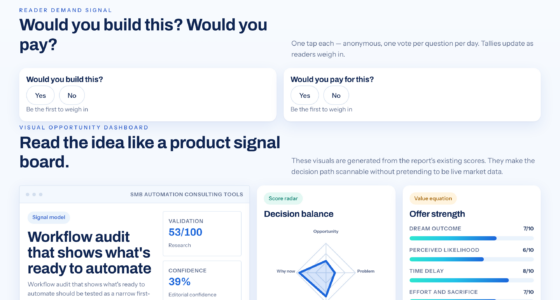
📊 Full opportunity report: A Practical Look At Automation For Brokerage Deal Checklists on IdeaNavigator AI — validation score, market gap, and execution plan.

Get the latest gadgets delivered free with Prime
- Fast, free delivery on millions of items
- Prime Video, Amazon Music and more included
- Member-only deals all year
TL;DR

A practical proposal recommends testing a narrow automation workflow at one residential brokerage: use a new CRM deal to create a transaction checklist and prefill an e-signature packet, with a person approving before it is sent. The proposed 30-deal pilot would compare coordinator hours and data-entry errors with the current manual process; no completed test or results are reported.
IdeaNavigator AI has proposed a limited test of deal-to-checklist automation at a residential real estate brokerage, connecting a new CRM deal to a transaction-management checklist and a prefilled e-signature packet. The suggested pilot would cover 30 deals and measure coordinator time saved and data-entry errors; it is a proposed workflow, not a reported deployment or proven product result.
The proposed workflow starts when a brokerage’s CRM records a new deal. An automation service would use the deal and listing fields to create the corresponding checklist in the brokerage’s transaction-management system and prefill relevant information in an e-signature packet. A staff member would review and approve the packet before it is sent, keeping a human decision point in the process.
The proposal targets an operations manager at a residential brokerage or team looking to find practical automation opportunities. It describes coordinators as manually copying listing and deal details between separate systems, including CRM, multiple listing service (MLS) feeds, e-signature tools, transaction-management software and email. The proposal says this handoff can leave records out of sync, but provides no measured error rate or estimate of current administrative hours.
For validation, the recommendation is to select one brokerage, run the workflow on 30 deals and compare coordinator hours and data-entry errors with the existing manual process. The suggested business model is a monthly subscription priced in tiers according to the number of active transactions automated. No pricing, customer commitment or pilot findings are provided.
Brokerage operations · Pilot proposal
A Practical Look At Automation For Brokerage Deal Checklists
IdeaNavigator AI proposes a focused test: turn a new CRM deal into a transaction checklist and a prefilled e-signature packet, with a staff member reviewing before anything is sent.
01 / The operational problem
A workflow split across brokerage systems
Coordinators may manually copy listing and deal details between separate tools: CRM, MLS feeds, e-signature, transaction management and email. The proposal says this can leave records out of sync, but reports no measured error rate or administrative-hour baseline.
CRM
A new deal is the proposed trigger. CRM fields would supply the starting details for the next steps.
MLS + email
Listing information can enter the workflow through feeds and everyday communication, adding another handoff.
Checklist + signatures
Milestones live in transaction software, while documents are prepared and sent through e-signature tools.
02 / Proposed flow
Automate the handoff, keep a person in control
The first test is deliberately narrow: connect one new-deal event to two follow-up actions, then hold the packet for human review.
New CRM deal
A brokerage CRM records a new deal and its available fields.
Create checklist
Deal details populate a matching transaction-management checklist.
Prefill packet
Relevant listing and deal fields are added to an e-signature packet.
Staff approval
A person reviews and approves the packet before it is sent.
Automated transfer does not confirm that information is correct or that a packet is ready. The reviewer can catch missing or incorrect fields before an external document goes out.
03 / How to validate
Measure the work before deciding to expand
The recommendation is to run the workflow on 30 deals at one residential brokerage and compare it with the current manual process. The proposal does not define the measurement method, comparison period or success thresholds.
Coordinator time
Measure ARecord coordinator hours for the manual baseline and pilot deals using a consistent method.
Data-entry errors
Measure BTrack field errors across both processes. No starting error rate or reduction target is reported.
Use the findings to decide whether to expand the workflow, revise it or stop. Until the test is run, time savings and error reduction remain unverified.
04 / What remains open
Integration details and commercial terms are unresolved
The pilot outline gives a deal count, but leaves practical setup questions unanswered. These details would shape whether a brokerage can judge the operating and commercial case.
Which tools connect?
No participating brokerage, CRM, transaction-management product or e-signature service is identified. MLS field mapping is not specified.
How are changes handled?
The proposal does not explain missing or conflicting fields, or what happens if CRM data changes after checklist or packet creation.
What would it cost?
A monthly subscription tiered by active transactions is suggested. No prices, tier terms or definition of an active transaction are given.
05 / Key questions
What the proposal does—and does not—establish
What would the automation do?
Detect a new CRM deal, create a matching transaction checklist and prefill an e-signature packet from listing fields. A person approves before sending.
Has a brokerage tested it?
No test or deployment results are reported. The recommendation is a pilot at one brokerage covering 30 deals.
How would results be measured?
Compare coordinator hours and data-entry errors with the manual process. The method and success thresholds are not specified.
How might customers be charged?
The suggested model is a monthly subscription tiered by active transactions automated. Pricing and terms are not provided.
Where Automation Could Save Staff Time
If a pilot confirms that staff repeatedly re-enter the same fields, linking the systems could reduce duplicate data entry and help coordinators keep deal records aligned. A checklist created from CRM data may also reduce the chance that a transaction starts without the relevant fields carried over, although the proposal does not report that this has happened or quantify the risk.
The human approval step matters because automated data transfer does not establish that the information is accurate or that a packet is ready to send. A reviewer can catch missing or incorrect fields before an external document goes out. For brokerage operators, the practical question is whether this control can save enough staff time without adding a new layer of review or maintenance.
The proposed measurement plan focuses on hours saved and entry errors, rather than assuming automation is beneficial. Those measures could help an operations manager decide whether to expand the workflow, revise it or stop the test. The proposal offers no evidence yet about financial returns, reliability at scale or the subscription’s value to brokerages.
Products Worth Considering

Amazon Kindle Paperwhite Signature Edition (12th Generation, 2024), 32 GB, Metallic Black

Apple iPad Air (4th Generation, 10.9-inch, Wi-Fi, 256GB) – Space Gray

Bose S1 Pro+ Portable PA Speaker
As an affiliate, we earn on qualifying purchases.
A Workflow Split Across Brokerage Systems
Brokerage transactions often involve separate tools for customer and deal records, listing information, signatures and transaction milestones. The proposal describes coordinators moving data among these systems manually, with email also part of the working process. Its focus is not automating every brokerage task, but connecting a specific trigger—a new CRM deal—to two follow-up actions.
IdeaNavigator AI frames the opportunity around a claimed technology gap: real estate CRMs expose APIs and webhooks, while general automation tools may lack real-estate-specific connectors and MLS field mappings. That is the proposal’s rationale for a domain-focused integration layer, not an independently verified survey of available products. The suggested first test avoids a broad rollout by limiting the workflow to one brokerage and a defined set of transactions.
Pilot Results and Integration Details
No pilot has been reported, so there are no results showing whether the workflow reduces staff hours or errors. The proposal does not identify a participating brokerage, the CRM or transaction-management products involved, or the e-signature service to be connected.
It also does not specify how MLS fields would be mapped, how missing or conflicting data would be handled, or what happens when a CRM record changes after a checklist or packet has been created. The number of deals proposed for testing is clear, but the measurement method, comparison period and criteria for deciding whether the test succeeds are not described.
Pricing is also unresolved: the suggested model is a monthly subscription tiered by active transactions, but no rates or definition of an active transaction are given. There are no reported customer commitments, launch schedule or claims of regulatory review. Those details would need to be established before a brokerage could judge the operational and commercial case.
A 30-Deal Test Would Come First
The recommended next step is to choose one residential brokerage and configure the new-deal-to-checklist workflow for its systems. The e-signature packet would be prefilled from listing fields, while an employee retains approval authority before sending it. The proposal calls for testing the process on 30 deals against the brokerage’s current manual approach.
To make the comparison useful, the brokerage would need to record coordinator time and data-entry errors consistently across the test and its manual baseline. The proposed plan does not set a start date or publish success thresholds. Until an operator runs the test and reports results, the expected time savings and error reduction remain unverified.
Key Questions
What does the proposed automation do?
It would detect a new deal in a brokerage CRM, create a matching transaction-management checklist and prefill an e-signature packet using listing fields. A person would approve the packet before it is sent.
Has a brokerage tested the workflow?
No test or deployment results are reported. The proposal recommends a pilot at one brokerage covering 30 deals.
How would the pilot measure results?
The proposed measures are coordinator hours saved and data-entry errors, compared with the brokerage’s current manual process. The measurement method and success thresholds have not been specified.
How might the service charge customers?
The suggested model is a monthly subscription tiered by active transactions automated. No prices or subscription terms are provided.
Source: IdeaNavigator AI