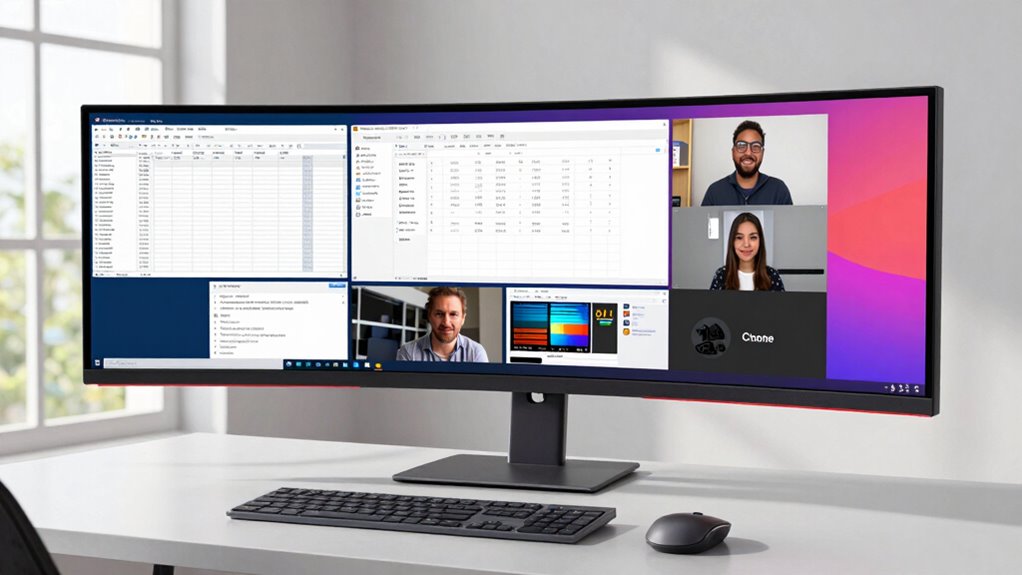

Most people miss the multitasking power of ultrawide monitors because they just enlarge windows or stack them without proper organization. This approach wastes the extra space and makes multitasking harder. To truly benefit, you need to customize your layout, assign specific zones to different apps, and use shortcuts to switch tasks quickly. If you keep relying on defaults, you’ll never access your monitor’s full potential—keep going to discover how to optimize your workspace effectively.
Key Takeaways
- Many users rely on default window stacking, which underutilizes the ultrawide aspect ratio for multitasking efficiency.
- Failing to set dedicated zones or custom layouts limits the productivity benefits of the expansive screen real estate.
- Overlooking resolution calibration can cause blurriness or underused space, reducing multitasking effectiveness.
- Using basic window management without tools like Snap Assist prevents optimal workspace organization.
- Not customizing workflows for specific tasks results in clutter and decreased ability to multitask seamlessly.
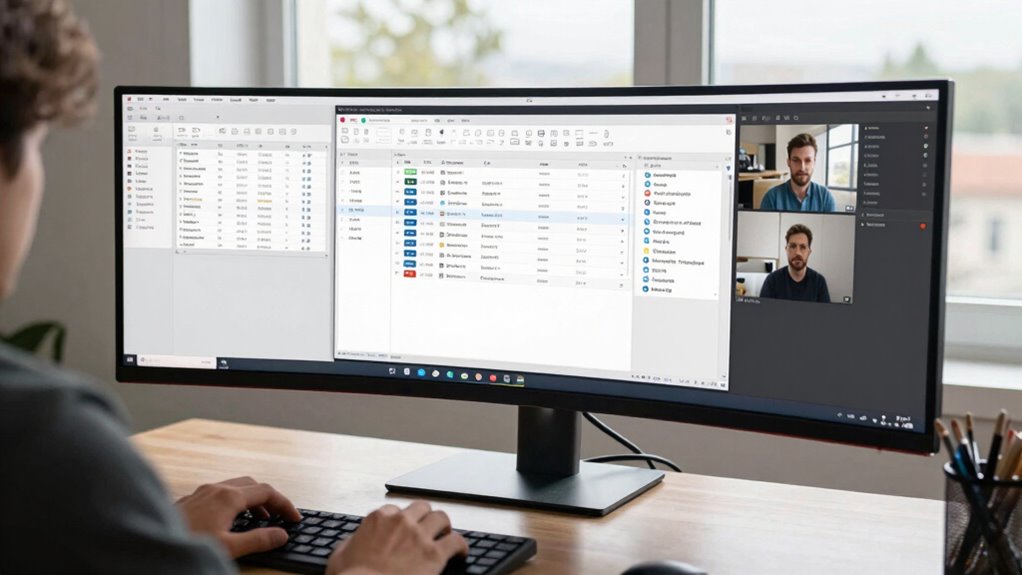
Many people buy ultrawide monitors expecting to boost their multitasking, but they often miss out on the full benefits because they use them incorrectly. The key to maximizing their potential lies in understanding how screen resolution and layout impact productivity enhancement. When you set up your ultrawide display properly, you can seamlessly manage multiple windows, but many fall into the trap of simply enlarging their existing setup without optimizing it.
Maximize ultrawide monitors by optimizing resolution and window layout for seamless multitasking and increased productivity.
First, you need to recognize that screen resolution plays a *pivotal* role in how effective your ultrawide monitor will be. Higher resolutions, such as 3440×1440 or 5120×1440, deliver sharper images and more space for multitasking. If your resolution is too low, the extra width becomes less useful, and you might find yourself zooming in or scrolling more often, which hampers your efficiency. To truly benefit from an ultrawide monitor’s capabilities, you should calibrate the resolution to match your tasks, ensuring clear visuals and ample workspace. Additionally, understanding the impact of screen resolution can help you avoid the common mistake of underutilizing your display’s potential.
Next, it’s essential to rethink how you organize your windows. Many users simply stretch a few applications across the screen or keep them stacked in a traditional manner. This approach doesn’t leverage the *distinctive* aspect ratio of ultrawides. Instead, you should consider dividing your screen into dedicated zones for different tasks. For example, keep your email and messaging apps on one side, your main work window in the center, and reference materials on the other. Proper window management tools or built-in OS features like Snap Assist can help you create these zones effortlessly, transforming your setup into an efficient multitasking hub. Understanding the importance of window organization ensures you maximize productivity by reducing clutter and streamlining workflows. Furthermore, productivity enhancement isn’t just about splitting your screen; it’s about doing so intelligently. Use shortcuts and keyboard commands to switch focus swiftly, and consider customizing your workspace to suit your workflow. If you’re editing videos or working with multiple documents, having dedicated sections reduces the need to constantly resize or move windows. This minimizes interruptions and helps maintain your focus.
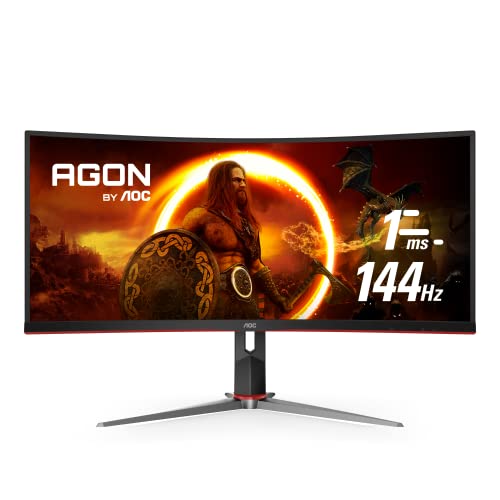
AOC CU34G2X 34" Curved Frameless Immersive Gaming Monitor, UltraWide QHD 3440×1440, VA Panel, 1ms 144Hz Adaptive-Sync, Height Adjustable, 3-Yr Zero Dead Pixels, Black/Red
- Screen Size: 34-inch UltraWide display
- Resolution: 3440×1440 Quad HD
- Panel Type: VA panel for vibrant colors
As an affiliate, we earn on qualifying purchases.
As an affiliate, we earn on qualifying purchases.
Frequently Asked Questions
Do Ultrawide Monitors Improve Productivity for All Tasks?
Ultrawide monitors can boost your productivity, but only if you avoid multitasking myths and ultrawide misconceptions. They excel at multitasking when you use the extra screen space wisely, like organizing multiple windows side-by-side. However, for tasks needing intense focus or detailed work, they might not offer significant benefits. So, assess your workflow and avoid common misconceptions to truly leverage an ultrawide’s potential.
What Is the Ideal Screen Size for Multitasking?
You’ll find that an ultrawide monitor around 34 inches with a high screen resolution, like 3440×1440, hits the sweet spot for multitasking. It’s big enough to display multiple windows without clutter, yet manageable for your ergonomic setup. Anything larger might turn your workspace into a cluttered jungle, and smaller screens won’t keep your multitasking game strong. Balance size and resolution for the best productivity and comfort.
How Should I Arrange Windows on an Ultrawide Monitor?
To arrange windows on your ultrawide monitor effectively, use window snapping to quickly organize apps side-by-side. Customize your workspace by creating specific zones for different tasks, like a communication panel on one side and a workspace on the other. This setup boosts productivity by minimizing clutter and maximizing focus. Experiment with snapping features and layout presets to find the most efficient arrangement for your multitasking needs.
Are There Any Drawbacks to Ultrawide Monitors for Multitasking?
Ultrawide monitors can have drawbacks for multitasking, like potential issues with color calibration that affect visual accuracy, especially for color-sensitive work. Gaming performance might also suffer if your monitor’s refresh rate isn’t high enough, causing lag or screen tearing. Additionally, their size can be overwhelming in smaller spaces, making window management tricky. So, consider these factors before investing to guarantee they meet your multitasking and performance needs.
What Software Tools Enhance Ultrawide Multitasking Efficiency?
You can boost your ultrawide multitasking with tools like DisplayFusion or AquaSnap, which enhance window management and make a multi monitor setup seamless. These programs allow you to easily snap, resize, and organize windows, maximizing your screen space efficiently. By improving window management, you’ll find it simpler to juggle multiple tasks on your ultrawide, turning it into a powerful productivity hub without the hassle of constant window juggling.
monitor resolution calibration tools
As an affiliate, we earn on qualifying purchases.
As an affiliate, we earn on qualifying purchases.
Conclusion
So, next time you sit down with your ultrawide, remember there’s more to it than just extra screen space. The real power lies in how you leverage it—beyond simple multitasking. Are you truly maximizing its potential, or just scratching the surface? Sometimes, the biggest advantage isn’t what you see, but how you use it. Stay curious, because what you discover next could change everything—if you’re willing to look deeper.

gianotter Dual Monitor Stand Riser, Desk Organizer With Drawer and 2 Pen Holders, Computer Monitor Stand, Desk Shelf for Top of Desk (Black)
- Ample Storage Space: Includes drawer and magnetic pen holders
- Ergonomic Adjustment: Adjusts monitor to eye level
- Space Optimization: Raises monitor to free up desk space
As an affiliate, we earn on qualifying purchases.
As an affiliate, we earn on qualifying purchases.

INNOCN 34" Ultrawide Monitor WQHD 3440 x 1440P 180Hz IPS PC Adaptive-Sync G-SYNC Compatible, HDMI, DP, PIP/PBP, 21:9, HDR, MPRT, Built-in Speaker, Height Adjustable, Eye Care – 34C1R
- Ultra-Wide 21:9 Aspect Ratio: Double monitor screen space
- PIP and PBP Modes: Connect and display two devices
- 180Hz Refresh Rate: Smooth gameplay with low latency
As an affiliate, we earn on qualifying purchases.
As an affiliate, we earn on qualifying purchases.