
When you taste smoked food, you’ll notice a deep, smoky flavor that’s tender and melts in your mouth, developed over slow, low heat. Grilled foods, on the other hand, give you a bold, charred taste with a crispy exterior, thanks to quick, high-heat cooking. These immediate flavor differences come from the heat levels and techniques used. Keep exploring to discover how each method uniquely transforms your favorite meats.
Key Takeaways
- Grilling produces a quick, charred, and caramelized exterior with bold, immediate flavors.
- Smoking develops a deep, smoky taste gradually, resulting in a subtler flavor profile.
- Grilled meat offers a crispy, browned crust, while smoked meat remains tender and melt-in-your-mouth.
- The high heat of grilling creates instant, intense flavor contrasts, unlike the mellow infusion from smoking.
- Immediate taste differences are driven by grilling’s rapid caramelization versus smoking’s slow flavor buildup.
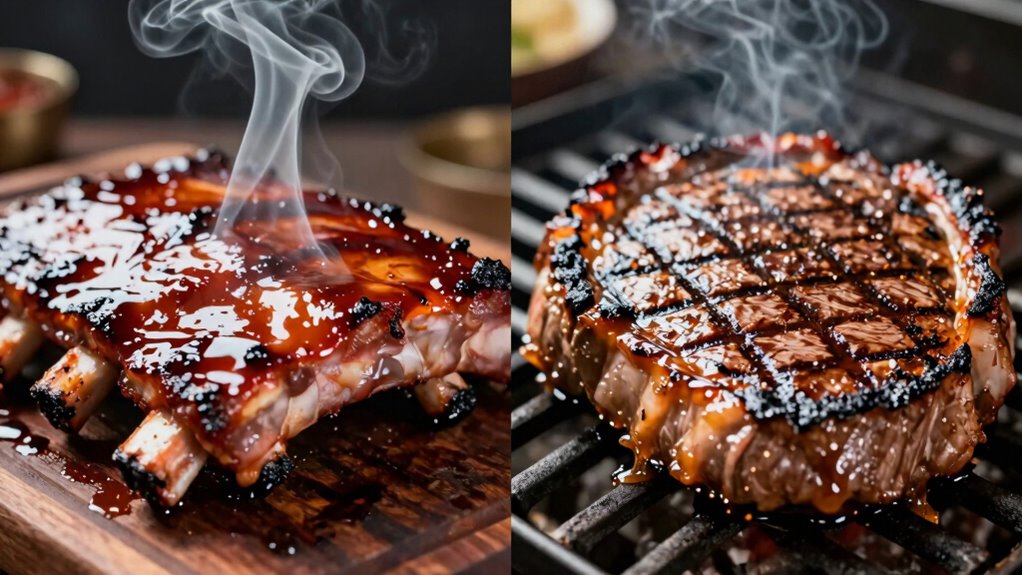
Have you ever wondered which cooking method—smoking or grilling—is better for your favorite meats? The answer depends on what flavor profile you’re after and how you want to prepare your meat. Both methods bring unique qualities to the table, and understanding their differences can help you make the right choice for any occasion.
When you smoke meat, you’re immersing it in a slow, low-temperature environment that allows flavors to develop gradually. This process often involves specific marinade techniques to infuse the meat with additional depth. For example, you might marinate brisket in a mixture of vinegar, spices, and herbs overnight before smoking. This not only tenderizes the meat but also enhances its flavor. During smoking, maintaining a consistent cooking temperature—usually between 225°F and 275°F—is vital. A steady temperature ensures the meat cooks evenly and absorbs the smoky aroma thoroughly. The low heat and extended cooking time break down connective tissues, resulting in tender, melt-in-your-mouth textures that are hard to achieve with other methods. Additionally, temperature regulation is essential for ensuring the meat develops a balanced flavor profile during smoking. Proper smoking techniques can also influence how deeply the smoke flavor penetrates the meat, creating a richer taste.
Smoking meat at 225°F–275°F tenderizes and infuses deep smoky flavor through slow, consistent cooking.
On the other hand, grilling is a quicker process that involves cooking meat over direct high heat. You’ve probably experienced the sizzle of meat hitting a hot grill, which creates a flavorful crust almost instantly. Marinade techniques for grilling focus on quick flavor infusion—think acidic ingredients like citrus or vinegar that tenderize and add zest. Because grilling relies on high temperatures—often between 400°F and 600°F—you have to pay close attention to cooking temperature to prevent burning or overcooking. The high heat caramelizes the exterior, locking in juices and creating the signature charred flavor that many love. Grilling is ideal for thinner cuts or steaks where you want a smoky char and a juicy interior in a short amount of time.
While both methods deliver distinct flavor experiences, it’s the marinade techniques and cooking temperature regulation that truly set them apart. Smoking produces a deep, smoky richness that’s layered over hours of gentle cooking, whereas grilling offers quick, intense heat that creates a bold, charred taste. Your choice ultimately hinges on whether you prefer tender, slow-cooked meat with complex flavors or a fast-cooked, crispy exterior with a smoky punch. Understanding these differences helps you tailor your approach to each cut of meat, guaranteeing you get the flavor you desire every time you cook.

EAST OAK 30" Electric Smoker for Outdoors | Built-in Meat Probe & Clear Viewing Window | Side Chip Loader for 6x Longer Uninterrupted Smoking | 725 sq in Cooking Area for Bigger Batches, Night Blue
FEWER REFILLS, MORE FLAVOR – With 6× longer smokes per load, you get uninterrupted smoking sessions that lock…
As an affiliate, we earn on qualifying purchases.
As an affiliate, we earn on qualifying purchases.
Frequently Asked Questions
How Does Smoking Affect the Nutritional Value of Meat?
Smoking can slightly affect the nutritional value of meat by promoting nutrient retention and fat oxidation. The slow process helps preserve vitamins and minerals better than high-heat methods. Additionally, it encourages the breakdown of fats, which can reduce unhealthy fat content. Overall, smoking preserves more nutrients and can produce a healthier, flavorful result, making it a beneficial method for maintaining meat’s nutritional integrity while enhancing taste.
Can You Combine Smoking and Grilling Techniques?
Yes, you can combine smoking and grilling techniques for a unique flavor infusion. This technique fusion involves starting with smoking to develop deep, smoky flavors, then finishing on the grill for a crispy exterior. You get the best of both worlds—rich flavor and perfect texture. Just monitor temperatures carefully, and you’ll enjoy a delicious, multi-layered dish that highlights the strengths of both methods.
What Types of Wood Are Best for Smoking?
Think of the best smoking woods as a painter’s palette—each type offers a unique flavor. Hickory and mesquite add bold, smoky notes, perfect for beef or pork, while fruit woods like apple and cherry lend a sweet, subtle aroma suitable for poultry and fish. Alder is ideal for a delicate touch. These types of wood are considered the best smoking woods, enhancing your food with rich, memorable flavors.
How Long Does It Take to Smoke Versus Grill Meat?
Smoking typically takes several hours, often 4 to 12 hours or more, depending on the meat and desired tenderness, allowing for deep flavor development. Grilling, on the other hand, is much quicker, usually 10 to 30 minutes, providing fast, high-heat cooking. Your choice depends on whether you’re after the rich, smoky taste that develops over time or quick, charred flavors.
Is Smoking Healthier Than Grilling?
Imagine biting into juicy, tender meat, feeling the smoky aroma linger, then savoring the intense flavor. Smoking tends to be healthier than grilling because it produces less charring and fewer harmful compounds. While grilling can create a crispy exterior, smoking’s slower process reduces the risk of carcinogens. So, if you’re after a healthier option with rich flavor, smoking offers a gentler, more controlled cooking method that enhances taste without the health trade-offs.

BIG HORN OUTDOORS 1500°F Infrared Propane Gas Grill AS SEEN ON TV– Portable Steak Broiler & Sear Station, Outdoor Salamander BBQ, Stainless Steel, 16 inch
Fast & Efficient Heating – 1500℉ in 3-5 Mins: This small propane grill features a powerful 19,000 BTU…
As an affiliate, we earn on qualifying purchases.
As an affiliate, we earn on qualifying purchases.
Conclusion
So, whether you prefer the deep, smoky flavor or the bold, charred taste, both methods bring something special to the table. Some might think smoking takes too long or grilling lacks complexity, but once you experience the rich aroma and tender bites, you’ll see it’s worth the wait. Don’t let those doubts hold you back—try both and discover how each method elevates your grilling game. Your taste buds will thank you!

Grilling Accessories BBQ Smoker Box Grill Kit – Stainless Steel Smoke Box
Works for gas and charcoal grills – This stainless steel smoker box sits directly on standard grill grates….
As an affiliate, we earn on qualifying purchases.
As an affiliate, we earn on qualifying purchases.

Kaluns Grilling Accessories, Dad Gifts for Fathers Day, Grilling Gifts, Heavy Duty Stainless Steel BBQ Tool Set for Outdoor Grill with Aluminum Case and Apron, Birthday Gifts for Men Women
COMPLETE GRILL SET: Upgrade your grilling game with this 21-piece set! Includes: Apron with 4 pockets for tool…
As an affiliate, we earn on qualifying purchases.
As an affiliate, we earn on qualifying purchases.