
📊 Full opportunity report: AI’s Creative Engineering Powers Station 36’S Shortwave Listening Platform on ThorstenMeyerAI.com — validation score, market gap, and execution plan.
Open a free Amazon Business account
Business pricing, bulk buying and tax-exempt orders.
Create a free accountAs an affiliate, we earn on qualifying purchases.
TL;DR
Station 36 features an AI-crafted web interface simulating a vintage shortwave radio room. It uses AI for design and audio synthesis, offering users an interactive signal-hunting experience. This showcases AI’s role in creative engineering and digital heritage preservation, as detailed in the original analysis.
Station 36, a web-based shortwave numbers station listening post, has been developed entirely through AI-driven creative engineering. This immersive platform allows visitors to simulate tuning into secret signals using a tactile, vintage-inspired interface, emphasizing AI’s role in blending historical aesthetics with modern web technology. The project highlights how AI can craft detailed, interactive experiences that evoke the tactile joy of vintage radio listening, making it relevant for both digital enthusiasts and radio history aficionados. For a deeper look into the design trick behind such projects, see this detailed analysis.
The platform employs a restrained vintage color scheme with deep bakelite brown-black (#191210), warm amber accents (#ffb54a), phosphor cyan for active signals (#67fff0), and soft cream for logbook textures. It features an inline SVG-based control panel that mimics classic radio hardware, with a dynamically generated dial, knobs, and meters. Users can drag the dial to change frequencies, which updates spectral visualizations and triggers synthesized audio signals, including static hiss, heterodyne whistles, carrier hum, and Morse code bursts. These sounds are generated in real time via Web Audio API, creating a convincing simulation of a secret shortwave listening post.
The visual and audio components are tightly integrated, with spectral waterfalls scrolling beneath the control panel, illustrating signal activity over time. The interface is designed for tactile realism, with precise SVG controls and synchronized visual and audio feedback, all built with pure HTML, CSS, and JavaScript, without external dependencies. The site also includes an interactive logbook with redactions and hidden signals, adding an element of mystery and discovery.
AI-Driven Creative Engineering in Digital Heritage
This project demonstrates how AI can be used to create highly detailed, interactive digital reconstructions of historical technology, in this case, vintage shortwave radio stations. It showcases the potential for AI to enhance digital heritage preservation, education, and entertainment by blending authentic aesthetics with modern web capabilities. For enthusiasts, it offers a nostalgic yet innovative experience, while for developers, it provides a blueprint for AI-assisted creative design.
As an affiliate, we earn on qualifying purchases.
AI and Vintage Radio: A New Digital Frontier
Recent years have seen increasing interest in digital recreations of historical technologies, often driven by AI and machine learning. Station 36 builds on this trend by using AI to generate a realistic vintage radio environment entirely within a browser, without external assets or dependencies. This approach aligns with broader efforts to preserve and reanimate historical media through advanced web technologies, making such experiences accessible globally and interactively. The project is part of a larger series of AI-crafted websites that explore different facets of history and technology through innovative design.
“The use of AI in this project allows for a level of detail and interactivity that was previously difficult to achieve in digital recreations of vintage radio environments.”
— an anonymous researcher
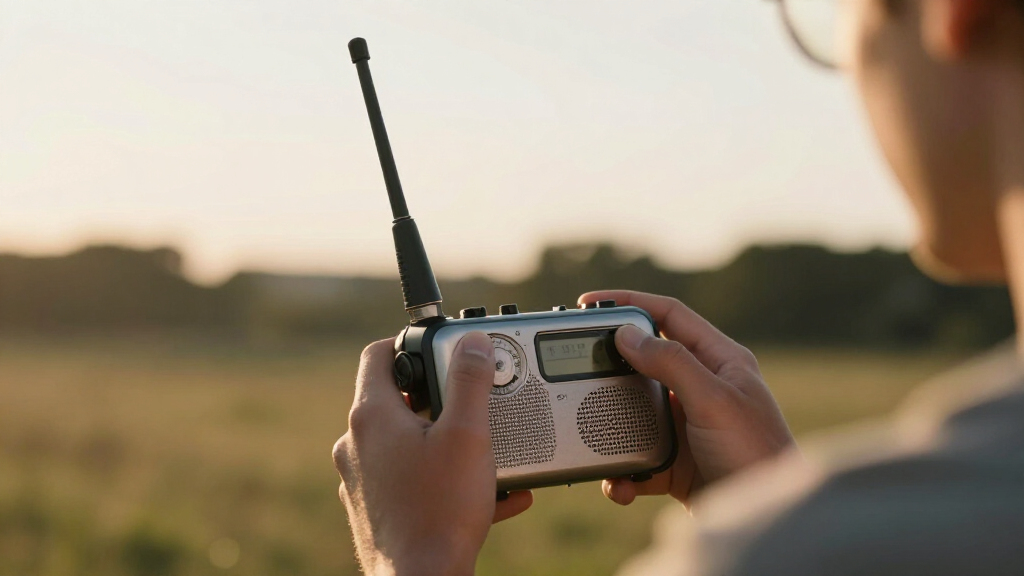
digital shortwave radio with signal visualization
As an affiliate, we earn on qualifying purchases.
As an affiliate, we earn on qualifying purchases.
What Aspects of the AI-Generated Experience Are Still Unclear?
While the platform’s visual and audio synthesis are well-documented, it is not yet clear how much of the underlying AI-driven design process is automated versus manually curated. Details about the specific AI models or algorithms used remain undisclosed, and the extent of AI’s role in dynamically generating content versus preset scripting is still emerging. Additionally, the long-term scalability and potential for user customization are areas that have not been fully explored or disclosed.
web-based shortwave radio receiver
As an affiliate, we earn on qualifying purchases.
As an affiliate, we earn on qualifying purchases.
Future Developments and Expanding AI-Driven Digital Heritage
Next steps likely include expanding the platform’s interactivity, possibly adding user-modifiable signals or more complex signal decoding features. Developers may also explore integrating more AI models to generate even richer audio-visual content or to simulate different vintage radio environments. Further, the project may serve as a prototype for broader applications in digital heritage preservation, educational tools, and interactive media, potentially inspiring similar AI-driven reconstructions of other historical technologies.
interactive vintage radio simulation
As an affiliate, we earn on qualifying purchases.
As an affiliate, we earn on qualifying purchases.
Key Questions
How does the AI generate the sounds and visuals on Station 36?
The platform uses Web Audio API to synthesize authentic radio sounds like static hiss, heterodyne whistles, and Morse code bursts, synchronized with spectral visualizations. The visual interface is built with SVG and JavaScript, designed to mimic vintage hardware, with AI assisting in creating detailed, realistic controls and signals.
Can users tune into actual radio signals or is this purely simulated?
This experience is a simulated reconstruction, designed to evoke the tactile and auditory experience of vintage shortwave listening. It does not connect to real radio signals but uses AI-generated audio and visuals to create an authentic feel.
Is the platform accessible on all devices?
The platform is optimized for desktop browsers with at least 390px width, supporting high-quality rendering at 834px and 1440px. It emphasizes accessibility with focus-visible styles and large tap targets, but detailed mobile compatibility has not been explicitly confirmed.
What role did AI play in designing this platform?
AI was responsible for generating the detailed visual design, interactive controls, and audio synthesis, enabling a highly realistic and immersive vintage radio environment entirely through code, without external assets or dependencies.
Will there be more similar AI-crafted web projects?
Yes, the platform is part of a series of 175 AI-designed websites exploring different historical and technological themes, indicating ongoing development and expansion in this creative approach.
Source: ThorstenMeyerAI.com
Fall yard work Picks
leaf blowers
As an affiliate, we earn on qualifying purchases.