
TL;DR

Get the latest gadgets delivered free — and shop member deals
- Fast, free delivery on millions of items
- Access to Prime Big Deal Days deals on October 6–7
- Prime Video, Amazon Music and more included
Wall Street now views Micron as a potential successor to Nvidia in the AI chip market, driven by its recent stock surge and strategic supply deals. The company’s long-term outlook hinges on sustained demand for memory chips amid ongoing shortages.
Wall Street has begun to see Micron, the Boise-based memory chip maker, as a potential successor to Nvidia in the AI hardware market, driven by its recent surge in valuation and strategic long-term supply agreements. This shift in perception highlights Micron’s rising prominence amid a global AI-driven memory shortage that has significantly boosted demand for DRAM and NAND chips.
Micron’s market capitalization briefly surpassed that of Meta and Tesla last week, reaching nearly $1.27 trillion, as its stock soared over 236% in the past month. The company’s recent earnings report showed quadrupled revenue to $41.45 billion and profits jumping from $1.88 billion to $28.2 billion. Micron’s positive outlook for the upcoming quarter, with revenue estimates between $49 billion and $51 billion, has fueled investor enthusiasm.
Wall Street analysts point to Micron’s strategic long-term supply agreements with major AI and data center clients, including Nvidia, Microsoft, Amazon AWS, Google, Meta, and Oracle, as key to its future growth. These contracts, along with the persistent AI chip shortage dubbed ‘RAMageddon,’ are seen as providing a durable revenue stream. However, the company’s ability to sustain this growth depends on the continuation of high demand and limited supply, as building new manufacturing capacity is costly and time-consuming.
Implications of Micron’s Market Valuation Surge
The recent surge in Micron’s valuation reflects a broader investor belief that memory chips will become a critical component of AI infrastructure, similar to Nvidia’s dominance in GPUs. If Micron can maintain its supply agreements and leverage the ongoing AI data center expansion, it could establish itself as a long-term leader in the memory chip sector. This shift could reshape the competitive landscape for memory manufacturers and influence the pricing and availability of AI hardware and consumer electronics.
As an affiliate, we earn on qualifying purchases.
Memory Chip Market and AI Demand Trends
Historically, memory chip makers like Micron faced cyclical demand, with capacity expansion often leading to oversupply and falling prices. However, the current AI boom has created a sustained shortage of high-performance memory, especially HBM used in AI servers. The shortage, dubbed ‘RAMageddon,’ is expected to persist into 2027, supporting higher prices and revenues for companies like Micron. The company’s recent focus on long-term supply contracts aims to mitigate the risks of demand fluctuations and capacity oversupply.
“Demand growth continues to outpace new capacity, supporting a favorable environment for memory prices and supplier revenues.”
— an anonymous researcher
As an affiliate, we earn on qualifying purchases.
Uncertainties Surrounding Micron’s Long-Term Growth
It remains unclear whether Micron can sustain its rapid growth once the current AI-driven demand peaks or if a supply glut will eventually develop, similar to past cycles. The company’s ability to expand manufacturing capacity quickly enough to meet demand without causing oversupply is also uncertain. Additionally, the longevity of the AI chip shortage and whether other competitors will emerge as significant players are still unknown factors.
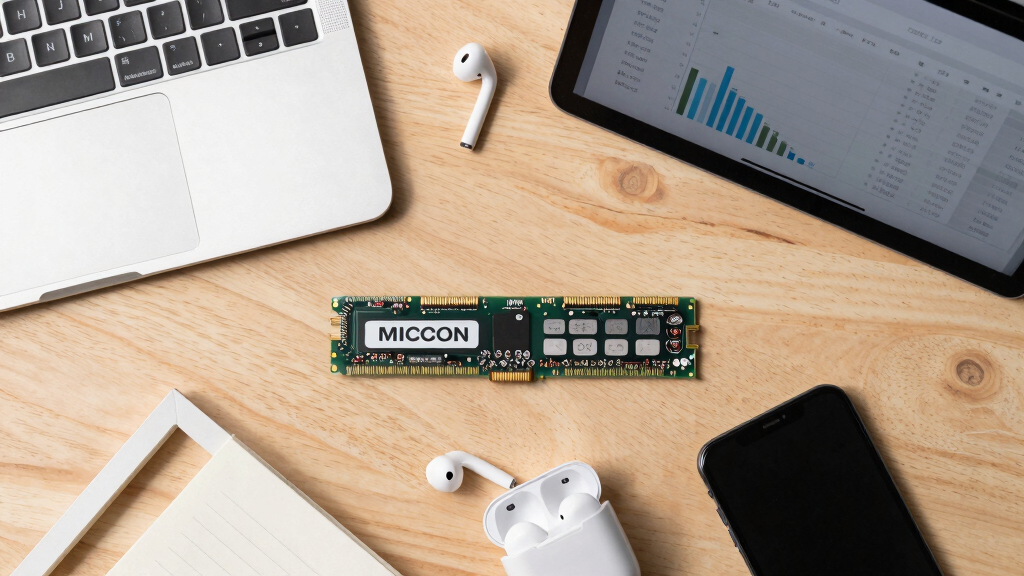
high performance memory modules for data centers
As an affiliate, we earn on qualifying purchases.
As an affiliate, we earn on qualifying purchases.
Upcoming Developments and Market Monitoring
Investors and industry watchers will be closely monitoring Micron’s upcoming quarterly earnings, new supply contract announcements, and capacity expansion plans. The company’s ability to maintain or grow its market share amid evolving AI hardware demands will determine whether it can truly emulate Nvidia’s success in the long term. Further analysis of supply chain developments and demand trends will be crucial in the coming months.
As an affiliate, we earn on qualifying purchases.
Key Questions
Why is Wall Street comparing Micron to Nvidia?
Because of Micron’s recent valuation surge, strategic long-term supply agreements with major AI and data center clients, and the ongoing AI memory shortage, analysts see potential for Micron to become a key player in AI hardware, similar to Nvidia’s role in GPUs.
What is ‘RAMageddon’?
‘RAMageddon’ refers to the current global shortage of high-performance memory chips used in AI servers and data centers, which is driving prices higher and supporting companies like Micron.
Can Micron sustain its growth long-term?
It is uncertain. Micron’s future growth depends on continued demand for AI memory, its ability to expand manufacturing capacity efficiently, and the stability of the AI chip market. Market conditions could change, impacting its long-term prospects.
What risks does Micron face?
Risks include potential oversupply if demand wanes, delays or costs associated with capacity expansion, and competition from other memory chip manufacturers or new entrants in the AI hardware space.
What is the significance of Micron’s recent earnings report?
Micron’s earnings showed a quadrupling of revenue and a significant profit increase, reinforcing investor confidence and supporting the view that the company is well-positioned in the current AI-driven memory market.
Source: TechCrunch
Fall Picks
fall essentials
As an affiliate, we earn on qualifying purchases.