
📊 Full opportunity report: DDR5 Now, DDR6 Soon: A Buyer’s Field Guide on ThorstenMeyerAI.com — validation score, market gap, and execution plan.

Get the latest gadgets delivered free with Prime
- Fast, free delivery on millions of items
- Prime Video, Amazon Music and more included
- Member-only deals all year
TL;DR
DDR5 remains the recommended memory standard for 2026, with DDR6 not expected to be mainstream until 2027-2030. Buyers should prioritize current DDR5 options over waiting or investing in DDR4 or early DDR6.
DDR5 memory remains the primary choice for mainstream builds in 2026, with no immediate benefit in waiting for DDR6, which is still in development and not yet available for consumer desktops.
Manufacturers and industry forecasts agree that DDR5-6000 with CL30 timings offers the best value for most users, balancing speed and cost. DDR5-8000 modules are generally unnecessary for gaming or typical workloads, as they provide minimal real-world gains.
Prices for DDR5 have remained high, with forecasts indicating that significant price relief is unlikely before 2028. Meanwhile, DDR4 is effectively phased out, with current costs comparable to DDR5, making it a poor investment for new builds. DDR6, on the other hand, is not yet ready for mainstream adoption, with initial launches limited to enterprise and AI applications around 2026–27, and consumer availability not expected until 2027 or later. DDR6 modules will require new CPUs, chipsets, and physical modules (CAMM2), with no backward compatibility.
DDR5 now, DDR6 soon
A buyer’s field guide. The 20-year instinct — wait for prices to drop, or wait for the next generation — is broken this cycle. Buy the DDR5 you actually need now; don’t wait for DDR6. Here’s the reasoning.
Driven to end-of-life, production slashed. Same money, dead-end socket. Leave a working DDR4 box alone — but never start a new build on DDR4 to “save.”
A framework, not a gamble. Buy the DDR5 you need now, at the sweet spot, in the capacity you’ll actually use — don’t buy DDR4, don’t wait for DDR6. The two costliest mistakes in this market are the ones that feel prudent: waiting for a price drop that isn’t coming, and waiting for a next-gen part that launches dearer than what’s on the shelf. Next: The SSD Squeeze.
The Impact of DDR5 and DDR6 on PC Building Strategies
For consumers, understanding the current and near-future memory landscape is essential to avoid overpaying or delaying upgrades unnecessarily. Buying DDR5 now ensures compatibility, performance, and cost-effectiveness, while waiting for DDR6 could mean missing out on platform improvements and facing higher costs when it finally arrives. The phased rollout of DDR6 means most users should plan to adopt it only in the long term, around 2027 or later, especially for specialized workloads.
As an affiliate, we earn on qualifying purchases.
Memory Market Trends and Development Timelines
Historically, new memory standards like DDR4 and DDR5 have followed a slow adoption curve, with DDR4 taking about four years from launch to mainstream ubiquity. DDR5 was introduced in 2021, but high prices and limited supply have persisted into 2026. Industry forecasts suggest DDR6 will debut in enterprise settings first, with consumer platforms catching up around 2027–28. The transition involves significant hardware changes, including new physical modules (CAMM2) and chipsets, which delay widespread adoption.
“DDR6 will offer significant bandwidth improvements, but early modules will be expensive and limited in capacity, making it unsuitable for most users in 2027.”
— Major memory manufacturer spokesperson
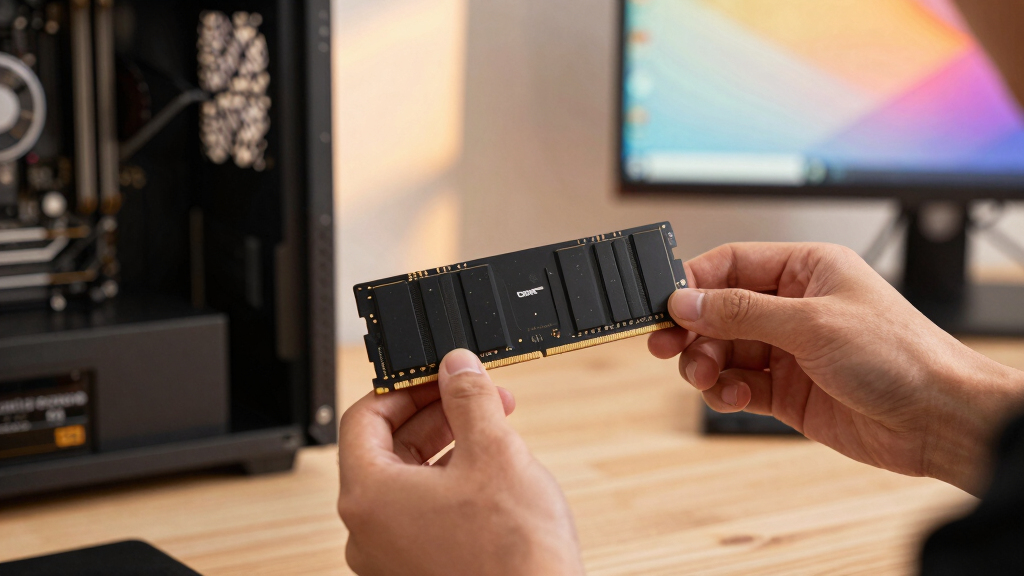
high performance DDR5 memory for gaming
As an affiliate, we earn on qualifying purchases.
As an affiliate, we earn on qualifying purchases.
Unresolved Questions About DDR6 Adoption and Performance
It is still unclear when DDR6 modules will become affordable and widely available for mainstream desktops. The exact timeline for motherboard compatibility, pricing, and capacity options remains uncertain, as does the real-world performance benefit for typical consumer workloads. Additionally, the impact of DDR6 on gaming performance is expected to be minimal, but concrete benchmarks are not yet available.
As an affiliate, we earn on qualifying purchases.
Upcoming Milestones for DDR5 and DDR6 Deployment
Consumers should monitor JEDEC standards for DDR6 adoption, as well as announcements from motherboard manufacturers regarding compatible platforms. The first DDR6 modules and compatible CPUs are expected to appear in late 2026 or early 2027, with broader availability and price reductions likely delayed until 2028 or later. For now, the focus should remain on DDR5-6000 modules and appropriate capacity planning for upcoming builds.
As an affiliate, we earn on qualifying purchases.
Key Questions
Should I buy DDR4 memory in 2026?
No. DDR4 is effectively phased out, and new builds should prioritize DDR5 to ensure future compatibility and performance, as DDR4 modules are now similarly priced or more expensive than DDR5.
Is DDR6 worth waiting for in 2026?
Most users should not wait for DDR6, as it will be expensive, limited in capacity, and not significantly beneficial for gaming or general workloads until at least 2027–28.
What DDR5 configuration offers the best value?
DDR5-6000 with CL30 timings remains the recommended sweet spot for most users, balancing speed, latency, and cost-effectiveness.
Will DDR6 be compatible with current platforms?
No. DDR6 will require new CPUs, chipsets, and modules (CAMM2), and will not be backward compatible with DDR5 or DDR4 motherboards.
When can I expect DDR6 to become mainstream?
Most likely around 2028 or later, after initial enterprise and server deployments in 2026–27, with consumer adoption possibly starting in 2027.
Source: ThorstenMeyerAI.com
Fall Picks
fall essentials
As an affiliate, we earn on qualifying purchases.