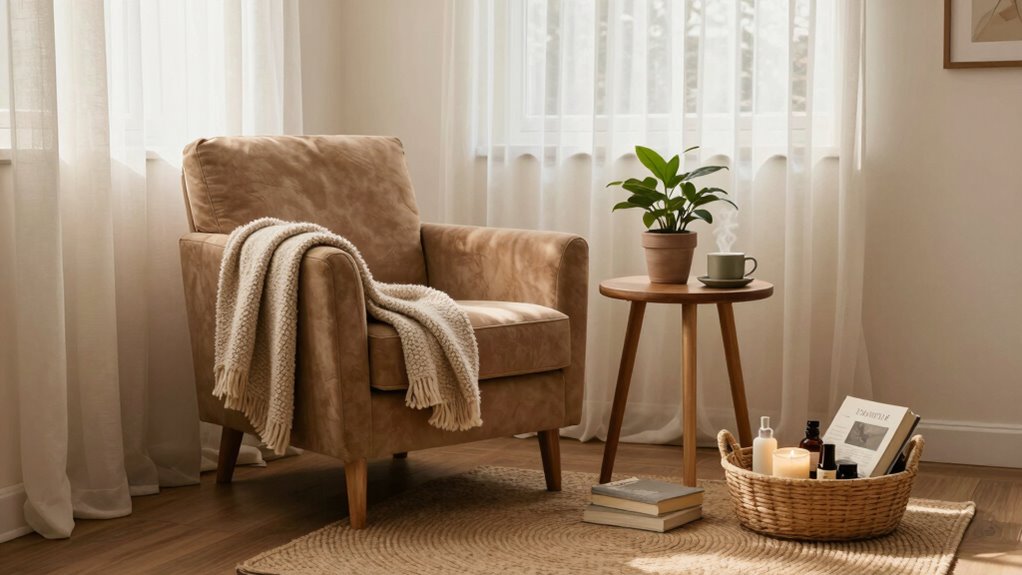

To build a simple recovery corner at home without overcomplicating things, choose a quiet, cozy spot and keep it minimal. Add a comfortable chair, your favorite calming objects, or inspiring decor that makes you feel safe. Use vertical storage to avoid clutter and incorporate calming sounds or scents. Keep it clean and adjustable as your needs change. To learn how to make this space truly effective and personalized, keep exploring more tips and ideas.
Key Takeaways
- Select a quiet, small space with minimal distractions to keep the setup simple and effective.
- Use a few meaningful decor items and functional furniture to create a cozy, personalized atmosphere.
- Incorporate vertical storage and wall-mounted shelves to maximize space and reduce clutter.
- Focus on essential elements like calming scents, soft blankets, or soothing sounds to enhance relaxation.
- Regularly update and declutter the space to maintain its calming, accessible, and personalized nature.
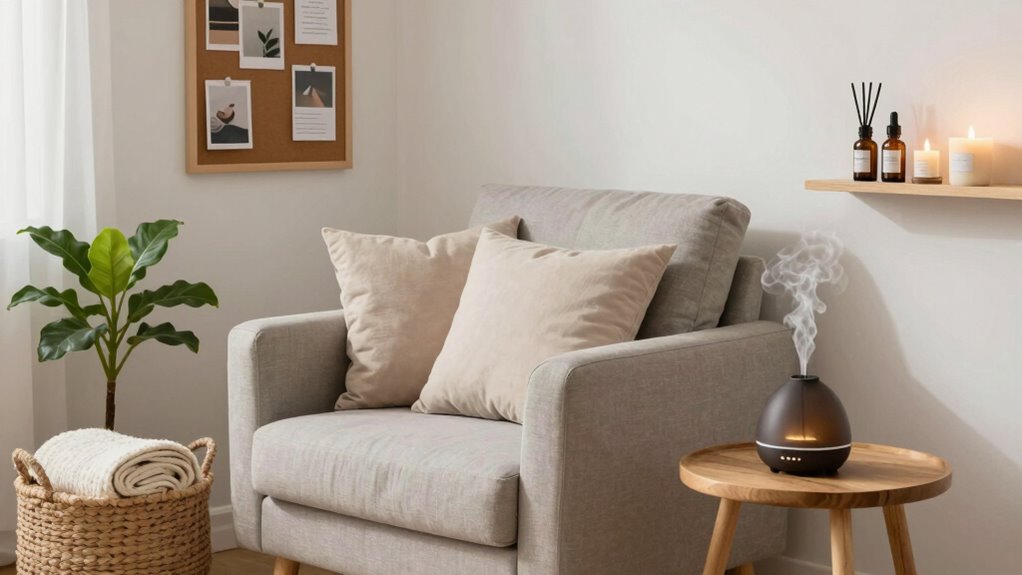
Creating a recovery corner at home can be a powerful step toward supporting your mental and emotional well-being. You don’t need to turn your entire space upside down or invest in elaborate furniture to make it effective. Instead, focus on creating a simple, personalized area that feels safe and restorative. Personalizing your decor is key—choose items that bring you comfort, inspiration, or calm. This could be a cozy chair, a small bookshelf with your favorite books, calming artwork, or meaningful objects that evoke positive feelings. Keep it minimal but intentional, so every piece serves a purpose in helping you relax or reset.
Create a simple, personalized space with meaningful items to promote calm and emotional well-being at home.
Space optimization is also essential. You want your recovery corner to feel inviting without clutter. Find a quiet corner or a small nook where you won’t be easily disturbed. You don’t need a large area—just enough room for a comfortable seat and a few essentials. Use vertical space for storage or decor to maximize the limited area. For example, wall-mounted shelves can hold calming candles, plants, or journals, freeing up surface space. Keep the materials and decor simple, avoiding overwhelming the senses. The goal is to create a sanctuary that’s easy to maintain and inviting every time you step into it.
Building a recovery corner doesn’t have to be complicated. Start by selecting a spot that feels naturally peaceful or private. Then, gather a few items that make you feel good—whether that’s soft blankets, a diffuser with relaxing scents, or a playlist of calming sounds. Incorporate personalized decor that resonates with you—photos, artwork, or objects that remind you of positive moments. Use space optimization strategies like multi-purpose furniture or vertical storage to keep the area uncluttered. Remember, the key is to keep it simple and functional. You want your recovery corner to be an accessible retreat, not a source of stress.
Finally, make it your own. Adjust the decor and arrangements over time so it continues to serve your needs. A recovery corner is not a one-size-fits-all solution; it’s a reflection of what helps you feel grounded and calm. Keep it clean, cozy, and personalized, and it will become a go-to space for moments of self-care. When you prioritize space optimization and personalized decor, you create a meaningful retreat that supports your mental and emotional health without overcomplicating the process.
As an affiliate, we earn on qualifying purchases.
Frequently Asked Questions
How Much Space Do I Need for a Recovery Corner?
You only need a small, cozy space—about 3×3 feet—to create a recovery corner. Use decorative accessories to personalize it, like plants or calming artwork, and choose soft lighting options such as lamps or fairy lights for a relaxing atmosphere. This compact setup doesn’t require much room but offers a peaceful retreat. Keep it simple and functional, making sure you have enough space to sit comfortably and enjoy your calming environment.
Can I Personalize My Recovery Corner With Specific Items?
Absolutely, you can personalize your recovery corner with specific items. Picture cozy cushions, calming art, or custom accessories that make the space uniquely yours. Personalized decor helps create a soothing environment tailored to your preferences, making recovery more inviting. Feel free to add meaningful objects or colors that lift your spirits. Custom accessories allow you to craft a space that feels comfortable, encouraging regular use and faster healing.
What Budget Should I Plan for Setting up a Recovery Corner?
You should plan around $50 to $150 for setting up your recovery corner. This budget covers essentials like medication organization items, cozy seating, and aromatherapy options such as diffusers and essential oils. Prioritize your needs first, then add personalized touches gradually. Keeping it simple and budget-friendly guarantees your space remains functional and relaxing, without overcomplicating your recovery environment.
How Often Should I Update or Change the Items in My Recovery Corner?
You should update your recovery corner every few months to keep it fresh and functional. For example, after a month of use, you might add new decorative accents like calming artwork or replace worn-out items. Regularly review your storage solutions to guarantee essentials stay organized and accessible. This keeps the space inviting and effective, helping you stay motivated and comfortable during recovery.
Are There Any Safety Considerations to Keep in Mind?
Yes, safety is essential in your recovery corner. You should include safety equipment like fire extinguishers, first aid kits, and emergency preparedness items. Make certain pathways are clear and items are securely stored to prevent accidents. Regularly check and maintain safety equipment, and keep emergency contact info visible. Being proactive guarantees your recovery space remains safe and ready for any situation, giving you peace of mind during your recovery process.
As an affiliate, we earn on qualifying purchases.
Conclusion
Creating a recovery corner at home isn’t about fancy equipment or perfect space—it’s about making a sanctuary for yourself. Think of it as your personal retreat, a simple haven amid daily chaos. Just as a small garden can flourish with care, so can your well-being in this cozy corner. It’s a quiet place where you can pause and recharge, proving that sometimes, the simplest setups are the most powerful. Your path to recovery starts with this small, meaningful step.
As an affiliate, we earn on qualifying purchases.
As an affiliate, we earn on qualifying purchases.