
Many creatives turn their anxiety into inspiring art, using it as a powerful tool for healing and self-expression. They transform painful emotions into visual, musical, or written works that reveal personal resilience and foster emotional awareness. Through mindfulness and authentic creation, they let go of perfection, allowing their inner struggles to inspire meaningful art. Exploring their journeys can show you that turning pain into inspiration is possible—if you keep exploring, you’ll find more ways to channel your own emotions.
Key Takeaways
- Many artists channel their anxiety into visual, musical, or written art, turning emotional distress into inspiring creations.
- Creative outlets serve as safe spaces for processing pain, fostering emotional resilience and self-awareness.
- Mindfulness techniques enhance artistic expression, helping artists stay present and reduce overwhelming feelings.
- Art becomes a powerful tool for confronting fears, promoting healing, and transforming raw pain into meaningful inspiration.
- Regular artistic practice combined with self-compassion supports emotional growth and turns anxiety into a source of strength.

Anxiety can feel overwhelming, but many people are discovering that turning their nervous energy into art offers a powerful way to cope. When you channel your feelings into creative pursuits, you create more than just a visual or musical piece—you forge a pathway to understanding and managing your emotions. One effective approach is using mindfulness techniques to ground yourself in the present moment. Before you start creating, take a few deep breaths, focus on the sensations around you, and let go of racing thoughts. This helps calm your mind and allows your emotions to surface without judgment, making your art a true expressive outlet. Instead of suppressing anxiety, you embrace it, transforming that raw energy into something tangible and meaningful.
Transform anxiety into art through mindfulness—calm your mind, embrace emotions, and create a meaningful, expressive outlet.
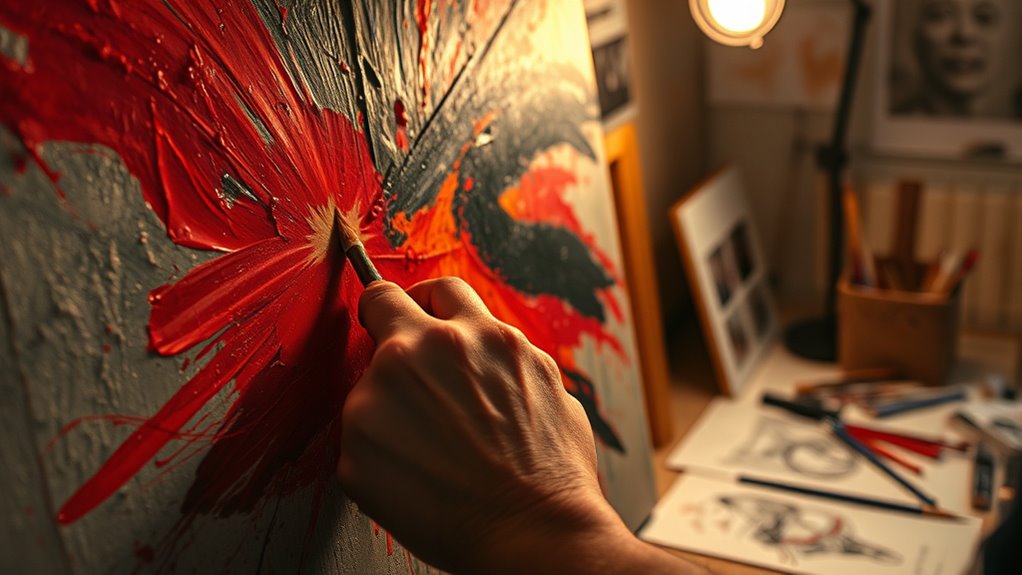
As you engage in artistic expression, you begin to see your emotions from a different perspective. Whether you’re painting, drawing, writing, or playing music, these activities serve as expressive outlets that help articulate feelings words often can’t capture. Your art becomes a mirror reflecting your inner landscape, enabling you to confront fears or sadness in a safe, controlled way. This process doesn’t require perfection—it’s about authenticity and release. Over time, you may notice that your creations not only reduce anxiety but also provide insights into your emotional patterns, fostering self-awareness and resilience.
Incorporating mindfulness techniques into your artistic process amplifies the benefits. For example, you might set aside dedicated time to focus solely on the act of creating, paying attention to textures, colors, sounds, or movements without distraction. This mindful approach helps you stay present, preventing anxiety from spiraling out of control. It also encourages patience and self-compassion, reminding you that art isn’t about producing a masterpiece but about expressing yourself truthfully. The combination of mindfulness and expressive outlets transforms your anxiety from an uncontrollable force into a source of inspiration and healing.
You’ll find that turning anxiety into art isn’t just about distraction; it’s about transformation. Each brushstroke or note becomes a step toward emotional clarity and empowerment. Over time, this practice can evolve into a valuable tool for managing stress and fostering a deeper connection with yourself. By making art a regular part of your coping strategy, you’re not only easing immediate tension but also building resilience for future challenges. Remember, your creative process is uniquely yours—embrace it as a powerful means to turn pain into inspiration and anxiety into growth. Additionally, engaging in creative activities like color accuracy can help you better express your emotional state through visual means.

Anxiety Relief Coloring Book for Adults: Mindfulness Coloring to Soothe Anxiety
As an affiliate, we earn on qualifying purchases.
As an affiliate, we earn on qualifying purchases.
Frequently Asked Questions
How Can Artists Safely Explore Their Anxiety Through Art?
You can safely explore your anxiety through art by practicing mindful techniques, like deep breathing and grounding exercises, before starting. Set emotional boundaries by knowing your limits and taking breaks when needed. Use these practices to stay connected to your feelings without becoming overwhelmed. Remember, art is a personal process; prioritize your well-being and allow yourself to express honestly while maintaining a safe, balanced approach.
What Are Common Challenges Creatives Face When Turning Pain Into Art?
You might feel like you’re battling an endless storm, facing emotional vulnerability and creative blockages when turning pain into art. These challenges can make it tough to express your truth without fear of judgment or feeling overwhelmed. You may struggle to channel your feelings productively or worry that your work isn’t good enough. Overcoming these hurdles requires patience, self-compassion, and a commitment to embracing vulnerability as a crucial part of your creative process.
Can Anxiety-Driven Art Be Commercially Successful?
Yes, your anxiety-driven art can achieve commercial success if you balance authenticity with appeal. When you stay true to your emotional truth, your work resonates deeply, attracting audiences who value genuine expression. By marketing your art thoughtfully and connecting with the right communities, you enhance its commercial potential without sacrificing artistic authenticity. Ultimately, embracing your vulnerability can create powerful, marketable pieces that both inspire and succeed financially.
How Does Transforming Anxiety Impact Mental Health Long-Term?
Transforming anxiety through art can boost your emotional resilience and self-awareness over time. Studies show that creative expression reduces symptoms of anxiety and depression by 25%, helping you build healthier coping skills. When you channel your anxiety into art, you develop a deeper understanding of your emotions, which supports long-term mental health. This process fosters resilience, allowing you to face future challenges with greater strength and clarity.
Are There Specific Art Forms More Effective for Anxiety Expression?
You might find that abstract techniques and visual symbolism are especially effective for expressing anxiety. Abstract art allows you to channel complex feelings into shapes and colors, making it easier to process emotions. Visual symbolism helps you convey deeper meanings and personal struggles subtly. Using these art forms, you can transform anxiety into a creative outlet, promoting emotional release and long-term mental health benefits.

Guided Art Therapy Card Deck: 75 Activities to Explore Your Feelings and Manage Your Emotional Well-Being
As an affiliate, we earn on qualifying purchases.
As an affiliate, we earn on qualifying purchases.
Conclusion
By channeling your anxiety into art, you transform a storm inside you into a beautiful masterpiece. Just like a butterfly emerges from a cocoon, your pain can become a source of inspiration and growth. Remember, your creativity is a powerful tool to turn struggles into something meaningful. Embrace the process, and watch how your art not only heals you but also helps others see the strength within their own challenges.

ZTJ Mini Rain Drum for Outside – 3-Inch 6-Note Steel Tongue Drum, Garden Chime Percussion Instrument with Mallets & Bag, Meditation Tools for Yoga, Stress Relief for Office(Black)
【Mini Size, Real Sound – Take It Anywhere】Only 3 inches wide, this palm-sized steel tongue drum brings a…
As an affiliate, we earn on qualifying purchases.
As an affiliate, we earn on qualifying purchases.

Tizzer Note to Self Mental Health Self Care Self Love Lined Hardcover College Ruled Spiral Notebook Journal for Work Notes Journaling 5.5×8.3 Inch,Mental Health Awareness Gifts
Size & Material: This spiral notebook measures 5.5×8.3 inches and is made of high-quality materials for durability. Its…
As an affiliate, we earn on qualifying purchases.
As an affiliate, we earn on qualifying purchases.