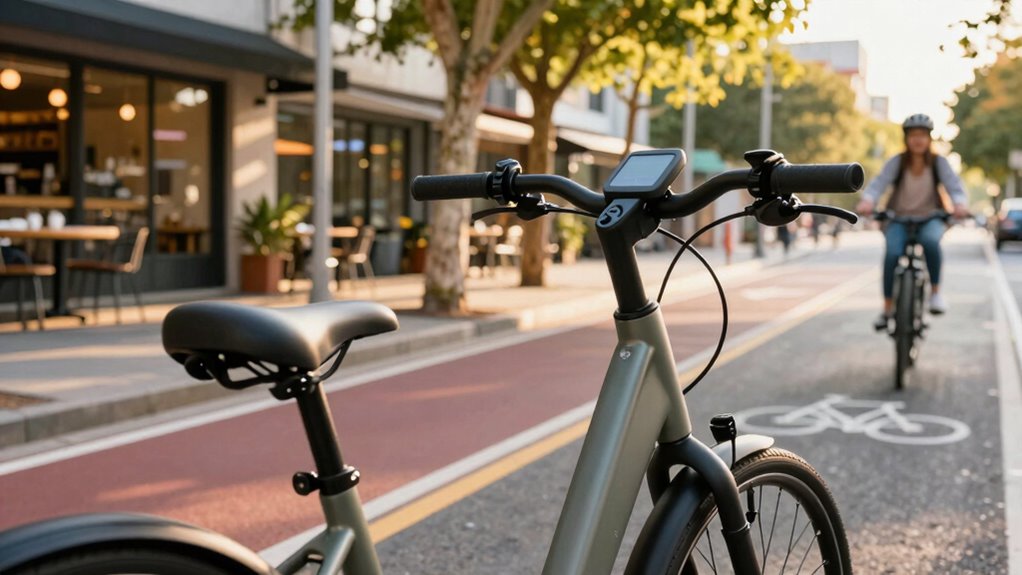

To make e-biking less intimidating, start with familiar, flat routes that you know well. This builds your confidence and helps you conserve battery life, so you don’t feel overwhelmed. Gradually explore new areas once you’re comfortable. Pay attention to your bike’s battery indicator and plan your rides within its range. As you gain experience, you can take on more adventurous routes—keep going, and you’ll discover even more helpful tips along the way.

Get the latest gadgets delivered free with Prime
- Fast, free delivery on millions of items
- Prime Video, Amazon Music and more included
- Member-only deals all year
Key Takeaways
- Start with familiar, flat routes to build confidence before tackling more challenging terrains.
- Plan routes within your e-bike’s battery range, and carry spares or chargers for longer rides.
- Use mapping tools to select terrain-appropriate paths and monitor elevation profiles to conserve battery.
- Gradually increase route difficulty as skills improve, avoiding overwhelming or steep terrains initially.
- Keep an eye on battery levels during rides and adjust routes accordingly for a stress-free experience.
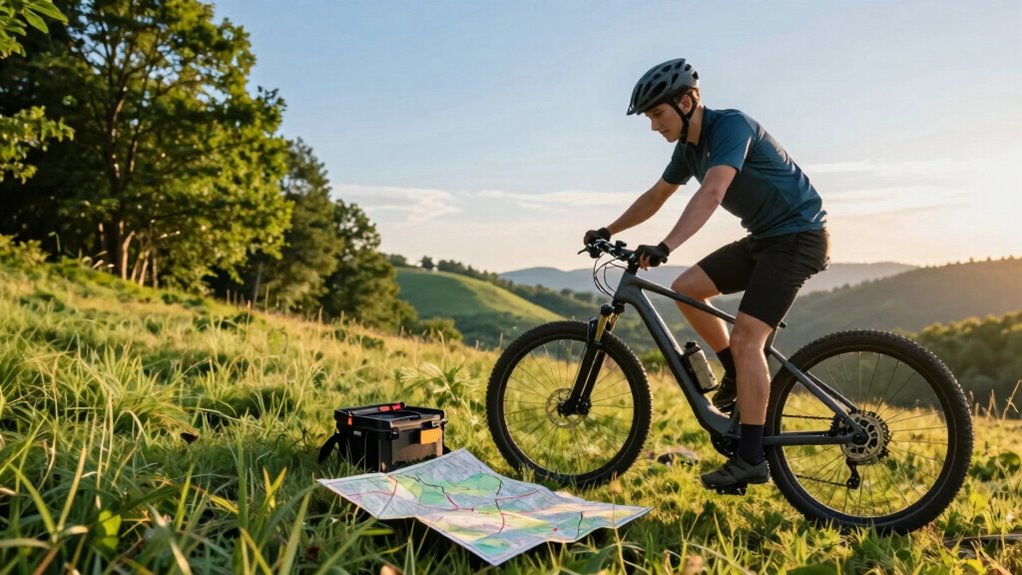
Are you new to e-biking and wondering how to plan your routes effectively? If so, you’re not alone. Many beginners find the idea of navigating unfamiliar terrain intimidating, but a simple trick can make all the difference: start with familiar, manageable routes and gradually expand your horizons. This approach helps you build confidence without feeling overwhelmed. A key factor in your planning should be considering your e-bike’s battery longevity. Knowing how far you can go on a single charge prevents you from getting stranded mid-ride, which can be frustrating and discouraging. Before heading out, check your bike’s battery range and plan routes within that distance, especially if you’re just starting. It’s also smart to carry a portable charger or spare battery if your bike allows it, giving you extra peace of mind on longer rides. Additionally, understanding your e-bike’s power management features can help optimize battery usage and extend your riding distance.
Another important element is terrain adaptation. Different terrains demand different levels of effort from your e-bike and impact battery life. Flat, paved paths typically allow for longer rides with less energy consumption, whereas hilly or rugged trails can deplete your battery faster. When planning, choose routes that match your current skill level and your bike’s capabilities. If you’re just beginning, stick to smoother, flatter routes that let you focus on getting comfortable riding without the added challenge of steep inclines or uneven surfaces. As you gain confidence, you can gradually incorporate more challenging terrains into your plans. Incorporating terrain considerations into your planning can help you better manage your battery life and riding experience. This step-by-step progression helps you avoid overexertion and keeps your rides enjoyable.
Mapping out your routes with these factors in mind makes the whole experience less intimidating. Use apps or online maps that show elevation profiles and terrain types to select routes that suit your experience and your bike’s specifications. Keep an eye on your battery indicator during the ride, and plan for potential stops at charging stations or safe areas where you can rest and recharge if needed. Over time, you’ll learn how different terrains affect your battery life and how to adjust your routes accordingly. Remember, patience is key—each ride is an opportunity to learn more about your e-bike’s capabilities and your comfort zone.
As an affiliate, we earn on qualifying purchases.
Frequently Asked Questions
How Do I Choose the Safest Routes for My E-Bike Adventures?
To choose the safest routes for your e-bike adventures, start by evaluating trail difficulty to match your skill level. Look for scenic routes that offer well-maintained paths and avoid overly technical terrain. Use local maps or bike apps to find beginner-friendly trails, and check reviews for safety tips. Planning ahead ensures you enjoy stunning scenery without unnecessary risks, making your ride both safe and enjoyable.
What Gear Should I Carry for Beginner E-Bike Rides?
You should carry essential gear like a basic bike maintenance kit—think spare tube, pump, and multi-tool—to handle minor issues. Also, pack essentials like water, a snack, a map or GPS, and weather-appropriate clothing. Don’t worry about overpacking; good gear selection boosts your confidence and safety. Being prepared keeps you comfortable and ready for unexpected situations, making your beginner e-bike rides more enjoyable and less stressful.
How Can I Plan Routes With Accessible Rest Stops?
To plan routes with accessible rest stops, start by researching scenic viewpoints and nearby cafes along your intended path. Use mapping apps to identify spots with rest areas, benches, or shaded seating near attractions or eateries. Choose routes that pass through popular parks or town centers, ensuring you’ll find convenient rest stops. This approach helps you recharge comfortably, making your e-bike rides enjoyable and less stressful, especially as a beginner.
Are There Apps That Help With Beginner-Friendly Route Planning?
Yes, there are apps designed for beginner-friendly route planning, like Komoot and Strava, which offer easy navigation and trail options. These apps also include helpful tips on bike maintenance and riding techniques to boost your confidence. By using them, you can find accessible routes, plan rest stops, and learn how to handle your e-bike better, making your rides safer and more enjoyable for beginners.
How Do Weather Conditions Affect E-Bike Route Choices?
Weather considerations play a vital role in your e-bike route choices. Rain, strong winds, or extreme temperatures can impact your safety and comfort. You should opt for routes with good shelter, smooth surfaces, and minimal exposure to the elements during bad weather. Checking the forecast beforehand helps guarantee route safety, allowing you to avoid hazards like slick roads or strong gusts, making your ride safer and more enjoyable.
As an affiliate, we earn on qualifying purchases.
Conclusion
By embracing this simple route-planning trick, you turn formidable rides into confident adventures. Think of it as your trusty map through uncharted territory, guiding you past potential pitfalls and toward smooth sailing. Remember, every journey begins with a single step, and with a clear plan, that first step becomes less intimidating. So, gear up, plan smart, and let your e-bike open doors to new horizons—because the road is yours to explore.
As an affiliate, we earn on qualifying purchases.
mountable phone holder for e-bike
As an affiliate, we earn on qualifying purchases.
As an affiliate, we earn on qualifying purchases.
Halloween Picks
halloween
As an affiliate, we earn on qualifying purchases.