Many fears about OLED burn-in are exaggerated or outdated. Modern OLED screens use advanced pixel management, screen shifting, and software features that substantially reduce the risk of permanent image retention. If you avoid static images and follow simple care tips, burn-in becomes unlikely. While it’s a real phenomenon if misused, myths about inevitable damage are overstated. Want to know the truth about how to protect your OLED display? Keep exploring for the facts.
Key Takeaways
- Modern OLEDs use advanced pixel management and image processing to significantly reduce burn-in risk.
- Image retention is temporary and often fades over time with proper display settings and usage habits.
- Severe burn-in typically requires professional repair; everyday use with caution usually prevents permanent damage.
- Burn-in concerns are often exaggerated; proper care and technology extend OLED lifespan.
- Techniques like screen shift and pixel refreshers effectively mitigate static image effects, debunking many myths.
What Is OLED Burn-In, and Is It a Serious Problem?

Have you ever noticed faint ghost images lingering on your OLED screen after viewing certain content? That’s a sign of image retention, a temporary issue where static images leave a lingering shadow. Unlike traditional burn-in, this isn’t permanent and often fades over time. OLED screens are known for their vibrant colors and excellent color stability, which makes static images more noticeable. Burn-in occurs when static elements, like logos or interface icons, remain on the screen for extended periods, causing uneven pixel wear. While image retention can be unsettling, it’s generally not a serious problem if you vary your content and use your device responsibly. Most of the time, these ghost images disappear, restoring your display’s clarity and color vibrancy. Regularly adjusting your screen brightness and avoiding prolonged static images can help prevent pixel wear, and understanding the nature of OLED technology can guide you in better managing your display’s longevity. Additionally, using features like screen savers or auto-dimming settings can further reduce the risk of image retention, which is often caused by static content remaining on the display for too long. Being aware of display lifespan can help you make informed decisions to prolong your OLED screen’s performance.
How Do Modern OLED Screens Reduce Burn-In Risks?
Modern OLED screens use pixel management techniques to evenly distribute wear and prevent burn-in. Advanced image processing adjusts content dynamically, reducing static images that cause damage. Additionally, usage-driven technology tailors display behavior based on your habits, further lowering burn-in risks. Smart display management techniques help optimize longevity by adapting to different types of content and user patterns. Newer material innovations also contribute to increasing the durability of OLED panels. By incorporating wear leveling algorithms, manufacturers can further extend the lifespan of OLED panels. These innovations are backed by ongoing research into OLED longevity to ensure screens remain vibrant over time.
Screen Pixel Management
To reduce the risk of burn-in, OLED screens employ various pixel management techniques that actively distribute wear across the display. These strategies help prevent pixel degradation and minimize image retention, which can cause ghost images over time. For example, pixel shifting slightly moves static images, reducing prolonged pixel stress. Brightness adjustments lower the intensity of static areas, lessening wear. Additionally, screen savers and auto-dimming features periodically refresh the display. Here’s how these techniques work:
| Technique | Purpose |
|---|---|
| Pixel Shifting | Moves static images subtly to avoid constant wear |
| Brightness Adjustment | Reduces pixel stress on static regions |
| Screen Savers | Prevents static images from remaining fixed too long |
These methods work together to extend OLED lifespan and maintain image quality.
Advanced Image Processing
Advanced image processing techniques play a crucial role in reducing burn-in risks on OLED screens by actively analyzing and adjusting the displayed content in real-time. These systems optimize color accuracy, ensuring that static images don’t cause uneven wear on specific pixels. By dynamically shifting and varying image elements, they help distribute pixel usage evenly, which enhances panel durability. Modern OLED panels incorporate intelligent algorithms that detect repetitive patterns and subtly modify them to prevent burn-in. This continuous adjustment minimizes the risk of long-term image retention without sacrificing visual quality. As a result, your screen maintains vibrant colors and sharpness while extending its lifespan. These innovations demonstrate how advanced image processing protects your device’s display from burn-in, making OLED screens more resilient and reliable over time.
Usage-Driven Technology
Usage-driven technology focuses on how OLED screens adapt their operation based on user habits and display content to minimize burn-in. By intelligently adjusting brightness, shifting pixels, and optimizing color accuracy, these screens reduce the risk of static image persistence. For instance, they may subtly move static elements or reduce their intensity over time, preventing uneven aging of the panel. This approach helps maintain panel longevity by balancing image quality with wear management. Modern OLEDs also incorporate algorithms that monitor usage patterns to optimize pixel refresh cycles, ensuring consistent performance. As a result, you get vibrant colors without sacrificing durability. Additionally, media literacy plays a role in understanding how these technologies work and how to properly care for your device. This dynamic adaptation not only preserves color accuracy but also extends the lifespan of your display, addressing common concerns about burn-in while delivering a high-quality visual experience.
What Causes OLED Burn-In: and How Can You Prevent It?
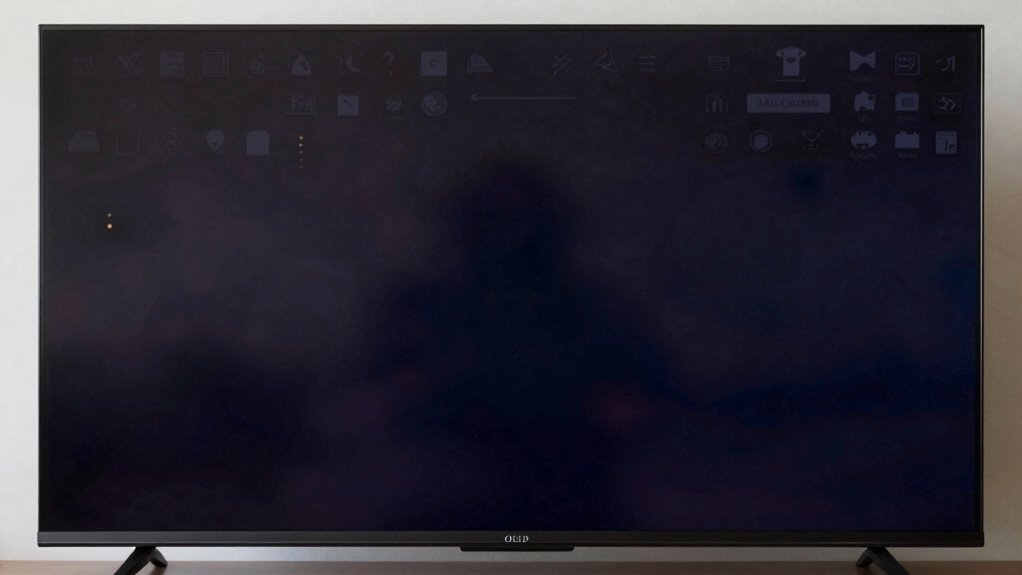
OLED burn-in occurs when static images linger on the screen for long periods, causing certain pixels to wear out faster than others. This uneven wear can affect color accuracy, making images appear faded or ghosted over time. To prevent this, avoid leaving static images, logos, or menus on display for extended periods. Using screen savers and enabling pixel-shifting features can help distribute pixel usage evenly, supporting panel longevity. Adjusting brightness levels and avoiding high contrast images also reduce stress on individual pixels. Regularly changing content and minimizing static elements can substantially decrease burn-in risk. By taking these precautions, you preserve your OLED display’s image quality and extend its lifespan, ensuring vibrant visuals and consistent performance over time.
Can OLED Burn-In Be Reversed or Fixed?

While burn-in can be a persistent issue, it’s often possible to improve or reduce its visible effects through various methods. Image retention, which causes the ghostly afterimages on your screen, isn’t always permanent. Techniques like pixel shifting, screen refreshers, or using built-in software features can help fade or diminish the appearance of burn-in over time. Regular maintenance such as adjusting display settings and enabling screen savers can also contribute to preventing further damage. Additionally, understanding OLED screen technology can help users adopt better practices for screen care. Moreover, some manufacturers implement image retention mitigation features that can temporarily alleviate burn-in effects. However, completely reversing severe burn-in isn’t always achievable, especially if the affected pixels have been damaged long-term. Focus on protecting your screen’s longevity by avoiding static images and using screen savers. While some minor image retention may fade naturally, persistent or deep burn-in might require professional repair or, in worst cases, replacing the display. Prevention remains key to maintaining your OLED’s ideal performance. Understanding image retention and burn-in can empower you to take proactive steps.
Tips to Prevent Burn-In and Extend Your OLED Screen’s Life
To keep your OLED screen looking its best, consider using screen savers that prevent static images from staying too long. Adjusting your brightness levels can also reduce the risk of burn-in and extend your display’s lifespan. Small changes like these make a big difference in preserving your screen’s quality over time. Additionally, understanding OLED burn-in myths can help you avoid unnecessary concerns and take effective steps to protect your display. Being aware of how image retention occurs can help you make informed decisions about your screen usage habits. Regularly updating your device’s software can also help manage display settings effectively, further reducing the risk of burn-in. Recognizing the differences between burn-in and image retention can further aid in proper display care. Moreover, avoiding prolonged static images during extended use can significantly minimize the chance of experiencing OLED damage.
Use Screen Savers
Using screen savers is a simple yet effective way to prevent burn-in and prolong the lifespan of your OLED display. By displaying a static image for extended periods, you risk pixel burn-in, but a well-chosen screen saver can minimize this. Opt for screen savers that incorporate ambient lighting cues, which help reduce eye strain and create a more comfortable viewing experience. Additionally, make sure your device’s color calibration is set correctly; avoiding overly bright or saturated images reduces stress on pixels. Regularly activating a screen saver when you’re not using your device prevents static images from lingering. This simple habit not only protects your screen but also maintains vibrant color quality over time, helping your OLED display stay sharp and healthy longer.
Adjust Brightness Levels
Adjusting your screen’s brightness is one of the most effective ways to prevent burn-in and extend the lifespan of your OLED display. Brightness optimization helps reduce the strain on individual pixels, lowering the risk of uneven aging. Keep the brightness at a comfortable level, avoiding maxed-out settings, especially for long viewing sessions. Contrast adjustment also plays a vital role; lowering contrast can minimize static elements that cause burn-in. Many devices offer auto-brightness features—use them to maintain consistent brightness based on ambient light. Regularly adjusting brightness levels ensures your display remains healthy over time. Additionally, monitoring filter replacement and cleaning can help prevent residual issues that might contribute to uneven pixel wear. By implementing simple brightness and contrast tweaks, you extend your OLED’s longevity while enjoying vibrant visuals without worrying about burn-in.
How Do OLED Burn-In Risks Compare to Other Displays?
OLED burn-in risks are often compared to those of other display technologies, but understanding the differences can help you make informed choices. OLED panels tend to have lower panel longevity compared to LCDs or LEDs, mainly because organic materials degrade more rapidly with prolonged use. However, OLED displays offer superior contrast and color accuracy, making them more durable in terms of display quality over time. While burn-in can occur if static images are left on the screen for extended periods, modern OLEDs incorporate screen shift and pixel refresh features to mitigate this risk. Additionally, the Paint Sprayer Zone techniques used in other industries demonstrate how proper maintenance and technology improvements can extend equipment lifespan. Moreover, advancements in protective display coatings contribute to enhancing OLED durability and resistance to damage. Implementing landscape landscaping strategies, such as strategic placement of elements and shading, can also help reduce static image retention and prolong display lifespan. Research indicates that panel lifespan for OLEDs is continually improving due to ongoing technological innovations. Overall, OLED display durability continues to improve, and for most everyday use, the burn-in risk isn’t markedly higher than that of other display types, especially with proper usage.
Is Burn-In a Concern for Everyday OLED Users? Myths Versus Reality
Many people worry that burn-in will ruin their OLED screens, but for most everyday users, this concern is often exaggerated. Modern OLED panels are designed with techniques that mitigate burn-in risk, making it unlikely you’ll notice significant issues. Your main focus should be maintaining good color accuracy by avoiding static images for extended periods. While burn-in can affect panel lifespan if neglected, typical usage rarely causes problems. Most screens are built to last several years before any noticeable degradation occurs, and smart usage habits can further extend their longevity. For daily tasks like streaming, gaming, or browsing, burn-in isn’t a major concern. Instead, understanding how to optimize your display helps ensure vibrant visuals and a long-lasting screen.
Frequently Asked Questions
How Does Ambient Lighting Affect OLED Burn-In Risk?
Ambient lighting doesn’t directly impact OLED burn-in risk, but it influences your viewer behavior. When you use your screen in well-lit environments, you’re less likely to display static images for long periods, reducing burn-in chances. Conversely, in dim lighting, you might leave static images on longer, increasing risk. Adjust your ambient lighting and be mindful of your viewing habits to help protect your OLED display from burn-in.
Are There Specific Apps or Content Types More Prone to Causing Burn-In?
Certain app types and content exposure can increase your risk of OLED burn-in. Static images like navigation apps, video game HUDs, and news tickers tend to stay on-screen longer, making them more prone to burn-in. If you regularly use these apps or watch content with static elements, be mindful to vary your display or use screen-saving features. This helps prevent the prolonged static exposure that can cause burn-in over time.
Can Screen Savers Fully Prevent OLED Burn-In?
Imagine your screen as a canvas, and screen savers act like gentle brushes that keep your OLED vibrant. While they help with burn-in prevention, they can’t fully eliminate the risk. Using screen savers reduces static image retention, but if you leave a static image for hours, some burn-in may still occur. To best protect your display, combine screen savers with other habits like adjusting brightness and avoiding static images for long periods.
How Does OLED Burn-In Compare to Image Retention on LCDS?
OLED burn-in is more permanent than LCD image retention, which usually fades over time. With OLEDs, you might notice persistent ghost images if you display static content for long periods. To prevent this, you can use pixel shift and vary your usage patterns, reducing the risk of burn-in. LCDs, on the other hand, experience temporary image retention, making them less susceptible to lasting damage.
What Future Innovations Might Eliminate OLED Burn-In Concerns Entirely?
Future innovations like advanced pixel tech and adaptive display algorithms are promising solutions to eliminate OLED burn-in concerns. You might see displays that dynamically adjust pixel usage, preventing static images from causing damage. These technologies will likely make burn-in a thing of the past, ensuring your screens stay vibrant and long-lasting. With continuous research, OLEDs will become even more reliable, giving you worry-free viewing experiences.
Conclusion
So, go ahead and enjoy your OLED screen without fear—after all, burn-in is just a mythical monster lurking in the tech folklore. Keep your display fresh with simple tips, and you’ll be fine. No need to obsess over every pixel, because in reality, OLED burn-in is more myth than menace. Sit back, relax, and watch your favorite shows, knowing you’re not about to turn your shiny new screen into a vintage relic overnight.