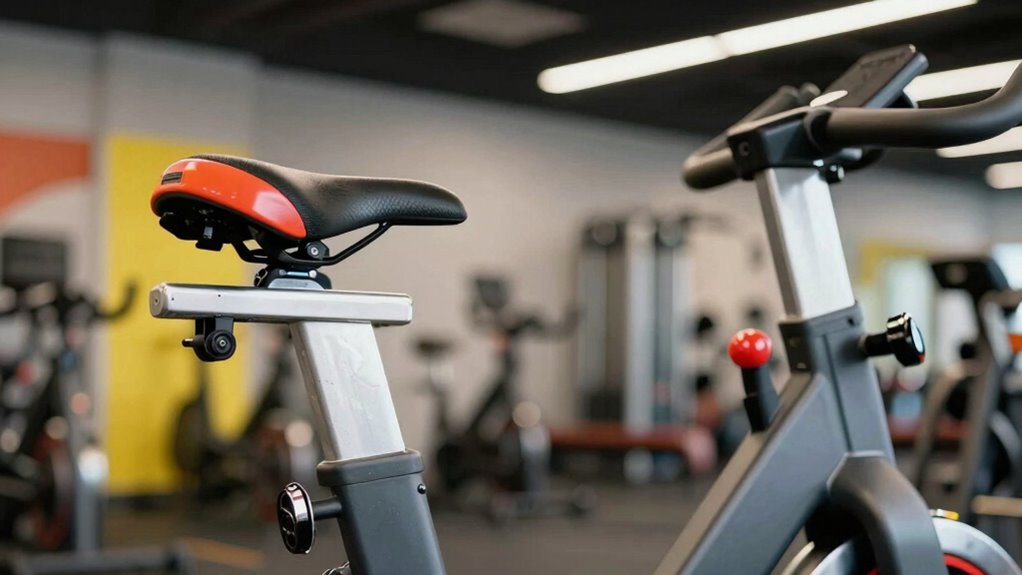

If your spin bike seat isn’t properly adjusted, your workout won’t be effective and could cause discomfort or injury. Make certain your seat height lets your leg extend slightly at the bottom of the pedal stroke, and position the saddle so your knee is above the pedal axle at 3 o’clock. Small tweaks can make a big difference—continuing to improve your setup helps maximize comfort and performance. Keep going to discover how to achieve the perfect fit for your ride.
Key Takeaways
- Proper seat height ensures efficient pedaling and prevents knee strain, maximizing workout benefits.
- Correct fore-aft saddle position maintains balance and reduces discomfort during rides.
- Regularly check saddle angle and position to avoid pressure points and improve comfort.
- Use tools like a level or torque wrench for precise adjustments, ensuring stability and safety.
- Reassess seat setup if experiencing persistent pain, numbness, or instability to prevent injury and enhance performance.
How to Properly Adjust Your Spin Bike Seat Height for Comfort and Efficiency

Adjusting your spin bike seat height correctly is essential for comfort and ideal performance. When done properly, it enhances seat comfort and optimizes cycling ergonomics, reducing strain and preventing injuries. To start, stand next to your bike and set the seat so it’s roughly hip height. Then, sit on the saddle and place your heel on the pedal at the bottom of the pedal stroke; your leg should be straight but not locked. This position ensures your hips stay stable and your knees aren’t overextended. Proper seat height allows you to pedal efficiently while minimizing discomfort. Remember, small adjustments can make a big difference in comfort and performance. Taking the time to get your seat height right ensures a smoother ride and better workout results. Additionally, understanding how ergonomic adjustments impact your cycling experience can help you customize your setup for maximum comfort and efficiency, especially when considering vetted information to optimize your workout. Proper seat positioning is crucial for aligning your body correctly and avoiding unnecessary fatigue, and ensuring the correct saddle height can significantly improve your overall cycling experience.
The Right Seat Position: Fore-Aft Adjustment Tips for Better Cycling Posture
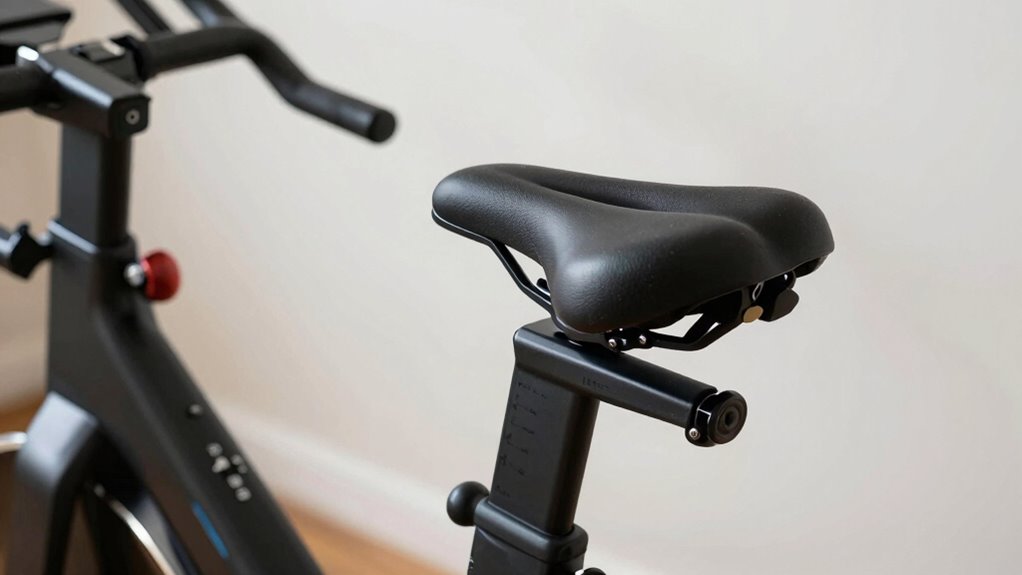
To achieve a comfortable and efficient cycling posture, getting the fore-aft seat position right is essential. Proper adjustment aligns with your cycling biomechanics, ensuring ideal power transfer and reducing strain. Position the saddle so that when you pedal, your knee is directly above the pedal axle at the 3 o’clock position. This setup helps maintain balance and prevents knee pain. Consider saddle materials too; softer materials provide comfort, while firmer options offer better support for sustained rides. Make small adjustments and test your position by riding briefly, paying attention to comfort and movement. Remember, the right fore-aft placement varies based on your body dimensions and riding style. Proper setup enhances your workout, prevents injury, and guarantees you get the most out of every session. Additionally, understanding European cloud innovation can inspire the deployment of smart, connected cycling technology for improved training insights. Incorporating biomechanical principles into your setup can further optimize your cycling efficiency and comfort. Being aware of body alignment can help prevent common cycling injuries and improve overall posture during workouts. For optimal results, consider consulting a cycling biomechanist or professional fitter who can tailor your setup to your specific needs and individual biomechanics. Embracing traditional Indigenous wellness essentials in your approach to health can also promote a holistic understanding of body awareness and movement, complementing biomechanical adjustments.
Common Seat Setup Mistakes That Sabotage Your Workout and How to Avoid Them
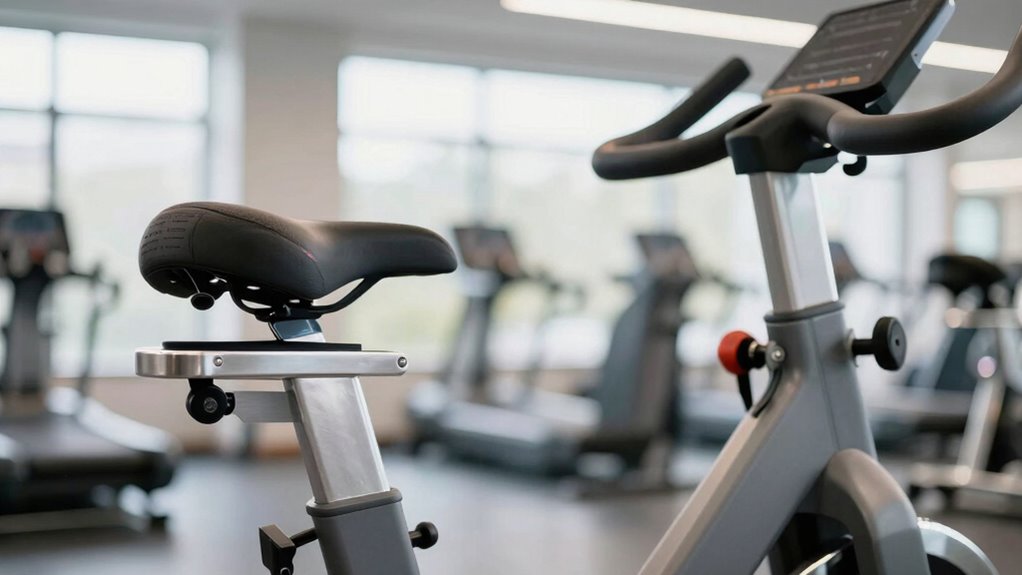
One common seat setup mistake that can sabotage your workout is positioning the saddle too high or too low, which forces your knees into awkward angles and reduces pedaling efficiency. Incorrect saddle height can lead to discomfort and even injury over time. Another mistake involves neglecting the saddle angle; a poorly angled seat can cause pressure points and discomfort, making it hard to stay focused. Many riders also overlook the importance of adjusting the seat cushion’s position for proper support. If the cushion is too soft or too firm, it can lead to pain and fatigue. Avoid these mistakes by ensuring your saddle is at the right height, with a slight downward tilt if needed, and that your seat cushion provides ample support without excessive pressure. Proper setup maximizes comfort and workout effectiveness. Additionally, understanding how to adjust water park amenities can enhance your overall exercise routine, even if indirectly, by promoting better hydration and recovery. Regularly checking your bike’s components and settings can also help prevent discomfort and ensure optimal performance during your workouts.
Tools and Techniques to Fine-Tune Your Spin Bike Seat for Maximum Performance
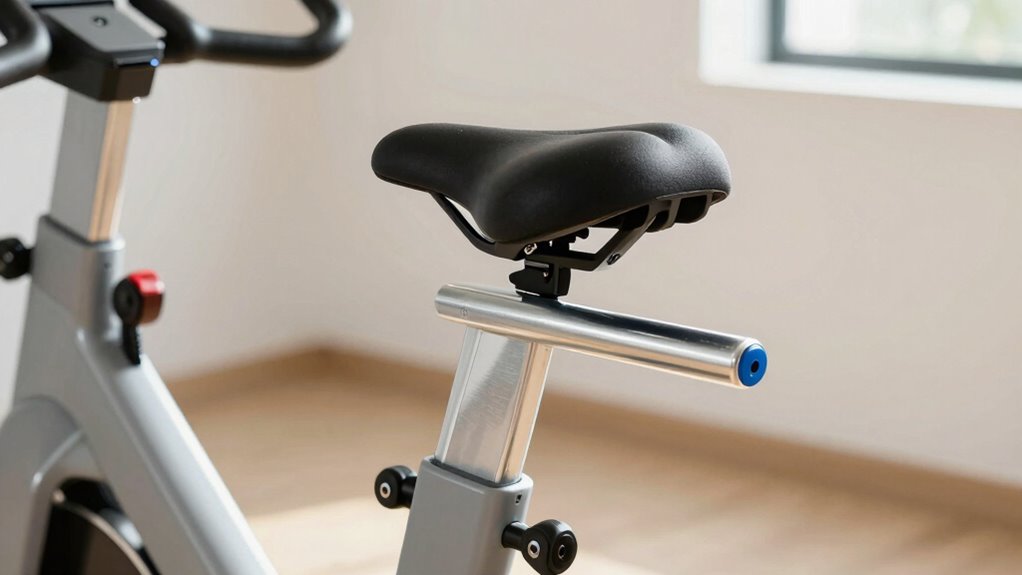
Fine-tuning your spin bike seat for peak performance involves using the right tools and techniques to make precise adjustments. First, use a level or angle indicator to set the saddle angle, ensuring it’s neither too tilted nor flat. Adjust the bike cushion to match your hip width and comfort level, using the saddle height and fore-aft sliders. A torque wrench can help tighten bolts securely without over-tightening. When adjusting the saddle angle, aim for a slight downward tilt to prevent pressure buildup. Check your positioning frequently by sitting on the saddle and ensuring your knee is aligned over the pedal axle. Incorporating proper bike fit techniques can greatly enhance your comfort and effectiveness during rides, especially when considering ergonomic adjustments that support joint health. Regularly fine-tune these settings to maintain comfort and efficiency during every workout, maximizing performance and reducing injury risk. Paying attention to ergonomic adjustments can also help prevent common issues like saddle soreness and numbness, ensuring a more enjoyable ride. Additionally, periodically reassessing your setup can help accommodate changes in flexibility and strength, keeping your cycling posture optimized.
Signs Your Seat Is Wrong and When to Reassess Your Spin Bike Setup
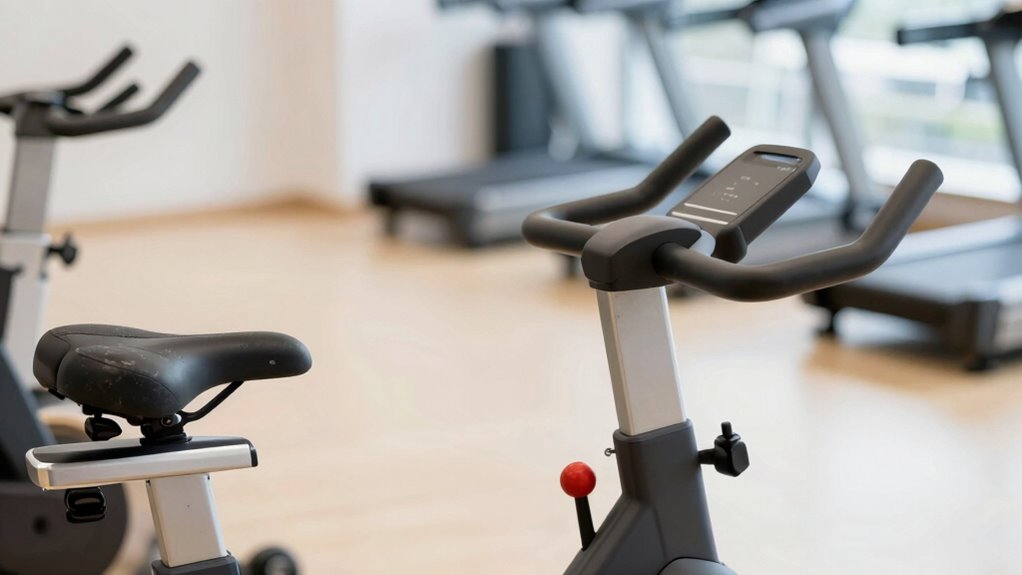
If your spin bike seat isn’t properly aligned or adjusted, it can cause immediate discomfort or lead to longer-term issues. Signs your saddle fit is off include persistent pain in your hips, knees, or lower back, even after warming up. You might notice excessive saddle movement or feeling unstable during rides. Poor bike comfort often results from an improperly positioned seat, which can cause you to shift excessively or feel strained. If you experience numbness or tingling in your groin or thighs, it’s a clear sign you need to reevaluate your setup. Regularly check your saddle height, tilt, and fore-aft position to ensure a proper fit. Reassessing your bike setup helps prevent injury and maximizes performance, making every workout more effective.
Frequently Asked Questions
How Often Should I Recheck My Spin Bike Seat Adjustments?
You should recheck your spin bike seat adjustments every few rides, especially if you notice discomfort or difficulty maintaining ergonomic posture. Regular bike maintenance guarantees your seat is properly aligned, preventing strain and injury. After each workout, take a moment to verify the seat height and position. Frequent checks help you stay comfortable, optimize your workout, and avoid long-term issues with your posture or bike setup.
Can Seat Adjustments Prevent Knee Pain During Cycling?
Yes, adjusting your seat height and saddle position can prevent knee pain during cycling. When your seat is properly set, your knee stays in a comfortable angle throughout the pedal stroke, reducing strain. Make sure your seat height allows a slight bend in your knee at the bottom of the pedal cycle. Proper saddle position also guarantees even weight distribution, preventing unnecessary knee stress and enhancing your overall comfort during rides.
What Are Signs of Poor Seat Alignment Affecting Performance?
You’ll notice poor seat alignment if you experience persistent seat pain or posture issues, which ironically hinder your performance more than overtraining. If your knees ache or your back feels strained, your seat’s position might be off. These signs show your setup isn’t right, and ignoring them could lead to injury. Proper alignment boosts efficiency, comfort, and results—so don’t dismiss those discomforts as just part of the ride.
Is It Necessary to Reconfigure Seat Settings for Different Workouts?
Yes, you should reconfigure seat settings for different workouts to maintain ergonomic posture and optimize performance. Adjusting your seat height and angle guarantees proper leg extension and comfort, preventing strain. For intense sprints, a slightly lower seat might help, while for endurance rides, a higher, more relaxed position could be better. Regularly customizing your seat height and angle keeps your workout effective and reduces the risk of injury.
How Do I Know if My Seat Adjustment Improves My Cycling Efficiency?
If your seat adjustment improves your cycling efficiency, you’ll notice less knee pain, smoother pedaling, and better endurance—no magic tricks needed. When you achieve an ergonomic posture with the right saddle height, your muscles work smarter, not harder. Keep an eye on your form, and if you feel more comfortable and your rides feel less like a chore, congratulations—your adjustments are paying off. If not, maybe your saddle’s still plotting against you.
Conclusion
Remember, a proper spin bike seat setup can boost your performance and prevent injuries, making every workout count. Did you know that improper seat height can reduce power output by up to 20%? So, take the time to adjust your seat correctly—your knees, hips, and overall comfort will thank you. When your setup is right, you’ll ride more efficiently and enjoy your workouts even more. Don’t overlook this key detail; it truly makes all the difference.