

🔍 Read the full analysis: 10 AI Solutions Worth Exploring For 2027 on ThorstenMeyerAI.com

Get the latest gadgets delivered free with Prime
- Fast, free delivery on millions of items
- Prime Video, Amazon Music and more included
- Member-only deals all year
TL;DR
A source article from ThorstenMeyerAI.com compares 10 camera lenses, including versatile zooms, a portrait prime and an ultra-zoom. It does not provide evidence of a 2027 industry development or verify current prices, testing results or future product availability.
ThorstenMeyerAI.com has published a 10-lens buying guide for photographers considering equipment for 2027, comparing models by optical performance, autofocus and value. The article favors the Tamron 28-75mm F/2.8 Di III VXD G2 as its overall pick, while naming the Sony FE 24-70mm F2.8 GM II as a higher-cost option for buyers prioritizing optical performance.
The guide covers several kinds of lenses rather than reporting a product launch or new test results. Its recommendations include standard zooms, a portrait prime, an APS-C zoom and a high-range travel zoom. It argues that buyers should weigh sharpness, autofocus reliability and price against weight and focal-range flexibility.
The source identifies the Tamron 28-75mm G2 as a balance of aperture, portability and cost. It says the Sony GM II offers stronger optical performance but comes with greater weight and expense. These are the guide’s assessments; the supplied material does not include test charts, controlled comparisons or independent verification.
The article also describes constant-aperture f/2.8 zooms as useful for low-light work, and says an APS-C zoom such as the Tamron 17-70mm can provide value for crop-sensor users. It presents the Nikon 28-400mm as a convenience-focused option and the Canon RF 85mm as a portrait lens for background separation. Specific prices and complete specifications are not supplied.
The 10 picks
- 1
 Canon RF 24-70mm F2.8 L IS USM LensView on Amazon →
- 2
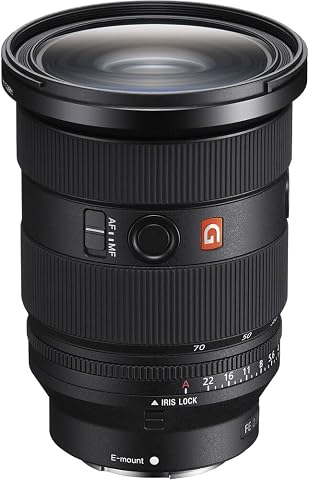 Sony FE 24-70mm F2.8 GM II Full-Frame Zoom LensView on Amazon →
- 3
 Canon RF200-800mm F6.3-9 IS USM LensView on Amazon →
- 4
 Canon RF 24-105mm f/4L IS USM LensView on Amazon →
- 5
 Canon RF 28-70mm f/2.8 IS STM Zoom LensView on Amazon →
- 6
 Nikon NIKKOR Z 28-400mm f/4-8 VR Mirrorless LensView on Amazon →
- 7
 Tamron 28-75mm F/2.8 Di III VXD G2 Zoom Lens for Sony E-MountView on Amazon →
- 8
 Tamron 17-70mm f/2.8 Di III-A VC RXD Zoom Lens for Sony E APS-C CamerasView on Amazon →
- 9
 Canon RF85mm F2 Macro IS STM LensView on Amazon →
- 10
 Canon EF 50mm f/1.8 STM Lens for Canon EOS DSLR CamerasView on Amazon →
How the Picks Fit Different Shoots
The recommendations matter mainly as a purchasing framework, not as evidence that the camera market has changed. They highlight practical tradeoffs: a wide-aperture zoom can reduce lens changes and help in dim conditions, while a prime may be preferable for portraits or a compact kit. A long-range zoom can simplify travel, but the guide acknowledges that convenience may involve optical compromises.
For readers, the immediate value is in matching equipment to a real camera system and shooting style. Mount compatibility, lens weight, stabilization and budget may matter more than a ranking. The source recommends considering native mirrorless lenses for newer systems, but individual compatibility and performance should be checked with the camera manufacturer before purchase.
Products Worth Considering

Bose QuietComfort Ultra Earbuds (2nd Gen), Wireless Noise-Cancelling Earbuds, Black

DJI Mini 4K Drone with 4K UHD Camera, Under 249 g

Apple AirPods Pro 3 Wireless Earbuds with Active Noise Cancellation
As an affiliate, we earn on qualifying purchases.
The Guide’s Selection Criteria
ThorstenMeyerAI.com says it selected lenses using optical performance, autofocus reliability and value. Its stated optical considerations include center and edge sharpness, chromatic aberration and bokeh. Autofocus was considered for speed and accuracy, particularly with moving subjects or in low light.
The article also urges buyers to consider zoom versus prime, aperture, ergonomics and stabilization. Its broader point is that a lens choice depends on the subject and shooting conditions, as well as the camera mount. The source material names ten models in its discussion, but does not provide a complete, independently documented test methodology or enough specification detail to verify every comparison.
What the Source Does Not Verify
The supplied material does not establish that these are the best lenses for 2027, nor does it document a new announcement, market survey or hands-on test date. It gives no publication date, prices, quantified test results or comparison baselines. The claims about relative sharpness, value and autofocus should be read as the source’s judgments, not independently confirmed findings.
Several models are mentioned, but the supplied excerpt does not contain a complete, clearly enumerated list of all ten lenses or detailed evidence for each one. Availability, firmware support and compatibility may also vary by camera body and market. Readers should verify current specifications and prices before buying.
Check Models Before Buying
No follow-up test, product release or update schedule is stated in the source. Photographers considering a purchase can compare the guide’s suggestions with their camera mount, typical subjects and budget, then consult current manufacturer specifications and independent reviews. Current pricing and availability should be checked directly with retailers, since the supplied material does not date those details.
Key Questions
What is the overall lens pick in the guide?
The source names the Tamron 28-75mm F/2.8 Di III VXD G2 as its overall choice, citing its balance of aperture, weight and price. That is the guide’s assessment, not an independently verified ranking.
Which lens does the guide favor for optical performance?
It points to the Sony FE 24-70mm F2.8 GM II for buyers prioritizing optical performance, while noting its higher cost and heavier weight.
Are these lenses confirmed as the best options for 2027?
No. The source presents them as recommendations to explore, but provides no dated testing or evidence that they are the best choices for 2027.
What should buyers check before choosing a lens?
Check mount compatibility, current price, weight, aperture and stabilization, then compare those factors with the subjects you photograph and the camera body you own.
Source: ThorstenMeyerAI.com