🔍 Read the full analysis: 10 High Refresh Gaming Monitors To Explore For Competitive Gaming In 2026 on ThorstenMeyerAI.com

Get the latest gadgets delivered free — and shop member deals
- Fast, free delivery on millions of items
- Access to Prime Big Deal Days deals on October 6–7
- Prime Video, Amazon Music and more included
TL;DR
A new roundup of ten high-refresh gaming monitors for 2026 names the ASUS TUF Gaming VG259QM5A (24.5-inch, Full HD, 240Hz) as the best overall pick, with the CRUA 27-inch 540Hz model as the specialist speed option. The guide stresses that a monitor’s Hz rating only helps when the PC can deliver matching frame rates.
A newly published 2026 roundup of high refresh gaming monitors ranks ten models for competitive gaming, naming the ASUS TUF Gaming VG259QM5A — a 24.5-inch Full HD panel with a 240Hz refresh rate — as the best overall pick. The guide, built on listed manufacturer specifications rather than hands-on testing, argues that the right choice depends on matching refresh rate to the frame rates a player’s hardware can actually deliver, not on chasing the highest Hz figure alone.
1. ASUS TUF Gaming VG259QM5A — Best Overall
The guide’s top pick pairs a 24.5-inch Full HD screen with 240Hz, a combination the author calls the most balanced fit for fast, focused play. Its compact format avoids the graphics demands of ultrawide or QHD displays, making it easier for a mid-range PC to sustain the frame rates that make 240Hz worthwhile.
2. CRUA 27-Inch 540Hz — The Speed Specialist
The CRUA 27-inch 540Hz model targets players who prioritize extreme refresh rates, such as competitive esports participants with high-end GPUs. The guide notes its Full HD resolution makes it less suited to buyers who want fine detail or an immersive large-screen view — it ranks as a specialized tool rather than an all-rounder.
3. SANSUI 34-Inch UWQHD 240Hz — Ultrawide Speed
This model combines an ultrawide UWQHD resolution with a 240Hz refresh rate, offering broad workspace and immersion. The tradeoff is graphics load: the extra pixels demand more from the GPU than standard Full HD or QHD formats, and game support for the wider aspect ratio varies by title.
4. Kado Two-Monitor Bundle — Area Over Speed
The Kado bundle delivers more total screen area at a lower 165Hz refresh rate. The guide notes it adds a center bezel and may require more desk space than a single ultrawide panel.
5. KTC 31.5-Inch 240Hz — Scale in Full HD
The KTC 31.5-inch offers 240Hz-class play on a roomy Full HD panel. At that size, the guide cautions, the resolution spreads pixels across more area, which can make text and game detail look less crisp at close desk distances — QHD is described as a better match for detail-focused buyers at this screen size.
6. SANSUI 32-Inch 240Hz — Same Tradeoff, Larger Nameplate
The SANSUI 32-inch model repeats the large Full HD formula: 240Hz-class speed on a big screen, with the same sharpness compromise versus QHD alternatives.
7. Dell 24-Inch Full HD 240Hz — Compact and Practical
Dell’s entry keeps the setup compact with a 24-inch Full HD 240Hz format, aimed at players who want speed without a large footprint on the desk.
8. Samsung Odyssey G55C — Resolution and Curve First
The Samsung Odyssey G55C, a 32-inch QHD display with a pronounced 1000R curvature, prioritizes resolution and immersion over refresh rate — it carries the lowest refresh figure in the group. The guide notes the tight curve feels immersive from a centered seat, while off-center or shared viewing may favor a flatter or gentler 1500R design.
9. How the Ranking Was Built
The author ranked the monitors on native refresh rate, resolution at the stated screen size, panel format, and how demanding each display is for a typical setup. According to the guide, “a very high Hz figure only helps when a system can produce enough frames to use it.” Listed specifications served as the comparison basis; no unlisted features or firsthand performance were assumed.
10. Matching the Pick to Your Hardware
The guide’s central advice is to check frame rates in demanding games rather than a single lightweight benchmark, and to leave headroom for future GPU upgrades. Seating distance, desk depth and whether the games played are competitive or detail-heavy all shape which of the ten picks fits best.
The 10 picks
- 1
 CRUA 45-Inch DQHD 185Hz Ultrawide Curved Gaming MonitorView on Amazon →
 - 2
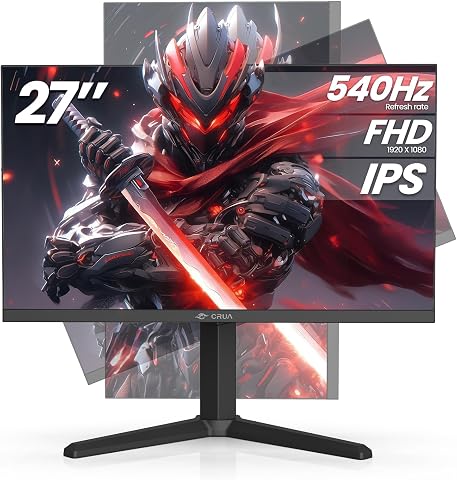 CRUA 27-Inch FHD 540Hz IPS Gaming MonitorView on Amazon →
 - 3
 Kado 2-Pack 34-Inch Curved Ultrawide Monitor with 1500R Curvature, 165Hz, 1ms…View on Amazon →
 - 4
 SANSUI 34-Inch Curved UWQHD 240Hz Gaming MonitorView on Amazon →
 - 5
 KTC 32 Inch 280Hz 240Hz Curved Gaming Monitor, FHD PC Monitor 1080P, H32C5View on Amazon →
 - 6
 Samsung 32" Odyssey G55C Series QHD Curved Gaming MonitorView on Amazon →
 - 7
 SANSUI 32 Inch Curved Gaming Monitor 240Hz FHD 1080PView on Amazon →
 - 8
 ASUS TUF Gaming VG259QM5A 25-Inch 1080p 240Hz G-SYNC Gaming MonitorView on Amazon →
 - 9
 SANSUI 27 Inch Curved Gaming Monitor 240Hz FHD 1080PView on Amazon →
 - 10
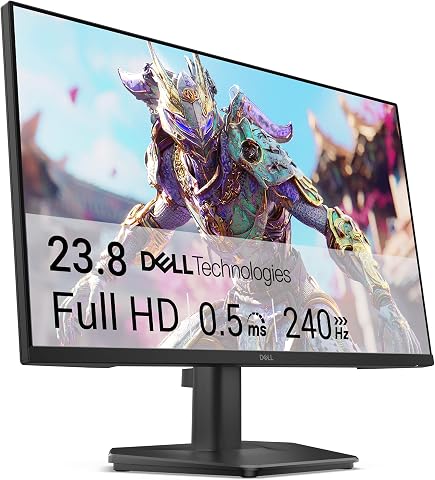 Dell 24 240Hz Gaming Monitor – SE2426HG – 23.8-inch FHD (1920×1080) 240Hz Dis…View on Amazon →
Why Frame Rates Decide This Roundup
The guide’s core message matters because refresh rate and frame rate must be paired: a 540Hz monitor cannot compensate for a GPU that delivers 150 frames per second. That framing shifts the buying decision away from headline specifications and toward system-level matching, which the guide argues produces more real-world benefit than “chasing the largest refresh-rate figure.”
It also highlights a persistent market pattern for 2026: high-Hz Full HD panels serve competitive players, while QHD and ultrawide options trade speed headroom for detail and immersion. Buyers who understand the tradeoff — speed versus image detail, screen size versus graphics demand — can avoid paying for refresh rates their hardware will never use.
The 2026 High-Refresh Landscape
High refresh monitors have moved from niche esports gear to mainstream retail, with 240Hz now common at mid-range prices and specialist models pushing to 540Hz. At the same time, panel formats have diversified: ultrawide UWQHD displays, curved 1000R screens and multi-monitor bundles compete alongside traditional flat panels.
The guide reflects that fragmentation. Its picks span a compact 24-inch Full HD monitor, a 540Hz specialist, two ultrawide-format options, two large Full HD panels and a QHD curved display — each aimed at a different balance of speed, detail and desk setup. Console players face an added constraint, since most consoles cap output well below the refresh rates these monitors support.
“A very high Hz figure only helps when a system can produce enough frames to use it.”
— ThorstenMeyerAI.com monitor buying guide
What the Rankings Do Not Test
The guide is explicitly a specification-based comparison: the author states that listed specifications were the basis for ranking and that no unlisted features or firsthand performance were assumed. Real-world measurements — actual response times, motion clarity, input lag, panel uniformity and HDR performance — are not covered.
Pricing and regional availability for the ten models are not stated in the source material, and the excerpt does not detail every model’s full specification sheet. Which two of the ten picks fill the remaining slots beyond the eight described above is not specified in the available text. Buyers should verify current prices, warranty terms and independent test results before purchasing.
Buyers’ Next Steps Before Purchasing
The guide recommends buyers benchmark their own games to see what frame rates their PC produces, measure desk depth including monitor stands, and consider whether a future GPU upgrade would justify extra refresh headroom now. Checking ultrawide compatibility in the specific games played is advised before choosing the SANSUI 34-inch or Kado bundle.
For the market, expect further price pressure on 240Hz Full HD panels through 2026 as 540Hz-class models push down from the high end, and broader adoption of high-refresh QHD panels as mid-range GPUs grow more capable. New model releases later in the year could shift the ranking.
Key Questions
Is a 540Hz monitor worth it over 240Hz?
Only if your games and hardware can sustain very high frame rates, the guide says. Competitive players with a capable PC may value the headroom; most buyers get more practical benefit from a balanced 240Hz setup.
Why is Full HD a problem on a 32-inch monitor?
At 31.5 or 32 inches, the same pixel count spreads across more area, which can make text and game detail look less crisp at close desk distances. QHD is a better match at that size if detail matters to you.
Do all games support ultrawide monitors?
No. The guide notes support varies: some titles fill the wider aspect ratio naturally, while others show side bars or stretch the image. Check the games you actually play before buying an ultrawide.
Is a 1000R curve better than 1500R?
Neither is strictly better. A 1000R curve like the Samsung Odyssey G55C wraps more closely around a centered viewer and feels immersive, while shared viewing or frequent off-center use may favor a flatter or gentler design.
Was this ranking based on hands-on testing?
No. The author states the ranking is based on listed manufacturer specifications, without assuming unlisted features or firsthand performance. Independent reviews are advisable before buying.
Source: ThorstenMeyerAI.com
Fall Picks
fall essentials
As an affiliate, we earn on qualifying purchases.