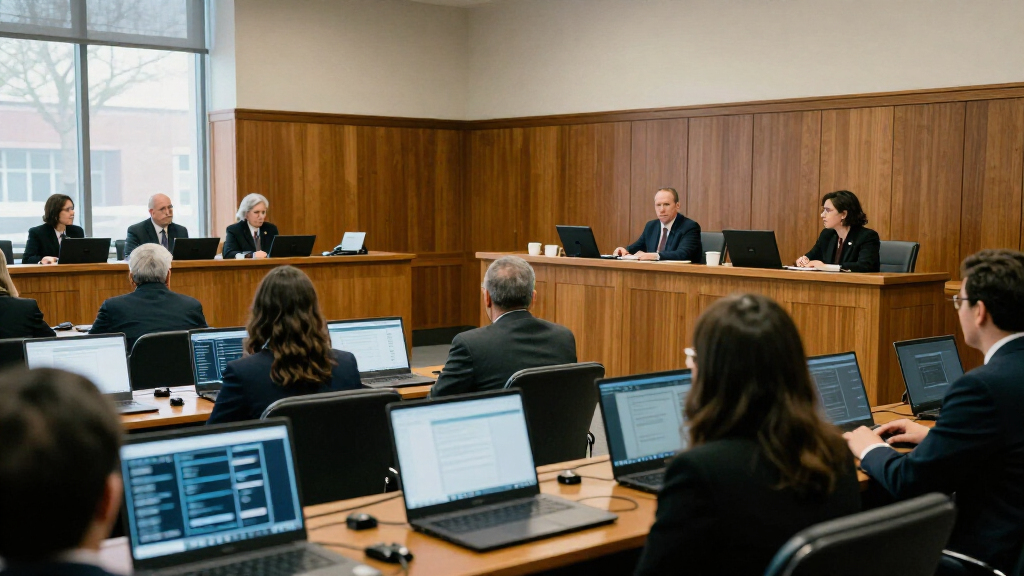

🔍 Read the full analysis: Can The Pentagon Blacklist Anthropic For Refusing Claude Features? Court Weighs In on ThorstenMeyerAI.com

Get the latest gadgets delivered free — and shop member deals
- Fast, free delivery on millions of items
- Access to Prime Big Deal Days deals on October 6–7
- Prime Video, Amazon Music and more included
TL;DR
A federal appeals court in Washington ruled 2-1 on Sept. 25 that the Pentagon could designate Anthropic a supply-chain risk under a procurement statute, allowing restrictions on Claude in Defense Department work to continue. The decision is separate from a California ruling that found a parallel designation unlawful, and Anthropic says it is considering further review.
A federal appeals court in Washington ruled 2-1 on Sept. 25 that the Pentagon could designate Anthropic a supply-chain risk under a procurement law, allowing the department to keep Claude out of its systems and Defense Department work, as described in the original analysis. The decision turns on the government’s authority to restrict a supplier whose AI system has limits the military says could prevent requested uses; Anthropic says it disagrees and is considering further review.
The U.S. Court of Appeals for the District of Columbia Circuit denied Anthropic’s petitions challenging the designation. The majority concluded that a law governing federal procurement, 41 U.S.C. § 4713, permits a supply-chain-risk designation without proof that the company acted with hostile intent. The Pentagon had designated Anthropic under that law and a separate statute, 10 U.S.C. § 3252.
The court distinguished the two laws. It said the California district court’s conclusion that the narrower statute requires a malicious or adversarial motive was not at issue in its review. But the majority read Section 4713 more broadly: it said the provision’s reference to “any person” does not limit risk to foreign adversaries, and that the government could view Anthropic’s restrictions on Claude as a risk if they might prevent functions the department considers contractually authorized and necessary.
The majority pointed to the company’s built-in limits on Claude and said the department had reason to worry that the model might not perform as officials expected in national-security work. It also cited a dispute about whether contractual restrictions applied to an ongoing overseas military operation. The ruling does not establish that the court approved every possible restriction on AI suppliers; it addresses the government’s designation under the procurement law before the panel.
What the Ruling Means for Defense AI
The decision gives the Pentagon a legal basis, under Section 4713, to continue excluding Anthropic’s products from Defense Department work. The Associated Press reported that this includes removing Claude from department workflows and barring defense contractors from using Anthropic products on the department’s behalf. It does not bar Anthropic from the federal government as a whole under this ruling.
For government procurement, the dispute puts a practical question before AI vendors: how might product restrictions affect eligibility when a customer is the military? The majority treated the possibility that Claude could be prevented from performing a requested function as relevant to the statutory risk test, even while acknowledging that Anthropic’s restrictions may stem from concerns about privacy and AI safety.
The decision also leaves a different court’s ruling in place for now. A California federal judge found that a parallel designation was unlawful, including on First Amendment grounds. The appeals court’s decision does not erase that ruling; the cases concern different statutes and different legal questions. The split path through the courts means the practical reach of the government’s actions depends on which designation and proceeding are involved.
Top picks for "pentagon blacklist anthropic"
As an affiliate, we earn on qualifying purchases.
Two Laws, Two Court Challenges
The dispute grew out of a disagreement over the conditions for military use of Claude. Anthropic maintained restrictions against using its products for fully autonomous lethal weapons and mass surveillance of Americans. The Pentagon sought broader access for lawful uses, according to reporting on the case. The administration designated the company a supply-chain risk and ordered agencies and defense contractors to stop using its products for department work.
Anthropic sued the administration in March. In August, a federal district judge in California ruled against the government’s action under Section 3252, finding that the statute’s definition of a supply-chain risk was tied to malicious conduct and that the government had unlawfully retaliated against the company for its views on AI use. The Pentagon’s designation had also relied on Section 4713, a procurement provision the D.C. Circuit reviewed separately.
In the Sept. 25 opinion, the appeals court majority said the California judge’s reading of Section 3252 did not resolve the question before it. The panel examined whether the designation could stand under Section 4713, which it said has a broader definition of supply-chain risk. The D.C. Circuit had exclusive jurisdiction to review procurement actions under that provision, according to Ars Technica’s account of the ruling.
Limits of the Court’s Decision
The panel decided whether the designation could stand under Section 4713; it did not settle the separate California case or resolve every legal dispute between Anthropic and the government. Anthropic has said it is considering further review, but the available reporting does not establish whether it will seek a rehearing before the full appeals court or petition the Supreme Court.
The opinion describes the Pentagon’s concerns about Claude’s restrictions and references an overseas operation, but the public reporting does not identify the operation or provide details about the specific requested tasks. The decision also does not show that Claude malfunctioned in that situation. The majority’s stated concern was that restrictions might prevent the system from performing requested functions.
It remains unclear how the competing rulings will affect the parties’ positions as the cases proceed. The California decision addresses the other statutory basis and constitutional claims, while the D.C. Circuit ruling addresses the procurement-law designation. The exact operational scope of any ongoing removal, contract changes, or further Pentagon action was not detailed in the accounts of the ruling.
Further Review and Pentagon Implementation
Anthropic says it is weighing its options, including further review. A request for rehearing by the full D.C. Circuit or a petition to the Supreme Court would create another stage in the challenge, but the company has not confirmed which course it will take.
Meanwhile, the ruling allows the Pentagon’s restrictions under the Section 4713 designation to continue. The department’s implementation and any effects on specific contracts may become clearer through further statements, filings, or reporting. The separate California case also remains relevant: its judgment concerns the other statutory basis and the company’s claim that the administration retaliated against it.
The next milestones are thus procedural as well as practical: whether Anthropic seeks further review, how the government applies the designation in its contracts and systems, and how the remaining litigation addresses the separate ruling. Until those steps are clear, the Sept. 25 decision establishes the D.C. Circuit majority’s reading of one procurement law, while the broader dispute over government access and company-set limits on Claude continues.
Key Questions
What did the appeals court decide?
The D.C. Circuit ruled 2-1 that the Pentagon could designate Anthropic a supply-chain risk under 41 U.S.C. § 4713, rejecting the company’s challenge to that designation.
Does the ruling ban Anthropic from all federal government work?
No. The Associated Press reported that the ruling allows restrictions on Claude in Defense Department systems and work, including contractor work for the department. It does not bar Anthropic from the federal government as a whole under this decision.
Why did the California case reach a different result?
The California court reviewed the designation under a different statute, 10 U.S.C. § 3252, and found the government’s action unlawful. The D.C. Circuit reviewed the separate procurement provision, Section 4713, which the majority interpreted more broadly.
What restrictions on Claude were part of the dispute?
Anthropic maintained limits against using its products for fully autonomous lethal weapons and mass surveillance of Americans. The court’s opinion discussed the government’s concern that those limits could prevent Claude from carrying out some requested functions.
Will Anthropic appeal?
The company said it is considering further review. It has not confirmed whether it will ask the full appeals court to rehear the case or petition the Supreme Court.
Primary source: Anthropic · via ThorstenMeyerAI.com
Fall Picks
fall essentials
As an affiliate, we earn on qualifying purchases.