
TL;DR

Get the latest gadgets delivered free with Prime
- Fast, free delivery on millions of items
- Prime Video, Amazon Music and more included
- Member-only deals all year
A report by The Pragmatic Engineer says AI coding tools are changing software work rapidly, with engineers increasingly directing multiple agents rather than writing code by hand. The report also flags weaker code quality and performative reviews as emerging problems; it does not provide industry-wide measurements proving how widespread those changes are.
AI coding agents are changing how some software engineers work, with developers increasingly managing several agent sessions at once instead of writing code line by line, according to a 2026 industry snapshot from The Pragmatic Engineer. The report also warns that code quality, reliability and meaningful review are under pressure as adoption accelerates, though it does not establish how prevalent those problems are across the entire tech industry.
The report draws on a keynote delivered at the LDX3 engineering leadership conference in New York, which the author says was attended by more than 2,000 engineering leaders and senior technical staff. Its author describes conversations with teams at AI labs including OpenAI and Anthropic, startups such as Ramp, and companies including Uber, alongside unpublished data from GitHub, Factory AI and Linear. The source does not publish the underlying data in the material provided here.
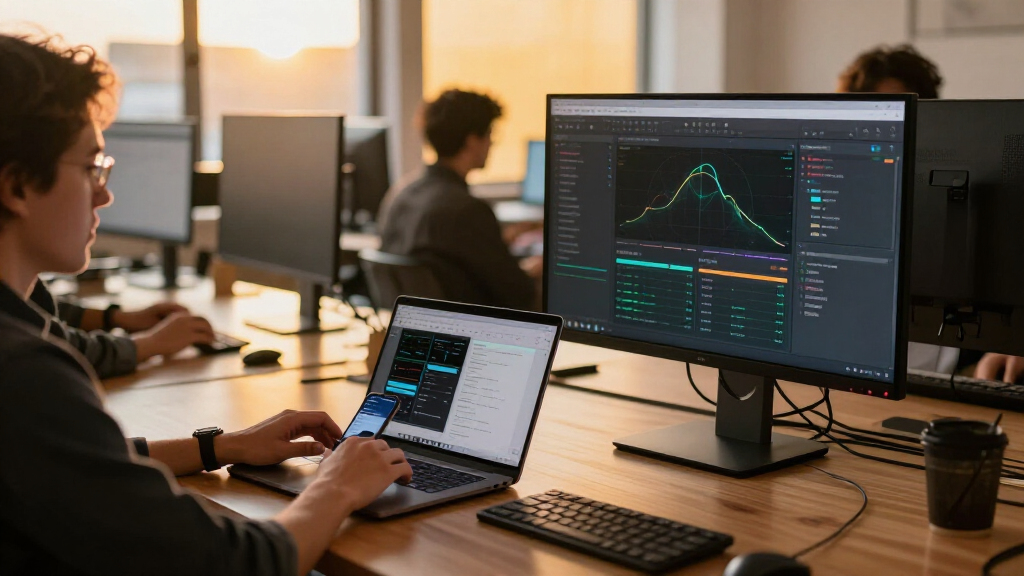
A central observation is that experienced developers are using agents in parallel. Claude Code creator Boris Cherny described using five terminal sessions and five to 10 additional Claude sessions on the web. Peter Mattis, co-founder of Cockroach Labs, said his typical cognitive capacity was around five to 10 concurrent agent sessions, sometimes with subagents working within them. Dima Zaytsev, a software engineer at Linear, described rotating between multiple local worktrees while agents produce or test code.
The report says the shift is changing familiar tools and habits, including the role of the integrated development environment (IDE) and the amount of code developers write directly. It also identifies problems: assumptions about generated code no longer hold, reviews can become “theatrical,” and quality and reliability have declined. These are the author’s reported observations, not quantified industry-wide findings in the source material.
How AI Changes Engineering Work
The move from writing code directly to directing agents could alter what employers expect from software engineers, how teams divide work and how projects are planned. If one developer can supervise several coding tasks at once, productivity may rise, but that depends on the ability to check outputs and integrate them safely. Parallel agent use shifts time toward specifying work, testing results and making technical decisions.
The reported concerns about reliability make that oversight consequential. More generated code does not by itself establish that software is better or delivered faster. If reviews become procedural rather than substantive, defects may be harder to catch. The report offers a view into practices at the industry’s leading edge, but readers should not treat individual examples as proof that every company or developer is working this way.
Products Worth Considering

Apple iPad Air 11-inch (M2), 512GB, Wi-Fi, Space Gray

Apple iPad Air (2025) 13‑inch Wi‑Fi 256 GB – Space Gray (M3 chip)

Logitech MX Mechanical Wireless Illuminated Keyboard, Tactile Quiet, Graphite
As an affiliate, we earn on qualifying purchases.
From Coding Tools to Agent Workflows
Software teams have adapted to earlier changes, including the spread of the internet, smartphones, cloud computing and new programming languages and frameworks. The report argues that AI stands apart because of the scale and speed of change and the direct effect on the act of producing software.
The author says coding models improved substantially toward the end of 2025, helping make agent-driven workflows more practical. The article frames 2026 as an early phase of a broader shift, rather than a settled endpoint. It also stresses that some fundamentals remain: teams and planning still matter, and the report says non-engineers are not yet shipping code as a simple consequence of better AI tools.
“Nothing has hit with the magnitude of AI. This is a whole size difference from anything that we’ve faced before.”
— Martin Fowler, software industry veteran, speaking at The Pragmatic Summit
How Broad Is the Shift?
The source is a reported snapshot based on a keynote, interviews and access to selected companies; it is not a representative survey of the full technology workforce. The material supplied does not include the unpublished data from GitHub, Factory AI and Linear, nor comparable measurements of code quality, reliability or productivity before and after AI adoption.
It is also unclear how quickly agent-heavy workflows will spread beyond highly productive developers and AI-focused teams, whether the practices will improve software outcomes, and how organizations will adapt review and accountability. The report presents future developments such as cloud coding agents and new AI infrastructure as trends that may accelerate, not as outcomes already established.
What Teams Will Test Next
The report expects cloud-based coding agents and agent “harnesses”—the tools and processes used to coordinate them—to develop further. It also anticipates new infrastructure built for AI-supported software work and a possible change in how engineers engage with code. These are forecasts in the report, not confirmed industry-wide results.
For engineering leaders, the near-term test is whether teams can get practical gains without weakening review, reliability or ownership. More detailed data on adoption, software defects and delivery outcomes would help show whether the practices described by early adopters are spreading and producing measurable benefits.
Key Questions
What is the main development described in the report?
The report says AI coding agents are changing software workflows, with some engineers managing several agent sessions in parallel instead of writing all code by hand.
Does the report show that most engineers have stopped coding by hand?
No. The author reports signs that manual coding is declining, but the supplied material does not provide a representative survey or figures establishing that most engineers have stopped.
What problems does the report identify?
It flags concerns about code quality, reliability and code review, including the risk that reviews may become performative. The source does not quantify the scale of these concerns.
What remains uncertain about AI coding agents?
Their industry-wide adoption, effects on productivity and impact on software defects remain unclear from the information provided. The examples are drawn from specific engineers and companies, not the whole sector.
Source: rss