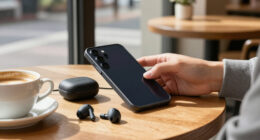


The best Apple product for most people is the MacBook Air 13-inch with M5, thanks to its balance of performance, memory, and everyday portability. The iPad 11-inch with A16 is a more approachable choice for browsing and streaming, while AirPods Pro 3 stand out for buyers focused on noise-canceling earbuds. This lineup spans laptops, tablets, audio, wearables, tracking, and stylus accessories, so the right choice depends on what you need—not simply which device has the newest chip. Key tradeoffs include performance versus simplicity, premium features versus basic functionality, and compatibility with devices you already own. Read on for the full breakdown and help matching each pick to its best use.

Get the latest gadgets delivered free with Prime
- Fast, free delivery on millions of items
- Prime Video, Amazon Music and more included
- Member-only deals all year
Complete the kit



Key Takeaways
- The MacBook Air M5 is the strongest all-around computer pick, while the MacBook Neo is aimed at lighter workloads and a simpler laptop role.
- The standard iPad and iPad Air serve different needs: the A16 model covers everyday tablet use, while the M4 Air suits heavier work and creative tasks.
- AirPods Pro models are not interchangeable; generation, charging case, and feature set matter, so check the exact version before choosing among the overlapping listings.
- Apple’s audio choices split by fit and use: AirPods 5 add noise cancellation in an open-ear design, Pro earbuds seal in the ear, and AirPods Max 2 use an over-ear format.
- Accessories are most useful when they solve a specific problem: Apple Pencil Pro and USB-C Pencil suit different workflows, while AirTag is for tracking belongings rather than people.
| Apple MacBook Neo 13-inch Laptop with A18 Pro Chip, 8GB Memory, 512GB SSD, and Touch ID – Citrus |  | Best Compact Mac for Everyday Work | Display: 13-inch Liquid Retina | Chip: A18 Pro | Unified memory: 8GB | VIEW LATEST PRICE | See Our Full Breakdown |
| Apple Pencil Pro |  | Best for Creative iPad Work | Model: MX2D3AM/A | Compatibility: Specified iPad Pro and iPad Air models; iPad mini (A17 Pro) | Input: Tilt and pressure sensitivity; low latency | VIEW LATEST PRICE | See Our Full Breakdown |
| Apple AirTag (2nd Generation), 4-Pack |  | Best for Tracking Everyday Belongings | Generation: 2nd | Pack size: 4 | Compatibility: iPhone and Apple Watch; some features require compatible models and software | VIEW LATEST PRICE | See Our Full Breakdown |
| Apple Watch SE 3 GPS Smartwatch, 40mm |  | Best Apple Watch for Everyday Health and Safety | Case size: 40mm | Connectivity: GPS; iPhone or Wi-Fi | Battery life: Up to 18 hours | VIEW LATEST PRICE | See Our Full Breakdown |
| Apple MacBook Air 13-inch Laptop with M5 Chip, 16GB Memory, 512GB SSD, Silver |  | Best Premium Everyday MacBook | Display: 13.6-inch Liquid Retina | Chip: Apple M5 | Unified memory: 16GB | VIEW LATEST PRICE | See Our Full Breakdown |
| Apple AirPods Pro 2 Wireless Earbuds with USB-C Charging |  | Best Apple Earbuds for Flexible Noise Control | Chip: Apple H2 | Connectivity: Bluetooth | Noise control: Active Noise Cancellation, Transparency, Adaptive Audio | VIEW LATEST PRICE | See Our Full Breakdown |
| Apple AirPods Pro |  | Best for a Simpler Pro Earbud Feature Set | Model number: MWP22AM/A | Connectivity: Not specified in supplied product data | Noise control: Active Noise Cancellation and Transparency mode | VIEW LATEST PRICE | See Our Full Breakdown |
| Apple AirPods Max 2 Wireless Over-Ear Headphones, Starlight |  | Best Premium Over-Ear Apple Headphones | Audio chip: Apple H2 | Connectivity: Wireless; USB-C for lossless audio and charging | Noise control: Active Noise Cancellation, Adaptive Audio, Transparency mode, Conversation Awareness | VIEW LATEST PRICE | See Our Full Breakdown |
| Apple AirPods Pro (1st Generation) with MagSafe Charging Case |  | Best for MagSafe Case Compatibility | Generation: 1st Generation | Model: MLWK3AM/A | Charging case: MagSafe | VIEW LATEST PRICE | See Our Full Breakdown |
| Apple iPad Air 11-inch (M4), 128GB, Wi-Fi 7, Space Gray |  | Best Apple Tablet for Versatile Everyday Work | Display: 11-inch Liquid Retina | Chip: Apple M4 | Storage: 128GB | VIEW LATEST PRICE | See Our Full Breakdown |
| Apple AirPods 5 Wireless Earbuds with Active Noise Cancellation |  | Best Open-Ear Pick | Model: MKFW4LL/A | Design: Open-ear | Noise control: Active Noise Cancellation, Adaptive Audio, Conversation Awareness | VIEW LATEST PRICE | See Our Full Breakdown |
| Apple Pencil (USB-C) |  | Best for Everyday iPad Notes | Model: MUWA3AM/A | Charging: USB-C | Input features: Pixel-perfect precision, low latency, and tilt sensitivity | VIEW LATEST PRICE | See Our Full Breakdown |
| Apple iPad 11-inch with A16 Chip, 128GB, Wi-Fi, and Liquid Retina Display – Silver |  | Best Everyday iPad | Chip: A16 | Display: 11-inch Liquid Retina with True Tone | Storage: 128GB | VIEW LATEST PRICE | See Our Full Breakdown |
| Apple AirPods Pro (2nd Generation) Wireless Earbuds with USB-C Charging, Up to 2X More Active Noise Cancelling, Transparency Mode, Adaptive Audio, Personalized Spatial Audio, White |  | Best for Customizable Fit | Model: MTJV3AM/A | Chip: Apple H2 | Noise control: Active Noise Cancellation and Transparency mode | VIEW LATEST PRICE | See Our Full Breakdown |
| Apple AirPods Pro 3 Wireless Earbuds with Active Noise Cancellation |  | Best Feature-Rich Earbuds | Model: MFHP4LL/A | Product type: Wireless earbuds | Noise control: Active Noise Cancellation | VIEW LATEST PRICE | See Our Full Breakdown |
More Details on Our Top Picks
Apple MacBook Neo 13-inch Laptop with A18 Pro Chip, 8GB Memory, 512GB SSD, and Touch ID – Citrus
The MacBook Neo is the portable, everyday pick in this group: its 2.71-pound aluminum body and claimed battery life of up to 16 hours suit students and commuters who want a full macOS laptop without carrying a larger machine. The 13-inch Liquid Retina display, 1080p camera, and Touch ID cover the basics for study, calls, and media. Compared with the MacBook Air 13-inch with M5, the Neo has less memory and a shorter stated battery life, so it is less suited to demanding multitasking or longer days away from an outlet. Its 8GB of unified memory is the main compromise, especially for buyers who keep many apps or large creative projects open. I’d choose it for lighter workloads, not as a long-term workstation.
Pros:- 2.71-pound aluminum design is easy to carry.
- Battery life is rated for up to 16 hours.
- Liquid Retina display supports 1 billion colors.
- 1080p camera, dual microphones, speakers, and Touch ID cover common daily needs.
Cons:- 8GB of unified memory limits headroom for demanding workloads.
- Its stated battery life is shorter than the MacBook Air M5’s up to 18 hours.
Best for: Students and mobile users who want a lightweight macOS laptop for documents, browsing, video calls, and everyday tasks.
Not ideal for: People who regularly edit large media projects, run demanding applications, or need more memory for heavy multitasking.
- Display:13-inch Liquid Retina
- Chip:A18 Pro
- Unified memory:8GB
- Storage:512GB SSD
- Battery life:Up to 16 hours
- Camera:1080p FaceTime HD
- Security:Touch ID
- Weight:2.71 pounds
Our verdict“Choose the MacBook Neo for portable everyday macOS use; pick the MacBook Air M5 if you need more memory and longer stated battery life.”
Apple Pencil Pro
For iPad owners who draw, annotate, or take handwritten notes, Apple Pencil Pro adds more expressive control than a basic stylus. Pressure and tilt sensitivity let strokes vary with how the Pencil is held and pressed, while squeeze, barrel roll, and haptic feedback give compatible workflows extra input options. Magnetic attachment handles pairing and charging, and Find My can help locate a misplaced Pencil. Unlike the Apple Pencil (USB-C) elsewhere in this roundup, this model’s listed features lean further toward precise creative work. That advantage only matters if the buyer owns a compatible iPad: support is limited to specific recent iPad Pro, iPad Air, and iPad mini models. It is also a separate accessory, so it adds little value for someone who mainly types or uses an iPad for video and browsing.
Pros:- Pressure and tilt sensitivity support varied, controlled strokes.
- Squeeze, barrel roll, and haptic feedback add creative input options.
- Magnetic attachment supports wireless pairing and charging.
- Find My support can help locate the stylus.
Cons:- Compatibility is limited to specified iPad models.
- It is a separate purchase from the iPad and offers little benefit for mostly touch-based use.
Best for: Illustrators, designers, students, and note-takers with a compatible iPad who will use pressure-sensitive drawing or gesture controls.
Not ideal for: iPad owners with unsupported models or people who rarely write or draw on their tablet.
- Model:MX2D3AM/A
- Compatibility:Specified iPad Pro and iPad Air models; iPad mini (A17 Pro)
- Input:Tilt and pressure sensitivity; low latency
- Gestures:Squeeze and barrel roll
- Feedback:Haptic feedback
- Charging and pairing:Magnetic attachment with wireless pairing and charging
- Find My:Supported
- Weight:0.68 ounces
Our verdict“Choose Apple Pencil Pro for creative or handwritten work on a supported iPad; for casual tablet use, its specialized controls may go unused.”
Apple AirTag (2nd Generation), 4-Pack
The AirTag 2nd Generation 4-pack is the most practical Apple pick here for keeping tabs on several easy-to-lose belongings at once. Attach one to a bag, keys, or luggage and use the Find My app to help locate it; compatible iPhone and Apple Watch models add Precision Finding directions. Compared with the Apple Watch SE 3, AirTag is not a health or communications device—it is a focused locator for items, not a wearable companion. The upgraded Ultra Wideband and Bluetooth system and louder speaker are intended to make locating easier, while the replaceable battery is rated for more than a year. There are limits: some features depend on compatible devices, software, and regional availability, and the supplied details do not include an attachment accessory. Buyers will need a way to secure each tag to their belongings.
Pros:- Four tags let buyers track multiple belongings.
- Find My and Precision Finding support item location on compatible devices.
- Upgraded Ultra Wideband and Bluetooth system with a louder speaker.
- Replaceable battery is designed to last more than a year.
Cons:- Some features require specific devices, software versions, or regional availability.
- The provided product details do not list an attachment accessory.
Best for: iPhone households, frequent travelers, and people who want to track several bags, keys, or other belongings through Find My.
Not ideal for: People without compatible Apple devices, or buyers who expect an included holder or attachment for each item.
- Generation:2nd
- Pack size:4
- Compatibility:iPhone and Apple Watch; some features require compatible models and software
- Battery life:More than 1 year
- Battery:Replaceable standard battery
- Enclosure material:85% recycled plastic
- Dimensions:1.26 x 1.26 x 0.31 inches
- Item weight:1.44 ounces
Our verdict“Choose the four-pack to locate several everyday items in Apple’s Find My network, provided you have compatible devices and suitable attachments.”
Apple Watch SE 3 GPS Smartwatch, 40mm
The Apple Watch SE 3 GPS brings activity and safety features to the wrist without trying to replace an iPhone. It tracks workouts and sleep, offers temperature-related health insights and cycle information, and can detect hard falls and severe car crashes. For calls, texts, music, and notifications, it relies on a paired iPhone or Wi-Fi; unlike the AirTag 2nd Generation, it is an active wearable rather than a tag for locating possessions. The 40mm case is a smaller option for buyers who prefer a less prominent watch. Battery life is rated for up to 18 hours, with fast charging that can provide up to eight hours of battery in 15 minutes. The tradeoff is the need to charge regularly and the GPS model’s dependence on an iPhone or Wi-Fi for connectivity.
Pros:- Tracks workouts, sleep, temperature-related insights, and cycle information.
- Fall and severe car crash detection add safety functions.
- Fast charging can provide up to eight hours of battery in 15 minutes.
- Supports calls, texts, music, and notifications when connected to an iPhone or Wi-Fi.
Cons:- GPS model connectivity depends on an iPhone or Wi-Fi.
- Up to 18 hours of battery life means regular charging.
- Some health and safety features depend on setup or availability.
Best for: iPhone users who want workout and sleep tracking, wrist notifications, and fall or crash detection in a 40mm watch.
Not ideal for: People who need cellular connectivity without an iPhone or Wi-Fi nearby, or who want a watch that lasts several days between charges.
- Case size:40mm
- Connectivity:GPS; iPhone or Wi-Fi
- Battery life:Up to 18 hours
- Fast charging:Up to 8 hours of battery in 15 minutes
- Health tracking:Workouts, sleep, temperature-related insights, and cycle information
- Safety features:Hard fall and severe car crash detection
- Model number:MJKR4LW/A
- Item weight:8.6 ounces
Our verdict“Choose the SE 3 for everyday fitness, notifications, and safety features if you are comfortable charging daily and staying connected to an iPhone or Wi-Fi.”
Apple MacBook Air 13-inch Laptop with M5 Chip, 16GB Memory, 512GB SSD, Silver
The MacBook Air 13-inch with M5 is the stronger all-round laptop choice in this batch for buyers who need room to multitask. Its 16GB of unified memory gives it more headroom than the MacBook Neo’s 8GB, while the 13.6-inch display, 12MP Center Stage camera, and four-speaker audio suit both focused work and video calls. Battery life is rated for up to 18 hours, two hours longer than the Neo’s stated maximum. At 2.71 pounds, it remains portable, and MagSafe charging leaves the two Thunderbolt 4 ports available for accessories. That port selection is still limited, so users with several wired devices may need an adapter or hub. Its memory and storage are specified at 16GB and 512GB, rather than offering a higher configuration in the supplied product details.
Pros:- 16GB of unified memory offers more multitasking headroom than the MacBook Neo.
- Battery life is rated for up to 18 hours.
- 12MP Center Stage camera and four-speaker audio support calls and media.
- MagSafe, two Thunderbolt 4 ports, Wi-Fi 7, and Bluetooth 6 provide modern connectivity.
Cons:- Two Thunderbolt 4 ports provide limited built-in connectivity.
- The listed configuration has 16GB of memory and 512GB of storage.
Best for: Professionals, students, and frequent travelers who want a lightweight Mac for multitasking, video calls, and longer stretches away from an outlet.
Not ideal for: Buyers who need many built-in ports or want more than the listed 16GB of memory and 512GB of storage.
- Display:13.6-inch Liquid Retina
- Chip:Apple M5
- Unified memory:16GB
- Storage:512GB SSD
- Camera:12MP Center Stage
- Battery life:Up to 18 hours
- Ports:Two Thunderbolt 4, MagSafe charging, and headphone jack
- Weight:2.71 pounds
Our verdict“Choose the MacBook Air M5 over the MacBook Neo if you want more memory, a stronger video-call setup, and longer stated battery life in a similarly light laptop.”
Apple AirPods Pro 2 Wireless Earbuds with USB-C Charging
AirPods Pro 2 are the most adaptable in-ear pick here: Active Noise Cancellation quiets busy settings, while Transparency and Adaptive Audio let outside sound back in when a fully isolated fit is inconvenient. Personalized Spatial Audio with head tracking adds an immersive option that the older AirPods Pro models in this roundup do not match as fully. Four tip sizes give more room to find a stable seal than the three included with those earlier models, and IP54 resistance suits workouts and commutes. The tradeoff is runtime: you get up to 6 hours per charge with ANC on, so long stretches may require a case recharge. This is a stronger everyday fit than AirPods Max 2 if you want compact earbuds, but it cannot provide their over-ear design.
Pros:- Active Noise Cancellation, Transparency, and Adaptive Audio suit changing surroundings.
- Four silicone tip sizes offer more fit options than the older AirPods Pro models listed.
- IP54 dust, sweat, and water resistance supports active daily use.
- Case supports USB-C, MagSafe, Apple Watch, and Qi-certified charging.
Cons:- ANC listening is rated for up to six hours per charge, shorter than the case-supported total.
- The listed dimensions and weight may describe the earbuds rather than the full charging case.
Best for: Apple users who move between commutes, calls, workouts, and quiet listening and want several noise-control modes in compact earbuds.
Not ideal for: Listeners who prefer over-ear comfort for extended sessions or need more than six hours of ANC listening between case charges.
- Chip:Apple H2
- Connectivity:Bluetooth
- Noise control:Active Noise Cancellation, Transparency, Adaptive Audio
- Spatial audio:Personalized Spatial Audio with dynamic head tracking
- Ear tip sizes:XS, S, M, L
- Listening time:Up to 6 hours with Active Noise Cancellation enabled
- Total listening time:Up to 30 hours with charging case and Active Noise Cancellation enabled
- Charging:USB-C, MagSafe, Apple Watch charger, or Qi-certified charger
Our verdict“Choose AirPods Pro 2 if you want compact Apple earbuds with versatile noise control and broad charging options, and can manage their per-charge runtime.”
Apple AirPods Pro
The original AirPods Pro bring the essentials many Apple listeners want: Active Noise Cancellation, Transparency mode, customizable silicone tips, and Adaptive EQ. Their wireless case provides more than 24 hours of battery life across charges, though the listing does not state earbud runtime by itself, making long-session planning less clear than with AirPods Pro 2. Compared with that newer model, these lack listed Adaptive Audio, IP54 protection, and its four-size tip selection; you get three tip sizes here. They remain a more straightforward alternative to the feature-rich AirPods Max 2 if you want earbuds rather than over-ear headphones. The dated model and incomplete standalone battery detail make them a less compelling choice for buyers seeking the newest controls or clearly specified endurance.
Pros:- Active Noise Cancellation and Transparency mode cover quiet listening and awareness.
- Three silicone tip sizes allow a more tailored fit than one-size earbuds.
- Adaptive EQ adjusts music to the shape of the listener’s ear.
- Wireless charging case provides more than 24 hours of battery life.
Cons:- Earbud listening time per charge is not specified in the supplied product details.
- It lacks the listed Adaptive Audio and IP54 protection of AirPods Pro 2.
- Three tip sizes offer fewer fit choices than AirPods Pro 2.
Best for: Apple users who want noise cancellation, Transparency mode, and a wireless charging case in a familiar in-ear design without needing the newer Pro 2 features.
Not ideal for: Buyers who want Adaptive Audio, four tip sizes, IP54 resistance, or a clearly stated per-charge listening time.
- Model number:MWP22AM/A
- Connectivity:Not specified in supplied product data
- Noise control:Active Noise Cancellation and Transparency mode
- Audio adjustment:Adaptive EQ
- Ear tip sizes:Three silicone tip sizes
- Charging case battery life:More than 24 hours
- Water resistance:Sweat- and water-resistant
- Product dimensions:0.94 x 0.86 x 1.22 inches
Our verdict“Pick the original AirPods Pro for core noise-control features and a wireless case, but choose AirPods Pro 2 if updated modes and clearer battery details matter.”
Apple AirPods Max 2 Wireless Over-Ear Headphones, Starlight
AirPods Max 2 are the premium over-ear choice for buyers who want a cushioned fit and a larger headphone format rather than the portability of AirPods Pro 2. Their H2-powered mix of Active Noise Cancellation, Adaptive Audio, Transparency, and Conversation Awareness gives listeners several ways to manage sound around them; personalized Spatial Audio adds head-tracked immersion. The knit-mesh canopy and memory-foam textile cushions set them apart from every in-ear option in this roundup, while USB-C lossless audio offers a wired listening path. The costs of that format are physical: at 13.6 ounces, they are much heavier and larger to carry than earbuds. Battery life reaches up to 20 hours with ANC and Spatial Audio enabled, less convenient for travel than an earbud case’s combined listening capacity. Some features also depend on compatible Apple devices and software.
Pros:- Over-ear cushions and a knit-mesh canopy distinguish the fit from AirPods Pro 2 earbuds.
- Active Noise Cancellation, Adaptive Audio, Transparency, and Conversation Awareness offer varied listening controls.
- Personalized Spatial Audio includes dynamic head tracking.
- USB-C supports charging and lossless audio.
Cons:- The 13.6-ounce weight and large dimensions make them less portable than earbuds.
- Battery life is up to 20 hours with ANC and Spatial Audio enabled.
- Live Translation and Spatial Audio profile creation depend on compatible Apple devices and software.
Best for: Apple listeners who prefer full-size, cushioned headphones for focused listening, immersive audio, and noise control at a desk or during travel.
Not ideal for: Commuters prioritizing a small pocketable set, buyers sensitive to headphone weight, or people without compatible devices for dependent software features.
- Audio chip:Apple H2
- Connectivity:Wireless; USB-C for lossless audio and charging
- Noise control:Active Noise Cancellation, Adaptive Audio, Transparency mode, Conversation Awareness
- Spatial audio:Personalized Spatial Audio with dynamic head tracking
- Battery life:Up to 20 hours with Active Noise Cancellation and Spatial Audio enabled
- Materials:Knit-mesh canopy, memory foam and custom textile ear cushions
- Weight:13.6 ounces
- Color:Starlight
Our verdict“Choose AirPods Max 2 if you value a full-size Apple headphone fit and immersive features more than low weight and pocketable portability.”
Apple AirPods Pro (1st Generation) with MagSafe Charging Case
This first-generation AirPods Pro package pairs Active Noise Cancellation and Transparency mode with a MagSafe Charging Case, making it a fit for Apple users who already rely on MagSafe charging. Dynamic head tracking for Spatial Audio and Adaptive EQ add capabilities beyond basic wireless earbuds, while three silicone tip sizes help tailor the seal. Compared with the newer AirPods Pro 2, this version does not list Adaptive Audio, IP54 dust resistance, or the newer model’s four tip sizes. Its case provides more than 24 hours of total listening time, but the product data’s three-hour charging-time listing is worth weighing against newer charging options. Sound and call performance also depend on getting the tips seated properly. It offers a distinct case advantage, not the broadest feature set in this Apple lineup.
Pros:- MagSafe Charging Case supports a familiar Apple charging setup.
- Active Noise Cancellation and Transparency mode cover different listening environments.
- Spatial Audio includes dynamic head tracking, with Adaptive EQ for music.
- Three silicone tip sizes support a customizable fit.
Cons:- The first-generation feature set lacks the Adaptive Audio listed for AirPods Pro 2.
- The supplied charging-time detail lists three hours.
- Fit matters: poorly seated tips may affect sound and call performance.
Best for: Apple users who specifically want first-generation AirPods Pro with a MagSafe case and are comfortable with a three-tip fit system.
Not ideal for: Buyers seeking AirPods Pro 2’s newer noise modes, IP54 protection, USB-C charging, or more extensive fit options.
- Generation:1st Generation
- Model:MLWK3AM/A
- Charging case:MagSafe
- Noise control:Active Noise Cancellation and Transparency mode
- Spatial audio:Dynamic head tracking
- Included ear tip sizes:Three
- Listening time with case:More than 24 hours
- Water resistance:Sweat- and water-resistant
Our verdict“Choose this first-generation set if a MagSafe case is your priority, but opt for AirPods Pro 2 for newer controls and additional fit choices.”
Apple iPad Air 11-inch (M4), 128GB, Wi-Fi 7, Space Gray
The 11-inch iPad Air with M4 earns its place as the most capable tablet in this group: its chip is suited to multitasking and demanding apps, while the Liquid Retina display brings P3 wide color, True Tone, and ultralow reflectivity to reading, creative work, and video. Compared with the iPad 11-inch with A16 elsewhere in the roundup, this Air pairs a more advanced chip with Wi-Fi 7 and support for Apple Pencil Pro, making it the better fit for heavier workloads and drawing ambitions. The tradeoff is that its best accessory-based uses add separate purchases: Apple Pencil and Magic Keyboard are not included. 128GB of storage can also become restrictive for large video libraries, creative files, or offline media. At 1.02 pounds, it stays portable, but it is more tablet than laptop without the keyboard.
Pros:- M4 chip supports demanding apps and multitasking beyond the A16 iPad’s intended role.
- Liquid Retina display includes P3 wide color, True Tone, and ultralow reflectivity.
- Wi-Fi 7 and Touch ID add modern connectivity and convenient authentication.
- Supports Apple Pencil Pro, Apple Pencil USB-C, and Magic Keyboard.
Cons:- Apple Pencil and Magic Keyboard are sold separately.
- 128GB may constrain users with large creative projects or offline media libraries.
Best for: Students, mobile professionals, and creative users who want an 11-inch Apple tablet for multitasking, drawing, and media, with room to add accessories.
Not ideal for: People who need generous built-in storage, expect a keyboard or Pencil in the box, or want a full laptop setup without buying accessories.
- Display:11-inch Liquid Retina
- Chip:Apple M4
- Storage:128GB
- Connectivity:Wi-Fi 7 with Apple N1
- Front camera:12MP Center Stage
- Rear camera:12MP Wide; supports 4K video
- Authentication:Touch ID
- Battery life:All-day
- Weight:1.02 pounds
Our verdict“Choose the M4 iPad Air for demanding tablet work and Pencil Pro support, provided 128GB and separately purchased accessories suit your setup.”
Apple AirPods 5 Wireless Earbuds with Active Noise Cancellation
The AirPods 5 suit listeners who want Apple’s noise-management features without the sealed feel of silicone tips. Their open-ear design can feel less intrusive than the AirPods Pro 3, while Active Noise Cancellation and Adaptive Audio help adjust listening to changing surroundings. Personalized Spatial Audio with head tracking adds an immersive option for compatible content, and IP57 resistance makes them a practical choice for workouts and wet-weather commutes. The tradeoff is that an open fit offers less isolation than the Pro models, so they are a weaker choice for loud flights or focused listening. Battery life is also limited to up to four hours per charge with ANC on; the case extends total listening to 20 hours, but frequent listeners may need to recharge during the day.
Pros:- Open-ear design avoids the sealed fit of silicone-tip earbuds.
- Active Noise Cancellation and Adaptive Audio respond to listening conditions.
- IP57 dust, sweat, and water resistance suits active use.
- USB-C case provides up to 20 hours of total listening time.
Cons:- Up to four hours of listening per charge with Active Noise Cancellation enabled.
- Open-ear fit provides less isolation than AirPods Pro 3.
- Noise control may be less effective in loud settings than a sealed in-ear design.
Best for: Apple users who prefer an open, less-sealing earbud fit for everyday listening, calls, and workouts.
Not ideal for: Commuters and frequent flyers who need strong passive isolation or long uninterrupted listening between charges.
- Model:MKFW4LL/A
- Design:Open-ear
- Noise control:Active Noise Cancellation, Adaptive Audio, Conversation Awareness
- Spatial audio:Personalized Spatial Audio with dynamic head tracking
- Battery life:Up to 4 hours per charge with ANC; up to 20 hours total with case
- Charging case:USB-C
- Resistance:IP57 dust, sweat, and water resistance
- Weight:3.87 ounces
Our verdict“Choose the AirPods 5 if you want an open fit and Apple noise-control features, but choose AirPods Pro 3 for stronger isolation and longer ANC listening.”
Apple Pencil (USB-C)
The Apple Pencil (USB-C) is a straightforward companion for iPad owners who mainly annotate documents, take notes, or sketch. Its pixel-level precision, low latency, and tilt sensitivity make handwriting and shading feel more controlled than finger input, while USB-C charging avoids a separate proprietary charging connector. Magnetic attachment also gives the Pencil a convenient place to stay with a compatible iPad. Compared with Apple Pencil Pro, this model is the simpler choice: the supplied details emphasize core writing and drawing, not the Pro’s premium toolset. That keeps the decision clear for buyers who do not need advanced controls, but users seeking the fuller creative accessory experience should compare the Pro before choosing. Compatibility is the key limitation; it works only with supported newer iPads, so owners of older models should check their exact device before buying.
Pros:- Pixel-perfect precision supports neat handwriting and detailed annotations.
- Low latency and tilt sensitivity help make writing and shading feel responsive.
- USB-C charging uses a widely adopted connector.
- Magnetic attachment keeps it close to compatible iPads.
Cons:- Compatibility is limited to specific newer iPad generations.
- Does not provide the advanced feature set associated with Apple Pencil Pro.
- Requires a compatible iPad, which is not included.
Best for: Students, office users, and casual sketchers with a compatible iPad who want a precise stylus for notes and annotations.
Not ideal for: Owners of older or unsupported iPads, and illustrators who want the advanced creative features of Apple Pencil Pro.
- Model:MUWA3AM/A
- Charging:USB-C
- Input features:Pixel-perfect precision, low latency, and tilt sensitivity
- Attachment:Magnetic attachment to compatible iPad models
- Compatibility:Selected iPad Pro, iPad Air, iPad mini, and iPad models
- Dimensions:6.1 x 0.3 x 0.3 inches
- Weight:0.88 ounces
- Battery:One included lithium-ion battery
Our verdict“Pick the USB-C Apple Pencil for reliable everyday writing on a supported iPad; choose Apple Pencil Pro if your creative work calls for its more advanced tools.”
Apple iPad 11-inch with A16 Chip, 128GB, Wi-Fi, and Liquid Retina Display – Silver
This 11-inch iPad is the everyday choice in this Apple lineup: a general-purpose tablet for browsing, video calls, media, and apps, with an A16 chip and 128GB of storage. True Tone adjusts the Liquid Retina display to the surrounding light, while the 12MP Center Stage camera is designed to keep video calls framed around the speaker. Compared with the 11-inch iPad Air with M4, this model has a less advanced chip and Wi-Fi 6 rather than Wi-Fi 7, but it covers common tablet tasks without requiring buyers to step up to the Air’s higher-performance positioning. It also supports Apple Pencil and Magic Keyboard Folio, though both are separate purchases. The main compromise for longer-term use is fixed 128GB storage; buyers with large media libraries or demanding creative workflows may prefer an iPad with more headroom.
Pros:- A16 chip supports responsive performance for everyday apps, games, and creative tasks.
- 11-inch Liquid Retina display includes True Tone for changing lighting conditions.
- 12MP Center Stage front camera supports video calls that keep the speaker in frame.
- USB-C, Touch ID, Wi-Fi 6, and all-day battery life suit daily use.
Cons:- Apple Pencil and Magic Keyboard Folio are sold separately.
- 128GB storage is not expandable according to the supplied details.
- The iPad Air 11-inch with M4 offers a higher-performance chip and Wi-Fi 7.
Best for: Families, students, and casual users who want a versatile iPad for schoolwork, streaming, video calls, and everyday apps.
Not ideal for: Power users with demanding creative workflows, large local files, or a need for the iPad Air’s M4 performance and Wi-Fi 7.
- Chip:A16
- Display:11-inch Liquid Retina with True Tone
- Storage:128GB
- Wireless:Wi-Fi 6
- Front camera:12MP Center Stage
- Rear camera:12MP Wide with True Tone flash; supports 4K video
- Authentication and connector:Touch ID and USB-C
- Compatible accessories:Apple Pencil (USB-C), Apple Pencil (1st generation), and Magic Keyboard Folio
Our verdict“Choose this iPad for a capable everyday tablet; opt for the iPad Air 11-inch with M4 if your work needs more performance or Wi-Fi 7.”
Apple AirPods Pro (2nd Generation) Wireless Earbuds with USB-C Charging, Up to 2X More Active Noise Cancelling, Transparency Mode, Adaptive Audio, Personalized Spatial Audio, White
The AirPods Pro (2nd Generation) make the most sense for Apple listeners who want in-ear noise control and a fit they can tune with interchangeable tips. Their four silicone tip sizes offer a more secure, sealed fit than the open-ear AirPods 5, helping block distractions while Active Noise Cancellation and Transparency mode cover different listening situations. The H2 chip supports richer sound, and Adaptive Audio blends noise cancellation with outside sound rather than forcing a fixed choice. Compared with the newer AirPods Pro 3, this model lacks the listed heart-rate sensing, Live Translation, and longer ANC listening time. Its case uses USB-C, but the supplied product details do not specify battery runtime, so buyers should not assume it matches the newer model’s stated endurance. It remains a good fit-focused option, with a meaningful feature gap against Pro 3.
Pros:- Four silicone tip sizes allow a more personalized in-ear fit.
- Active Noise Cancellation and Transparency mode support different environments.
- Adaptive Audio blends noise control and awareness of outside sound.
- USB-C charging case and H2 chip are included.
Cons:- The supplied details do not state battery life per charge.
- Lacks the heart-rate sensing and Live Translation listed for AirPods Pro 3.
- Offers fewer stated listening hours with ANC than the newer Pro 3 model.
Best for: Apple users who want silicone-tip earbuds with adjustable fit, ANC, and Transparency mode for commuting and daily listening.
Not ideal for: Buyers who want the AirPods Pro 3’s listed heart-rate sensing, Live Translation, or up to eight hours of ANC listening.
- Model:MTJV3AM/A
- Chip:Apple H2
- Noise control:Active Noise Cancellation and Transparency mode
- Adaptive audio:Adaptive Audio blends ANC and Transparency
- Ear tips:Four sizes of silicone tips
- Charging case:USB-C
- Dimensions:0.94 x 0.86 x 1.22 inches
- Date first available:September 12, 2023
Our verdict“Choose AirPods Pro (2nd Generation) for an adjustable silicone-tip fit and core noise-control features, or step up to Pro 3 for newer health features and longer listed ANC listening.”
Apple AirPods Pro 3 Wireless Earbuds with Active Noise Cancellation
The AirPods Pro 3 are the most feature-rich earbuds in this group, combining Active Noise Cancellation with health and workout tools that go beyond listening. They offer up to eight hours with ANC on, twice the stated ANC listening time of the AirPods 5, and five ear-tip sizes for a more tailored fit than the AirPods Pro (2nd Generation). Heart-rate sensing, hearing health features, and Live Translation add reasons to keep them in throughout the day, although some capabilities depend on compatible Apple devices or Apple Intelligence. That makes this a stronger all-round pick for users already invested in Apple’s ecosystem, but a less compelling match for buyers who only need basic wireless audio. The extra feature set also makes compatibility worth checking before purchase, and the listed 10-hour figure applies only to Transparency mode while using the Hearing Aid feature—not standard ANC listening.
Pros:- Up to eight hours of listening with Active Noise Cancellation enabled.
- Heart-rate sensing supports tracking across up to 50 workout types.
- Five ear-tip sizes offer more fit options than AirPods Pro (2nd Generation).
- Includes Adaptive EQ, Live Translation, and hearing health features.
Cons:- Some features require compatible Apple devices or Apple Intelligence.
- The stated 10-hour listening time applies to a specific Transparency and Hearing Aid mode, not ANC.
- More feature-rich than necessary for listeners who only want basic wireless audio.
Best for: Apple users who want noise-cancelling earbuds for workouts and daily listening, plus heart-rate sensing and hearing-health features.
Not ideal for: Listeners who only need simple earbuds, use non-compatible devices, or do not want features tied to Apple device compatibility.
- Model:MFHP4LL/A
- Product type:Wireless earbuds
- Noise control:Active Noise Cancellation
- Listening time:Up to 8 hours with ANC; up to 10 hours in Transparency using the Hearing Aid feature
- Ear-tip sizes:Five
- Features:Heart-rate sensing, Adaptive EQ, Live Translation, and hearing health features
- Device features:Audio Sharing and Automatic Switching
- Dimensions and weight:1.1 x 0.8 x 1.2 inches; 0.32 ounces
Our verdict“Choose AirPods Pro 3 if you want Apple’s broadest earbud feature set and longer stated ANC listening; skip them if you need only straightforward audio.”

How We Picked
I ranked these picks by the job each product can do, how readily it fits into everyday Apple use, and the tradeoffs a buyer faces across the lineup. For computers and tablets, I weighed chip and memory configurations against portability and the likely demands of common tasks. For audio, I focused on listening style, fit, noise control, and how clearly each model differs from its alternatives. I also considered whether an accessory adds useful capability to a compatible device or makes most sense for a narrow need.
The order favors products with broad usefulness and a clear role, not simply the newest model or the longest feature list. Value here means getting a suitable set of capabilities without paying for functions a buyer may not use; it does not refer to a price comparison. Similar listings—especially the several AirPods Pro versions—are separated by generation and configuration, so buyers should verify the exact model and case details. Each product has a distinct audience, and a lower-ranked pick may be a better fit when its specific form or function matches your routine.
Factors to Consider When Choosing Best Apple Products
Apple’s lineup spans devices that can work together, but buying into one category does not mean every product will suit your habits. I would start with the task you need to solve, then check compatibility and the compromises you can live with before choosing a model.
Start With the Device You Need Most
Choose the main device that will carry your daily workload before adding accessories around it. A laptop is better suited to long typing sessions, desktop-style apps, and multitasking, while a tablet can be easier to carry and more natural for touch or pencil input. If you already have a capable computer, a new iPad may fill a different role rather than replace it. Buyers sometimes choose by chip name alone and overlook screen size, memory, storage, or the way they actually work. Match the device to your most demanding regular task, not an occasional project. That keeps you from paying for headroom you rarely use or choosing a configuration that feels limiting.
Separate Everyday Performance From Headroom
More capable hardware matters most when your workload can use it: think demanding creative apps, heavier multitasking, or keeping a device useful through changing needs. For browsing, video, notes, and routine school tasks, a simpler configuration may already cover the job. Memory and storage are different decisions: memory affects how well a device handles concurrent tasks, while storage determines how much local content and software it can hold. Buyers often focus on processor labels and leave too little room for files or future use. Consider cloud storage habits, offline media, and the apps you rely on before settling on capacity. Paying for extra performance makes more sense when it removes a real bottleneck.
Check Compatibility Before Buying Accessories
Apple Pencil models and other accessories do not automatically support every iPad, so verify compatibility with the exact tablet generation and size. The same care applies to charging connectors, cases, and other add-ons: a familiar product name does not guarantee that all versions work together. Before choosing a Pencil, decide whether your routine calls for basic handwriting and markup or more advanced creative controls. A common mistake is buying the accessory first and discovering the tablet does not support its features. Check the manufacturer’s compatibility details for the specific device rather than relying on a broad product-family label. This is especially useful when comparing newer tablets with older accessories you already own.
Choose Earbuds by Fit, Not Feature Count
Earbud shape affects comfort and sound isolation as much as the feature list does. In-ear designs can suit listeners who want a more secure seal and stronger isolation, while an open fit may feel preferable to people who dislike silicone tips. Over-ear headphones offer a different wearing experience and are less convenient to carry than small earbuds. Noise cancellation is helpful in busy spaces, but it cannot compensate for a fit that is uncomfortable during a long session. Buyers comparing multiple AirPods Pro listings should confirm the generation and charging case rather than assume similar names mean identical products. Prioritize the design you will wear consistently, then compare added listening features.
Treat Tracking and Wearables as Supporting Tools
An AirTag is designed to help locate belongings; it is not a substitute for a GPS tracker or a safe way to monitor another person. A multi-pack is useful when you have several everyday items to track, but one tag may be enough if you only misplace a particular bag or key set. A smartwatch also works best when its features match a regular routine, such as activity tracking or quick access to notifications. Consider whether you want a device on your wrist every day and whether its size and charging habits suit you. A mistake buyers make is choosing a wearable for its feature list without thinking about comfort and daily upkeep. These products can complement an Apple setup, but they solve narrower problems than a computer or tablet.
Frequently Asked Questions
Should I choose the MacBook Neo or the MacBook Air M5?
I would choose based on workload rather than the laptop’s name or color. The Air’s listed 16GB of memory gives it more room for multitasking and demanding applications than the Neo’s 8GB configuration. The Neo may suit lighter everyday tasks if its configuration meets your needs, while the Air is the more flexible choice for work that could grow. Compare the exact storage and memory you need before deciding, since those affect daily use more than cosmetic differences. If you expect to keep one laptop through heavier future tasks, the Air is the safer fit.
Which iPad makes more sense for school: the A16 iPad or the M4 iPad Air?
For reading, web research, video calls, and notes, the A16 iPad may cover the core school routine. The M4 iPad Air is better suited to students who expect heavier creative work, more demanding apps, or a greater need for multitasking. Pencil compatibility should be checked against the exact iPad model before buying a stylus, since the two Pencil options in this roundup are not interchangeable by default. Think about whether the tablet will supplement a laptop or serve as your primary work device. Choosing the more capable model is useful only if your apps and workflow can take advantage of it.
Are the AirPods Pro listings in this roundup the same product?
No. The lineup includes several generations and configurations, including USB-C charging versions and an earlier model with a MagSafe charging case. Similar product names can hide differences in features, age, and included charging hardware. Before ordering, confirm the generation stated in the listing and check that the case and features match what you want. A newer model is not automatically the right fit if an older version covers your needs, but the generation should never be left ambiguous. I would compare the exact model numbers when listings use shortened names.
Should I get AirPods 5 with noise cancellation or AirPods Pro?
The main choice is the fit: AirPods 5 use an open-ear style, while AirPods Pro use in-ear tips. If you dislike a sealed feeling in your ears, the AirPods 5 may be more comfortable for your preferences, though an open fit provides less passive isolation. Pro models are a better match for listeners who want the in-ear design and its more isolating fit. Consider where you listen most, since noisy commutes and quiet rooms place different demands on earbuds. Comfort over a full listening session matters more than choosing the model with the longest feature list.
Is an Apple Pencil worth buying if I mainly use my iPad for notes?
A Pencil can make handwritten notes, annotations, and sketches feel more direct than typing or using a finger, but it is not necessary for every iPad owner. If most of your use is browsing, reading, or video, the added accessory may stay unused. For basic note-taking and markup, compare the USB-C Pencil with the features supported by your iPad; the Pencil Pro is intended for workflows that can make use of its advanced controls. Confirm compatibility with your specific iPad before purchase. A keyboard may be a better add-on if your notes are mostly typed essays or long documents.
Conclusion
Best overall: I recommend the MacBook Air 13-inch with M5 for buyers who want a capable, portable computer with more memory for multitasking. Best value and best for beginners: the iPad 11-inch with A16 is the straightforward pick for everyday tablet use, while the MacBook Neo suits people who specifically need a simple laptop for lighter work. Best premium: choose AirPods Max 2 if you prefer an over-ear listening format, or the iPad Air M4 if you want a more capable tablet for demanding tasks. For specific needs, I’d pick AirPods Pro 3 for in-ear noise-canceling earbuds, Apple Pencil Pro for compatible creative workflows, and AirTag for keeping tabs on belongings. Start with the device that solves your biggest daily problem, then add accessories only when their role is clear.