
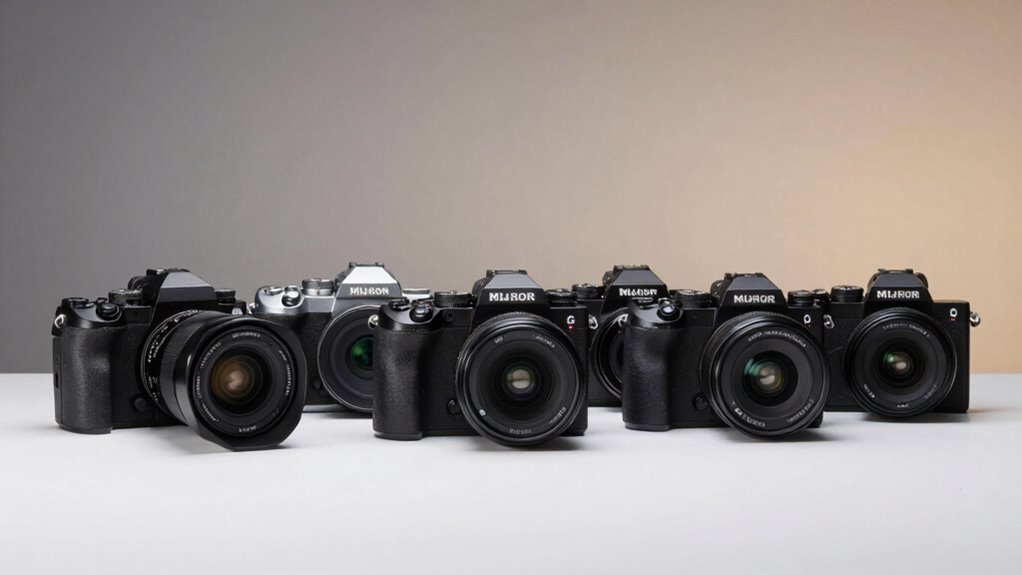

Searching for the best mirrorless cameras on Amazon USA in 2026? The top pick, the Sony Alpha a7 III, offers a versatile blend of image quality and advanced features suitable for enthusiasts and professionals alike. The Canon EOS R50 stands out as a more affordable option with excellent autofocus for beginners, while the Nikon Z50 II provides compact design and solid video capabilities for travel photographers. Each camera presents its own tradeoffs, such as price versus performance or size versus feature set. Continue reading for an in-depth comparison that helps match your needs with the right mirrorless camera.

Get the latest gadgets delivered free with Prime
- Fast, free delivery on millions of items
- Prime Video, Amazon Music and more included
- Member-only deals all year
Complete the kit



Key Takeaways
- The Sony Alpha a7 III remains the most versatile option, excelling in both photo and video quality for a wide range of users.
- Canon‘s EOS R50 and R100 series provide excellent entry points with simpler interfaces and more affordable prices, ideal for beginners.
- Compact models like the Nikon Z50 II deliver portability without sacrificing core features, perfect for travel and casual shooting.
- High-end options such as the Sony a7 III come with higher price tags but offer superior build quality, sensor size, and lens compatibility.
- Bundled packages often include lenses and accessories, providing better value but sometimes at the cost of flexibility or premium features.
| Canon EOS R50 Mirrorless Camera with RF-S18-45mm F4.5-6.3 IS STM Lens Kit |  | Best Overall | Sensor: 24.2 Megapixel CMOS (APS-C) | Lens: RF-S18-45mm F4.5-6.3 IS STM | Video Recording: 4K at 30 fps, Full HD at 120 fps | VIEW ON AMAZON | See Our Full Breakdown |
| Canon EOS R50 Mirrorless Camera with 18-45mm Lens Bundle |  | Best for Beginners | Sensor Type: CMOS | Sensor Resolution: 24.2 MP | Lens Mount: Canon RF | VIEW ON AMAZON | See Our Full Breakdown |
| Nikon Z50 II with Two Lenses – Compact Mirrorless Camera with 20.9MP Sensor, 4K Video, and Wireless Sharing |  | Best Compact All-Rounder | Sensor: 20.9 MP APS-C (DX format) | Video: 4K UHD/60p, 120p slow-motion Full HD | Autofocus: Subject detection and tracking for 9 subjects | VIEW ON AMAZON | See Our Full Breakdown |
| Canon EOS R100 Mirrorless Camera with RF-S 18-45mm Lens Bundle |  | Best Budget-Friendly Entry-Level | Sensor: 24.1 MP APS-C CMOS | Processor: DIGIC 8 | Lens: RF-S 18-45mm f/4.5-6.3 IS STM | VIEW ON AMAZON | See Our Full Breakdown |
| Canon EOS R100 Mirrorless Camera RF-S18-45mm F4.5-6.3 IS STM Lens Kit |  | Best Compact and Portable | Sensor: 24.1 Megapixel CMOS (APS-C) | Lens: RF-S18-45mm F4.5-6.3 IS STM | Video: 4K at 24 fps, Full HD at 60 fps | VIEW ON AMAZON | See Our Full Breakdown |
| Sony ZV-E10 Mirrorless Camera with 16-50mm Lens & Tripod Bundle |  | Best for Content Creators and Videographers | Sensor: APS-C | Lens: 16-50mm II Power Zoom | Video Recording: 4K | VIEW ON AMAZON | See Our Full Breakdown |
| Sony Alpha a7 III Mirrorless Camera with 28-70mm Lens |  | Best for Professional Photography and Serious Enthusiasts | Sensor Type: 35mm full frame (Exmor R CMOS) | Resolution: 24.2 MP | Maximum Shutter Speed: 1/8000 seconds | VIEW ON AMAZON | See Our Full Breakdown |
| mirrorless cameras on amazon usa | Sensor | Lens | Autofocus |
|---|---|---|---|
| Canon EOS R50 Mirrorless Camer | 24.2 Megapixel CMOS (APS-C) | RF-S18-45mm F4.5-6.3 IS STM | Dual Pixel CMOS AF II with 651 zones |
| Canon EOS R50 Mirrorless Camer | — | — | — |
| Nikon Z50 II with Two Lenses | 20.9 MP APS-C (DX format) | — | Subject detection and tracking for 9 subjects |
| Canon EOS R100 Mirrorless Came | 24.1 MP APS-C CMOS | RF-S 18-45mm f/4.5-6.3 IS STM | Dual Pixel CMOS AF with 143 zones |
| Canon EOS R100 Mirrorless Came | 24.1 Megapixel CMOS (APS-C) | RF-S18-45mm F4.5-6.3 IS STM | Face and Eye Detection |
| Sony ZV-E10 Mirrorless Camera | APS-C | 16-50mm II Power Zoom | — |
| Sony Alpha a7 III Mirrorless C | — | — | — |
More Details on Our Top Picks
Canon EOS R50 Mirrorless Camera with RF-S18-45mm F4.5-6.3 IS STM Lens Kit
This model stands out for its combination of high image quality, fast autofocus, and versatile 4K video, making it a well-rounded choice for enthusiasts who want both photography and content creation capabilities. Compared to the Nikon Z50 II, the Canon EOS R50 offers slightly better autofocus with Dual Pixel CMOS AF II and more user-friendly interface, but its focal length range could be limiting for some users. Its high-resolution sensor and quick shooting speeds make it suitable for capturing fast-moving subjects or vlogging with ease, yet the complexity of controls may be overwhelming for absolute beginners. The included RF-S18-45mm lens is versatile but somewhat limited for specialized photography, especially in tight spaces or landscapes. Overall, this camera balances performance and usability, ideal for serious hobbyists who want flexibility in both stills and video.
Pros:- High image quality with 24.2MP sensor and excellent low-light performance
- Fast autofocus with Dual Pixel CMOS AF II and subject tracking
- Versatile 4K video recording with high-quality output
Cons:- Limited focal length range may restrict certain types of photography
- Complex interface could require a learning curve for new users
Best for: Intermediate hobbyists seeking a versatile camera for both photography and video, who are comfortable learning advanced features.
Not ideal for: Complete beginners who may find the menu system and autofocus options overwhelming, or outdoor photographers needing rugged weather resistance.
- Sensor:24.2 Megapixel CMOS (APS-C)
- Lens:RF-S18-45mm F4.5-6.3 IS STM
- Video Recording:4K at 30 fps, Full HD at 120 fps
- Autofocus:Dual Pixel CMOS AF II with 651 zones
- Continuous Shooting:Up to 12 fps with electronic first curtain, 15 fps with electronic shutter
- Viewfinder:2.36 million-dot EVF
Our verdict“This is a strong all-around choice for enthusiasts who want advanced features and flexibility without excessive complexity.”
Canon EOS R50 Mirrorless Camera with 18-45mm Lens Bundle
This bundle targets newcomers and casual shooters with its lightweight design, straightforward controls, and creative features like vertical video. Compared with the Canon EOS R100, the R50 offers a slightly more advanced autofocus system and better connectivity options, making it easier to learn and expand. Its user-friendly interface, combined with 4K oversampling and in-camera guides, makes it ideal for those just starting out or vlogging casually. The included 18-45mm kit lens covers a wide range of everyday scenarios, though it’s limited in zoom and low-light performance due to the aperture range. While lacking water resistance and a built-in flash, this camera simplifies the process of capturing high-quality images and videos for social media. It’s best suited for beginners who want an affordable, easy-to-operate camera that still delivers good results.
Pros:- Lightweight and easy to operate, perfect for beginners
- High-quality 4K oversampling video and creative tools like vertical video
- Included versatile kit lens suitable for various shooting scenarios
Cons:- Limited weather resistance, not suitable for harsh outdoor conditions
- No built-in flash, requiring external accessories in certain situations
Best for: Beginners and casual content creators wanting an easy-to-use, versatile camera for everyday photography and vlogging.
Not ideal for: Experienced photographers or outdoor adventurers needing rugged, water-resistant gear or professional-grade features.
- Sensor Type:CMOS
- Sensor Resolution:24.2 MP
- Lens Mount:Canon RF
- Video Resolution:2160p
- Display:Electronic, 3840 x 2160
- Weight:2 pounds
Our verdict“This camera makes the most sense for new users seeking a straightforward, capable entry-level mirrorless option.”
Nikon Z50 II with Two Lenses – Compact Mirrorless Camera with 20.9MP Sensor, 4K Video, and Wireless Sharing
The Nikon Z50 II excels at portability and versatility, with its 20.9MP sensor and included zoom lenses making it a practical choice for travel and everyday photography. It surpasses some competitors like the Canon EOS R100 in image resolution and offers a more advanced autofocus system, especially with subject detection and tracking. Its dual lenses cover a broad range of focal lengths, appealing to photographers who want to shoot everything from landscapes to portraits without swapping lenses. However, its low-light capabilities are somewhat limited without additional accessories, and its menu system can be complex for beginners. The wireless sharing feature streamlines photo transfer, but battery life could be improved for longer outings. Overall, this camera is ideal for travelers and hobbyists who need a compact, capable kit without sacrificing image quality.
Pros:- High-resolution 20.9MP sensor for detailed images
- Includes two zoom lenses for flexible shooting
- Wireless sharing via Nikon SnapBridge simplifies workflow
Cons:- Limited low-light performance without additional gear
- Menu system may present a learning curve for new users
- Battery life could be better for extended sessions
Best for: Travelers and hobbyists wanting a lightweight camera with versatile zoom lenses and wireless sharing features.
Not ideal for: Low-light shooters or those needing rugged outdoor equipment, due to limited weather sealing and battery life.
- Sensor:20.9 MP APS-C (DX format)
- Video:4K UHD/60p, 120p slow-motion Full HD
- Autofocus:Subject detection and tracking for 9 subjects
- Connectivity:Wireless photo sharing via Nikon SnapBridge
- Included Lenses:16-50mm and 50-250mm zoom
Our verdict“This compact kit suits travelers who want quality images and easy sharing, with some tradeoffs in low-light conditions.”
Canon EOS R100 Mirrorless Camera with RF-S 18-45mm Lens Bundle
The Canon EOS R100 is designed for absolute beginners seeking a straightforward camera with high-quality results. Its 24.1MP APS-C sensor produces sharp images, and the DIGIC 8 processor handles 4K video and fast autofocus reliably. Compared to higher-end models like the EOS R50, the R100 focuses on simplicity, making it easier for new users to pick up and shoot with confidence. The included RF-S 18-45mm lens is versatile enough for everyday shots, though its limited zoom range and aperture may restrict low-light or creative shots. Lacking in-body stabilization and a water-resistant build, it’s best used in controlled environments. This camera is perfect for casual photographers or first-time buyers who prioritize ease of use and decent image quality without extra complexity or expense.
Pros:- Simple, intuitive interface and auto modes for easy shooting
- High-quality 24.1 MP sensor with reliable autofocus
- Built-in image stabilization for sharper handheld photos
Cons:- Limited zoom range on the kit lens
- No in-body stabilization or water resistance
- Crop factor in 4K videos may affect framing
Best for: Beginners and casual photographers stepping into mirrorless cameras for everyday shots and social media content.
Not ideal for: Advanced photographers or outdoor shooters needing rugged, high-performance gear or extensive lens options.
- Sensor:24.1 MP APS-C CMOS
- Processor:DIGIC 8
- Lens:RF-S 18-45mm f/4.5-6.3 IS STM
- Video:4K at 24p, Full HD at 60p
- Autofocus:Dual Pixel CMOS AF with 143 zones
- Viewfinder:2.36m-Dot OLED EVF
Our verdict“This is a practical entry-level option for those new to mirrorless photography who want straightforward performance.”
Canon EOS R100 Mirrorless Camera RF-S18-45mm F4.5-6.3 IS STM Lens Kit
This version emphasizes portability, with its lightweight design paired with a 24.1MP sensor and 4K video, making it ideal for content creators on the go. Compared to the bundle with the same name, this kit emphasizes its minimal footprint and ease of carry, perfect for travel or casual shooting. Its autofocus with face and eye detection, combined with built-in stabilization, ensures sharp images even in dynamic environments. However, the limited lens zoom range and aperture in the kit lens may hinder low-light shooting or creative flexibility. The absence of a built-in flash and lack of rugged features mean it’s not suited for challenging outdoor conditions. For those prioritizing size and ease of use, this camera offers a compelling combination of image quality and portability.
Pros:- Extremely lightweight and portable design
- High-quality 24.1 MP sensor and 4K video capabilities
- Face and eye detection autofocus enhances ease of use
Cons:- Limited zoom range and aperture may restrict low-light and creative shots
- No built-in flash or rugged features for harsh environments
Best for: Travelers and casual shooters seeking a compact, lightweight camera for everyday photography and vlogging.
Not ideal for: Outdoor adventurers or professionals needing weather resistance, extensive lens options, or high-speed performance.
- Sensor:24.1 Megapixel CMOS (APS-C)
- Lens:RF-S18-45mm F4.5-6.3 IS STM
- Video:4K at 24 fps, Full HD at 60 fps
- Autofocus:Face and Eye Detection
- Weight:Approximately 1.5 pounds
- Connectivity:Wi-Fi & Bluetooth
Our verdict“This compact camera is best suited for those who need portability without sacrificing core image quality.”
Sony ZV-E10 Mirrorless Camera with 16-50mm Lens & Tripod Bundle
The Sony ZV-E10 excels as a versatile content creation tool, especially compared to the more traditional Sony Alpha a7 III. Its large APS-C sensor and 4K video with real-time autofocus make it ideal for vloggers and streamers who need quick, reliable focus and flexible angles, thanks to its vari-angle touchscreen. The bundled accessories, including a tripod and memory card, add immediate value for those starting out or upgrading their vlogging setup. However, the camera’s complexity and shorter battery life could challenge beginners or those planning long shooting sessions without extra batteries. Unlike the a7 III, which leans toward professional photography, the ZV-E10 prioritizes ease of use and portability for on-the-go content creation at the expense of some advanced controls.
Pros:- High-quality 4K video with advanced autofocus for sharp, professional-looking content
- Vari-angle touchscreen offers flexible framing and creative angles
- Includes a complete bundle with accessories, reducing additional purchases
Cons:- Can be overwhelming for users unfamiliar with mirrorless systems
- Battery life is limited, requiring extra batteries for extended sessions
Best for: Aspiring YouTubers, streamers, and content creators seeking a comprehensive, beginner-friendly kit.
Not ideal for: Professional photographers or videographers who need extensive manual controls and longer battery life for demanding shoots.
- Sensor:APS-C
- Lens:16-50mm II Power Zoom
- Video Recording:4K
- Included Accessories:64GB Memory Card, Soft Bag, Tripod, Memory Card Reader, Micro HDMI Cable, Hand Strap, Cleaning Kit
Our verdict“This camera makes the most sense for content creators who want a versatile, ready-to-shoot setup without the complexity of high-end professional gear.”
Sony Alpha a7 III Mirrorless Camera with 28-70mm Lens
The Sony a7 III stands out for its full-frame sensor and high-resolution 24.2MP images, providing superior detail and depth compared to crop-sensor cameras like the Sony ZV-E10. Its fast autofocus with 693 phase-detection points ensures sharp shots even in fast-paced environments, making it a compelling choice for professional photographers and videographers who need reliable, high-quality results. The camera’s compact form and 4K HDR video add to its appeal for portable shooting, yet the complex menu system can be daunting for newcomers. While the a7 III’s price is higher, it offers a level of image quality and performance that justifies the investment for serious users, unlike the more budget-friendly ZV-E10 designed for casual or beginner content creators.
Pros:- Full-frame 24.2MP sensor delivers stunning, high-detail images
- Fast, accurate autofocus with 693 phase-detection points for reliable shooting
- 4K HDR video capabilities suit professional video production
- Lightweight and compact for a full-frame camera
Cons:- Premium price may be prohibitive for casual users
- Complex menu system can slow down workflow for beginners
- Battery life may require multiple spare batteries during long shoots
Best for: Professional photographers and videographers who require high image quality and advanced features in a portable package.
Not ideal for: Casual shooters or beginners who may find the menu system and price point too overwhelming or unnecessary.
- Sensor Type:35mm full frame (Exmor R CMOS)
- Resolution:24.2 MP
- Maximum Shutter Speed:1/8000 seconds
- ISO Range:50 to 204,800
- Video Resolution:4K UHD 2160p
- Weight:1.8 pounds
- Battery:NP-FZ100
- File Format:RAW
Our verdict“This camera is best suited for those needing professional-grade image quality and robust performance in a lightweight form factor, despite its higher cost and complexity.”

How We Picked
The cameras in this roundup were selected based on their popularity on Amazon USA, user reviews, and overall value. Key criteria included image and video performance, build quality, ease of use, battery life, and compatibility with lenses and accessories. We prioritized models that cater to different skill levels and budgets, ensuring each offers a clear advantage in its category. The ranking reflects a balance between performance, price, and versatility, helping buyers find a camera suited to their specific needs.| mirrorless cameras on amazon usa | Autofocus |
|---|---|
| Canon EOS R50 Mirrorless Camer | Dual Pixel CMOS AF II with 651 zones |
| Canon EOS R50 Mirrorless Camer | — |
| Nikon Z50 II with Two Lenses | Subject detection and tracking for 9 subjects |
| Canon EOS R100 Mirrorless Came | Dual Pixel CMOS AF with 143 zones |
| Canon EOS R100 Mirrorless Came | Face and Eye Detection |
| Sony ZV-E10 Mirrorless Camera | — |
| Sony Alpha a7 III Mirrorless C | — |
Factors to Consider When Choosing Mirrorless Cameras On Amazon Usa
Choosing the right mirrorless camera involves more than just specs. Consider your main photography style—whether it’s capturing moments on the go, shooting high-resolution landscapes, or recording videos. Budget also plays a crucial role; investing in a camera with more advanced sensors and features often pays off if you plan to grow your skills. Additionally, lens compatibility and future upgrade options can extend the camera’s usefulness. Be mindful of size and weight if portability matters, and check for user-friendly controls if you’re new to mirrorless systems. Lastly, think about how much you value features like in-body stabilization, 4K video, and Wi-Fi connectivity, which can influence your overall satisfaction and workflow.Performance and Image Quality
Performance encompasses sensor size, autofocus, and image processing. Larger sensors like full-frame deliver better detail and low-light performance but come at higher prices and larger sizes. APS-C sensors, found in many models here, strike a balance between quality and portability. Autofocus speed and accuracy are vital, especially for action or wildlife photography. Look for cameras with eye-tracking and subject detection features for better results in dynamic scenes. Remember, a higher megapixel count isn’t always better if it compromises low-light performance or introduces noise at higher ISO settings.
Ease of Use and Interface
Beginners should prioritize intuitive controls, a clear menu system, and helpful guides built into the camera. Models like the Canon EOS R50 and R100 are designed with simplicity in mind, making them excellent starting points. More advanced users might appreciate customizable buttons and advanced menu options. Touchscreens can enhance navigation, but check their responsiveness. Weight and size also influence usability—lighter, compact models reduce fatigue during extended shoots. Consider whether the camera has a good grip and easy access to essential controls for a smoother shooting experience.
Video Capabilities
If video shooting is a priority, look for cameras with 4K recording, good autofocus in video mode, and features like microphone input and stabilization. The Nikon Z50 II and Sony ZV-E10 excel in this area, offering solid video specs in compact bodies. Higher-end models like the Sony a7 III provide 4K with full pixel readout and better color profiles, suitable for more serious videographers. Beware of cameras with limited recording time or no microphone input, which can restrict creative options. Evaluate your needs based on whether you want casual vlogging or professional-quality production.
Lens Compatibility and Expandability
Lens ecosystem is a key factor—more established brands like Sony, Canon, and Nikon offer a wider selection of lenses, giving you room to grow. The Sony a7 III’s full-frame system is compatible with a vast array of high-quality lenses but comes at a premium price. Canon’s RF and RF-S lenses balance quality and affordability, especially when bundled. Nikon’s Z-mount system is rapidly expanding, making it a compelling choice for future upgrades. Keep in mind that some entry-level models have limited lens options, which might restrict your creative choices over time.
Portability and Design
If portability is a priority, compact models like the Nikon Z50 II or Canon EOS R50 are ideal, especially for travel or casual shooting. These tend to be lighter and smaller, but sometimes at the expense of features like larger batteries or rugged build quality. Larger, more robust models like the Sony a7 III offer better durability and ergonomic design, suitable for demanding shooting conditions. Consider your typical shooting environment and whether you prefer a lightweight setup or a more substantial, weather-sealed body for outdoor work.
Frequently Asked Questions
Is a full-frame mirrorless camera worth the extra cost?
Full-frame mirrorless cameras generally offer superior image quality, better low-light performance, and a shallower depth of field. They often come with more advanced autofocus and faster burst rates, making them suitable for professional work. However, they tend to be heavier, larger, and more expensive, including lenses. If your photography demands high detail or you frequently shoot in challenging lighting, a full-frame camera can be a worthwhile investment. For casual or beginner shooters, APS-C models often provide excellent results at a lower price point.
Should I prioritize video features or still photo quality?
This depends on your primary use case. If you plan to create videos, look for cameras with 4K recording, good autofocus in video mode, and microphone inputs. The Sony ZV-E10 and Nikon Z50 II are strong options here. For still photography, sensor size, autofocus, and lens selection are more critical. Many cameras excel at both, but high-end models like the Sony a7 III are designed to deliver professional-quality results in both areas. Balance your needs carefully—prioritizing one might mean compromising slightly on the other.
Can I upgrade lenses later without changing the camera body?
Yes, most mirrorless systems are designed for expandability, allowing you to upgrade lenses over time. Brands like Sony, Canon, and Nikon have extensive lens lines, giving you options suited for different styles and budgets. Keep in mind that full-frame systems typically use larger, more expensive lenses, while APS-C models might have more affordable options. When choosing a camera, consider the availability and cost of future lenses, as this will impact your overall investment and creative potential down the line.
Is weather sealing important in a mirrorless camera?
Weather sealing is beneficial if you plan to shoot outdoors frequently or in challenging conditions. It helps protect the camera from dust, moisture, and light rain, increasing durability and reducing worry during outdoor shoots. Not all mirrorless cameras have weather sealing, so if you work in unpredictable environments, investing in a sealed body can be worthwhile. However, weather-sealed cameras tend to be heavier and more expensive, so weigh the benefits against your typical shooting conditions and budget.
How much should I expect to spend on a good mirrorless camera?
Entry-level mirrorless cameras can be found for around $500 to $800, offering solid performance for beginners. Mid-range models typically cost between $800 and $1500, adding more advanced features and better image quality. High-end options like the Sony a7 III or similar full-frame models usually start around $2000 or more, often with bundled lenses. Your budget should reflect your intended use—investing more pays off if you need better performance, durability, and future-proofing. For casual shooting or learning, affordable models often provide enough features to get started without overspending.
Conclusion
The best overall choice, the Sony Alpha a7 III, caters to serious enthusiasts and professionals needing top-tier image quality and versatility. The Canon EOS R50 and Nikon Z50 II are excellent for beginners and travelers, offering simplicity and portability at a lower price. For those prioritizing budget, the Canon EOS R100 series provides a compelling entry point. If you want high-end features and expandability, the Sony a7 III remains the premium pick. Your ideal camera depends on your skill level, budget, and specific needs—consider these factors carefully to find the best fit.
As an affiliate, we earn on qualifying purchases.Halloween Picks
halloween