
📊 Full opportunity report: Disk Is the Contract: Inside Threlmark’s Local-First Architecture on ThorstenMeyerAI.com — validation score, market gap, and execution plan.
TL;DR
Threlmark employs a unique local-first architecture where project data resides on disk as JSON files, making the system portable, inspectable, and resilient without a central database. This approach enables seamless integration and recovery, emphasizing data integrity and openness.
Threlmark’s latest architecture design centers on treating disk-based JSON files as the sole source of truth for project data, removing the need for a server or cloud storage. This approach is detailed in Disk Is the Contract: Inside Threlmark’s Local-First Architecture. This approach makes the system highly portable, inspectable, and restartable, emphasizing data integrity and interoperability.
Threlmark’s core architectural decision is that there is no dedicated server or database; instead, all project data is stored in plain JSON files on disk, with the on-disk layout serving as the contract for data access and modification. The data root defaults to ~/.threlmark, containing files such as threlmark.json, links.json, and individual project folders with files like project.json, board.json, and one file per roadmap item in the items/ directory.
This design allows external tools to participate seamlessly, as all data is accessible through simple file reads and writes. The system ensures safety through atomic file operations, where writes occur via temporary files renamed atomically, preventing corruption during crashes. It also employs read-merge-write techniques with tolerant normalization, preserving unknown fields for forward compatibility. External tools can modify individual items without race conditions or conflicts, thanks to single-file atomic writes and self-healing board logic that reconciles actual files with the in-memory state on each read.
Disk is the contract: inside a local-first roadmap hub
A Next.js app on top of plain JSON files — no database, no cloud, no accounts. The key decision: the on-disk layout IS the API. Everything else cascades from taking that seriously.
There is no server-of-record — the files are the record
The UI and any external tool reach the same files through the same discipline. The data root defaults to ~/.threlmark — home-based, because it’s a shared hub every one of your apps points at.
Inspectable
Every artifact is a file you can cat, diff, grep, commit.
Portable · no lock-in
Back up with cp, sync with Dropbox / git, migrate trivially.
Interoperable
Any tool in any language joins by reading / writing files.
Restartable
No in-memory state to lose — stateless over the files.
Two disciplined patterns instead of a database
“Just use files” is easy to get wrong. These two patterns — ported from a battle-tested sibling app — are what make file-based state sound rather than reckless.
Atomic writes
Write to a temp file in the same dir, then rename() over the target. Rename is atomic on one filesystem — a crash mid-write leaves the complete old file or the complete new one, never a half.
The board heals itself
A single roadmap.json array races when two tools write at once. One file per card makes writes collision-free. Lane order lives in board.json and reconciles on read.
board.json. It writes an item file — the board fixes itself on Threlmark’s next read. Unknown keys are preserved, so the contract is forward-compatible.The numbers can’t drift from the files
Anything computable from item state is computed — so the displayed numbers can never disagree with the underlying JSON. Priority is the clearest example: it’s calculated on read, never persisted.
priority — computed on read
Impact weighted heaviest; effort the only axis that subtracts. Reused verbatim from the original tool, so imported cards rank identically.
A handoff is a first-class flow event
The genuinely 2026-shaped part: most building is done by AI agents, so Threlmark closes the loop. Watch a card go from ranked to Done without anyone dragging it.
Handoff → report → self-move
The brief carries a reporting protocol. The agent reports through REST or the filesystem — and a done report moves the card itself.
POST /api/projects/:id/
items/:itemId/report
Direct call. Applied immediately.
drop reports/<file>.json
→ ingested on read
Robust even if the server’s down at finish time.
A small formula, and an honest hosting caveat
Because items are globally addressable (<projectId>/<itemId>), the Portfolio ranks everything together by a status-weighted score — finishing beats starting, blockers get a boost.
Portfolio ranking — status-weighted
In-flight work floats to the top; bottlenecks cost the most, so blockers get nudged up.
Static read-only demo
Seeded data, writes to localStorage. Try-before-you-clone.
Personal Node instance
Password-gated, persistent backed-up THRELMARK_DATA_DIR.
Multi-tenant SaaS
Add accounts + per-tenant isolation. A separate build.
src/lib/*/store.ts is the natural seam — the same boundary that keeps the local tool simple is the one you’d extend for multi-tenancy. The architecture doesn’t fight that future; it just doesn’t pay for it until you need it.
Why Disk as the Contract Enhances Project Management
This approach matters because it offers a highly portable, transparent, and resilient way to manage project data. Without reliance on external servers or proprietary formats, users can back up, migrate, or modify their project data with standard tools. It also enables better interoperability, as any tool that can read and write JSON can participate. Additionally, the system’s restartability ensures data integrity even after crashes, making it suitable for critical workflows where reliability is paramount.
As an affiliate, we earn on qualifying purchases.
The Evolution of Local-First Project Tools
Traditional project management tools often depend on centralized servers or cloud storage, which can introduce lock-in, data silos, and recovery challenges. Threlmark’s approach offers an alternative that emphasizes local-first principles. Threlmark’s design builds on the growing trend of local-first applications, emphasizing user control and data portability. Its architecture draws inspiration from battle-tested file-based systems, emphasizing atomic operations and tolerant merging to ensure safety and compatibility. This approach aligns with broader movements toward open, interoperable, and resilient software systems.
“The core idea is that the on-disk layout is the API, making the data portable and the system restartable without a server. For a deeper understanding, see Disk Is the Contract: Inside Threlmark’s Local-First Architecture.”
— Thorsten Meyer
![DeskFX Free Audio Effects & Audio Enhancer Software [PC Download]](https://m.media-amazon.com/images/I/41fXbDohyuS._SL500_.jpg)
DeskFX Free Audio Effects & Audio Enhancer Software [PC Download]
- Audio Transformation: Enhance sound through speakers and headphones
- Sound Quality Improvement: Adjust audio with various effects
- Audio Control: Manage sound settings for hardware
As an affiliate, we earn on qualifying purchases.
As an affiliate, we earn on qualifying purchases.
Remaining Questions About Threlmark’s Architecture
While the system’s design is well-documented, it is not yet clear how it performs under high concurrency or large-scale projects. The practical limits of file-based coordination, especially in multi-user scenarios or with extensive automation, remain to be tested. Additionally, the user experience implications of managing many small files versus traditional databases are still being explored.
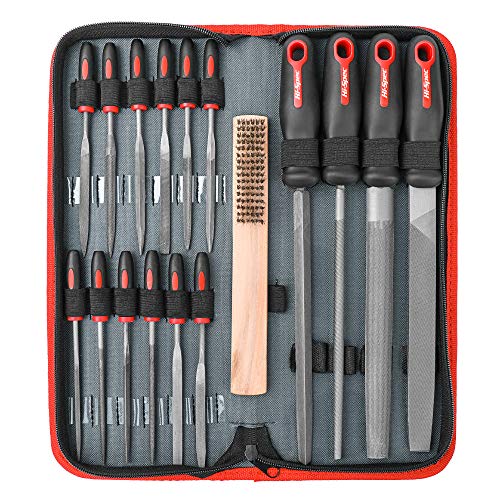
Hi-Spec Metal Hand & Needle File Tool Kit Half-Round Round & Triangle Files
- Complete Filing Set: Includes 4 full-length and 12 needle files
- High-Quality Material: Made from heat-treated T12 high-carbon steel
- Versatile for Various Materials: Suitable for metal, wood, and plastics
As an affiliate, we earn on qualifying purchases.
As an affiliate, we earn on qualifying purchases.
Next Steps for Threlmark’s Development and Adoption
Further development will likely focus on performance optimization, multi-user support, and integrations with external tools. Community feedback and real-world testing will determine how well the architecture scales and how it can be refined for broader adoption. The project team may also develop best practices and tooling to streamline workflows around the file-based system.

eufy Security eufyCam S330 (eufyCam 3), 4-Cam Kit, 4K Solar
- Night Vision with 4K Clarity: Superior low-light night surveillance
- AI Intruder Detection: Identifies friends and strangers accurately
- Local Storage with Encryption: Expandable up to 16TB, secure data storage
As an affiliate, we earn on qualifying purchases.
As an affiliate, we earn on qualifying purchases.
Key Questions
How does Threlmark ensure data safety without a database?
It uses atomic file writes via temporary files and rename operations, preventing corruption during crashes and ensuring consistent data state.
Can external tools modify Threlmark data?
Yes, since all data is stored in accessible JSON files, any tool capable of reading and writing JSON can participate, enabling interoperability.
What are the advantages of this disk-based approach?
Portability, inspectability, restartability, and no lock-in, allowing users to back up, migrate, and integrate easily with other systems.
Are there limitations to this architecture?
Potential challenges include managing concurrency at scale and ensuring performance with many small files, which are areas for ongoing testing and development.
Source: ThorstenMeyerAI.com