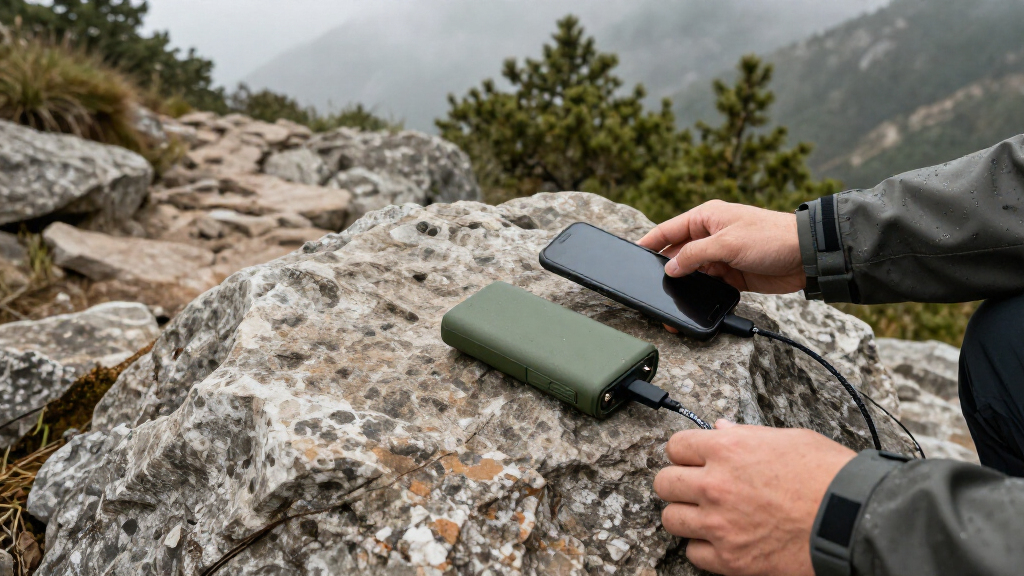

Rugged military-grade power banks trade some pocketability for protection, but the label alone does not tell you how well one suits a wet trail, a worksite, or a long trip. My best overall pick is the NESTOUT 15,000mAh, which pairs the lineup’s largest NESTOUT capacity with 32W USB-C PD and IP67 protection. The ASWAYKE 20,000mAh stands out for longer trips and its 420-lumen lantern, while the INIU 10,000mAh 45W models favor faster charging and practical carry features. The main tradeoffs are capacity versus size, charging speed versus simplicity, and proven protection details versus added extras. Read on for the full breakdown and guidance on choosing among these rugged power banks.

Get the latest gadgets delivered free with Prime
- Fast, free delivery on millions of items
- Prime Video, Amazon Music and more included
- Member-only deals all year
Complete the kit



Key Takeaways
NESTOUT 15,000mAh leads on balanced capacity: It combines more stored power than the 10,000mAh NESTOUT options with 32W USB-C PD and IP67 protection.
INIU’s 45W options prioritize speed: They offer more output than the listed NESTOUT models, making them better suited to compatible devices that benefit from faster charging.
ASWAYKE splits the capacity choice: Its 10,000mAh model emphasizes IP68 protection, while the 20,000mAh version adds longer-runtime potential and a 420-lumen lantern.
The smallest capacity has a clear job: NESTOUT’s 5,000mAh model is the compact choice for topping up a phone, not for repeated recharging across a long trip.
Rugged claims vary in usefulness: IP67 and IP68 ratings describe water and dust resistance under specified conditions; they do not establish a universal military certification or cover every kind of impact.
| ELECOM NESTOUT 10,000mAh Rugged Power Bank with 20W USB-C PD, IP67 Waterproofing and Shock Protection |  | Best Overall | Battery capacity: 10,280mAh | USB-C Power Delivery: Up to 20W | Ports: USB Type-A and USB Type-C | VIEW LATEST PRICE | See Our Full Breakdown |
| NESTOUT 10,280mAh Rugged Outdoor Power Bank with USB-C PD, IP67 Waterproofing and Shock Protection |  | Best for Accessory-Minded Campers | Battery capacity: 10,280mAh | USB-C Power Delivery: Up to 20W | Ports: 2: USB Type-A and USB Type-C | VIEW LATEST PRICE | See Our Full Breakdown |
| NESTOUT Rugged 5,000mAh Power Bank, 15W USB-C, IP67 Waterproof, Olive Green |  | Best Compact Pick | Battery capacity: 5,000mAh | USB-C Power Delivery: 15W | Ports: 2: USB Type-A and USB Type-C | VIEW LATEST PRICE | See Our Full Breakdown |
| INIU Rugged 10,000mAh Portable Charger, 45W USB-C Power Bank with Flashlight, Carabiner and Cable |  | Best for Faster Charging and Included Gear | Battery capacity: 10,000mAh | Maximum charging output: 45W | USB-C outputs: 2 | VIEW LATEST PRICE | See Our Full Breakdown |
| NESTOUT Rugged 15,000mAh Power Bank with 32W USB-C PD, IP67 Waterproofing, and Shockproof Design |  | Best for Longer Trips | Battery capacity: 15,000mAh | Maximum charging power: 32W | Ports: 3: USB Type-A and USB Type-C | VIEW LATEST PRICE | See Our Full Breakdown |
| INIU Rugged 10,000mAh Portable Charger with 45W Fast Charging |  | Best for Fast Charging on Day Hikes | Battery capacity: 10,000mAh | Maximum output: 45W | Ports: 2 USB Type-C | VIEW LATEST PRICE | See Our Full Breakdown |
| ASWAYKE 10,000mAh Rugged USB-C PD Power Bank with IP68 Waterproofing and Drop Protection |  | Best for Visible Battery Monitoring | Battery capacity: 10,000mAh | Battery type: Lithium-ion | Ports: USB-C and USB-A, as described; listed connector type is D-sub 15 | VIEW LATEST PRICE | See Our Full Breakdown |
| ASWAYKE 20,000mAh Rugged Power Bank with 420-Lumen Camping Lantern |  | Best for Camp Lighting and Battery Reserve | Battery capacity: 20,000mAh | Battery cell type: Lithium polymer | Charging and ports: USB-C PD fast charging; USB-C and USB-A ports | VIEW LATEST PRICE | See Our Full Breakdown |
| BLAVOR 15,000mAh Rugged LiFePO4 Power Bank with IP67 Protection |  | Best for Long-Term Battery Durability | Battery capacity: 15,000mAh | Battery cell type: LiFePO4; rated for over 3,500 charge cycles | Charging: 20W USB-C Power Delivery | VIEW LATEST PRICE | See Our Full Breakdown |
| NESTOUT 10,000mAh Rugged Power Bank with 20W USB-C PD, IP67 Waterproofing, and Shockproof Design |  | Best for Documented Drop Protection | Battery capacity: 10,280mAh | Maximum charging power: 20W | Ports: USB Type-A and USB Type-C; 2 ports | VIEW LATEST PRICE | See Our Full Breakdown |
| rugged military grade power bank | Battery capacity | Ports | Weight | Water and dust resistance |
|---|---|---|---|---|
| ELECOM NESTOUT 10,000mAh Rugge | 10,280mAh | USB Type-A and USB Type-C | 241g | IP67; up to 30 minutes at 1 meter |
| NESTOUT 10,280mAh Rugged Outdo | 10,280mAh | 2: USB Type-A and USB Type-C | 241g | IP67 |
| NESTOUT Rugged 5,000mAh Power | 5,000mAh | 2: USB Type-A and USB Type-C | 4.9 oz | IP67; up to 30 minutes at 1 meter |
| INIU Rugged 10,000mAh Portable | 10,000mAh | — | — | — |
| NESTOUT Rugged 15,000mAh Power | 15,000mAh | 3: USB Type-A and USB Type-C | 364g | IP67; up to 30 minutes at 1 meter |
| INIU Rugged 10,000mAh Portable | 10,000mAh | 2 USB Type-C | 6.9 oz (160 g) | — |
| ASWAYKE 10,000mAh Rugged USB-C | 10,000mAh | USB-C and USB-A, as described; listed connector type is D-sub 15 | 7.68 ounces | IP68; stated submersion up to 1.5m for 30 minutes |
| ASWAYKE 20,000mAh Rugged Power | 20,000mAh | — | 1.5 lb | — |
| BLAVOR 15,000mAh Rugged LiFePO | 15,000mAh | 2 USB-C ports | — | IP67 when the lid is securely closed |
| NESTOUT 10,000mAh Rugged Power | 10,280mAh | USB Type-A and USB Type-C; 2 ports | 241g | IP67; submersion up to 1m for up to 30 minutes |
More Details on Our Top Picks
ELECOM NESTOUT 10,000mAh Rugged Power Bank with 20W USB-C PD, IP67 Waterproofing and Shock Protection
For a balanced mix of protection and everyday charging, I’d put the ELECOM NESTOUT 10,280mAh first. Its IP67 rating covers dust and brief submersion, while the silicone-cushioned shell is tested to a drop standard—useful safeguards for campsites and wet-weather day trips. The two ports and up to 20W USB-C PD make it more flexible than the smaller 5,000mAh NESTOUT, which is better for a short outing than repeated top-ups. The ¼-20 mount also gives this model an accessory option that the INIU RG10000 does not list. The tradeoff is a 241g body and only 10,280mAh; for longer trips, the 15,000mAh NESTOUT carries more reserve. Its tripod and lights are separate purchases, and a suitable wall adapter is recommended for recharging.
Pros:- IP67-rated protection against dust and brief submersion
- Silicone-cushioned shell tested to MIL-STD 810G 516.7 drop standard
- Two USB ports and up to 20W USB-C Power Delivery
- ¼-20 mount supports compatible accessories
Cons:- 10,280mAh capacity is less suited to extended trips than the 15,000mAh NESTOUT
- Tripod and lights are sold separately
- Computer USB charging may be slow or may not work
Best for: Campers and day hikers who want a water- and dust-resistant bank with enough capacity for multiple small-device top-ups.
Not ideal for: Multi-day travelers who need a larger capacity, or buyers who want a tripod or light included in the box.
- Battery capacity:10,280mAh
- USB-C Power Delivery:Up to 20W
- Ports:USB Type-A and USB Type-C
- Water and dust resistance:IP67; up to 30 minutes at 1 meter
- Drop protection:Silicone-cushioned shell; tested to MIL-STD 810G 516.7
- Tripod mount:¼-20
- Weight:241g
- Dimensions:5 x 2.4 x 1.4 inches
Our verdict“Choose this NESTOUT for a balanced rugged build and everyday capacity; pick the 15,000mAh version when trip length matters more.”
NESTOUT 10,280mAh Rugged Outdoor Power Bank with USB-C PD, IP67 Waterproofing and Shock Protection
This NESTOUT is a natural fit for buyers who want a rugged power bank that can join an accessory setup. Its built-in ¼-20 mount supports compatible tripod equipment, and its IP67 shell is rated for dust and brief submersion. Like the ELECOM NESTOUT 10,280mAh, it pairs two ports with up to 20W USB-C PD and a silicone-cushioned, drop-tested housing, so the practical differences between those listings are limited. The 5,000mAh NESTOUT is lighter on capacity, while the 15,000mAh model provides more reserve for longer trips. At 241g, this one is still a meaningful carry, and its tripod and lights are not included. I’d also plan to recharge from a wall adapter supporting at least 18W, since computer USB may be slow or unreliable.
Pros:- IP67-rated against water and dust, including brief submersion
- Silicone-cushioned hard shell tested to a drop standard
- Two ports with up to 20W USB-C Power Delivery
- Built-in ¼-20 mount works with compatible tripod equipment
Cons:- Tripod and lights are sold separately
- 241g weight is more than the 5,000mAh NESTOUT
- Computer USB charging may be slow or may not work
Best for: Campers and outdoor photographers who already use compatible tripod accessories and want IP67 protection in a mid-capacity bank.
Not ideal for: Minimalist hikers seeking the lightest option, or buyers who need a lantern or tripod included.
- Battery capacity:10,280mAh
- USB-C Power Delivery:Up to 20W
- Ports:2: USB Type-A and USB Type-C
- Water and dust resistance:IP67
- Drop protection:Silicone-cushioned shell; tested to MIL-STD 810G 516.7
- Tripod mount:¼-20 inch
- Weight:241g
- Dimensions:5 x 2.4 x 1.4 inches
Our verdict“Pick this model if you want a tripod-compatible NESTOUT with useful capacity, and consider the 5,000mAh version to reduce carry weight.”
NESTOUT Rugged 5,000mAh Power Bank, 15W USB-C, IP67 Waterproof, Olive Green
When reducing pack weight matters more than carrying spare capacity, the 5,000mAh NESTOUT makes the most sense in this group. It keeps the range’s IP67 protection, silicone-cushioned drop-tested shell, and ¼-20 mount, but cuts capacity to less than half that of the 10,280mAh NESTOUT models. That makes it a simpler backup for a phone or small device on a day hike, rather than a dependable source for several devices over a long weekend. Its listed USB-C output is up to 15W, below the 20W models and well below the INIU RG10000’s listed 45W. The smaller battery also recharges in a listed two hours. Buyers should still account for the recommended wall adapter, and the accessory mount does not mean accessories come in the box.
Pros:- IP67-rated protection with brief submersion capability
- Silicone-cushioned, drop-tested housing
- 15W USB-C Power Delivery and automatic power adjustment
- ¼-20 mount supports compatible accessories
Cons:- 5,000mAh capacity is limited for extended trips
- 15W output is lower than the 20W NESTOUT models and 45W INIU RG10000
- Wall adapter is recommended and accessories are not included
Best for: Day hikers and cyclists who want a compact emergency charge for a phone and value rugged protection over extra capacity.
Not ideal for: Travelers needing repeated phone charges, charging for multiple people, or higher output for demanding devices.
- Battery capacity:5,000mAh
- USB-C Power Delivery:15W
- Ports:2: USB Type-A and USB Type-C
- Water and dust resistance:IP67; up to 30 minutes at 1 meter
- Drop protection:Silicone-cushioned shell; tested to MIL-STD 810G 516.7
- Tripod mount:¼-20 inch
- Weight:4.9 oz
- Battery charge time:2 hours
Our verdict“Choose this compact NESTOUT for a protected day-trip backup, but take a larger model for multi-day charging needs.”
INIU Rugged 10,000mAh Portable Charger, 45W USB-C Power Bank with Flashlight, Carabiner and Cable
The INIU RG10000 takes a different approach to rugged carry: it lists 45W output and includes a flashlight, carabiner, and USB-C cable. That makes it a stronger fit for buyers who value faster charging and useful extras over the NESTOUT models’ documented IP67 rating and MIL-STD drop-test detail. Its 10,000mAh capacity is close to the 10,280mAh NESTOUT, but the supplied specs do not state a water-resistance rating or a tested drop standard, so I would not treat the word “rugged” as equivalent protection. Two USB-C outputs suit a USB-C-centric kit, though no USB-A output is listed. The compact 160g weight and five-year warranty are attractive, but the listed 5V voltage leaves some output details unclear for buyers matching it to specific equipment.
Pros:- Listed maximum output of 45W
- Compact 160g battery weight
- Includes flashlight, carabiner, and USB-C cable
- Five-year warranty
Cons:- No water-resistance rating or drop-test standard is specified in the supplied product data
- Only USB-C outputs are listed; no USB-A port is specified
- Listed voltage is 5V, leaving output compatibility details unclear
Best for: USB-C device owners who prioritize listed 45W output, a low carry weight, and an included flashlight and carabiner.
Not ideal for: Users who need a stated IP rating or drop-test standard for wet, dusty, or impact-prone field use.
- Battery capacity:10,000mAh
- Maximum charging output:45W
- USB-C outputs:2
- Battery type:Lithium polymer
- Listed voltage:5V
- Battery weight:160g
- Dimensions:3.58 x 2.26 x 1.1 inches
- Included accessories:Carabiner, USB-C cable, flashlight
- Warranty:5 years
Our verdict“Choose the INIU for listed high output and included carry gear, while the NESTOUT 10,280mAh is the clearer choice for documented water and drop protection.”
NESTOUT Rugged 15,000mAh Power Bank with 32W USB-C PD, IP67 Waterproofing, and Shockproof Design
For a longer stretch away from an outlet, I’d choose the 15,000mAh NESTOUT over the 10,280mAh versions. It adds roughly half again as much capacity while retaining IP67 water and dust resistance, a silicone-cushioned shell tested to a drop standard, and the ¼-20 accessory mount. Its listed 32W USB-C PD also exceeds the 20W output of the smaller NESTOUTs, giving compatible devices more charging headroom. The tradeoff is a 364g weight and larger stated dimensions, so it is less appealing for a weight-conscious day hike. Compared with the INIU RG10000, this NESTOUT has clearer documented outdoor protection and more capacity, while the INIU lists a higher 45W output and includes a flashlight. The tripod and lights remain separate purchases.
Pros:- 15,000mAh capacity for more charging reserve than the smaller NESTOUTs
- Up to 32W USB-C Power Delivery
- IP67 rating and tested shock-protection design
- Three ports and ¼-20 accessory mount
Cons:- 364g weight is substantially heavier than the 10,280mAh NESTOUT
- Tripod and lights are sold separately
- Computer USB charging may be slow or unavailable; an 18W-or-higher PD adapter is recommended
Best for: Backpackers and field crews who need more phone and small-device charging reserve with stated water, dust, and drop protection.
Not ideal for: Ultralight hikers or buyers who prioritize the highest listed output and an included flashlight over capacity and documented IP67 protection.
- Battery capacity:15,000mAh
- Maximum charging power:32W
- Ports:3: USB Type-A and USB Type-C
- Water and dust resistance:IP67; up to 30 minutes at 1 meter
- Drop protection:Silicone-cushioned shell; tested to MIL-STD 810G 516.7
- Tripod mount:¼-20
- Weight:364g
- Dimensions:5 x 2.4 x 3 inches
Our verdict“Choose this NESTOUT for longer trips where extra capacity and documented rugged protection outweigh the heavier carry.”
INIU Rugged 10,000mAh Portable Charger with 45W Fast Charging
The INIU RG10000 is the strongest fit here for hikers who value charging speed and low pack weight over a large reserve. Its 45W output exceeds the 20W NESTOUT 10,280mAh model, which can matter when you need to top up a compatible phone or small laptop during a short stop. At 6.9 ounces, it is also much lighter than the 1.5-pound ASWAYKE 20,000mAh lantern model. Its IP67 rating, carabiner, and built-in tripod thread suit exposed trails and hands-free setups. The tradeoff is capacity: 10,000mAh is better for day outings than repeated charging on longer trips. It also lists only USB-C ports, so buyers relying on USB-A cables should choose a different option.
Pros:- 45W maximum output offers faster charging for compatible devices than the 20W NESTOUT 10,280mAh model.
- 6.9-ounce weight and compact dimensions suit day packs and travel.
- IP67 protection helps guard against rain, dust, and trail exposure.
- Carabiner and 1/4-inch thread support pack attachment and hands-free mounting.
Cons:- 10,000mAh capacity may fall short on extended trips or when charging several devices repeatedly.
- Only two USB-C ports are listed, with no USB-A port.
- The 45W output is useful only with compatible devices and charging setups.
Best for: Day hikers and travelers carrying USB-C devices who want fast output in a compact, attachable package.
Not ideal for: Multi-day campers who need a larger charging reserve or buyers whose devices and cables depend on USB-A.
- Battery capacity:10,000mAh
- Maximum output:45W
- Ports:2 USB Type-C
- Ingress protection:IP67
- Dimensions:3.6 × 2.3 × 1.1 inches
- Weight:6.9 oz (160 g)
- Mounting features:Built-in 1/4-inch thread; detachable D-ring screw and carabiner
- Warranty:5 years
Our verdict“Choose the INIU RG10000 for lightweight outings where fast USB-C charging matters more than a large battery reserve.”
ASWAYKE 10,000mAh Rugged USB-C PD Power Bank with IP68 Waterproofing and Drop Protection
The ASWAYKE P10 suits outdoor users who want a clear readout and a mix of USB-C and USB-A charging, rather than the INIU RG10000’s higher 45W output and lighter build. Its digital display shows battery percentage and charging current, helping you judge whether the bank is still worth keeping connected. The stated IP68 rating and 2-meter drop protection give it a stronger claimed water and impact profile than the IP67-rated NESTOUT 10,280mAh option. It also has a tripod mount for hands-free use. There are caveats: the warranty is only six months, and the listed connector type conflicts with the description of USB-C and USB-A ports. I would verify the port details before relying on it in the field, and dry the ports after water exposure.
Pros:- Display reports battery percentage, input current, and output current.
- USB-C and USB-A ports are described as supporting simultaneous charging.
- IP68 and stated 2-meter drop protection suit rough outdoor conditions.
- Tripod mount supports hands-free use.
Cons:- Connector information is inconsistent: the listed connector type conflicts with the described USB-C and USB-A ports.
- Six-month warranty is shorter than the five-year warranty listed for the INIU RG10000.
- Ports should be dried before charging after water exposure.
Best for: Campers and field users who want battery and charging-current readouts, plus both USB-C and USB-A connections.
Not ideal for: Buyers who need a clearly documented port configuration, long warranty coverage, or verified high-wattage output.
- Battery capacity:10,000mAh
- Battery type:Lithium-ion
- Ports:USB-C and USB-A, as described; listed connector type is D-sub 15
- Water and dust resistance:IP68; stated submersion up to 1.5m for 30 minutes
- Drop protection:Up to 2m
- Display:Battery percentage, input current, and output current
- Weight:7.68 ounces
- Warranty:6 months
Our verdict“Pick the ASWAYKE P10 if its port configuration checks out and a live battery readout matters more to you than warranty length or charging speed.”
ASWAYKE 20,000mAh Rugged Power Bank with 420-Lumen Camping Lantern
For campsites where a light and a substantial battery reserve matter more than pack weight, the ASWAYKE P20 fills a different role from the compact INIU RG10000. Its 20,000mAh capacity doubles the INIU’s listed capacity, while the integrated 420-lumen lantern adds High, Soft, SOS, Strobe, and Warm modes without requiring a separate light. A display shows battery percentage and charging current, and the IP68-rated housing is designed for dust, water, and drops. That combination makes it better suited to a base camp or car-camping kit than a lightweight hiking setup. At 1.5 pounds, it is a substantial carry, and the ports need to dry after water exposure. Compared with the BLAVOR PN-W52, it prioritizes capacity and lighting over a LiFePO4 cell rated for more than 3,500 cycles.
Pros:- 20,000mAh capacity provides a larger reserve than the 10,000mAh INIU RG10000.
- Integrated 420-lumen lantern offers five lighting modes.
- IP68-rated, dust-resistant housing is designed for outdoor exposure and drops up to 2m.
- Digital display and tripod mount aid monitoring and hands-free placement.
Cons:- At 1.5 pounds, it is much heavier than compact options such as the INIU RG10000.
- Ports should be dried before charging after water exposure.
- Its capacity and lantern add bulk for buyers who only need a phone top-up.
Best for: Car campers and base-camp users who want a high-capacity charger with a built-in area light.
Not ideal for: Ultralight backpackers or day hikers who will not use the lantern and do not want to carry a 1.5-pound power bank.
- Battery capacity:20,000mAh
- Battery cell type:Lithium polymer
- Charging and ports:USB-C PD fast charging; USB-C and USB-A ports
- Lantern:420 lumens; High, Soft, SOS, Strobe, and Warm modes
- Water resistance:IP68; claimed submersion up to 1.5m for 30 minutes
- Drop resistance:Designed to withstand drops up to 2m
- Weight:1.5 lb
- Warranty:1 year
Our verdict“Choose the ASWAYKE P20 for a campsite-ready combination of a large charging reserve and built-in lantern, not for lightweight travel.”
BLAVOR 15,000mAh Rugged LiFePO4 Power Bank with IP67 Protection
The BLAVOR PN-W52 stands out for battery longevity rather than peak charging speed or built-in lighting. Its LiFePO4 cell is rated for more than 3,500 charge cycles, a useful distinction for frequent outdoor users who expect to recharge the bank often. With 15,000mAh, it also offers more capacity than the INIU RG10000, though its 20W USB-C PD output is well below that model’s 45W ceiling. Two USB-C ports can charge two devices, and the integrated USB-C cable in the lanyard means one less cable to pack. The cylindrical body is less pack-friendly than a slim rectangular bank, and IP67 protection depends on the lid being fully tightened. Compared with the ASWAYKE P20, it gives up the lantern and 20,000mAh capacity for a longer-rated cell and a smaller overall charging role.
Pros:- LiFePO4 battery is rated for over 3,500 charge cycles.
- 15,000mAh capacity exceeds the 10,000mAh INIU RG10000.
- Two USB-C ports support simultaneous charging of two devices.
- Integrated USB-C lanyard cable reduces the need to pack a separate cable.
Cons:- 20W maximum charging is slower than the INIU RG10000’s 45W output.
- IP67 protection depends on the lid being fully tightened.
- The 17.7cm cylindrical design may pack less neatly than a slim power bank.
Best for: Frequent campers and travelers who prioritize a high-cycle-life battery, USB-C charging, and a built-in carry cable.
Not ideal for: Buyers who need high-wattage charging, USB-A compatibility, or a flat shape that packs neatly in a narrow pocket.
- Battery capacity:15,000mAh
- Battery cell type:LiFePO4; rated for over 3,500 charge cycles
- Charging:20W USB-C Power Delivery
- Ports:2 USB-C ports
- Water and dust resistance:IP67 when the lid is securely closed
- Integrated cable:USB-C to USB-C cable in lanyard
- Dimensions:17.7 × 5.2 × 4.1cm
- Warranty:3 years
Our verdict“Choose the BLAVOR PN-W52 if repeated recharge cycles and an integrated USB-C cable matter more than fast output or a pocket-friendly shape.”
NESTOUT 10,000mAh Rugged Power Bank with 20W USB-C PD, IP67 Waterproofing, and Shockproof Design
The NESTOUT 10,280mAh is a measured choice for buyers who want rugged protection with a specific drop-test reference, rather than the highest output in this group. Its silicone-cushioned hard shell is listed as tested to MIL-STD 810G 516.7, alongside IP67 water and dust protection. That gives it a clearer impact-protection detail than the ASWAYKE P10’s stated drop rating, while the INIU RG10000 offers more than twice the maximum output at 45W. NESTOUT’s 20W USB-C PD and automatic power allocation suit phones, tablets, and other small electronics, but it is not the pick for fast-charging demands or a large multi-device reserve. The tripod mount adds flexibility, though compatible tripod and lighting accessories are sold separately. Its 241g weight is also heavier than the INIU.
Pros:- IP67 rating covers water and dust exposure, with submersion stated up to 1m for 30 minutes.
- Silicone-cushioned hard shell is listed as tested to MIL-STD 810G 516.7 drop testing.
- 20W USB-C PD and automatic power allocation suit phones and small electronics.
- 1/4-20-inch tripod mount supports compatible accessories.
Cons:- 20W maximum output is lower than the INIU RG10000’s 45W.
- Tripod and lights are not included.
- The listed 18W-or-higher wall adapter recommendation means a computer USB port may charge it slowly or not at all.
Best for: Outdoor users who want a compact-capacity power bank with a documented impact-test specification and tripod compatibility.
Not ideal for: Buyers who need 45W charging, a large battery reserve, or included tripod and lighting accessories.
- Battery capacity:10,280mAh
- Maximum charging power:20W
- Ports:USB Type-A and USB Type-C; 2 ports
- Water and dust resistance:IP67; submersion up to 1m for up to 30 minutes
- Impact protection:Silicone-cushioned hard shell; tested to MIL-STD 810G 516.7 drop test
- Tripod mount:Standard 1/4-20 inch
- Weight:241g
- Warranty:1 year
Our verdict“Choose the NESTOUT if documented drop protection and IP67 coverage matter more than faster charging or included outdoor accessories.”
How We Picked
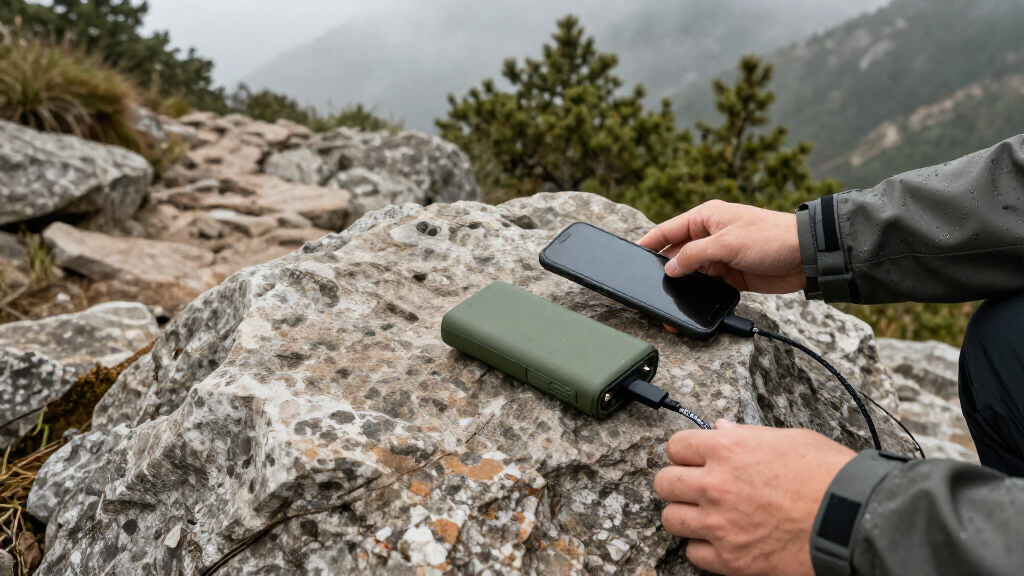
I compared the listed models by the features that change decisions outdoors: capacity, USB-C output, stated ingress protection, and practical carry or lighting features. I gave higher placement to options that combine useful capacity with clear protection details and charging performance, rather than relying on rugged styling alone. I also weighed how well each model fits a distinct job, from compact backup power to extended trips.
The ranking favors versatile choices first, then models with a narrower but useful advantage. That puts the NESTOUT 15,000mAh ahead for its mix of capacity, output, and IP67 protection; the ASWAYKE 20,000mAh and INIU 45W options follow for distinct runtime and speed priorities. The two similar NESTOUT 10,000mAh listings have closely matched stated features, so their relative position should not imply a major performance difference. Product names and listed specifications do not establish independent certification, actual battery endurance, or durability beyond the stated claims.
| rugged military grade power bank | Water and dust resistance | Drop protection | Tripod mount |
|---|---|---|---|
| ELECOM NESTOUT 10,000mAh Rugge | IP67; up to 30 minutes at 1 meter | Silicone-cushioned shell; tested to MIL-STD 810G 516.7 | ¼-20 |
| NESTOUT 10,280mAh Rugged Outdo | IP67 | Silicone-cushioned shell; tested to MIL-STD 810G 516.7 | ¼-20 inch |
| NESTOUT Rugged 5,000mAh Power | IP67; up to 30 minutes at 1 meter | Silicone-cushioned shell; tested to MIL-STD 810G 516.7 | ¼-20 inch |
| INIU Rugged 10,000mAh Portable | — | — | — |
| NESTOUT Rugged 15,000mAh Power | IP67; up to 30 minutes at 1 meter | Silicone-cushioned shell; tested to MIL-STD 810G 516.7 | ¼-20 |
| INIU Rugged 10,000mAh Portable | — | — | — |
| ASWAYKE 10,000mAh Rugged USB-C | IP68; stated submersion up to 1.5m for 30 minutes | Up to 2m | — |
| ASWAYKE 20,000mAh Rugged Power | — | — | — |
| BLAVOR 15,000mAh Rugged LiFePO | IP67 when the lid is securely closed | — | — |
| NESTOUT 10,000mAh Rugged Power | IP67; submersion up to 1m for up to 30 minutes | — | Standard 1/4-20 inch |
Factors to Consider When Choosing Rugged Military Grade Power Banks
Before choosing a rugged power bank, match its protection claims and charging behavior to the conditions and devices you actually have. These broader checks can prevent paying for capacity you will not use—or relying on a feature that does not cover your main risk.
Read IP Ratings as Specific Protection Claims
IP67 and IP68 are not interchangeable shorthand for being indestructible. They describe dust and water ingress protection under defined test conditions, while the exact conditions for an IP68 rating can depend on the manufacturer. Neither rating guarantees protection from every impact, saltwater exposure, mud, or a damaged port cover. Check the product documentation for limits, including whether ports must be sealed and how long or how deep water exposure is covered. If your main risk is rain or a brief accidental drop in water, a clearly specified rating may be more useful than vague claims of military-grade construction. For work around chemicals, seawater, or repeated submersion, seek details beyond the headline rating.
Choose Capacity Around Days Away and Device Count
Capacity figures describe the battery’s stored energy, not the exact amount that will reach your phone after conversion losses. A 5,000mAh bank makes sense as a light backup, while 10,000mAh is a practical middle ground for many single-device outings. A 15,000mAh or 20,000mAh model can better serve longer trips or several devices, but it adds bulk and weight to a pack. Estimate how many charges you need, then leave headroom for cold weather, navigation, and other power use. A common mistake is buying the largest capacity without checking whether its size will make you leave it behind. If it stays at camp rather than in your day bag, a smaller model may be more useful.
Match Output to the Device, Not Just the Fastest Number
USB-C PD output matters only when the connected device can accept that charging standard and power level. The INIU 45W models may suit compatible devices that draw more power, while the listed NESTOUT outputs range from 15W to 32W. A phone that cannot use higher output will not charge faster just because the bank advertises it. Check the device’s supported input and whether the power bank can deliver the advertised output from the port you plan to use. Also look for charging behavior when several ports are occupied, since output may be shared. For a phone-only kit, choosing a simpler lower-output option can avoid carrying unused capability.
Treat Ruggedness as More Than a Drop Claim
Outdoor durability depends on how the whole product is designed, not just its shell or a single drop-protection phrase. Port covers, exposed connectors, seams, buttons, and the ability to keep dirt out can all affect field use. Look for clear instructions on cleaning and drying the unit after exposure, and do not assume a waterproof rating makes charging a wet device safe. A carabiner can help keep a bank accessible, but it should not be treated as a certified climbing attachment unless the maker says so. If the power bank will be carried loose with tools, prioritize physical protection and secure storage as well as ingress ratings. For occasional hikes, those extra protections may matter less than manageable weight.
Decide Whether a Lantern or Flashlight Earns Its Space
Built-in lighting can reduce the number of items in a camp kit, but it also makes the power bank serve two jobs. The ASWAYKE 20,000mAh includes a 420-lumen camping lantern, while the INIU 10,000mAh 45W listing includes a flashlight. Those features may be handy for setting up camp or finding gear, but the listed lumen figure alone does not tell you beam shape, runtime, or whether brightness is adjustable. If you already carry a headlamp, an integrated light may add little value. Check whether the light can run independently and whether using it affects charging or battery reserve. Choose the combination feature when it replaces something you would otherwise pack, not simply because it sounds useful.
Pay More for a Real Need, Not a Rugged Label
A more capable power bank earns its place when its added capacity, output, or protection solves a specific problem. A long trip with multiple devices can justify moving from 10,000mAh to 15,000mAh or 20,000mAh, while a compatible high-draw device can make 45W output worthwhile. For short outings and phone top-ups, those upgrades may mean carrying extra weight for little practical gain. Compare warranty terms, charging inputs, included cables, and manufacturer guidance alongside headline specifications. Do not treat the phrase “military-grade” as proof of a particular test standard unless the seller names the standard and its results. Spending for verifiable details is more useful than paying for rugged language without supporting information.
Frequently Asked Questions
Does “military-grade” mean these power banks passed a military durability test?
Not by itself. “Military-grade” is often used as a marketing description, and the phrase alone does not identify a test standard or prove that a specific unit passed one. Look for a named standard, test conditions, and manufacturer documentation if that claim is central to your purchase. The IP67 and IP68 listings here provide more specific water and dust protection claims, though they do not describe every kind of impact. Treat unsupported wording as less useful than concrete specifications.
Is IP68 always a better choice than IP67 for outdoor use?
Not necessarily. IP68 can indicate a higher level of water protection, but the conditions for that rating may be set by the manufacturer and should be checked in the product documentation. IP67 already describes protection under specified dust and temporary immersion tests, which may suit many wet-weather outings. Neither rating makes a power bank suitable for charging while wet or protects it from all drops and contaminants. Choose based on the exposure you expect and the specific limits the manufacturer states.
Should I choose 45W output if I mostly charge a phone?
Only if your phone supports a charging mode that can use that output or you also plan to charge a higher-power device. A phone draws power according to its own limits, so a 45W bank does not automatically make every phone charge faster. The INIU models’ higher listed output gives them more flexibility for compatible devices, while lower-output options may be enough for basic phone charging. Check your device’s supported USB-C charging standard and input rating before paying for extra output. Also confirm how power is shared if you charge more than one device.
How much capacity do I need for a multi-day trip?
Start with the devices you will carry and how often you expect to use them, especially if you rely on a phone for maps or emergency contact. A 10,000mAh model may fit a short trip or a single phone, while 15,000mAh or 20,000mAh provides more reserve for longer outings or multiple devices. Actual usable power is lower than the stated cell capacity because charging involves energy loss. Cold conditions and frequent screen use can also raise demand. If weight matters, a smaller bank paired with a way to recharge it may be preferable to carrying the largest option.
Can I recharge a rugged power bank while it is wet?
No: water resistance does not mean it is safe to connect a charging cable while the ports or device are wet. Dry the exterior and follow the manufacturer’s instructions before charging; moisture or debris at a connector can cause damage. Sealed port covers only help when they are closed and intact, and they do not remove the need for careful handling. If the bank has been submerged, check the maker’s guidance before putting it back into service. This precaution matters even for models listed with IP67 or IP68 protection.
Conclusion
For most outdoor users, I would choose the NESTOUT 15,000mAh as the best overall: its capacity, 32W USB-C PD, and IP67 protection make a balanced combination. The best value-style fit is the NESTOUT 10,000mAh 20W model for buyers who want a practical capacity and clear protection without moving up to a larger bank; compare the two closely named NESTOUT listings, since their stated features are similar. For a best premium-capability pick, the ASWAYKE 20,000mAh is the choice when extended runtime and an integrated lantern matter more than compact carry. Beginners who mainly need a straightforward backup can start with a 10,000mAh NESTOUT, while the 5,000mAh version suits minimal day kits. Choose INIU for compatible devices that benefit from 45W output, ASWAYKE 10,000mAh for its IP68 claim, or BLAVOR if its listed LiFePO4 battery chemistry is a priority. Match the pick to your device, trip length, and exposure rather than relying on the “military-grade” label alone.