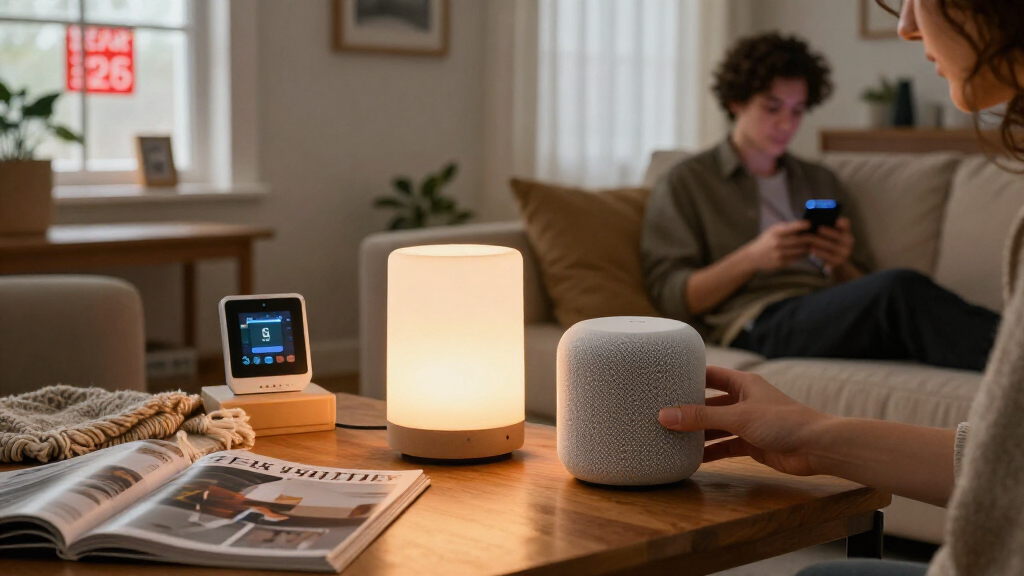
For Black Friday smart home deals, my best overall pick is the ecobee Smart Thermostat Essential, which focuses on useful heating and cooling control without the added hardware of the Premium model. The TP-Link Tapo P125M Matter Smart Plug Mini stands out for buyers who want a compact plug with Matter support, while the Kasa EP40 Outdoor Smart Plug is the clear fit for controlling outdoor devices. The main tradeoff is between simple, lower-commitment upgrades like indoor plugs and more involved purchases that can affect comfort, security, or home compatibility. Before choosing, check your Wi-Fi, smart-home platform, outlet layout, and installation needs. Read on for my full breakdown of where each option fits and what to check before buying.

Get the latest gadgets delivered free with Prime
- Fast, free delivery on millions of items
- Prime Video, Amazon Music and more included
- Member-only deals all year
Complete the kit



Key Takeaways
- Thermostats offer the broadest home impact, but the right choice depends on compatibility and whether you want basic control or extras such as a SmartSensor and voice-assistant features.
- Matter is a meaningful differentiator among the plugs: the Tapo P125M and Linkind plug can suit buyers prioritizing cross-platform setup, while Wi-Fi-only options may be simpler for an existing single-platform home.
- Multipacks make the most sense when you have several real use cases; buying four plugs is less useful if your appliances, outlets, or placement needs do not suit smart-plug control.
- Outdoor control is a separate need, not an indoor-plug upgrade: the Kasa EP40 has two independently controlled outlets for exterior devices, unlike the indoor plug packs.
- The DESLOC fingerprint-and-keypad lock has a different commitment level from plug-and-play devices, so fit, door compatibility, and access preferences matter more than adding another app feature.
| GHome Smart Wi-Fi Smart Plugs, 15 A, 4-Pack |  | Best Overall Smart Plug Pack | Pack size: 4 plugs | Maximum load: 15 A; 1800 W | Voltage: 120 V | VIEW LATEST PRICE | See Our Full Breakdown |
| ecobee Smart Thermostat Essential, Wi-Fi, Energy Star Certified |  | Best Smart Home Upgrade for HVAC Control | Display: 3.74-inch LCD touchscreen | Connectivity: Wi-Fi | Compatible platforms: Amazon Alexa, Apple HomeKit, Google Assistant | VIEW LATEST PRICE | See Our Full Breakdown |
| EIGHTREE Wi-Fi Smart Plug, 15 A, 4-Pack |  | Best Value for Multi-Device Scheduling | Pack count: 4 plugs | Maximum load: 15 A; 1800 W | Operating voltage: 120 V | VIEW LATEST PRICE | See Our Full Breakdown |
| TP-Link Tapo P125M Matter Smart Plug Mini, 3-Pack |  | Best for Matter-Compatible Homes | Pack size: 3 plugs | Maximum load: 15 A; 1800 W | Operating voltage: 120 V AC | VIEW LATEST PRICE | See Our Full Breakdown |
| GHome Smart Plug Mini, 4-Pack | 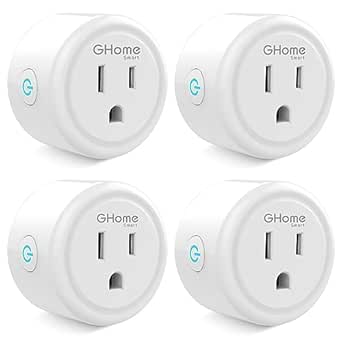 | Best for Lower-Power Basics | Quantity: 4 plugs | Maximum load: 10 A; 1200 W | Voltage: 120 V | VIEW LATEST PRICE | See Our Full Breakdown |
| GHome Smart Plug, 4-Pack, 2.4 GHz Wi-Fi, Works with Alexa and Google Home | 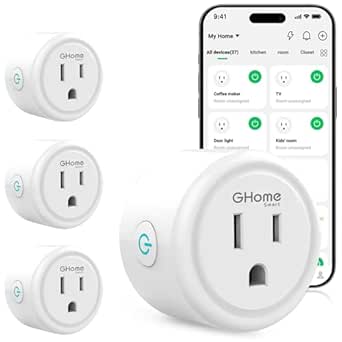 | Best Value for Multi-Room Basics | Model: WP3 | Pack size: 4 plugs | Connectivity: 2.4 GHz Wi-Fi; Bluetooth or Wi-Fi setup | VIEW LATEST PRICE | See Our Full Breakdown |
| Kasa Smart Wi-Fi Plug Mini EP10P4, 4-Pack | 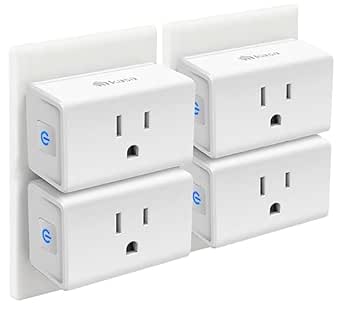 | Best Value for Higher-Power Indoor Devices | Model: EP10P4 | Pack size: 4 plugs | Maximum current: 15 A | VIEW LATEST PRICE | See Our Full Breakdown |
| Sensi ST55 Wi-Fi Smart Thermostat |  | Best for DIY Thermostat Upgrades | Model: ST55 | Connectivity: Wi-Fi | Compatible systems: Air conditioner, boiler, furnace, heat pump | VIEW LATEST PRICE | See Our Full Breakdown |
| Govee Smart Plugs, Wi-Fi and Bluetooth, 4-Pack |  | Best for Bluetooth-Assisted Setup | Model: B5081 (listing); H5083 (app pairing instructions) | Pack size: 4 plugs | Connectivity: Bluetooth and 2.4 GHz Wi-Fi | VIEW LATEST PRICE | See Our Full Breakdown |
| ecobee Smart Thermostat Premium with Wi-Fi, Siri and Alexa, and SmartSensor |  | Best Premium Comfort and Air-Quality Pick | Connectivity: Wi-Fi | Voice assistants: Siri and Alexa | Included sensor: SmartSensor | VIEW LATEST PRICE | See Our Full Breakdown |
| Linkind Matter Smart Plug, 4-Pack | 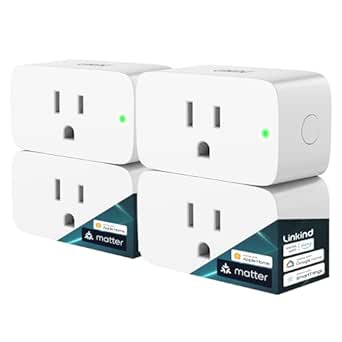 | Best for Multi-Platform Matter Setups | Pack size: 4 | Connectivity: Matter, 2.4 GHz Wi-Fi | Network requirement: IPv6 | VIEW LATEST PRICE | See Our Full Breakdown |
| Google Nest Smart Thermostat, Charcoal | 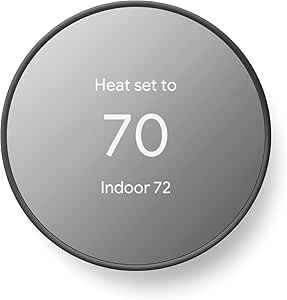 | Best for Simple DIY Climate Control | Connectivity: Wi-Fi 2.4 GHz and 5 GHz; Bluetooth Low Energy | Temperature control: Heating and cooling | Compatible systems: Heat pump; some systems may require a C wire or compatible power accessory | VIEW LATEST PRICE | See Our Full Breakdown |
| DESLOC D212 WiFi Smart Door Knob Lock with Fingerprint and Keypad Entry |  | Best for Keyless Entry Options | Access methods: Fingerprint, passcode, app, mechanical key | Connectivity: Built-in Wi-Fi | Materials: Aluminum alloy body; tempered glass keypad | VIEW LATEST PRICE | See Our Full Breakdown |
| Kasa EP40 Outdoor Smart Plug with Two Independently Controlled Outlets |  | Best for Outdoor Devices | Outlets: Two independently controlled AC outlets | Weather resistance: IP64 | Connectivity: 2.4 GHz Wi-Fi | VIEW LATEST PRICE | See Our Full Breakdown |
| Black Friday smart home deal | Connectivity | Voice assistants |
|---|---|---|
| GHome Smart Wi-Fi Smart Plugs | Bluetooth, 2.4 GHz Wi-Fi, 5 GHz Wi-Fi | Amazon Alexa, Google Assistant |
| ecobee Smart Thermostat Essent | Wi-Fi | — |
| EIGHTREE Wi-Fi Smart Plug | 2.4 GHz Wi-Fi | — |
| TP-Link Tapo P125M Matter Smar | 2.4 GHz Wi-Fi, Bluetooth, Matter | — |
| GHome Smart Plug Mini | — | Amazon Alexa, Google Home |
| GHome Smart Plug | 2.4 GHz Wi-Fi; Bluetooth or Wi-Fi setup | Amazon Alexa, Google Assistant |
| Kasa Smart Wi-Fi Plug Mini EP1 | 2.4 GHz Wi-Fi | Amazon Alexa, Google Assistant |
| Sensi ST55 Wi-Fi Smart Thermos | Wi-Fi | — |
| Govee Smart Plugs | Bluetooth and 2.4 GHz Wi-Fi | Amazon Alexa, Google Assistant |
| ecobee Smart Thermostat Premiu | Wi-Fi | Siri and Alexa |
| Linkind Matter Smart Plug | Matter, 2.4 GHz Wi-Fi | — |
| Google Nest Smart Thermostat | Wi-Fi 2.4 GHz and 5 GHz; Bluetooth Low Energy | — |
| DESLOC D212 WiFi Smart Door Kn | Built-in Wi-Fi | — |
| Kasa EP40 Outdoor Smart Plug w | 2.4 GHz Wi-Fi | Amazon Alexa, Google Assistant |
More Details on Our Top Picks
GHome Smart Wi-Fi Smart Plugs, 15 A, 4-Pack
For a Black Friday smart home refresh, I’d put this four-pack first for buyers who want flexible connectivity and straightforward everyday automation. Its support for 2.4 GHz and 5 GHz Wi-Fi gives it an advantage over the EIGHTREE plug and GHome Smart Plug Mini, both limited to 2.4 GHz. Each outlet can handle up to 15 A and 1800 W, while app control, schedules, grouping, and Alexa or Google Assistant voice commands cover the basics without a hub.
The tradeoff is setup: you need the GHome app before linking a voice assistant, so it is not the quickest route to a hands-free setup. Its IP40 rating also makes it an indoor choice, not an option for exposed damp areas. I’d choose it over the lower-capacity GHome Mini when appliance load matters, but skip it if you want Matter-based platform flexibility like the Tapo P125M.
Pros:- Supports both 2.4 GHz and 5 GHz Wi-Fi.
- Four plugs offer app, voice, scheduling, and grouping controls.
- 15 A and 1800 W rating suits higher-load devices than the GHome Smart Plug Mini.
- Compact body is designed to fit neatly into outlets.
Cons:- Requires setup in the GHome app before connecting Alexa or Google Home.
- IP40 protection limits it to suitable indoor conditions.
- Uses platform-specific integrations rather than Matter compatibility.
Best for: Shoppers automating several indoor lamps or household devices who want a four-pack, dual-band Wi-Fi, and a 15 A rating.
Not ideal for: Buyers who need outdoor or damp-area use, Matter support, or a plug that can be linked to Alexa or Google Home without first using a separate app.
- Pack size:4 plugs
- Maximum load:15 A; 1800 W
- Voltage:120 V
- Connectivity:Bluetooth, 2.4 GHz Wi-Fi, 5 GHz Wi-Fi
- Voice assistants:Amazon Alexa, Google Assistant
- Control methods:App, push button, voice
- Dimensions:2.1 × 2.1 × 1.1 inches
- Certifications:ETL, FCC
Our verdict“Choose this pack for versatile indoor automation and dual-band Wi-Fi; choose the Tapo P125M instead if Matter and local network control matter more.”
ecobee Smart Thermostat Essential, Wi-Fi, Energy Star Certified
A thermostat can change more of a home’s daily routine than a bundle of smart plugs, so I rank the ecobee Smart Thermostat Essential as the strongest upgrade for shoppers whose Black Friday plans include smarter heating and cooling. Its color touchscreen and app controls make schedules and temperature adjustments accessible at the wall or remotely. Auto-away, indoor humidity detection, and time-of-use preheating and precooling add useful control beyond the basic scheduling offered by plug-focused picks such as the GHome Smart Wi-Fi Smart Plugs.
Its broader value comes with a more involved buying decision: check HVAC compatibility before installation, and homes without a C wire may need a separately sold Power Extender Kit. The SmartSensor and trim kit are also separate. Compared with the Sensi ST55 in this roundup, this ecobee offers Apple HomeKit alongside Alexa and Google Assistant, but it is not the simplest choice for buyers seeking a quick, low-commitment smart home add-on.
Pros:- Touchscreen and app both provide convenient temperature and schedule control.
- Works with Apple HomeKit, Google Assistant, and Alexa.
- Auto-away, schedule assistance, and humidity detection add climate-focused automation.
- Supports many common 24 VAC heating and cooling systems.
Cons:- Some homes without a C wire need a separately sold Power Extender Kit.
- SmartSensor and trim kit are not included.
- HVAC compatibility must be checked before installation.
Best for: Homeowners with a compatible 24 VAC HVAC system who want app-based schedules, away automation, and Apple HomeKit, Alexa, or Google Assistant support.
Not ideal for: Renters or buyers with uncertain HVAC wiring, systems outside the supported range, or no interest in checking C-wire requirements and installation fit.
- Display:3.74-inch LCD touchscreen
- Connectivity:Wi-Fi
- Compatible platforms:Amazon Alexa, Apple HomeKit, Google Assistant
- Compatible systems:Most 24 VAC HVAC systems
- Features:Auto-away, auto-scheduling, fan control, indoor humidity detection
- Energy features:Schedule assistant, time-of-use preheating and precooling
- Mounting:Wall mount
- Power source:Battery powered
Our verdict“Pick the ecobee Essential for a compatible home where climate schedules and broad voice-platform support are a bigger priority than simple plug-in automation.”
EIGHTREE Wi-Fi Smart Plug, 15 A, 4-Pack
The EIGHTREE four-pack earns a value-focused spot by pairing a 15 A, 1800 W rating with a notably broad set of timer options: schedules, countdowns, cycles, and random schedules. Those modes suit buyers automating several lamps or appliances, including routines that vary timing rather than simply switching on at a fixed hour. It also works with SmartThings, Alexa, and Google Assistant, a wider listed platform mix than the GHome Smart Wi-Fi Smart Plugs, though that GHome model supports both 2.4 GHz and 5 GHz Wi-Fi.
Here, the compromise is 2.4 GHz-only connectivity and a required Smart Life app setup; the product does not connect directly to Alexa without that step. Compared with the Tapo P125M, EIGHTREE offers four plugs and more scheduling modes, while Tapo adds Matter and local network control. I’d favor EIGHTREE for routine variety, not for households prioritizing cross-platform flexibility or offline control.
Pros:- Four plugs support multiple scheduling modes, including cycles and random schedules.
- 15 A and 1800 W maximum load.
- Works with Alexa, Google Assistant, and SmartThings.
- Connects over Wi-Fi without requiring a hub.
Cons:- Supports 2.4 GHz Wi-Fi only.
- Requires setup through the Smart Life app before voice control.
- Does not offer the Tapo P125M’s stated Matter compatibility or local network control.
Best for: Households automating several lamps or appliances that benefit from countdowns, cycles, or randomized schedules, and that already use 2.4 GHz Wi-Fi.
Not ideal for: Buyers with only 5 GHz Wi-Fi, those wanting Matter or offline local control, or anyone who wants to avoid a separate Smart Life app setup.
- Pack count:4 plugs
- Maximum load:15 A; 1800 W
- Operating voltage:120 V
- Connectivity:2.4 GHz Wi-Fi
- Compatible platforms:Alexa, Google Assistant, SmartThings
- Scheduling features:Schedules, timer, countdown, cycles, random schedules
- Dimensions:1.96 × 1.96 × 2.03 inches
- Warranty:2 years
Our verdict“Choose EIGHTREE when four outlets and varied scheduling routines matter more than dual-band Wi-Fi, Matter, or direct voice-assistant setup.”
TP-Link Tapo P125M Matter Smart Plug Mini, 3-Pack
For a smart home already spread across multiple platforms, I’d favor the Tapo P125M over the more app-dependent plug packs here. Its Matter compatibility brings support for Apple Home, Alexa, Google Home, and SmartThings, while local network control can keep supported commands working when the internet is unavailable. That makes it the clearest choice in this group for buyers who want platform flexibility and a degree of offline resilience, rather than the wider four-plug coverage offered by EIGHTREE or the GHome 15 A pack.
The limits are practical: this bundle includes three plugs, not four, and it uses 2.4 GHz Wi-Fi only. Its 15 A, 1800 W ceiling is in line with the higher-capacity options, not a special advantage over them. I’d choose Tapo when Matter and local control shape the decision; for dual-band Wi-Fi, the GHome 15 A pack is a better match, while a buyer who only needs basic scheduling may not need Tapo’s platform breadth.
Pros:- Matter support spans Apple Home, Alexa, Google Home, and SmartThings.
- Local network control can work when internet access is unavailable.
- Compact design helps limit obstruction of nearby outlets.
- UL certified, with app, voice, schedule, and timer controls.
Cons:- Three plugs per pack, fewer than the four-plug GHome and EIGHTREE options.
- Works with 2.4 GHz Wi-Fi only.
- Maximum load is limited to 15 A and 1800 W.
Best for: Smart home owners mixing Apple Home, Alexa, Google Home, or SmartThings who want Matter support and local network control.
Not ideal for: Buyers who need four outlets in one pack, rely on 5 GHz Wi-Fi, or only want simple schedules and voice control.
- Pack size:3 plugs
- Maximum load:15 A; 1800 W
- Operating voltage:120 V AC
- Connectivity:2.4 GHz Wi-Fi, Bluetooth, Matter
- Compatible platforms:Apple Home, Amazon Alexa, Google Home, Samsung SmartThings
- Control methods:App, voice, scheduling
- Safety certification:UL certified
- Warranty:2-year limited warranty
Our verdict“Choose the Tapo P125M if Matter compatibility and local control outweigh getting a fourth plug or dual-band Wi-Fi.”
GHome Smart Plug Mini, 4-Pack
The GHome Smart Plug Mini is the straightforward pick for buyers who want a four-pack for lamps and other lower-power devices, without paying for features they may not use. Its compact format, app scheduling, group control, and Alexa or Google Home support cover common routines without a hub. Compared with the GHome Smart Wi-Fi Smart Plugs, this model has a lower 10 A, 1200 W ceiling and supports only 2.4 GHz Wi-Fi; in return, it keeps the feature set simple for basic indoor automation.
That lower load rating is the key reason not to treat it as interchangeable with the 15 A GHome pack or the EIGHTREE plugs. Check the connected device’s requirements before buying, and don’t expect 5 GHz support. Setup also starts in the GHome app before voice-assistant linking. I’d choose this Mini for simple, lower-load routines; shoppers who need higher capacity or Matter should step up to the GHome 15 A model or Tapo P125M.
Pros:- Four plugs provide app, group, schedule, and remote controls.
- Works with Alexa and Google Home.
- Compact dimensions suit tighter outlet spaces.
- ETL- and FCC-listed.
Cons:- 10 A and 1200 W maximum load is below the 15 A GHome and EIGHTREE packs.
- Supports 2.4 GHz Wi-Fi only, not 5 GHz.
- Requires GHome app setup before linking voice assistants.
Best for: Budget-minded smart home newcomers automating lamps and other compatible devices below the plug’s 10 A, 1200 W limit.
Not ideal for: Buyers connecting higher-load appliances, households without 2.4 GHz Wi-Fi, or anyone seeking Matter support or 15 A capacity.
- Quantity:4 plugs
- Maximum load:10 A; 1200 W
- Voltage:120 V
- Wi-Fi:2.4 GHz only
- Voice assistants:Amazon Alexa, Google Home
- Control features:Remote, group, schedule, auto-off timer
- Dimensions:2 × 2 × 1 inch
- Certifications:ETL, FCC
Our verdict“Choose the GHome Mini for basic, lower-power routines in a 2.4 GHz home, but select a 15 A model for higher-load devices.”
GHome Smart Plug, 4-Pack, 2.4 GHz Wi-Fi, Works with Alexa and Google Home
For a Black Friday smart home starter set, this four-pack covers everyday lamps and small appliances without adding a hub to the setup. App access, schedules, timers, voice commands, and group control make it easy to automate several rooms, while compatibility with GHome, Smart Life, and Tuya apps gives buyers a choice of control app. Compared with the Kasa EP10P4, this model has a lower stated maximum load, so I would reserve it for lower-powered devices rather than appliances that need more capacity. Setup also takes an extra step: each plug must first be added in the GHome app before linking to Alexa or Google Home. Its 2.4 GHz-only Wi-Fi requirement is another limitation, but for buyers seeking basic, hub-free control across several outlets, the bundle keeps the feature set straightforward.
Pros:- Four plugs provide a simple way to automate multiple rooms.
- Supports Alexa and Google Assistant voice control.
- Schedules, timers, remote access, and group control are available.
- No hub is required, and GHome, Smart Life, and Tuya apps are supported.
Cons:- The 1200 W maximum is lower than the Kasa EP10P4’s stated 1800 W maximum.
- Requires a 2.4 GHz Wi-Fi connection.
- Initial setup must happen in the GHome app before linking a voice assistant.
Best for: Shoppers adding scheduled lamp and small-device control in several rooms who use Alexa or Google Assistant and have 2.4 GHz Wi-Fi.
Not ideal for: Buyers who need support for higher-wattage appliances, 5 GHz Wi-Fi, or a direct Alexa or Google Home setup without first using the GHome app.
- Model:WP3
- Pack size:4 plugs
- Connectivity:2.4 GHz Wi-Fi; Bluetooth or Wi-Fi setup
- Voice assistants:Amazon Alexa, Google Assistant
- Compatible apps:GHome, Smart Life, Tuya
- Maximum wattage:1200 W
- Operating voltage:120 V
- Dimensions:2.1 × 2.1 × 1.1 in
- Certifications:ETL, FCC
Our verdict“Choose this four-pack for basic, lower-load automation across several rooms, but pick the Kasa EP10P4 if you need a higher stated power limit.”
Kasa Smart Wi-Fi Plug Mini EP10P4, 4-Pack
The Kasa EP10P4 makes a strong Black Friday pick for shoppers who want a four-plug set with a 15 A, 1800 W maximum and broad voice-assistant support. Its compact form is especially useful when a crowded outlet would otherwise block the neighboring socket. Compared with the GHome WP3, it offers a higher stated load limit and adds Samsung SmartThings compatibility, making it a better fit for homes already using that platform. Away Mode, schedules, and timers add useful routines beyond simple on-and-off control. The tradeoff is a 2.4 GHz Wi-Fi requirement and app-based setup through Kasa or Tapo; these plugs are not a hub-free, app-free shortcut. For multi-room automation with more platform options than the GHome or Govee packs, this is the most flexible plug set in this group.
Pros:- Four compact plugs leave the neighboring wall outlet unobstructed.
- 15 A and 1800 W maximum exceed the stated limits of the GHome WP3 and Govee four-packs.
- Works with Alexa, Google Assistant, and Samsung SmartThings.
- Includes schedules, timers, and Away Mode, with UL-certified flame-retardant materials.
Cons:- Requires a 2.4 GHz Wi-Fi connection.
- Setup and control require the Kasa or Tapo app and a compatible smartphone.
Best for: Households automating lamps and compatible appliances across several rooms, especially those using Samsung SmartThings or needing a higher stated load limit.
Not ideal for: Buyers with only 5 GHz Wi-Fi, no compatible smartphone, or a preference for plugs that do not require an app setup.
- Model:EP10P4
- Pack size:4 plugs
- Maximum current:15 A
- Maximum wattage:1800 W
- Connectivity:2.4 GHz Wi-Fi
- Voice assistants:Amazon Alexa, Google Assistant
- Additional compatibility:Samsung SmartThings
- Certifications:UL, RoHS, FCC, IC
- Warranty:2 years
Our verdict“Pick the Kasa EP10P4 for compact four-room control, SmartThings support, and a higher stated load limit than the other plug packs here.”
Sensi ST55 Wi-Fi Smart Thermostat
The Sensi ST55 is the more approachable thermostat choice for Black Friday shoppers who want remote temperature control and scheduling without the ecobee Premium’s speaker and room sensor features. Its app-guided installation, built-in level, and design that needs no C-wire in most applications can make a thermostat change more manageable for DIY homeowners. Once connected, usage reports, equipment alerts, and filter reminders offer practical ways to keep track of the system beyond setting a weekly schedule. It works with several HVAC types and voice platforms, including Apple HomeKit, unlike the ecobee Premium’s listed Siri and Alexa support. The tradeoff is that compatibility still depends on the home’s specific equipment, and it uses a 24 V AC power source. Choose Sensi for clear, familiar thermostat control; choose ecobee if room-by-room comfort and air-quality monitoring matter more.
Pros:- App instructions and a built-in level support DIY installation.
- C-wire is not required in most applications.
- Offers schedules, remote access, usage reports, equipment alerts, and filter reminders.
- Supports Alexa, Apple HomeKit, Google Assistant, SmartThings, and Vera.
Cons:- Compatibility depends on the home’s HVAC equipment.
- Uses a 24 V AC power source, so it is not a battery-only thermostat.
- Lacks the ecobee Premium’s included room sensor and air-quality monitor.
Best for: DIY homeowners with compatible HVAC equipment who want app scheduling, remote control, and system reminders without a C-wire in most setups.
Not ideal for: Buyers seeking an included room sensor, built-in speaker, or air-quality monitoring, or households whose HVAC compatibility has not been confirmed.
- Model:ST55
- Connectivity:Wi-Fi
- Compatible systems:Air conditioner, boiler, furnace, heat pump
- Voice assistants and platforms:Amazon Alexa, Apple HomeKit, Google Assistant, SmartThings, Vera
- Power source:24 V AC
- Display:5-inch LED screen
- Controls:Buttons, app, touch, voice
- Batteries:2 AA batteries, included
- Certification:ENERGY STAR
Our verdict“Choose the Sensi ST55 for a straightforward DIY smart thermostat with broad platform support, rather than the more feature-heavy ecobee Premium.”
Govee Smart Plugs, Wi-Fi and Bluetooth, 4-Pack
The Govee four-pack stands apart from the GHome WP3 and Kasa EP10P4 by pairing Bluetooth and 2.4 GHz Wi-Fi, offering an additional connection method alongside app and voice control. It covers the basics—schedules, group control, Alexa, and Google Assistant—without a hub, and its compact shape can help preserve space around an outlet. That makes it a reasonable Black Friday option for buyers already managing lights and small devices in Govee Home. Its main weakness is the listing’s conflicting current information: one section says 10 A and another says 11 A. The stated maximum power is 1200 W, below the Kasa EP10P4’s 1800 W, so I would avoid treating it as the higher-capacity pick. It also lacks the Kasa model’s listed SmartThings support. Check the ratings and appliance requirements before choosing it for anything beyond modest loads.
Pros:- Bluetooth and 2.4 GHz Wi-Fi connectivity are supported.
- Four plugs provide app scheduling and group control.
- Works with Amazon Alexa and Google Assistant.
- No hub is required, and the compact design can save outlet space.
Cons:- The listing conflicts on current rating, stating both 10 A and 11 A.
- The stated 1200 W maximum is below the Kasa EP10P4’s 1800 W maximum.
- Does not support 5 GHz Wi-Fi.
Best for: Govee Home users who want four compact plugs for lower-power devices and value Bluetooth as an additional connection option.
Not ideal for: Buyers who need a clearly stated current rating, 5 GHz Wi-Fi, SmartThings support, or a plug set for higher-load appliances.
- Model:B5081 (listing); H5083 (app pairing instructions)
- Pack size:4 plugs
- Connectivity:Bluetooth and 2.4 GHz Wi-Fi
- Voice assistants:Amazon Alexa, Google Assistant
- Maximum power:1200 W
- App:Govee Home
- Hub required:No
- Certifications:ETL, FCC
Our verdict“Choose this Govee pack for lower-power devices if Bluetooth connectivity and the Govee Home app suit your setup, but verify its conflicting current rating first.”
ecobee Smart Thermostat Premium with Wi-Fi, Siri and Alexa, and SmartSensor
Among these thermostat options, the ecobee Premium brings the broadest comfort toolkit: occupancy-aware scheduling, an included SmartSensor, and a built-in air-quality monitor. The sensor can help address rooms that feel warmer or cooler than the thermostat’s location, while the monitor adds alerts and filter reminders that the Sensi ST55 does not provide. A built-in speaker with Siri or Alexa also gives this model a role beyond temperature control. The included Power Extender Kit supports homes without a C-wire, and the product is listed as compatible with 95% of HVAC systems, though I would still check the specific system before buying. These extras make it a more involved choice than Sensi, and some security features require an ecobee Smart Security subscription. Siri also needs an Apple home hub, so the full experience depends on the buyer’s existing setup.
Pros:- Included SmartSensor can help account for comfort and occupancy beyond the thermostat’s location.
- Built-in air-quality monitor offers alerts and filter reminders.
- Speaker supports Siri or Alexa and audio streaming.
- Power Extender Kit and Trim Kit are included for installation flexibility.
Cons:- Siri requires an Apple home hub.
- Some security features require an ecobee Smart Security subscription.
- HVAC compatibility should be checked for the specific home.
Best for: Homeowners who want room-level comfort support, air-quality alerts, and built-in voice features in one thermostat.
Not ideal for: Buyers who want a simple thermostat replacement, do not need a room sensor or air monitoring, or lack an Apple home hub for Siri.
- Connectivity:Wi-Fi
- Voice assistants:Siri and Alexa
- Included sensor:SmartSensor
- HVAC compatibility:Compatible with 95% of HVAC systems
- Installation:Power Extender Kit and Trim Kit included
- Air-quality monitoring:Built-in monitor with alerts and filter reminders
- Warranty:3 years
- Energy certification:ENERGY STAR
Our verdict“Choose the ecobee Premium over the Sensi ST55 if room sensing, air-quality monitoring, and built-in voice features justify a more feature-rich setup.”
Linkind Matter Smart Plug, 4-Pack
For a Black Friday smart home refresh, I’d choose the Linkind Matter Smart Plug when compatibility across platforms matters more than a hub-free setup. It works with Apple Home, Alexa, Google Home, and SmartThings, while its local-network communication can keep Matter control available during an internet outage. That makes it a more flexible pick than the Kasa EP40 outdoor plug, which focuses on controlling two exterior outlets rather than broad Matter integration. The four-pack also suits buyers adding several indoor lamps or small appliances at once.
The tradeoff is setup: several named platforms require a Matter controller, and the plugs use 2.4 GHz Wi-Fi only. The AiDot app offers a route without a hub, but buyers already invested in a compatible Matter controller get the clearest benefit. Its 15 A, 1800 W rating and overload protection add practical reassurance, though it is not an outdoor option.
Pros:- Supports Apple Home, Alexa, Google Home, SmartThings, and the AiDot app.
- Matter devices can communicate over the local network when internet service is unavailable.
- Four plugs support a multi-room setup with scheduling, timers, and remote control.
- 15 A and 1800 W rating with fire-resistant materials and short-circuit and overload protection.
Cons:- A Matter controller is required for Apple Home, Alexa, Google Home, and SmartThings.
- Supports 2.4 GHz Wi-Fi only.
- Designed for indoor use, unlike the Kasa EP40 outdoor plug.
Best for: Households adding several indoor devices to an existing Apple Home, Alexa, Google Home, or SmartThings setup with a Matter controller.
Not ideal for: Buyers without a Matter controller who want direct setup in their preferred platform, or anyone needing an outdoor-rated plug or 5 GHz Wi-Fi.
- Pack size:4
- Connectivity:Matter, 2.4 GHz Wi-Fi
- Network requirement:IPv6
- Plug type:Type A
- Control platforms:Apple Home, Alexa, Google Home, SmartThings, AiDot
- Hub requirement:Matter controller required for Apple Home, Alexa, Google Home, and SmartThings; AiDot app can be used without a hub
- Safety certification:FCC certified; ETL certified
Our verdict“Choose the Linkind four-pack for flexible indoor Matter control across multiple smart home platforms, provided you have the required controller.”
Google Nest Smart Thermostat, Charcoal
The Google Nest Smart Thermostat is my pick for households that want scheduling and remote temperature changes without choosing a more feature-heavy system. Its home-away adjustment can lower heating or cooling when the home is empty, while app control makes it easier to change settings away from home. Compared with the ecobee Smart Thermostat Premium, this model is a simpler fit for buyers who do not need an included SmartSensor or the same premium feature set. It also carries ENERGY STAR certification and is designed for do-it-yourself installation.
Compatibility deserves a check before a Black Friday purchase: many homes can install it without a C wire, but some heating, cooling, zone-controlled, and heat pump systems may need one or a compatible power accessory. The 2-inch LCD keeps the wall unit compact, but buyers who prefer a larger display may want another option. Remote control and notifications also depend on internet and Wi-Fi, so this is not a fully offline thermostat experience.
Pros:- Adjusts temperature when the home is empty and supports custom schedules.
- Remote settings control through the Google Home app.
- Designed for do-it-yourself installation, with most homes not requiring a C wire.
- ENERGY STAR certified and compatible with selected voice assistants.
Cons:- Some heat pump, heating, cooling, and zone-controlled systems may require a C wire or power accessory.
- Remote control and mobile notifications depend on internet and Wi-Fi.
- The 2-inch display is less spacious than a larger thermostat screen.
Best for: Homeowners with a compatible heating and cooling system who want DIY installation, schedules, and Google Home app control.
Not ideal for: Owners of complex or zone-controlled HVAC systems who have not confirmed wiring compatibility, or buyers seeking an included room sensor and premium features.
- Connectivity:Wi-Fi 2.4 GHz and 5 GHz; Bluetooth Low Energy
- Temperature control:Heating and cooling
- Compatible systems:Heat pump; some systems may require a C wire or compatible power accessory
- Controller compatibility:Amazon Alexa, Android, Google Assistant, iOS
- Display:2-inch LCD
- Power:Battery powered; two batteries included
- Voltage:24 volts
- Certification:ENERGY STAR
Our verdict“Pick the Nest for straightforward DIY scheduling and remote climate control, after checking that your HVAC wiring is compatible.”
DESLOC D212 WiFi Smart Door Knob Lock with Fingerprint and Keypad Entry
The DESLOC D212 earns a distinct place in a Black Friday smart home roundup by adding access control rather than another plug or climate device. It offers four entry methods—fingerprint, passcode, app, and mechanical key—so household members can use the method that suits them, while temporary passcodes and activity records help owners manage guests remotely. Unlike the Google Nest Smart Thermostat, this is a hands-on security upgrade: its value comes from changing how people enter the home, not from automating energy use.
The built-in Wi-Fi supports app access without a separately listed bridge, and fingerprint data is stored locally on the device. Still, buyers should measure their door and confirm fit before ordering; “most standard doors” does not mean every door. Installation calls for basic household tools, and the IPX4 rating is suited to everyday exposure, not an invitation to leave the lock unprotected in harsh conditions. The 12-month warranty is also a shorter stated support period than the Kasa EP40’s two years.
Pros:- Offers fingerprint, passcode, app, and mechanical key entry.
- App features include activity records, temporary passcodes, and user permissions.
- Fingerprint data is stored locally on the device.
- IPX4 water resistance and an adjustable auto-lock timer suit everyday use.
Cons:- Fit may vary across doors, so dimensions should be checked before purchase.
- Installation requires basic household tools.
- The stated warranty is 12 months.
Best for: Households that want fingerprint or keypad entry, temporary guest codes, and remote access management on a compatible standard door.
Not ideal for: Buyers with nonstandard door dimensions, those who want tool-free installation, or anyone seeking a long stated warranty period.
- Access methods:Fingerprint, passcode, app, mechanical key
- Connectivity:Built-in Wi-Fi
- Materials:Aluminum alloy body; tempered glass keypad
- Water resistance:IPX4
- Certification:BHMA Grade 3
- Auto-lock timer:5–120 seconds
- Included components:Exterior lock, interior lock, mounting plate, two strike plates, latch, two mechanical keys, screws
- Warranty:12 months
Our verdict“Choose the D212 if multiple keyless entry methods and remote guest-code management matter more than an easy, tool-free installation.”
Kasa EP40 Outdoor Smart Plug with Two Independently Controlled Outlets
The Kasa EP40 is the clearest choice here for controlling outdoor lighting or other exterior devices: its two outlets can run independently, so one schedule can manage a garden light while the other controls a separate device. That makes it more useful outdoors than the indoor Linkind Matter Smart Plug four-pack, which offers broader platform support but is not presented as weather resistant. The IP64 rating and attached outlet covers add protection for outdoor placement, while app, voice, schedules, and countdown timers make seasonal routines easier to manage.
This plug is a focused pick, not a general smart-home hub. It relies on 2.4 GHz Wi-Fi and Kasa app setup, and its listed voice assistants are Alexa and Google Assistant rather than the Linkind’s wider Matter platform lineup. Buyers who need more than two controlled connections may prefer a multi-plug indoor pack; those automating two outdoor devices get the more relevant design. Its 4.9-inch length also calls for space near the outlet.
Pros:- Two outlets can be controlled independently or together.
- IP64 weather resistance and attached covers support outdoor use.
- Offers app, voice, scheduling, and countdown timer control.
- Includes a two-year warranty.
Cons:- Requires 2.4 GHz Wi-Fi.
- Setup depends on the Kasa app, and Matter support is not listed.
- Its 4.9-inch length may take up space around an outdoor receptacle.
Best for: Homeowners automating two outdoor devices, such as separate landscape lights or seasonal decorations, with Alexa or Google Assistant.
Not ideal for: Buyers needing Matter support, Apple Home or SmartThings compatibility, 5 GHz Wi-Fi, or a compact indoor multi-pack.
- Outlets:Two independently controlled AC outlets
- Weather resistance:IP64
- Connectivity:2.4 GHz Wi-Fi
- Voice assistants:Amazon Alexa, Google Assistant
- Plug type:Type B
- Dimensions:4.9 × 2.38 × 2.29 in
- Certification:ETL
- Warranty:2 years
Our verdict“Choose the Kasa EP40 for two independently managed outdoor devices, but pick the Linkind plugs if broader Matter platform support is your priority.”
How We Picked
I ranked these options by how clearly they solve a practical smart-home task, how much setup or compatibility work they may require, and how well their features match the people most likely to buy them. For plugs, I weighed outlet footprint, outlet count, connection options, platform flexibility, and whether the product is intended for indoor or outdoor use. For thermostats, I gave weight to the distinction between straightforward temperature control and added features, while treating HVAC compatibility and installation as key buying hurdles. The smart lock was judged on access methods and the extra fit and security decisions that come with replacing door hardware.
The order reflects usefulness across common household needs, not a claim that one product suits every home. That puts a versatile thermostat and a compact Matter plug near the front, while specialized picks such as the outdoor plug and fingerprint lock rank for narrower tasks. Similar four-packs are separated by their connection and ecosystem positioning rather than by pack size alone. Since Black Friday deal availability and final terms can change, I focus on product fit and features rather than temporary promotions.
| Black Friday smart home deal | Voice assistants |
|---|---|
| GHome Smart Wi-Fi Smart Plugs | Amazon Alexa, Google Assistant |
| ecobee Smart Thermostat Essent | — |
| EIGHTREE Wi-Fi Smart Plug | — |
| TP-Link Tapo P125M Matter Smar | — |
| GHome Smart Plug Mini | Amazon Alexa, Google Home |
| GHome Smart Plug | Amazon Alexa, Google Assistant |
| Kasa Smart Wi-Fi Plug Mini EP1 | Amazon Alexa, Google Assistant |
| Sensi ST55 Wi-Fi Smart Thermos | — |
| Govee Smart Plugs | Amazon Alexa, Google Assistant |
| ecobee Smart Thermostat Premiu | Siri and Alexa |
| Linkind Matter Smart Plug | — |
| Google Nest Smart Thermostat | — |
| DESLOC D212 WiFi Smart Door Kn | — |
| Kasa EP40 Outdoor Smart Plug w | Amazon Alexa, Google Assistant |
Factors to Consider When Choosing Black Friday Smart Home Deals
Smart-home purchases can look alike on a deal page while creating very different setup demands. I would start with the job each device needs to do, then check compatibility and daily use before choosing a bundle or paying for extras.
Match the device to a real household task
Start with a specific problem: controlling a lamp, managing heating, switching outdoor lights, or changing how a door is accessed. That keeps a multipack from becoming a set of unused devices bought only because several come together. Smart plugs are best for compatible appliances that resume their previous state when power returns; they are not a universal substitute for purpose-built controls. A thermostat affects a larger part of daily comfort, but it also involves your heating and cooling system. A smart lock changes a security routine, so convenience should not be the only reason to choose one. I would write down the task and the device location before comparing features.
Check ecosystem and connection compatibility first
A product’s assistant or protocol support can shape setup and control long after the initial purchase. Matter support may help a plug fit into a mixed-platform household, but buyers should still confirm that their hub, controller, phone, and preferred automations support the intended setup. Wi-Fi products can be convenient when they work with a system already in use, yet a home with weak coverage or crowded networks may make setup less dependable. Many smart plugs in this roundup use 2.4 GHz Wi-Fi, so confirm router support rather than assuming every device works on any band. Also check whether the features you care about need an app, hub, or voice assistant. A few minutes spent on compatibility can prevent a device from becoming an isolated extra.
Compare a multipack with your outlet and appliance needs
Count the outlets you can actually use, not just the number of devices in a bundle. A compact plug may leave a neighboring outlet accessible, while a wider plug or crowded power strip can block other connections. Check the device’s load limits and the appliance maker’s guidance before automating anything that draws substantial power or needs uninterrupted operation. A smart plug can switch power, but it may not provide dimming, speed control, or other functions built into an appliance. For outdoor use, choose a model designed for that setting instead of placing an indoor plug outside. Buying fewer devices that match your layout is often more useful than filling every available socket.
Treat thermostat compatibility as a separate purchase step
Do not choose a thermostat based on app features alone. Check your current wiring, HVAC equipment, and system configuration against the manufacturer’s compatibility information before ordering. A thermostat that appears easy to install may still need additional wiring or a professional, depending on the home. Compare basic control needs with the value of extras such as remote sensors or broader assistant features; more functions do not help if you will not use them. If you rent or expect to move soon, installation requirements and permission from the property owner may matter more than advanced automation. Keep a photo of the existing wiring and model details handy when checking fit.
Separate convenience features from security requirements
Smart locks and connected devices can simplify routines, but they also add accounts, apps, network dependencies, and maintenance. With a door lock, confirm door thickness, backset, and compatibility with your existing hardware before focusing on fingerprint or keypad entry. Decide how you will handle backup access if a phone, network, or battery is unavailable. For smart-home devices generally, use unique account credentials and enable available account protections rather than relying only on the product’s advertised convenience. Think about who needs access and how you will remove it when a guest or household member no longer needs it. These checks matter more for entry hardware than for a plug controlling a lamp.
Judge a Black Friday offer by the total cost of ownership
A marked-down device is not automatically the best value if it needs accessories, a hub, electrician help, or a different platform to work as intended. Compare what is included in the box and whether ongoing services or extra sensors are needed for the features you want. Multipacks can reduce the cost per device, but only when the full pack has a job in your home. Consider setup time, firmware support, replacement availability, and whether the product can work with your existing routine. For thermostats and locks, installation and compatibility can outweigh the appeal of a short-term deal. I would choose the product that solves the task cleanly, not the one with the longest feature list.
Frequently Asked Questions
Should I choose a Matter smart plug or a Wi-Fi-only plug?
Matter is appealing when you want a device that may fit more than one supported smart-home platform, especially in a household with mixed phones or assistants. That flexibility still depends on compatible controllers and the features each platform supports, so check the exact setup path before buying. A Wi-Fi-only plug may be the simpler choice if you already use one compatible app and have reliable 2.4 GHz coverage. Also compare plug size and pack quantity, since protocol support does not solve blocked outlets or unused extras. Choose based on the system you actually run, not on the assumption that a newer label guarantees a smoother setup.
Is a four-pack of smart plugs a better buy than a smaller pack?
It is a better fit only when you can name several devices that are safe and useful to control by switching power. Check whether those appliances restart in the state you want after power is restored, and avoid treating a plug as a replacement for controls the appliance needs. Count available outlets and consider whether the plug body could block neighboring sockets. A smaller pack can be the smarter first purchase if you have not used smart plugs before or are unsure how they fit your routines. Compare the full bundle with the number of locations you can use rather than focusing only on how many devices are included.
What should I check before replacing my thermostat?
Start with your HVAC system type and the wiring behind your current thermostat, then compare both with the manufacturer’s compatibility guidance. Check whether your system needs a common wire or other installation support, and whether the thermostat covers your heating and cooling setup. If the wiring is unclear or your system is unusual, ask a qualified installer rather than guessing from a product photo. Consider whether remote sensors or additional assistant features solve a real comfort problem in your home. Installation fit should come before choosing between a basic model and a feature-rich one.
Can I use an indoor smart plug for outdoor lights or decorations?
I would not use an indoor plug outdoors unless its manufacturer explicitly rates it for that environment. Exterior locations can expose devices to moisture and temperature changes that indoor products are not built to handle. For outdoor lighting or equipment, choose a plug designed for outdoor use and check its weather protection and load limits. The Kasa EP40 is the lineup’s outdoor-specific option, with two outlets controlled independently, which can help when two devices need separate schedules. Confirm that your outdoor Wi-Fi reaches the installation spot before relying on app or voice control.
Is a fingerprint smart lock a good first smart-home purchase?
It can be a useful first device if easier entry is your main goal, but it involves more than adding a plug to an outlet. Confirm that the lock fits your door and existing hardware, and decide whether fingerprint, keypad, key, or app access suits everyone who needs to enter. Plan for backup access and check how the lock behaves if its battery or network connection fails. A thermostat or plug is usually a lower-impact way to learn an ecosystem before changing entry hardware. If security and compatibility checks are settled, the DESLOC lock is the lineup’s specialized pick for households that want biometric and keypad access.
Conclusion
For most buyers comparing these Black Friday smart home deals, I would start with the ecobee Smart Thermostat Essential as the best overall choice, provided it matches the home’s HVAC system. The best value depends on how many locations you need to control: a suitable four-pack can make sense when every plug has a planned job, while the Tapo P125M Matter plug is my pick for buyers prioritizing a compact, cross-platform option. For a best premium thermostat, the ecobee Smart Thermostat Premium adds a SmartSensor and broader assistant features; choose it only if those extras serve your routine. Beginners who want a simple first step can start with an indoor smart-plug pack that matches their existing platform, while outdoor-device owners should choose the Kasa EP40. For entry convenience, consider the DESLOC D212 only after confirming door fit and backup access; the best choice is the one that suits your home’s specific task, not the one with the most features.