
📊 Full opportunity report: What Kylie Jenner’s Victoria’s Secret Runway Moment Says About Fashion on IdeaNavigator AI — validation score, market gap, and execution plan.

Get the latest gadgets delivered free with Prime
- Fast, free delivery on millions of items
- Prime Video, Amazon Music and more included
- Member-only deals all year
TL;DR
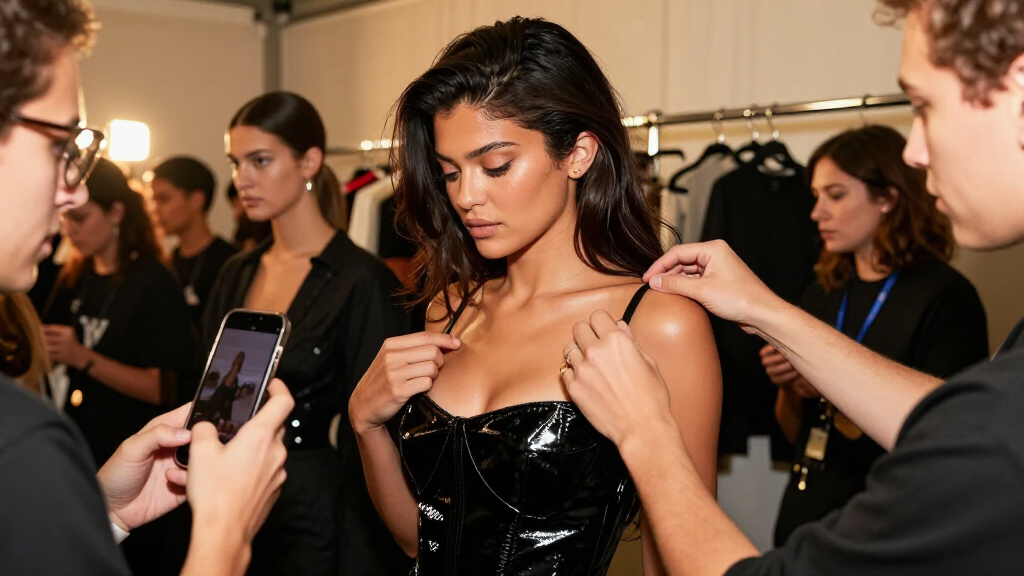
IdeaNavigator AI highlighted Kylie Jenner’s first Victoria’s Secret Fashion Show runway appearance as a potential signal for apparel buyers and merchandisers. The brief proposes a paid monitoring service that turns fashion news into role-specific summaries, but provides no evidence that this moment changed buying decisions or sales.
Kylie Jenner’s first Victoria’s Secret Fashion Show runway appearance has been flagged by IdeaNavigator AI as a potential retail signal for apparel buyers and merchandisers. The company’s brief uses the celebrity moment to propose a subscription service that filters fashion news into short, job-specific updates, though it does not show that the appearance affected consumer demand, sales or purchasing decisions.
IdeaNavigator AI’s fashion and apparel retail signal monitor marked the item with an 88 out of 100 signal score. The brief says the intended user is a buyer or merchandiser at an apparel brand, who may need to track celebrity appearances, style trends and product drops across scattered news and other feeds. It does not explain how the score is calculated, what its scale represents or how the item performed against other monitored stories.
The proposed product would monitor RSS and similar feeds, filter stories for relevance to apparel retail roles and produce a short brief covering what changed, why it matters and what to do. The Jenner runway appearance is offered as an example, not as proof that a particular clothing trend, product category or buying decision followed from it. No specific merchandise recommendation is included.
For validation, IdeaNavigator AI proposes delivering the brief and two other fashion-related items to five apparel buyers or merchandisers in one week. It says the test should measure whether recipients change a decision or forward a brief to a colleague. That is a suggested experiment, not a completed study: the material reports no participant responses, customer commitments or revenue.
Turning Celebrity Moments Into Buying Signals
The episode illustrates a practical challenge in fashion retail: a high-profile appearance can draw attention quickly, but buyers need to judge whether it points to a product opportunity relevant to their customers. A monitoring service could reduce the time spent scanning multiple feeds, particularly if it distinguishes a broadly visible celebrity story from a development with actionable implications for a specific brand or category.
That distinction is also the proposed service’s central test. Speed and relevance may be useful to retail teams, but a score or concise summary alone cannot establish that a story warrants a change in assortments, inventory or marketing. The brief does not connect Jenner’s appearance to demand data, search activity, sell-through or a measurable trend. Its commercial case remains a hypothesis until intended users act on the information and report that it improved a decision.
The example matters less as evidence of a confirmed fashion shift than as a test of whether role-filtered news can become a reliable work tool. For apparel businesses facing limited attention and rapidly moving coverage, the value would depend on reducing noise without presenting speculation as a buying signal.
As an affiliate, we earn on qualifying purchases.
A Proposed Monitor, Not a Trend Study
The IdeaNavigator AI item is framed as a product opportunity for the fashion and apparel retail market, rather than a report on the show’s audience or commercial results. It identifies a specific prospective customer—an apparel brand’s buyer or merchandiser—and describes a problem: relevant developments appear across news, forums and filings without a filter tailored to that role.
Its proposed response is an early, role-filtered read, delivered as a brief rather than a general weekly roundup. The document says RSS surfaced the Jenner item and assigns it a score of 88/100, but gives no publication timestamp for the underlying runway event and no independent evidence about its reach or business effects. The score should therefore be read as the monitor’s own signal rating, not as a measure of sales potential or industry-wide importance.
The suggested five-person trial is a small validation step, not a market study. It could show whether a few prospective users find the format useful, but the brief supplies no completed results and does not establish that a subscription service already exists.
celebrity-inspired women's fashion
As an affiliate, we earn on qualifying purchases.
As an affiliate, we earn on qualifying purchases.
Impact and Test Results Remain Unknown
The brief does not state when the runway appearance took place, provide a link to event coverage or identify what Jenner wore. It also offers no evidence that the appearance led to a measurable change in consumer interest, product demand or retailer decisions. Those outcomes should not be inferred from the fact that the item received a high internal signal score.
Other open questions concern the proposed monitor itself: how it selects and ranks stories, how it verifies information, what its subscription would cost and whether buyers would use its recommendations. The five-person test is described as a plan; no findings are reported. It is also unclear whether any apparel professionals have agreed to participate or whether the service is available to customers.
As an affiliate, we earn on qualifying purchases.
The Proposed Buyer Test
IdeaNavigator AI’s next stated step is to hand-deliver the Jenner brief alongside two additional style, drop or celebrity items to five people who match its target buyer or merchandiser profile. The planned measures are whether a recipient changes a decision or forwards the information to a colleague. No schedule beyond the proposed one-week test, participant names or results are provided.
If the test proceeds, its findings could help show whether the briefs influence work or simply summarize news readers already see. For now, the documented development is a product concept anchored to a celebrity runway appearance; whether it becomes a paid service, and whether it can support better buying decisions, remains to be established.
Source: IdeaNavigator AI
apparel buyer trend analysis software
As an affiliate, we earn on qualifying purchases.
As an affiliate, we earn on qualifying purchases.
Key Questions
What is the news about Kylie Jenner and Victoria’s Secret?
IdeaNavigator AI’s brief describes Jenner’s first Victoria’s Secret Fashion Show runway appearance and uses it as an example of a potential retail-news signal. The brief does not provide the event date or further runway details.
Did the appearance affect apparel sales or buying decisions?
No sales or decision impact is reported. The brief presents no sales data, consumer-demand measures or retailer accounts linking the appearance to a commercial outcome.
What service does IdeaNavigator AI propose?
It proposes a subscription monitor that scans RSS and similar feeds, filters fashion developments for apparel buyers and merchandisers, and summarizes what changed, why it matters and what to do.
What does the 88/100 score mean?
The brief assigns the story an 88 out of 100 signal score, but does not explain the scoring method, comparison group or what the number predicts. It is not presented as a sales or trend measure.
Has the proposed service been tested with buyers?
The brief proposes testing the format with five apparel buyers or merchandisers and measuring decisions or colleague forwards. It reports no test results or confirmed participants.
Source: IdeaNavigator AI
Halloween Picks
halloween
As an affiliate, we earn on qualifying purchases.