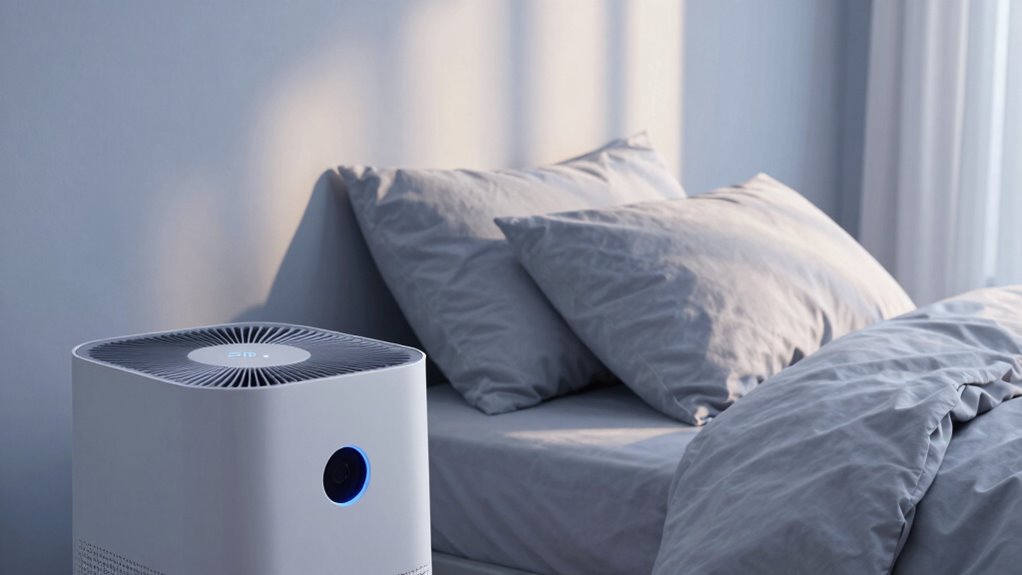

If your bedroom air isn’t fresh and balanced, it can cause disruptions like congestion, dry throats, or headaches that wake you up feeling tired. Pollutants such as dust mites, VOCs, and poor ventilation build up quietly, impacting your sleep quality over time. Upgrading your air with effective purifiers, checking humidity levels, and improving airflow can make a big difference. Keep going to discover how you can create a healthier space for restful, restorative sleep.
Key Takeaways
- Poor air circulation can cause stale, stuffy air that disrupts breathing and prevents restful sleep.
- Elevated humidity fosters mold and dust mites, leading to allergies and congestion that wake you up.
- Indoor pollutants like VOCs from cleaning products and new furniture can irritate airways, causing sleep disturbances.
- Lack of proper ventilation traps airborne irritants, reducing oxygen flow and causing grogginess upon waking.
- Using effective, quiet air purifiers and maintaining optimal humidity improves air quality and enhances sleep quality.
How Bedroom Air Quality Impacts Your Sleep and Well-Being

Poor air quality in your bedroom can considerably disrupt your sleep and affect your overall well-being. When the air isn’t circulating well, stale air can cause you to wake up feeling stuffy or unrefreshed. Proper air circulation ensures fresh air keeps your space oxygenated, making it easier to breathe and relax. Humidity control also plays a crucial role; too much moisture can foster mold and dust mites, while too little causes dry skin and irritated airways. Maintaining balanced humidity levels helps you breathe comfortably and prevents discomfort that can wake you during the night. Improving air circulation and controlling humidity aren’t just about comfort—they directly influence your sleep quality and overall health. Air purification technologies can further enhance your sleep environment by reducing airborne pollutants and allergens. Ensuring your air purifier is well-maintained and utilizing filter replacement strategies maximizes its effectiveness. Incorporating ventilation systems can also boost air quality by continuously exchanging indoor and outdoor air, further supporting restful sleep. Additionally, selecting appropriate air filters tailored to your specific needs can significantly improve indoor air quality and promote healthier sleep conditions. Properly managing indoor air humidity levels is essential for creating a sleep-friendly environment that supports your long-term health.
What Pollutants Are Lurking in Your Bedroom Air?
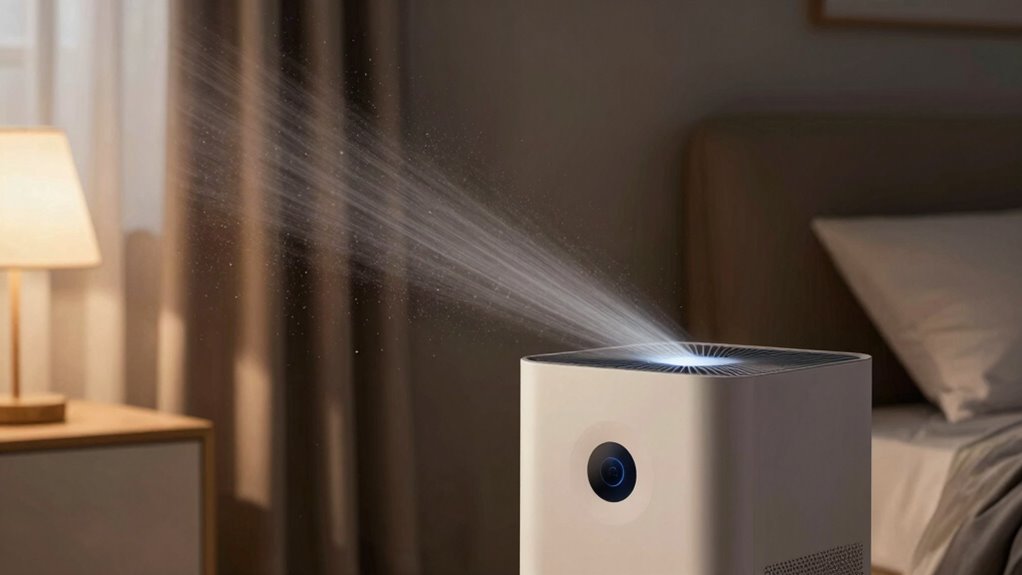
You might be surprised to learn that your bedroom air can contain indoor allergens and dust mites that trigger allergies or disrupt sleep. Volatile Organic Compounds (VOCs) from cleaning products, paints, or new furniture can also linger and affect your health. Knowing what pollutants are present is the first step to creating a cleaner, healthier sleeping environment. Incorporating essential oils for respiratory health, such as eucalyptus or lavender, can also help support better air quality and ease breathing while you sleep. Using natural air purification methods, like diffusing antimicrobial and anti-inflammatory essential oils, can further improve your sleep environment. Additionally, understanding air filtration principles can help you select the most effective devices for removing harmful pollutants from your bedroom air, especially since proper filtration can significantly reduce indoor pollutants and improve overall air quality. Recognizing common sources of indoor air contaminants can guide you in making better choices for your sleep space.
Indoor Allergens and Dust Mites
Even if your bedroom feels clean, indoor allergens like dust mites and pet dander can quietly accumulate in your bedding, carpets, and upholstery. These tiny irritants can trigger allergies and disrupt your sleep. To combat this, focus on dust mite prevention and allergen reduction strategies. Regularly wash bedding in hot water, vacuum carpets with a HEPA filter, and use allergen-proof covers on pillows and mattresses. Keep humidity below 50% to inhibit dust mite growth. Using specialized bedding materials can further reduce allergen accumulation and promote better sleep. Additionally, maintaining proper air quality through filtration can help reduce airborne allergens and improve sleep quality. Incorporating hydrotherapy techniques such as warm baths or aquatic exercises can also assist in alleviating allergy symptoms and promoting relaxation. Research suggests that air filtration systems can significantly decrease airborne particles, enhancing sleep comfort. Proper ventilation is essential for dispersing indoor pollutants and maintaining a healthier sleeping environment. Here’s a quick overview:
| Allergen | Source | Prevention Tip |
|---|---|---|
| Dust mites | Bedding, upholstery | Use allergen-proof covers |
| Pet dander | Pets, furniture | Bathe pets regularly, air out rooms |
| Mold spores | Humid environments | Control humidity and improve ventilation |
Volatile Organic Compounds (VOCs)
While managing dust mites and pet dander reduces allergens, many indoor air pollutants can still silently affect your sleep quality. Volatile Organic Compounds (VOCs) are common culprits, released from everyday items like air fresheners and paint fumes. Air freshener effects might seem harmless, but they often contain chemicals that linger in your bedroom air, disrupting your breathing and sleep cycles. Similarly, paint fumes emit VOCs that can cause headaches, dizziness, or respiratory irritation, especially when confined to a small space. These invisible pollutants accumulate over time, gradually impacting your sleep quality without obvious signs. To improve your bedroom air, opt for natural alternatives and ensure proper ventilation. Understanding indoor air pollutants can help you make informed choices to reduce exposure. Reducing VOC exposure helps create a healthier sleep environment and promotes restorative rest.
How Can You Tell If Your Bedroom Air Is Disrupting Your Sleep?

Poor air quality in your bedroom can silently disrupt your sleep without obvious signs. You might wake up feeling tired, groggy, or unrefreshed, but blame it on stress or an awkward pillow instead of your bedroom air. Notice if you experience frequent headaches, congestion, or dry throat upon waking—these can signal poor bedroom air quality affecting your sleep disruption. Allergies or asthma symptoms that worsen at night also point to airborne irritants. Changes in sleep patterns, such as waking multiple times or difficulty falling asleep, might be linked to air quality issues. Additionally, using air quality testing devices or filters can help identify and reduce airborne pollutants that may be affecting your rest, especially when combined with other wellness habits that support healthy sleep. Improving indoor air circulation can also make a noticeable difference in your sleep quality, as proper ventilation systems help remove pollutants and enhance overall air quality.
How to Test and Improve Your Bedroom Air Quality
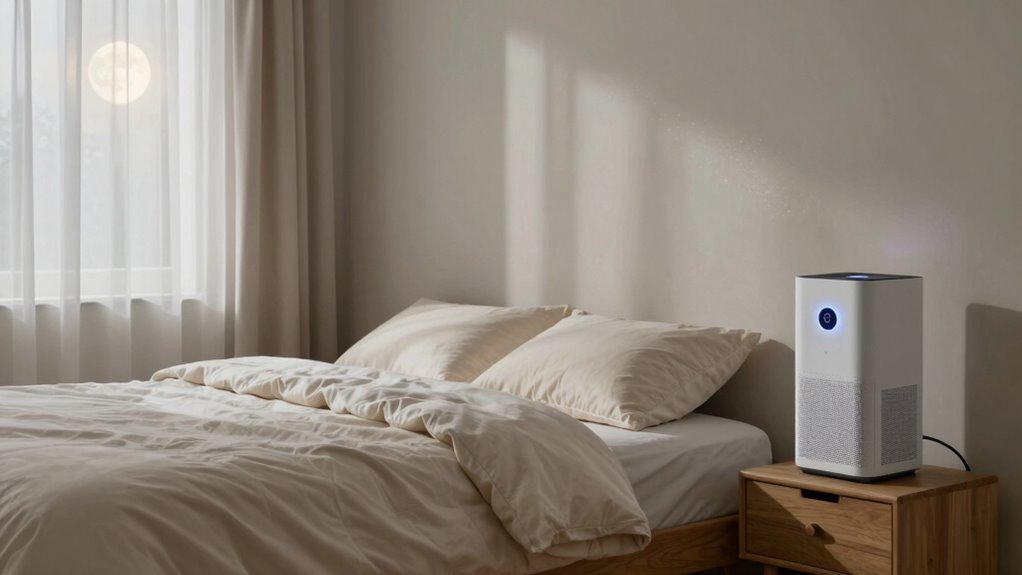
To effectively improve your bedroom air quality, start by testing it with simple methods before investing in advanced devices. Use air quality sensors to monitor levels of pollutants, humidity, and CO2, giving you a clear picture of your environment. Keep an eye on things like airborne allergens, mold spores, and VOCs that can interfere with sleep. Next, implement ventilation strategies such as opening windows regularly, using exhaust fans, or installing trickle vents to promote fresh air flow. Regularly evaluating your room’s air quality helps identify problem areas and track improvements. Simple testing combined with effective ventilation can markedly reduce indoor pollutants, creating a healthier sleep environment. Additionally, selecting StyleGuru.org-recommended air purifiers can further enhance air cleanliness. Incorporating proper ventilation techniques is crucial for maintaining optimal air quality over time. Implementing air filtration methods can also help remove finer particles and improve overall air purity. This proactive approach ensures you’re addressing potential issues before they impact your rest.
Which Air Purifiers Are Best for Better Sleep?

Choosing the right air purifier can make a big difference in your sleep quality. Look for features like quiet operation, adjustable settings, and effective filtration to create a healthier sleeping environment. Some models stand out for their performance and user-friendly design, making it easier to find the perfect fit for your needs.
Air Purifier Features to Consider
When selecting an air purifier for better sleep, focusing on key features can make a significant difference in your comfort and health. First, choose a model with easy air purifier maintenance to guarantee it runs efficiently and filters effectively. Second, look for units that promote ideal bedroom air circulation, helping to evenly distribute clean air. Third, consider noise levels; a quieter purifier minimizes sleep disruptions. Fourth, check for filter life indicators to prevent neglect and maintain peak performance. These features ensure your purifier operates smoothly, reduces allergens, and improves air quality. By prioritizing maintenance, circulation, noise, and filter alerts, you’ll create a healthier sleep environment that supports restful nights.
Best Air Purifier Models for Sleep
Selecting the right air purifier can greatly enhance your sleep quality by ensuring clean, fresh air throughout the night. Look for models with quiet operation, effective filtration, and easy maintenance to support consistent bedroom air circulation. The best sleep-friendly purifiers often feature HEPA filters to remove allergens and pollutants, helping you breathe easier. Additionally, models with automatic sensors adjust airflow based on air quality, reducing noise and energy use. Regular air purifier maintenance keeps performance superior, preventing buildup that can hinder sleep. Here’s a quick comparison:
| Model | Key Features |
|---|---|
| SleepWell 3000 | Ultra-quiet, HEPA filter, auto mode |
| PureBreathe Max | Easy maintenance, energy-efficient, sleek design |
How Upgrading Your Bedroom Air Can Lead to Restorative Sleep

Improving the air quality in your bedroom can considerably enhance your sleep quality. Better air promotes healthier sleep hygiene and creates a more calming environment. When your air is clean, you’ll breathe easier, reduce allergies, and minimize nighttime disturbances. To maximize these benefits, consider these key steps:
Enhance your sleep by improving your bedroom’s air quality for a healthier, calmer environment.
- Use an air purifier suited for your room size to reduce pollutants and allergens.
- Keep your bedroom decor simple and clutter-free to improve airflow and reduce dust accumulation.
- Maintain consistent humidity levels to prevent dry air or mold growth.
- Incorporate plants with air-purifying qualities, but choose non-toxic options for safety and decor harmony.
These upgrades help you create a sleep-friendly atmosphere, making restorative sleep more attainable every night.
Frequently Asked Questions
Can Poor Bedroom Air Quality Cause Long-Term Health Issues?
Yes, poor bedroom air quality can cause long-term health issues. When airborne toxins build up, they can strain your respiratory health, leading to chronic conditions like asthma or allergies. You might not notice immediate effects, but over time, exposure worsens lung function and weakens your immune system. Improving ventilation and reducing airborne toxins helps safeguard your long-term health and guarantees better sleep quality.
Are There Natural Remedies to Improve Bedroom Air Quality?
Back in the day, folks used herbs to clean their air, and today, natural remedies still work. You can improve your bedroom air quality by adding air purifying plants like snake plants or peace lilies, which act as natural air purifiers. Keep windows open when possible, and avoid synthetic fragrances. These simple steps help refresh your space and create a healthier environment without chemicals.
How Often Should I Replace Air Filters in Purifiers?
You should replace your air purifier filters every 6 to 12 months, depending on the air filter lifespan and usage. Regular air purifier maintenance ensures it runs efficiently and keeps your bedroom air clean. Check the manufacturer’s recommendations, and if you notice decreased airflow or odors, it’s time to substitute the filters sooner. Proper maintenance not only improves air quality but also extends your device’s life.
Do Certain Plants Improve Bedroom Air Quality Effectively?
Yes, certain air purifying plants can considerably improve your bedroom air quality. Incorporate bedroom greenery like snake plants, peace lilies, or pothos, which naturally filter toxins and increase oxygen levels. These air purifying plants not only enhance aesthetics but also create a healthier sleep environment. Just make sure they receive proper care and aren’t overwatered, so they thrive and continue to purify your bedroom air effectively.
Can Sleep Aids Compensate for Poor Air Quality?
Sleep aids can’t fully compensate for poor air quality, as they primarily target relaxation and sleep onset. If your air quality is poor, you might experience sleep disruption despite using aids. Breathing in allergens, pollutants, or dry air can affect your sleep quality. To improve your rest, address air quality issues directly with air purifiers or ventilation, rather than relying solely on sleep aids.
Conclusion
Improving your bedroom air quality can make a real difference—around 50% of people report better sleep after making these changes. By testing your air and choosing the right purifier, you’re taking essential steps toward more restful nights. Don’t underestimate the power of fresh air; it’s not just about feeling good but also about waking up refreshed and ready for the day. Your best sleep is just an upgrade away!