
📊 Full opportunity report: Help Your Small Office Move From Paper Files To Digital Records on IdeaNavigator AI — validation score, market gap, and execution plan.
TL;DR
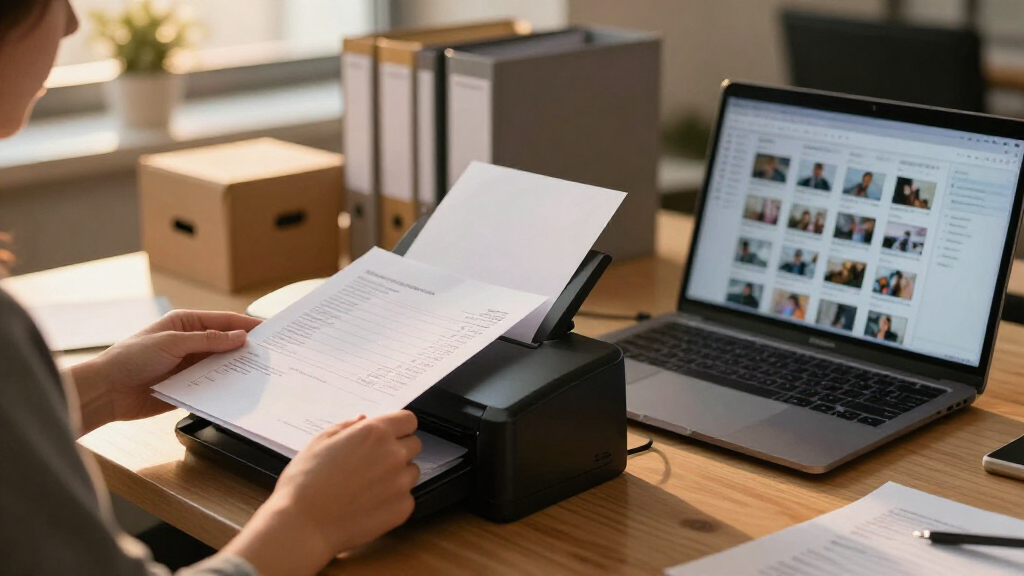
IdeaNavigator AI has outlined a proposed scanning app for small offices that would classify photographed paperwork, suggest filenames and save searchable PDFs to a shared folder. The idea remains untested: a suggested pilot would involve five offices, 200 documents per office and a one-week evaluation of classification accuracy and willingness to pay.
IdeaNavigator AI has proposed a one-week pilot of an auto-filing scanner app for paper-heavy small offices, including nonprofits, clinics and law firms. The concept would use a phone camera and document-recognition software to classify pages, suggest filenames and save searchable PDFs, but the app’s accuracy and commercial viability have not yet been demonstrated.
According to IdeaNavigator AI’s proposal, the app targets a familiar administrative problem: small organizations can accumulate intake forms, invoices and other records in filing cabinets, where locating a specific document may take time. The proposal argues that basic scanning applications often leave staff with unsorted image files rather than records that are easy to search or identify.
In the workflow described by IdeaNavigator AI, a staff member photographs a stack of papers with a phone. The app would apply optical character recognition (OCR) to read text, suggest a document category and filename, and place each item as a searchable PDF in a shared folder. An example filename could combine an invoice label, date and vendor. The proposal allows for either on-device or API-based processing, but does not specify a product, technical design or data-handling policy.
IdeaNavigator AI suggests a per-seat monthly subscription, with a page-volume cap and additional charges for usage above that limit. To test demand, its proposal recommends giving five small offices a one-week trial and asking each to scan a real backlog of 200 documents. The evaluation would track correct automatic classification and whether offices would pay per seat.
Less Time Searching Paper Records
If the workflow works reliably, it could help a small office make existing records easier to retrieve without first hiring dedicated IT staff or undertaking a large digitization project. Searchable PDFs and consistent filenames could reduce manual sorting and make shared folders more useful for routine administrative work.
The proposal matters most as a testable operational idea, not as evidence that the problem has already been solved. A low-cost pilot could reveal whether staff trust automatic categories, how much correction is required and whether the time saved justifies another monthly subscription. Those questions affect both the usefulness of the tool and its potential price.
For clinics and law offices in particular, records can contain sensitive personal information. That makes privacy, access controls and retention practices part of the product’s practical value, not optional add-ons. The proposal does not yet establish how those issues would be handled.
document scanner app for small office
As an affiliate, we earn on qualifying purchases.
As an affiliate, we earn on qualifying purchases.
From Scanning to Organized Records
IdeaNavigator AI frames the idea around a gap between capturing a page digitally and making it usable afterward. A scanner can produce an image, but staff may still need to name the file, identify its type and place it in the right folder. The proposed automation aims to combine those steps through text recognition and document classification.
The proposal says on-device and API-based OCR, alongside layout-aware models, are now affordable and accurate enough to support this kind of workflow. That is the rationale IdeaNavigator AI offers for pursuing the product; no benchmark results or independent testing are provided to establish how well it would perform on mixed real-world paperwork.
IdeaNavigator AI proposes narrowing the initial test to five small offices and 200 documents per office. That creates a concrete starting point for checking performance and interest, but the proposal does not identify participating organizations or report completed trials.
As an affiliate, we earn on qualifying purchases.
Accuracy, Privacy and Demand
No pilot results are available in IdeaNavigator AI’s proposal, so the rate of correct classification, the amount of staff review required and the time saved remain unknown. The proposed test also does not define what counts as a correct classification or how errors in extracted dates, vendors or other fields would be measured.
It is also unclear whether the tool would handle different document layouts, poor-quality images, handwriting, multi-page files or duplicate records. The proposal does not specify security safeguards, data storage locations, retention periods or access permissions, all of which would matter to organizations handling confidential records.
Commercial demand has not been established. The subscription model and page-volume charges suggested by IdeaNavigator AI are pricing ideas, not evidence that offices would pay. The proposed willingness-to-pay check could provide an early signal, but no price point, customer commitment or market estimate is provided.
digital document management software
As an affiliate, we earn on qualifying purchases.
As an affiliate, we earn on qualifying purchases.
A Five-Office Trial Could Test It
IdeaNavigator AI proposes a one-week pilot across five small offices, with each office processing 200 documents from its existing backlog. The test would measure classification accuracy and willingness to pay per seat. The proposal gives no start date or participating offices, and no results have been announced.
A useful evaluation would also need to show how often staff correct suggested categories and filenames, and whether records can be retrieved from the shared folder afterward. For offices considering a similar system, the unresolved questions are practical: how much human checking is needed, how sensitive information is protected, and whether the workflow fits existing records practices.
Source: IdeaNavigator AI’s proposal
searchable PDF creator for business
As an affiliate, we earn on qualifying purchases.
As an affiliate, we earn on qualifying purchases.
Key Questions
What would the proposed app do?
As described in IdeaNavigator AI’s proposal, it would let staff photograph paper documents, then use OCR and classification to suggest a document type and filename before saving a searchable PDF to a shared folder.
Has the app been tested?
IdeaNavigator AI’s proposal describes a pilot but provides no completed test results. It suggests a one-week trial with five offices.
What would the pilot measure?
Under the proposed plan, each office would scan 200 documents. IdeaNavigator AI identifies correct auto-classification and willingness to pay per seat as measures; the evaluation method has not been detailed.
How might the service charge customers?
IdeaNavigator AI suggests a monthly per-seat subscription with a page-volume limit and extra charges for usage above that cap. No prices have been provided.
What should offices ask about before using such a tool?
They would need clear information on data security, storage, access permissions and retention, as well as accuracy and the amount of staff review needed. IdeaNavigator AI’s proposal does not specify those details.
Source: IdeaNavigator AI