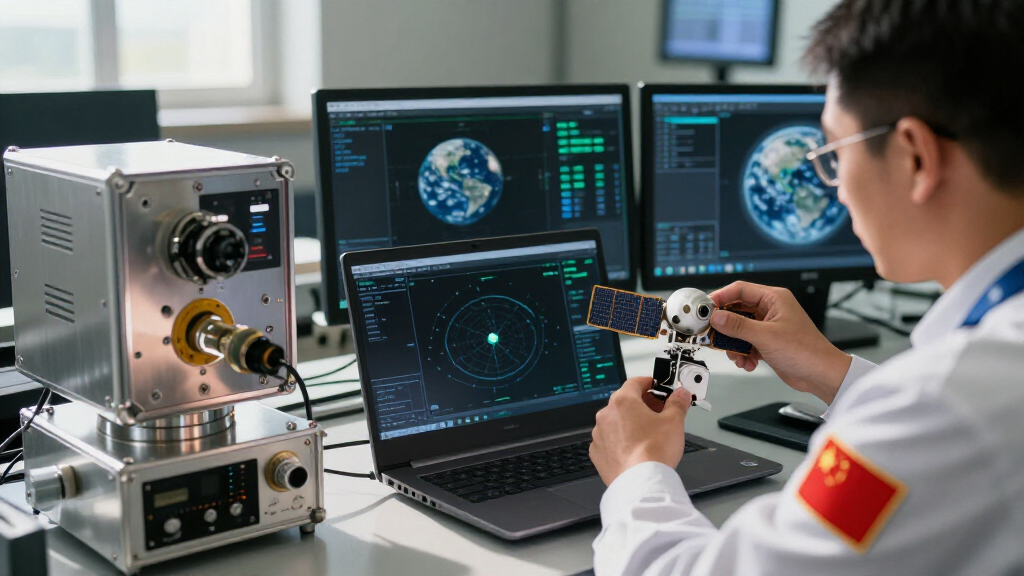

🔍 Read the full analysis: China Sends An AI Compute Node Into Orbit With SenseTime And Zhipu AI Backing on ThorstenMeyerAI.com

Get the latest gadgets delivered free with Prime
- Fast, free delivery on millions of items
- Prime Video, Amazon Music and more included
- Member-only deals all year
TL;DR
A Tech Times headline reports that China has placed an AI compute node in orbit and names SenseTime and Zhipu AI as backers. The available material does not establish the launch date, spacecraft, companies’ roles or whether the system is operating.
A Tech Times headline, discussed in the original analysis, reports that China has placed an AI compute node in orbit, with SenseTime and Zhipu AI named as backers. The material available for this report contains no article body or corroborating mission information, so the launch, the companies’ roles and whether the node is running remain unverified.
The headline is the sole basis for the reported development in the supplied material. It identifies an orbital AI compute node and names SenseTime and Zhipu AI, but does not identify a spacecraft, operator, launch vehicle, date or orbit. It also does not provide technical specifications or a mission announcement that could substantiate the account.
The word “backed” does not establish what either company did. Their involvement could refer to financing, software, technical work or another form of support; the available information does not narrow that down. There are no included statements from the companies, Chinese officials or a satellite operator.
The headline describes the companies as US-sanctioned, but the supplied material does not identify the relevant designations or explain their connection to this project. It also provides no evidence that the node has processed workloads, what data it can handle or whether it is intended as a demonstration or an ongoing service.
What Orbital AI Could Enable
If the headline describes a real deployment, the project could be relevant to efforts to process data closer to satellites and other space-based sources. In principle, onboard computing might let a spacecraft analyze some data before transmitting it to Earth, potentially changing how much information needs to be sent and when. Those are possible uses of orbital processing, not demonstrated results from this node.
The practical value depends on details the available report does not provide: computing capacity, power supply, communications links and the tasks the system can perform. Without operating evidence or performance figures, it is not possible to assess whether the node can meaningfully reduce transmission needs, support users, or function beyond a test.
The reported company backing and sanctions reference could also draw attention to the intersection of AI, space infrastructure and US restrictions. But the headline alone cannot show which rules apply or whether a particular activity, product or transaction is implicated. Those conclusions require specific designation and project information.
Products Worth Considering

Apple iPad Air (2025) 13‑inch Wi‑Fi 256 GB – Space Gray (M3 chip)

Apple iPad Air (4th Generation, 10.9-inch, Wi-Fi, 256GB) – Space Gray

Apple iPad Air 11-inch (M2), 512GB, Wi-Fi, Space Gray
As an affiliate, we earn on qualifying purchases.
What the Headline Identifies
The source material identifies the account as a Tech Times report, but only its headline was available. It says China sent an AI compute node into orbit and names SenseTime and Zhipu AI as backers. No publication date, linked mission, spacecraft name or supporting account of the launch is included.
That limited record matters because several separate milestones can be described as an orbital deployment: a payload may be launched, enter orbit, be commissioned, and later demonstrate that it can perform computing tasks. The headline does not specify which milestones have occurred beyond claiming that the node is in orbit. It does not establish that the system is commissioned or processing AI workloads.
Similarly, “backed by” is broader than saying a company built or operates a satellite. The material does not document whether either named company provided funding, hardware, software, personnel or another contribution. The sanctions description is also not detailed enough to establish the specific restrictions or their relevance to the project.
Launch and Operations Remain Unverified
The central uncertainty is whether the headline’s account can be corroborated. The supplied material includes no dated launch record, mission documentation or independent observation, and does not name the satellite or its operator. It is therefore not possible from this material to confirm when the node reached orbit or its present status.
Its capabilities are also unknown. No information is provided about the hardware, power budget, communications system, computing capacity or intended workloads. The report does not say whether tests have taken place, whether any AI tasks have been run in orbit, or what results they produced.
The roles of SenseTime and Zhipu AI, along with the precise sanctions cited in the headline, remain unresolved. No direct comments or project records are included. A fuller account could contain details missing from the material supplied here, but that possibility cannot substitute for confirmation.
Records Needed to Verify the Mission
The next evidence needed is a dated launch or mission record that identifies the spacecraft, operator and payload, followed by confirmation from the operator or an authoritative source that the node is in orbit. A statement confirming commissioning or completed workload tests would help distinguish an orbital payload from a functioning computing service.
Technical disclosures could clarify the node’s power, communications and computing capabilities, while statements from SenseTime and Zhipu AI could establish what “backed by” means. To assess the sanctions reference, reporting would need to identify the relevant designations and explain their connection, if any, to the project’s companies or activities.
Until such information is available, the defensible conclusion remains limited: a headline reports an orbital AI compute node and names two backers, but the deployment’s status, capabilities and implications are not established by the material at hand.
Key Questions
What is reported to have happened?
A Tech Times headline reports that China put an AI compute node in orbit and names SenseTime and Zhipu AI as backers. The supplied material does not include details that independently confirm the deployment.
Have SenseTime and Zhipu AI been confirmed as builders?
No. The headline calls them backers, but does not explain their roles. It does not establish that either company built, operates or supplied software or hardware for the node.
Is the orbital compute node operating?
The available information does not say. There are no reported commissioning details, workload tests or performance results to confirm that it is processing AI tasks in orbit.
What does the report say about US sanctions?
The headline describes SenseTime and Zhipu AI as US-sanctioned, but the material does not identify the designations or explain how they relate to the project. The specific legal and commercial implications cannot be assessed from the headline alone.
Primary source: SenseTime · via ThorstenMeyerAI.com