TL;DR

Get the latest gadgets delivered free with Prime
- Fast, free delivery on millions of items
- Prime Video, Amazon Music and more included
- Member-only deals all year
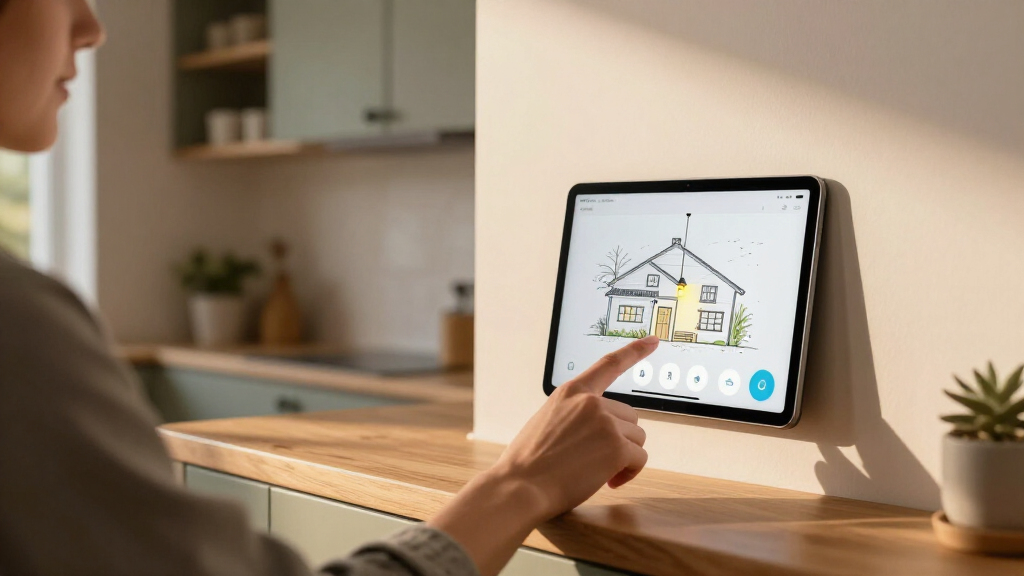
Anton Frolov commissioned an environment artist to illustrate his house and turned the layered artwork into an interactive Home Assistant dashboard. The project uses the platform’s picture-elements card to place device images and status information over the illustration; Frolov says it gave his family a dashboard they were more willing to use.
Anton Frolov commissioned an environment artist to draw his house, then used the artwork as the basis for an interactive Home Assistant dashboard showing devices and their states. In his report, Frolov said the illustrated interface was the first dashboard that his whole family enjoyed using, addressing a practical problem with controlling garden lights and other smart-home equipment.
Frolov said he had spent about a year automating his home with Home Assistant, an open-source smart-home platform. Some routines run automatically: air conditioners switch off when everyone leaves, while the garden sprinkler adjusts its operating time based on the weather. Other tasks still require someone to use an app. Garden lights, for example, can be controlled through the manufacturer’s app or Home Assistant, and a timer switches them off after a period of time.
To make the illustrated dashboard possible, Frolov supplied the artist with an architectural floor plan, room photographs, visual references and a technical brief. He asked for separate day and night images, transparent files, and individual layers for devices, including still images for off states and short animations for on states. He also specified that the images share a common canvas and retain their correct positions, which he said helped avoid manually aligning the pieces later.
Frolov built the interface with Home Assistant’s standard picture-elements card. The drawing serves as the background; images, icons and sensor labels sit above it as interactive elements. In his account, device images can change according to a device’s state, while conditional elements can appear or disappear as needed. The supplied report excerpt ends partway through his description of the implementation, so it does not establish the full configuration or all of the techniques used.
A Dashboard the Household Uses
The project addresses a familiar smart-home problem: automation can work in the background, but people still need an interface for actions that cannot or should not happen automatically. Frolov’s example is the garden lighting timer, which requires a person to reopen an app before the lights switch off. He said other household members did not want to use his earlier Home Assistant dashboard, leaving him with a system that was technically capable but less convenient for shared use.
The illustration changes the interface from a collection of controls into a visual map of the home, with device states shown in the rooms where they belong. That approach may make controls easier for household members to recognize, though Frolov’s account is a personal project report, not a user study showing that illustrated dashboards work better for everyone. It also illustrates that a polished smart-home interface may depend more on planning and commissioned artwork than on complex custom software.
custom smart home dashboard display
As an affiliate, we earn on qualifying purchases.
As an affiliate, we earn on qualifying purchases.
From Floor Plan to Interface
Frolov said he considered other floor-plan dashboards before commissioning the illustration. Many examples he found used a three-dimensional model as a static background with interactive icons layered over it. He also explored pixel art, but concluded that drawing the elements himself or arranging pre-made sprites would not suit the look he wanted. The artist he chose already specialized in illustrated environments, a fit that helped shape the project’s final style.
His brief treated the artwork as a set of interface assets rather than a single finished picture. Each device needed its own visual states, and the day and night versions had to line up with the background. Frolov said he initially requested PNG sprite sheets for animations but later converted the frames to animated WebP himself; in hindsight, he would request WebP directly. The garden also needed three backgrounds: day, night, and night with the lights on.
“Most importantly, every file should be exported on one shared canvas of the same size, with each piece sitting exactly where it belongs in the house rather than cropped to itself.”
— Anton Frolov, describing the technical brief
As an affiliate, we earn on qualifying purchases.
Details Not in the Excerpt
The supplied report excerpt cuts off during Frolov’s explanation of how device animations respond to state changes. It does not include the complete configuration, the full list of implementation techniques, or details such as the artist’s identity, the commission’s cost, and how long the work took. The source also does not provide a publication date, so the project’s timing cannot be stated more precisely.
Frolov’s report documents his own household’s experience. It does not provide independent testing, evidence that other families would prefer the same design, or information about accessibility, mobile performance, or ongoing maintenance. Those outcomes remain unreported in the supplied material.
As an affiliate, we earn on qualifying purchases.
Further Build Details Await
The next useful detail for readers seeking to reproduce the setup would be the remainder of Frolov’s implementation account, including the exact method for switching between still and animated images and arranging the controls. The supplied source gives no announced follow-up, product release, or development milestone; it describes a personal Home Assistant project rather than a commercial launch.
Home Assistant compatible smart devices
As an affiliate, we earn on qualifying purchases.
As an affiliate, we earn on qualifying purchases.
Key Questions
What did Anton Frolov build?
He used a commissioned illustration of his house as the background for an interactive Home Assistant dashboard, with device images and status information layered over it.
How did the dashboard work?
Frolov says he used Home Assistant’s picture-elements card. The illustration formed the background, while image, icon, state-label and conditional elements provided controls or displayed information.
Why did he commission an illustrator?
Frolov wanted a floor-plan interface his household would be willing to use. He said family members did not want to use his previous dashboard, even though some smart-home tasks still required app-based control.
What artwork files did the project require?
His brief called for separate device layers and day and night versions, with assets exported at matching canvas dimensions and positions. He also said animated WebP would have been preferable to the PNG sprite sheets he originally requested.
Is the setup proven to work for other households?
The report describes Frolov’s experience and his view that his family enjoyed using the result. It does not include independent testing or evidence that the approach suits other households.
Source: hn
Halloween Picks
halloween
As an affiliate, we earn on qualifying purchases.