
🔍 Read the full analysis: Where Will US Firms Build AI Data Centres? Trump Has Issued A Threat on ThorstenMeyerAI.com

Get the latest gadgets delivered free with Prime
- Fast, free delivery on millions of items
- Prime Video, Amazon Music and more included
- Member-only deals all year
TL;DR
President Donald Trump said U.S. companies building data centers outside the country could face a “tremendous tax” and penalties. As of Nov. 21, no order, rule or proposed tax had been published, and key details—including which firms or projects might be affected—were unknown.
President Donald Trump said Friday that the United States would not allow American companies to build data centers abroad, then added that firms could do so but might face a “tremendous tax.” As of Saturday morning, no executive action, regulation or proposed tax implementing the threat had been published, leaving companies with no announced new restriction to follow.
Trump made the remarks at a White House news conference on Nov. 20, after returning from a trip to Asia. He argued that data centers should be built in the United States and said companies that built them elsewhere could face a tax. He also referred to “tremendous penalties,” according to accounts of the remarks by The Verge and Gizmodo. The White House referred Newsweek to Trump’s comments when asked for further details.
The statements did not specify a tax rate, start date, legal authority, affected countries or covered companies. Trump named China and Finland, but did not explain whether the threat would apply to all overseas projects or particular investments. Newsweek reported that it was unclear whether he was referring to Google’s planned Finland investment, which Trump had criticized on Truth Social days earlier.
Trump also said his staff had not heard the proposal before he raised it publicly. The published transcript shows a shift in formulation: he first said the United States would not “allow” companies to build abroad, then said they could do so but would face a tax. A prohibition and a tax are different approaches, and the remarks did not settle which, if either, the administration intends to pursue.
A Threat With No Current Compliance Rule
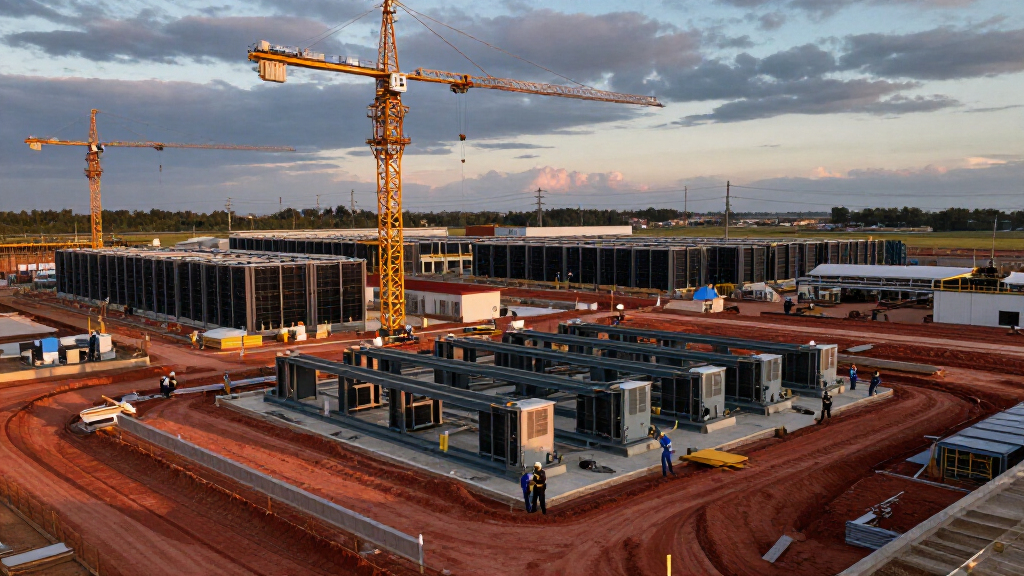
The remarks put a potential new risk on the radar for U.S. cloud and AI companies planning overseas infrastructure. Data centers require large, long-term investments, and a credible restriction or tax could affect where firms place computing capacity and how they serve customers in other markets. But the announcement alone does not tell companies to halt projects or change current operations.
The distinction matters because the legal route could shape both the policy’s reach and its durability. The source material notes that the Constitution gives Congress the power to impose federal taxes. It also reports that the Supreme Court ruled on Feb. 20, 2026, that the emergency law IEEPA does not authorize the president to impose tariffs. Those limits make the choice of legal authority consequential; the president did not identify one in his remarks.
For now, companies and local communities have a political signal, not an operational rule. The practical effects will depend on whether the administration proposes a measure, what authority it invokes and whether that measure can withstand legal and legislative scrutiny.
Products Worth Considering

DJI Mic 3 Wireless Microphone (2 Transmitters, 1 Receiver, Charging Case)

Apple AirPods Pro (2nd Generation) Wireless Earbuds with MagSafe Charging Case (Lightning)

DJI Mini 4K Drone with 4K UHD Camera
As an affiliate, we earn on qualifying purchases.
Existing AI Controls Target Chips
The United States already regulates some overseas access to advanced AI computing through export controls on chips, rather than a general ban on building data centers abroad. A Commerce Department rule that took effect Nov. 19 requires licenses for advanced AI chips in five countries and covers data centers serving China-headquartered companies at scale. It also includes a reporting lane for U.S.-headquartered companies, according to the supplied source material.
That rule addresses access to controlled technology and certain customers; it is not a blanket prohibition on U.S. firms constructing facilities overseas. The source also cites a July 2025 executive order stating that U.S. policy is to support the global deployment of U.S.-origin AI technologies, including data centers. The relationship between that existing policy and Trump’s new comments has not been explained.
As of the morning of Nov. 21, the White House presidential-actions page listed two actions dated Nov. 20—one on National Adoption Month and one on federal contracting—with neither addressing overseas data centers. A Federal Register search for “data center” documents dated from Nov. 19 found the Commerce rule and three securities notices, but no rule on overseas construction, according to the source.
“The White House referred Newsweek to Trump’s remarks when asked for further details about the proposal.”
— The White House, as reported by Newsweek
Scope and Legal Basis Still Unknown
No written proposal was identified in the records checked as of 08:00 UTC on Nov. 21. The administration had not said whether it was considering a ban, a tax, other penalties or no formal action at all. It was also unclear which companies, countries or projects might be covered, whether existing construction plans would count, or whether leasing overseas capacity or purchasing cloud services would trigger any restriction.
The legal mechanism is unsettled. The source identifies Congress’s taxing power and reports the Supreme Court’s February ruling limiting tariffs under IEEPA, but Trump offered no legal explanation. No implementation timetable or enforcement agency was announced. The White House’s referral to the remarks supplied no further clarification.
Watch for a Formal Policy Proposal
The next concrete indication would be a published presidential action, proposed legislation, Commerce Department measure or other official notice explaining what the administration intends to do. Until one appears, the remarks do not establish a new compliance requirement for companies building or operating overseas data centers.
Any eventual measure would need to identify its legal basis, coverage and effective date. Congress, courts or relevant agencies could shape what is possible, depending on the route chosen. No timetable for a follow-up announcement was given, so it remains unclear whether or when the threat will become a formal proposal.
Key Questions
Has Trump issued a ban on U.S. companies building data centers abroad?
No formal ban had been published as of 08:00 UTC on Nov. 21, 2026. Trump made the threat at a news conference, but the source found no related executive action or Federal Register rule.
What penalty did Trump propose?
He referred to a “tremendous tax” and “tremendous penalties”, without giving a rate, start date, legal basis or details about how the penalties would work.
Would the threat affect existing overseas data-center projects?
That is unknown. Trump did not say whether existing projects, planned construction, leases or purchases of overseas cloud capacity would be covered.
Did Trump identify a specific company or country?
He mentioned China and Finland but did not provide a list of affected countries or companies. Newsweek said it was unclear whether his remarks referred to Google’s planned investment in Finland.
What rules currently apply to overseas AI data centers?
The source describes existing Commerce Department controls on advanced AI chips, including licensing requirements that took effect Nov. 19 for specified destinations and certain data centers serving China-headquartered companies. Those controls are distinct from a general ban on overseas construction.
Source: ThorstenMeyerAI.com