
Choosing the right satellite messenger can be the difference between a safe return and a dangerous ordeal. The Garmin inReach Mini 3 Plus stands out as the best overall option, combining two-way messaging with advanced tracking and a compact form factor. For those prioritizing simplicity and cost-effectiveness, the SPOT Gen4 remains a reliable choice, while the ZOLEO offers unique flexibility for users who want to use their existing smartphone. The primary tradeoffs in this category revolve around subscription costs, device size, and battery life. Continue reading to see how these devices compare in real-world hiking scenarios.

Get the latest gadgets delivered free with Prime
- Fast, free delivery on millions of items
- Prime Video, Amazon Music and more included
- Member-only deals all year
Complete the kit



Key Takeaways
- The Garmin inReach Mini 3 Plus offers the best balance of size and functionality, but requires a higher subscription tier for full features.
- SPOT Gen4 provides the lowest barrier to entry for SOS-only users but lacks two-way messaging capabilities.
- ZOLEO stands apart by allowing users to send texts via Bluetooth from their phone, reducing the need to carry a separate screen.
- Battery life varies dramatically, with the Garmin inReach Messenger lasting up to 45 days compared to shorter lifespans on compact models.
- The Motorola Defy Satellite Link is the most affordable entry point but relies heavily on a smartphone connection for most functions.
| Garmin inReach Mini 3 Plus SOS Satellite Communicator |  | Best for Screen-Led Use | Satellite network: Iridium | Display: 1.9-inch capacitive color touchscreen | Battery life: Up to 350 hours with 10-minute tracking; up to 95 hours in performance messaging mode | VIEW LATEST PRICE | See Our Full Breakdown |
| Garmin inReach Mini 2 Satellite Communicator Bundle, Flame Red |  | Best for Long Trips | Satellite network: Iridium | Display: 0.9-inch transflective MIP, 176 x 176 pixels | Battery life: Up to 14 days at 10-minute tracking; up to 30 days at 30-minute tracking | VIEW LATEST PRICE | See Our Full Breakdown |
| Garmin inReach Mini 2 Portable Satellite Communicator and GPS Navigator, Flame Red |  | Best Accessory Bundle | Model: Garmin inReach Mini 2 | Display: 2.8-inch LCD; 176 x 176 pixels listed | Battery life: 336 hours listed; tracking interval not specified | VIEW LATEST PRICE | See Our Full Breakdown |
| SPOT Gen4 Satellite GPS Messenger |  | Best for Basic Location Tracking | Satellite network: Globalstar | Connectivity: USB | Features: Motion-activated tracking and SOS | VIEW LATEST PRICE | See Our Full Breakdown |
| ZOLEO Satellite Communicator, Limestone |  | Best for Smartphone Messaging | Messaging connectivity: Iridium satellite, cellular, and Wi-Fi | Compatible operating systems: Android, iOS | Navigation systems: GPS, Galileo | VIEW LATEST PRICE | See Our Full Breakdown |
| Garmin inReach Mini 2 Satellite Communicator, Orange |  | Best Compact Hiking Pick | Display: 1.27-inch monochrome, transflective MIP; 176 × 176 resolution | Satellite features: Two-way messaging, interactive SOS, and location sharing with an active subscription | Navigation: GPS, TracBack routing, and digital compass | VIEW LATEST PRICE | See Our Full Breakdown |
| ACR Bivy Stick Iridium Satellite Communicator with GPS Tracking and SOS |  | Best for Group Hiking | Satellite network: Iridium | Messaging and safety: Two-way messaging and 24/7 emergency SOS monitoring | Group tracking: Up to 12 people | VIEW LATEST PRICE | See Our Full Breakdown |
| Garmin inReach Mini 2 Satellite Communicator with Accessories Bundle |  | Best Rugged Bundle | Satellite network: Iridium | Messaging: Two-way text, email, SOS, and location sharing | Display: 0.9-inch LCD/LED | VIEW LATEST PRICE | See Our Full Breakdown |
| SPOT X Bluetooth 2-Way Satellite Messenger | 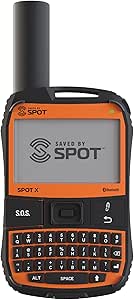 | Best for Independent Messaging | Satellite network: Globalstar | Messaging: Two-way satellite messaging | Emergency service: Connects to 24/7 search-and-rescue service | VIEW LATEST PRICE | See Our Full Breakdown |
| Garmin inReach Messenger Satellite Communicator |  | Best for Long Trips | Display: Sunlight-readable monochrome transflective MIP; 160 × 68 resolution | Screen size: 2.74 cm | Battery life: Up to 28 days in 10-minute tracking mode | VIEW LATEST PRICE | See Our Full Breakdown |
| Garmin inReach Mini 3 Satellite Communicator Bundle |  | Best Compact Upgrade | Weight: 3.84 oz | Display: 0.9-inch capacitive color touchscreen | Battery life: Up to 350 hours with 10-minute tracking | VIEW LATEST PRICE | See Our Full Breakdown |
| Motorola Defy Satellite Link Two-Way Satellite Messenger |  | Best Phone-Paired Option | Weight: 2.5 oz | Dimensions: 3.4 × 2.5 × 0.5 in | Connectivity: Bluetooth | VIEW LATEST PRICE | See Our Full Breakdown |
| Garmin Montana 710i Handheld GPS Navigator with inReach |  | Best for Navigation-Heavy Treks | Display: 5-inch capacitive, glove-friendly touchscreen | Resolution: 480 × 800 | Memory: 32 GB | VIEW LATEST PRICE | See Our Full Breakdown |
| satellite messengers for hiking | Connectivity | Battery life | Display | Satellite network |
|---|---|---|---|---|
| Garmin inReach Mini 3 Plus SOS | Bluetooth | Up to 350 hours with 10-minute tracking; up to 95 hours in performance messaging mode | 1.9-inch capacitive color touchscreen | Iridium |
| Garmin inReach Mini 2 Satellit | Bluetooth, ANT+, USB-C | Up to 14 days at 10-minute tracking; up to 30 days at 30-minute tracking | 0.9-inch transflective MIP, 176 x 176 pixels | Iridium |
| Garmin inReach Mini 2 Portable | USB | 336 hours listed; tracking interval not specified | 2.8-inch LCD; 176 x 176 pixels listed | — |
| SPOT Gen4 Satellite GPS Messen | USB | — | — | Globalstar |
| ZOLEO Satellite Communicator | — | 200+ hours in tracking mode | — | — |
| Garmin inReach Mini 2 Satellit | Bluetooth and USB | Up to 14 days in 10-minute tracking mode; 336 hours stated average | 1.27-inch monochrome, transflective MIP; 176 × 176 resolution | — |
| ACR Bivy Stick Iridium Satelli | Bluetooth, Iridium satellites, LoRa, and wireless | 120 hours | — | Iridium |
| Garmin inReach Mini 2 Satellit | Bluetooth | 336 hours; up to 14 days at 10-minute tracking or 30 days at 30-minute tracking | 0.9-inch LCD/LED | Iridium |
| SPOT X Bluetooth 2-Way Satelli | Bluetooth and USB | Up to 240 hours | — | Globalstar |
| Garmin inReach Messenger Satel | ANT+, Bluetooth, and Wi-Fi | Up to 28 days in 10-minute tracking mode | Sunlight-readable monochrome transflective MIP; 160 × 68 resolution | — |
| Garmin inReach Mini 3 Satellit | Iridium satellite network, USB | Up to 350 hours with 10-minute tracking | 0.9-inch capacitive color touchscreen | Iridium |
| Motorola Defy Satellite Link T | Bluetooth | — | — | — |
| Garmin Montana 710i Handheld G | Bluetooth, USB-C, Wi-Fi | Up to 24 hours in GPS mode; up to 432 hours in expedition mode | 5-inch capacitive, glove-friendly touchscreen | — |
More Details on Our Top Picks
Garmin inReach Mini 3 Plus SOS Satellite Communicator
The inReach Mini 3 Plus is the clearest fit here for hikers who want to handle more directly on the communicator rather than rely on a phone for every interaction. Its 1.9-inch color touchscreen, voice controls, weather reports, location sharing, and interactive SOS give it a broader on-device experience than the button-operated inReach Mini 2. It also lists up to 350 hours of tracking at 10-minute intervals, a useful buffer for extended trips when charging access is limited. The tradeoff is that the richer interface does not remove the need for an active satellite subscription, and some photo messaging and tracking features still depend on a compatible smartphone and Garmin apps. At 4.31 ounces, it is also heavier than the Mini 2. I’d choose it for usability and screen features, not for the lightest pack.
Pros:- Interactive SOS and satellite messaging work beyond cell coverage over the Iridium network.
- Color touchscreen and voice controls provide a more direct interface than the button-based inReach Mini 2.
- Up to 350 hours of battery life with 10-minute tracking.
- IP67 water rating, weather reports, and location sharing add useful trail support.
Cons:- Requires an active satellite subscription.
- Some photo messaging and tracking features require a compatible smartphone and Garmin apps.
- At 4.31 ounces, it is heavier than the listed inReach Mini 2 device.
Best for: Hikers who want a color touchscreen, voice controls, and weather information alongside satellite SOS and messaging.
Not ideal for: Ultralight hikers who prioritize the smallest carry weight, or anyone unwilling to keep a satellite subscription and compatible phone available for some features.
- Satellite network:Iridium
- Display:1.9-inch capacitive color touchscreen
- Battery life:Up to 350 hours with 10-minute tracking; up to 95 hours in performance messaging mode
- Weight:4.31 ounces
- Dimensions:1.05 x 2.16 x 3.85 inches
- Connectivity:Bluetooth
- Navigation:GPS
- Subscription:Active satellite subscription required
Our verdict“Choose the inReach Mini 3 Plus if you value a touchscreen-led hiking communicator more than the lower weight and simpler controls of the inReach Mini 2.”
Garmin inReach Mini 2 Satellite Communicator Bundle, Flame Red
This inReach Mini 2 bundle suits hikers who want a compact Iridium communicator and extra charging gear for trips where power access is uncertain. Its listed battery life reaches 14 days at 10-minute tracking, or 30 days with less frequent 30-minute updates, giving it a clear endurance advantage over devices whose listed tracking runtime is shorter. Compared with the touchscreen inReach Mini 3 Plus, the Mini 2 uses buttons and a 0.9-inch display; that keeps operation simple but makes message handling and on-device viewing less comfortable. TracBack, a digital compass, weather updates, and interactive SOS add practical trail functions, while the bundle’s portable charger and charging accessories help manage power. The drawbacks are the small screen, required airtime plan, and conflicting listed weights: 3.5 ounces for the device versus 1.3 pounds in product information.
Pros:- Up to 14 days of battery life at 10-minute tracking, with longer runtime at 30-minute intervals.
- TracBack, digital compass, and weather updates provide useful navigation support.
- Iridium two-way messaging and interactive SOS work outside cellular coverage.
- Bundle includes a portable battery charger and several charging accessories.
Cons:- The 0.9-inch display is small for reading messages or checking information on the device.
- Satellite features require a compatible airtime plan.
- Listed device and product weights differ substantially, making bundle carry weight unclear.
Best for: Multi-day hikers who want long tracking runtime, TracBack routing, and a bundled portable charger for trips away from reliable power.
Not ideal for: Hikers who want a large, easy-to-read display or a clearly documented total carry weight before choosing a kit.
- Satellite network:Iridium
- Display:0.9-inch transflective MIP, 176 x 176 pixels
- Battery life:Up to 14 days at 10-minute tracking; up to 30 days at 30-minute tracking
- Device weight:3.5 ounces as described; product information also lists 1.3 pounds
- Water resistance:IPX7
- Durability standard:MIL-STD-810
- Connectivity:Bluetooth, ANT+, USB-C
- Controls:Buttons; compatible with smartphones, tablets, Garmin handhelds, and wearables
- Bundle includes:10 ft USB-A to USB-C cable, USB charging adapters, USB car adapter, microfiber cloth, portable battery charger
Our verdict“Pick this Mini 2 bundle for long hikes where battery endurance and included charging gear matter more than screen size.”
Garmin inReach Mini 2 Portable Satellite Communicator and GPS Navigator, Flame Red
This inReach Mini 2 package combines two-way satellite messaging and interactive SOS with a Wagan camping lantern and a two-year extended protection plan. That makes it a bundle-led alternative to the charging-focused Mini 2 bundle, which includes a portable battery charger instead. For hikers, the communicator’s GPS navigation and map support add more trail utility than a location-only SOS device, while the included carabiner and USB cable keep the setup straightforward. The listed battery life is 336 hours, but the product data gives no tracking interval for that figure, so I would not treat it as directly comparable to the interval-specific runtime figures for the other Garmin options. Its small 176 x 176 display and button input also make it less suited to detailed map work than a dedicated handheld GPS. The lantern is useful camp gear, but it does not improve satellite communication itself.
Pros:- Supports two-way satellite messaging and interactive SOS alerts.
- GPS navigation and support for North America, satellite, and topographical map types add trail context.
- Includes a USB charging/data cable and carabiner.
- Bundle adds a Wagan LED camping lantern and two-year extended service protection plan.
Cons:- The 176 x 176 display is small for viewing maps or detailed navigation information.
- The listed 336-hour battery life has no tracking interval specified.
- The bundled lantern and protection plan add value to the package but do not expand the communicator’s satellite functions.
Best for: Hikers who want an inReach Mini 2 with a camp lantern and extended protection plan in one package.
Not ideal for: Buyers who need a large mapping screen, want to compare battery runtime by tracking interval, or prefer a bundle centered on charging accessories.
- Model:Garmin inReach Mini 2
- Display:2.8-inch LCD; 176 x 176 pixels listed
- Battery life:336 hours listed; tracking interval not specified
- Connectivity:USB
- Navigation:GPS
- Map types:North America, satellite, topographical
- Input:Buttons
- Included accessories:USB charging/data cable, carabiner, documentation
- Bundle items:Wagan LED Brite-Nite Dome Lantern and two-year extended service protection plan
Our verdict“Choose this package if the lantern and protection plan suit your camp kit; choose the charging-focused Mini 2 bundle if extra power gear is the priority.”
SPOT Gen4 Satellite GPS Messenger
The SPOT Gen4 is the simplest choice in this group for hikers whose main goal is sending location updates and having an SOS option beyond cell coverage. Its GPS tracking can report locations while moving or stopped, while the SOS button sends coordinates to emergency responders. That is a narrower feature set than the two-way messaging offered by the Garmin inReach Mini 2 or ZOLEO: the listed Gen4 features focus on tracking and SOS, not an exchange of messages with contacts. This can suit hikers who want a straightforward tracking device, but it offers less flexibility for communicating itinerary changes or confirming plans. A subscription and service plan are required, and the plastic enclosure is less confidence-inspiring than the IP67-rated Garmin inReach Mini 3 Plus. I’d choose it for basic location sharing, not as a full messaging replacement.
Pros:- GPS location sharing works beyond cellular coverage through the Globalstar satellite network.
- SOS button can send GPS coordinates to emergency responders.
- Tracking can send location updates while moving or stopped.
- Includes a strap, carabiner, USB cable, and batteries.
Cons:- The listed features do not include two-way messaging, unlike the Garmin inReach Mini 2 and ZOLEO.
- Requires a subscription and service plan.
- Plastic enclosure is a less rugged-feeling choice than the IP67-rated inReach Mini 3 Plus.
Best for: Hikers who mainly want satellite location updates and an SOS button, without needing two-way messaging.
Not ideal for: Solo hikers who want to exchange messages with contacts, or buyers seeking a rugged enclosure and a more feature-rich trail communicator.
- Satellite network:Globalstar
- Connectivity:USB
- Features:Motion-activated tracking and SOS
- Weight:142 g
- Dimensions:11.42 x 1.97 x 5.51 inches
- Enclosure material:Plastic
- Included items:Device, strap and carabiner, USB cable, batteries, quick start guide
- Subscription:Required
Our verdict“Choose the SPOT Gen4 for basic satellite tracking and SOS, but pick an inReach Mini 2 or ZOLEO if two-way messaging matters on your hikes.”
ZOLEO Satellite Communicator, Limestone
The ZOLEO Satellite Communicator is a strong match for hikers who prefer messaging through a phone app and want communication to continue across satellite, cellular, and Wi-Fi networks. That network flexibility sets it apart from the Iridium-only messaging approach of the Garmin inReach Mini 2, though satellite messaging still depends on a service plan. ZOLEO pairs with Android or iOS and provides an assigned SMS number and email, with messages up to 900 characters; those features can make it easier for contacts to reach a hiker. Its IP68 rating, USB-C charging, and 200-plus hours of tracking-mode battery life suit rough, extended outings. The tradeoff is phone dependence: app-based messaging and features require a compatible smartphone, so this is less appealing to hikers who want a self-contained interface. It also adds non-emergency medical assistance and 24/7 SOS monitoring.
Pros:- Can send messages over Iridium satellite, cellular, and Wi-Fi networks.
- Assigned SMS number and email support messages up to 900 characters.
- IP68-rated design, USB-C charging, and over 200 hours of tracking-mode battery life.
- One-button SOS includes 24/7 emergency monitoring, with check-ins and non-emergency medical assistance.
Cons:- Messaging requires a service plan.
- App-based features require a compatible Android or iOS smartphone.
- Phone pairing and app use make it less self-contained than the button-operated Garmin inReach Mini 2.
Best for: Smartphone-oriented hikers who want longer messages, an assigned SMS number, and messaging across satellite, cellular, and Wi-Fi.
Not ideal for: Hikers who do not want to carry or depend on a compatible smartphone, or who want satellite messaging without a service plan.
- Messaging connectivity:Iridium satellite, cellular, and Wi-Fi
- Compatible operating systems:Android, iOS
- Navigation systems:GPS, Galileo
- Battery life:200+ hours in tracking mode
- Charging:USB-C
- Durability:IP68-rated
- Messaging features:Assigned SMS number and email; messages up to 900 characters
- Safety features:SOS with 24/7 monitoring, medical assistance, check-ins
- Service plan:Required for messaging
Our verdict“Choose ZOLEO if you want phone-based messaging that can use satellite, cellular, and Wi-Fi, and skip it if you want a communicator that works without a smartphone.”
Garmin inReach Mini 2 Satellite Communicator, Orange
The inReach Mini 2 is my pick for hikers who want satellite messaging without carrying a larger navigation device. It pairs with a phone for trip planning and mapping, while its own TracBack routing and digital compass offer useful backup guidance if the phone is hard to use. Compared with the ACR Bivy Stick, it puts more emphasis on standalone navigation features and a tiny handheld form; the Bivy Stick instead offers group tracking for up to 12 people. Battery life reaches 14 days at a 10-minute tracking interval, but actual use depends on settings and conditions. The small monochrome screen is best for basic status and messages, not map browsing, and satellite messaging, SOS, and location sharing require an active subscription. Check local rules before carrying or using satellite equipment.
Pros:- Compact, lightweight handheld design suits trips where pack space matters.
- Two-way messaging and interactive SOS provide communication beyond cell coverage with an active subscription.
- TracBack routing and a digital compass add basic navigation backup.
- Up to 14 days of battery life in 10-minute tracking mode.
Cons:- Satellite messaging, SOS, and location sharing require an active subscription.
- The 1.27-inch monochrome display is limited for reading longer messages or viewing maps.
- Satellite-device use is regulated or prohibited in some jurisdictions.
Best for: Solo hikers and lightweight backpackers who want a compact satellite communicator with basic navigation backup and plan to pair it with a smartphone.
Not ideal for: Hikers who want detailed maps or a large on-device screen, or anyone unwilling to maintain an active satellite subscription.
- Display:1.27-inch monochrome, transflective MIP; 176 × 176 resolution
- Satellite features:Two-way messaging, interactive SOS, and location sharing with an active subscription
- Navigation:GPS, TracBack routing, and digital compass
- Battery life:Up to 14 days in 10-minute tracking mode; 336 hours stated average
- Connectivity:Bluetooth and USB
- Water resistance:Water resistant
- Mounting type:Handheld
- Color:Orange
Our verdict“Choose the inReach Mini 2 if you want a small hiking communicator with basic navigation tools, and skip it if you need detailed on-device maps.”
ACR Bivy Stick Iridium Satellite Communicator with GPS Tracking and SOS
The ACR Bivy Stick earns its place for hiking partners who want to share progress across a group, not just check in with one contact. Its app-based tools support group messaging and tracking for up to 12 people, along with offline maps, weather updates, and location sharing. That makes it a stronger fit for coordinated outings than the Garmin inReach Mini 2, whose supplied features focus more on compact navigation and TracBack. The Bivy Stick also uses the Iridium satellite network and includes 24/7 emergency SOS monitoring. The tradeoff is a service commitment: activation requires a satellite plan with an initial three-month commitment per device. At a stated 120 hours of battery life, it also calls for more attention to charging than the inReach Messenger, rated for up to 28 days in its specified tracking mode.
Pros:- Group tracking and messaging support outings with up to 12 people.
- Iridium satellite connectivity supports two-way messaging and SOS in remote areas.
- App features include GPS tracking, offline maps, weather updates, and location sharing.
- Waterproof design and included carabiner, lanyard, and mounting adapter support outdoor carry.
Cons:- Satellite service requires a paid plan with a three-month initial commitment per device.
- Stated battery life is 120 hours, shorter than the Garmin inReach Messenger’s specified 28 days in 10-minute tracking mode.
- Many navigation and messaging tools rely on a compatible smartphone and the Bivy app.
Best for: Hiking groups and trip leaders who want shared location tracking, group messaging, and app-based maps for up to 12 people.
Not ideal for: Occasional day hikers who want to avoid a service commitment, or users seeking the longest stated battery life between charges.
- Satellite network:Iridium
- Messaging and safety:Two-way messaging and 24/7 emergency SOS monitoring
- Group tracking:Up to 12 people
- App features:Offline maps, weather updates, GPS tracking, and location sharing
- Battery life:120 hours
- Dimensions:4.47 × 1.85 × 0.83 inches
- Weight:3.35 ounces
- Waterproofing:Waterproof
- Connectivity:Bluetooth, Iridium satellites, LoRa, and wireless
Our verdict“Pick the Bivy Stick for group hikes that benefit from shared tracking and app tools, but choose another model if its service commitment does not suit your trips.”
Garmin inReach Mini 2 Satellite Communicator with Accessories Bundle
This bundle keeps the inReach Mini 2’s compact safety-and-navigation approach and adds the appeal of an accessories package for hikers assembling a ready-to-carry setup. It offers Iridium-based two-way messaging, SOS, location sharing, a digital compass, and TracBack routing, with stated MIL-STD-810 durability and IPX7 water resistance. Against the orange inReach Mini 2 listed here, the core hiking role is much the same; the bundle makes more sense when its included accessories are useful to you, rather than as a reason to expect a different communicator. Its tracking life is listed as up to 14 days at the default 10-minute interval and up to 30 days at a 30-minute interval. The smaller 0.9-inch screen and required satellite subscription remain meaningful limits.
Pros:- Iridium satellite network supports global two-way text, email, SOS, and location sharing.
- IPX7 water resistance and MIL-STD-810 durability suit demanding outdoor use.
- TracBack routing and a digital compass provide basic navigation backup.
- Battery life is listed up to 14 days at 10-minute tracking intervals and up to 30 days at 30-minute intervals.
Cons:- The 0.9-inch display limits message readability and is not suited to detailed map viewing.
- Satellite features require a separate subscription plan.
- Its core device role closely matches the standard inReach Mini 2, so the bundle is less compelling if its accessories are not needed.
Best for: Backpackers seeking a rugged, compact communicator and a bundled accessory setup, especially those who already use Garmin devices or the Garmin Explore app.
Not ideal for: Hikers who need readable on-device maps, or buyers who already own the accessories and want a distinct upgrade over a standard inReach Mini 2.
- Satellite network:Iridium
- Messaging:Two-way text, email, SOS, and location sharing
- Display:0.9-inch LCD/LED
- Battery life:336 hours; up to 14 days at 10-minute tracking or 30 days at 30-minute tracking
- Navigation:Digital compass and TracBack routing
- Water resistance:IPX7
- Durability:MIL-STD-810
- Connectivity:Bluetooth
- Mounting type:Handheld
Our verdict“Choose this bundle if you want the Mini 2’s rugged satellite safety features alongside useful accessories, but compare the bundle contents with what you already own.”
SPOT X Bluetooth 2-Way Satellite Messenger
The SPOT X suits hikers who want to send and receive satellite messages from the device itself, with Bluetooth pairing available when they prefer a phone. Its standalone operation separates it from app-centered options such as the ACR Bivy Stick, while the larger, elongated body offers a different carry profile from the pocket-focused Garmin inReach Mini 2. SPOT X sends GPS coordinates and can connect users to a 24/7 search-and-rescue service, but it requires an activated service plan. The stated battery life is up to 240 hours, and the plastic enclosure is a less reassuring material choice than the ruggedness claims listed for the Garmin inReach Mini 2 bundle. Its Globalstar network also differs from the Iridium systems in the Garmin and ACR options, so hikers should check coverage for their intended routes.
Pros:- Two-way satellite messaging works on the device or through a Bluetooth-connected phone.
- Sends GPS coordinates and connects to a 24/7 search-and-rescue service.
- Up to 240 hours of stated battery life.
- Includes a strap and carabiner for carrying or attachment.
Cons:- An activated service plan is required for satellite features.
- Its 7.04-ounce weight is heavier than the 3.35-ounce ACR Bivy Stick.
- Plastic enclosure offers less confidence in ruggedness than the MIL-STD-810-rated Garmin inReach Mini 2 bundle.
Best for: Hikers who prefer to compose and receive messages on a dedicated device and want the option to pair it with an Android phone or iPhone.
Not ideal for: Minimalist hikers prioritizing the lightest compact device, or those whose routes require verified satellite coverage that does not match their local SPOT service.
- Satellite network:Globalstar
- Messaging:Two-way satellite messaging
- Emergency service:Connects to 24/7 search-and-rescue service
- Connectivity:Bluetooth and USB
- Battery life:Up to 240 hours
- Dimensions:2.9 × 0.94 × 6.54 inches
- Weight:7.04 ounces
- Enclosure material:Plastic
- Subscription:Activated service plan required
Our verdict“Choose the SPOT X if on-device two-way messaging matters more than a compact carry, after checking service coverage for your hiking region.”
Garmin inReach Messenger Satellite Communicator
For hikers who prioritize fewer charging stops, the Garmin inReach Messenger stands out with up to 28 days of battery life in 10-minute tracking mode. It supports two-way messaging, group chats, GPS location sharing, and interactive SOS when paired with an active satellite subscription. Compared with the inReach Mini 2, it gives up the listed TracBack routing and digital compass in favor of longer stated tracking life and group messaging; the Bivy Stick also supports group communication, but lists 120 hours of battery life. The Messenger can provide safety charging to a depleted phone, a useful backup on a long route, though that function draws on the communicator’s own power. Its small monochrome screen and button input make it better for messages and status checks than detailed navigation.
Pros:- Up to 28 days of battery life in 10-minute tracking mode.
- Supports two-way messaging, group chats, GPS location sharing, and interactive SOS with an active subscription.
- Can provide safety charging to a depleted phone.
- Multiple navigation satellite systems are listed: BeiDou, GPS, Galileo, and QZSS.
Cons:- Satellite features require an active subscription.
- Small monochrome display and button controls are less suited to detailed navigation than a dedicated GPS navigator.
- Phone charging draws on the communicator’s battery reserve.
Best for: Multi-day hikers and trekkers who want long stated battery life, group messaging, and location sharing without relying on cellular coverage.
Not ideal for: Hikers seeking detailed on-device navigation, a color map display, or satellite features without an ongoing subscription.
- Display:Sunlight-readable monochrome transflective MIP; 160 × 68 resolution
- Screen size:2.74 cm
- Battery life:Up to 28 days in 10-minute tracking mode
- Battery type:Rechargeable lithium
- Messaging and safety:Two-way messaging, group chats, GPS location sharing, and interactive SOS
- Connectivity:ANT+, Bluetooth, and Wi-Fi
- Navigation systems:BeiDou, GPS, Galileo, and QZSS
- Input:Buttons
- Mounting type:Handheld
Our verdict“Pick the inReach Messenger for long hikes where battery endurance and group check-ins matter more than on-device route guidance.”
Garmin inReach Mini 3 Satellite Communicator Bundle
The inReach Mini 3 suits hikers who want a small satellite communicator without giving up two-way messaging, location sharing, or interactive SOS through Garmin Response. Its up to 350-hour battery life with 10-minute tracking supports longer trips between charges, while the IP67-rated body adds protection against dust and water. Compared with the phone-dependent Motorola Defy Satellite Link, this Garmin is a self-contained handheld, so it does not rely on a compatible smartphone for its core use. The tradeoff is the 0.9-inch touchscreen: it keeps the device compact, but makes on-device interaction less comfortable than using the Montana 710i’s large screen. Some features still require the Garmin app, and satellite functions depend on coverage and an active service arrangement. The included cable and wall charger are useful extras, not substitutes for planning power on trail.
Pros:- Two-way satellite messaging and location sharing beyond cellular coverage
- Interactive SOS connects with Garmin Response
- IP67-rated construction and scratch-resistant color touchscreen
- Up to 350 hours of battery life with 10-minute tracking
Cons:- The 0.9-inch screen limits comfortable on-device interaction
- Some features require a compatible Garmin app
- Satellite communication depends on coverage and service access
Best for: Hikers who want a lightweight, standalone satellite communicator with long tracking endurance for multi-day routes.
Not ideal for: Hikers who need a large map display or prefer to compose messages on a phone-sized screen; the 0.9-inch display is restrictive.
- Weight:3.84 oz
- Display:0.9-inch capacitive color touchscreen
- Battery life:Up to 350 hours with 10-minute tracking
- Water resistance:IP67
- Satellite network:Iridium
- Navigation systems:GPS, GLONASS, Galileo
- Connectivity:Iridium satellite network, USB
- Included accessories:Microfiber cleaning cloth, 10-foot USB-A to USB-C cable, USB wall charger
Our verdict“Choose the inReach Mini 3 if you want a compact, standalone Garmin messenger with extended tracking life rather than a large-screen navigator.”
Motorola Defy Satellite Link Two-Way Satellite Messenger
The Motorola Defy Satellite Link is a sensible pick for hikers who want satellite messaging through a compatible phone instead of carrying a dedicated Garmin handheld. It pairs over Bluetooth with supported iOS and Android devices, allowing messages, location check-ins, and SOS use when cellular service drops away. Its 2.5-ounce weight and IP68-rated dustproof, waterproof build suit a pack or pocket, though its up to four days of standby is a different kind of battery claim from the inReach Mini 3’s long tracking runtime. The phone dependency is also the main compromise: unlike the self-contained Mini 3, this accessory needs a compatible smartphone and app, adding another device to keep charged and usable. A service plan is required, so it makes most sense for hikers already comfortable using their phone as part of their safety setup.
Pros:- Two-way satellite messaging and location check-ins
- SOS assistance can work beyond cellular coverage
- IP68-rated dustproof and waterproof construction
- Lightweight 2.5-ounce body with a D-ring webbing strap
Cons:- Requires a compatible smartphone and app
- A service plan is required for satellite use
- Up to four days refers to standby battery life, not a stated continuous tracking runtime
Best for: Smartphone users who want a compact satellite backup for day hikes and trips where they will carry a compatible, charged phone.
Not ideal for: Hikers seeking a standalone communicator or planning to leave their phone behind; this device depends on a compatible smartphone and app.
- Weight:2.5 oz
- Dimensions:3.4 × 2.5 × 0.5 in
- Connectivity:Bluetooth
- Compatible devices:iOS 14 and later; Android 10 and later
- Battery:600 mAh Li-Po
- Standby battery life:Up to 4 days
- Water and dust resistance:IP68; waterproof at nearly 5 ft for 30 minutes
- Included accessories:D-ring webbing strap, USB Type-C cable, quick start guide, warranty guide
Our verdict“Pick the Defy Satellite Link if you want a phone-paired satellite backup and are willing to depend on your smartphone and a service plan.”
Garmin Montana 710i Handheld GPS Navigator with inReach
The Montana 710i is the choice for hikers who want detailed navigation to take priority alongside satellite communication. Its 5-inch glove-friendly touchscreen, TopoActive maps, and multi-GNSS support make routes easier to read and manage than on the compact inReach Mini 3 or the phone-dependent Motorola Defy Satellite Link. With an active subscription, it also provides two-way messaging and interactive SOS beyond cell coverage. That broader navigation setup comes with real costs in bulk and battery expectations: the unit weighs more than a pocket communicator, and its stated endurance ranges from up to 24 hours in GPS mode to 432 hours in expedition mode. The rugged MIL-STD 810 testing and IPX7 water resistance suit demanding outings, but some mapping content and mounting options are separate purchases. I’d choose it for map-led routes, not minimalist day hikes.
Pros:- Large 5-inch glove-friendly touchscreen for reading maps and route information
- TopoActive maps and multi-GNSS navigation
- Two-way satellite messaging and interactive SOS with an active subscription
- MIL-STD 810 testing and IPX7 water resistance
Cons:- Larger and less pack-friendly than compact messengers such as the inReach Mini 3
- Satellite communication requires an active subscription
- Some maps, premium mapping content, and mounting options are sold separately
Best for: Hikers on complex, map-heavy routes who want a large glove-friendly display, built-in mapping, and satellite SOS in one rugged handheld.
Not ideal for: Ultralight hikers who mainly need check-ins and emergency messaging; its larger navigation-focused format is more than a compact messenger requires.
- Display:5-inch capacitive, glove-friendly touchscreen
- Resolution:480 × 800
- Memory:32 GB
- Battery life:Up to 24 hours in GPS mode; up to 432 hours in expedition mode
- Water resistance:IPX7
- Durability:MIL-STD 810 thermal, shock, and vibration testing
- Navigation:Multi-GNSS, GPS, TopoActive maps, City Navigator maps
- Connectivity:Bluetooth, USB-C, Wi-Fi
- Satellite communication:Two-way messaging and interactive SOS with active subscription
Our verdict“Choose the Montana 710i when detailed, glove-friendly navigation matters as much as satellite messaging, and skip it if you only need a compact emergency communicator.”

How We Picked
I evaluated these devices based on three core criteria: reliability in remote areas, ease of use under stress, and long-term cost of ownership. Reliability was assessed by examining the underlying network coverage (Iridium vs. Globalstar) and hardware durability ratings. Ease of use focused on interface clarity and the speed at which a user can trigger an SOS signal. Finally, I analyzed subscription models to determine which devices offer the best value for occasional hikers versus frequent backcountry travelers.
The ranking reflects a hierarchy of utility. Devices with two-way messaging and high-resolution tracking ranked higher because they allow for dynamic route adjustments and safer check-ins. However, budget-friendly options were not penalized heavily if they excelled at their specific niche, such as one-way tracking for ultra-runners. The final order prioritizes versatility, ensuring the top picks serve the widest range of hiking styles.
| satellite messengers for hiking | Satellite network |
|---|---|
| Garmin inReach Mini 3 Plus SOS | Iridium |
| Garmin inReach Mini 2 Satellit | Iridium |
| Garmin inReach Mini 2 Portable | — |
| SPOT Gen4 Satellite GPS Messen | Globalstar |
| ZOLEO Satellite Communicator | — |
| Garmin inReach Mini 2 Satellit | — |
| ACR Bivy Stick Iridium Satelli | Iridium |
| Garmin inReach Mini 2 Satellit | Iridium |
| SPOT X Bluetooth 2-Way Satelli | Globalstar |
| Garmin inReach Messenger Satel | — |
| Garmin inReach Mini 3 Satellit | Iridium |
| Motorola Defy Satellite Link T | — |
| Garmin Montana 710i Handheld G | — |
Factors to Consider When Choosing Satellite Messengers For Hiking
Selecting a satellite messenger is not just about picking the most expensive gadget; it is about matching the device’s capabilities to your typical hiking environment and risk tolerance. Here are the critical factors that should drive your decision.
Network Coverage and Reliability
Most modern satellite messengers rely on either the Iridium or Globalstar networks. Iridium offers truly global coverage, including the poles, which is critical for high-altitude or polar expeditions. Globalstar, used by SPOT, is cost-effective but may have gaps in extreme remote areas. If you hike in established National Parks, Globalstar is often sufficient, but for backcountry wilderness or international travel, Iridium provides a higher margin of safety. I recommend checking the coverage maps for your specific hiking regions before committing to a subscription.
Subscription Models and Hidden Costs
The device itself is often a one-time purchase, but the monthly subscription is where the real cost lies. Some brands require annual contracts, while others offer flexible month-to-month plans. Be wary of plans that limit message counts or tracking intervals on lower tiers. For casual hikers, a pay-as-you-go or flexible plan is ideal, whereas frequent backpackers might save money with annual prepaid plans. I always advise calculating the two-year total cost of ownership, not just the sticker price, to avoid budget surprises.
Size, Weight, and Battery Life
There is a direct correlation between device size and battery life. Compact units like the Garmin inReach Mini series are easy to pack but require frequent charging or have shorter runtimes. Larger units like the Garmin inReach Messenger offer multi-week battery life but add bulk to your pack. Consider your typical trip length; for weekend hikes, a small device is manageable, but for week-long treks, a larger battery capacity reduces anxiety and the need to carry heavy power banks.
Two-Way Communication vs. One-Way Tracking
One-way devices only send pre-set messages or SOS signals, which is sufficient for basic check-ins. Two-way devices allow you to receive replies, enabling you to tell rescuers your exact condition or adjust plans based on weather updates. Two-way communication significantly enhances safety by allowing for more nuanced interaction during emergencies. If you hike alone or in high-risk environments, the ability to send and receive custom text messages is a feature worth the extra cost.
Integration with Smartphones and Maps
Some devices, like the ZOLEO and Motorola Defy, act as Bluetooth bridges to your smartphone, leveraging its screen and GPS. This reduces device weight but introduces dependency on your phone’s battery and connectivity. Dedicated units like the Garmin Montana 710i have built-in screens and maps, which is safer if your phone dies. Decide whether you prefer a standalone device or a companion accessory based on how much you rely on your phone for navigation and other tasks.
Frequently Asked Questions
Can I use a satellite messenger without a cell phone signal?
Yes, that is the primary purpose of these devices. They communicate directly with satellites via a dedicated radio frequency, completely bypassing cellular networks. Whether you are in a deep canyon or a remote mountain range, the device will send and receive data as long as it has a view of the sky. However, some devices that pair with smartphones via Bluetooth require the phone for inputting text, though the transmission itself is still handled by the satellite unit.
How long do batteries last on typical hiking trips?
Battery life varies widely depending on the model and usage settings. Compact devices like the Garmin inReach Mini 2 may last 3-4 days with frequent tracking, while larger units like the Garmin inReach Messenger can last up to 45 days in power-saving mode. Most hikers carry a small power bank to extend the life of smaller devices. I recommend choosing a model that exceeds your planned trip duration by at least 50% to account for cold weather, which drains batteries faster.
Is a satellite messenger better than a personal locator beacon (PLB)?
For most hikers, yes. A PLB only sends an SOS signal to rescue authorities and requires you to have a cell phone or other means to communicate details. Satellite messengers allow for two-way communication, enabling you to send non-emergency check-ins, receive weather updates, and coordinate with search and rescue teams. While PLBs are cheaper to own with no subscription, the lack of situational awareness makes messengers the safer choice for backcountry travel.
Do I need to subscribe to a service plan to use these devices?
Almost all commercial satellite messengers require a subscription to access the satellite network. This covers the cost of satellite usage and data transmission. Plans vary by provider, with some offering flexible monthly options and others requiring annual commitments. Be sure to check if you can pause your subscription during off-seasons, as this can save money for seasonal hikers. Without an active plan, the device will not transmit SOS signals or messages.
Can I use a satellite messenger for navigation?
Most satellite messengers have basic GPS tracking capabilities but lack detailed topographical maps for turn-by-turn navigation. Devices like the Garmin Montana 710i are exceptions, combining a full GPS navigator with satellite communication. For most other models, you will need to rely on your smartphone with offline maps or a separate GPS unit for route finding. The messenger serves as a safety backup and communication tool, not a primary navigation device.
Conclusion
Choosing the right satellite messenger depends largely on your hiking style and budget. For the majority of hikers, the Garmin inReach Mini 3 Plus is the best overall choice due to its compact size, reliable Iridium network, and robust two-way messaging. If you are new to satellite communication and want a simple, low-cost entry point, the SPOT Gen4 is the best value, offering essential SOS and tracking features without the complexity of messaging. For those who prefer using their existing smartphone interface, the ZOLEO is the best for beginners and tech-savvy users who want flexibility. If you require a premium all-in-one solution with detailed mapping, the Garmin Montana 710i is the best premium pick, though it comes with a higher weight and cost. Ultimately, prioritize network reliability and subscription flexibility to ensure your device serves you well in the backcountry.