
📊 Full opportunity report: What Independent Retailers Need From A Wholesale Marketplace on IdeaNavigator AI — validation score, market gap, and execution plan.

Get the latest gadgets delivered free with Prime
- Fast, free delivery on millions of items
- Prime Video, Amazon Music and more included
- Member-only deals all year
TL;DR
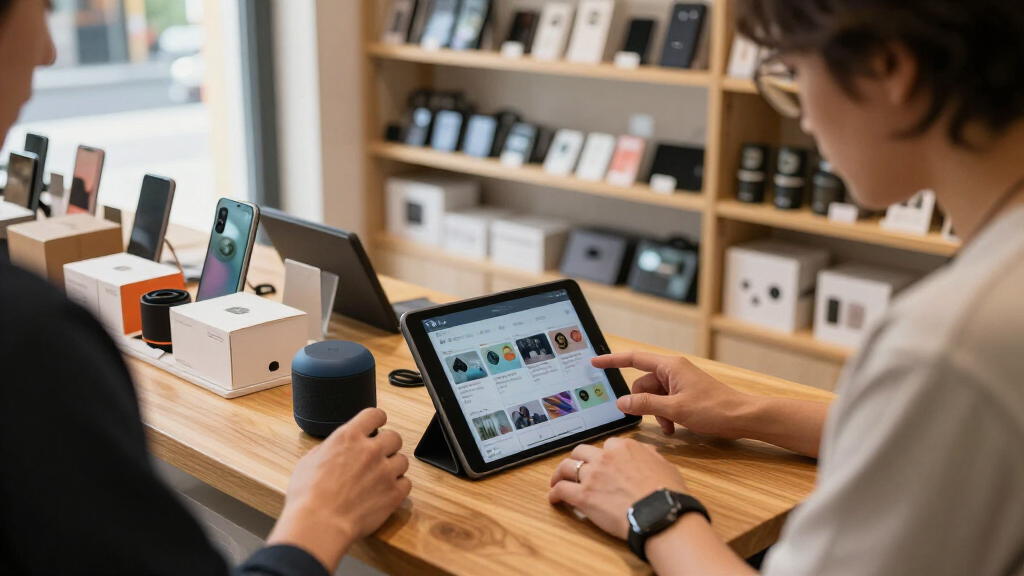
IdeaNavigator AI has outlined a proposed wholesale marketplace lane that would let independent retailers test products in very small quantities, with consolidated fulfillment and sell-through tracking. The concept has not been described as a launched service or validated business; its suggested test is to broker trial orders between 20 brands and 50 shops and measure reorders within a quarter.
IdeaNavigator AI has proposed a wholesale marketplace lane that would let independent retailers test products in small quantities, including five-unit assortments, before committing to standard wholesale orders. The concept targets shop owners who cannot meet distributors’ minimums, but it remains a proposal: no operating marketplace, completed pilot or measured reorder results were reported.
The proposed service would let participating brands set micro-minimum order quantities and use consolidated fulfillment to make small trial orders practical. Retailers could test products on their shelves, track sell-through and, if a trial performs well, move into a standard wholesale relationship with the brand. The proposal does not specify how shipping would be consolidated, who would manage fulfillment or what fees retailers would pay.
IdeaNavigator AI frames the problem as a mismatch between independent shops’ appetite for product discovery and distributor order requirements. Its concept says case minimums and opening orders sized for larger retailers can make experiments costly for smaller stores, leaving them with fewer opportunities to test unfamiliar products between trade shows. These are the proposal’s market observations, not findings backed by published survey data or reported retailer interviews.
The suggested business model combines a commission on orders with optional subscription analytics for brands seeking to track trial performance. To test demand before building a full platform, the proposal recommends manually brokering orders between 20 brands and 50 shops, then measuring how many trial purchases become standard reorders within a quarter. No pilot has been reported as completed, and the proposal gives no target conversion rate.
Small Trials Could Lower Buying Risk
If the model works, small-order access could give independent shops a way to experiment without tying up as much cash or shelf space in an initial purchase. That could matter most to retailers for whom a distributor’s case minimum makes an untested product a substantial commitment. A five-unit trial, as proposed, would make the initial decision smaller; whether it is economical depends on the final product prices, shipping charges and assortment rules.
Brands could also gain a structured path to reach smaller stores and observe whether products sell before investing in broader wholesale distribution. Trial-performance data might help brands distinguish promising products from weak ones, but the proposal does not explain how results would be measured or whether stores would provide consistent sales data. Any conclusions from a small pilot would also need to account for differences among shops, locations and product categories.
The commercial case rests on more than offering low minimums. Consolidated shipping must keep delivery costs manageable, and the platform’s fees cannot erase the savings from ordering less. Retailers would need dependable delivery and clear terms, while brands would need trial orders to produce enough information—or enough follow-up sales—to justify the work. Those conditions are untested.
Products Worth Considering

DJI Osmo Mobile 8 Smartphone Gimbal with Mic Mini Transmitter, Infinity Black

DJI Osmo Mobile 7P Smartphone Gimbal Stabilizer with Mic Mini Transmitter, Infinity Black

Samsung Galaxy Tab A11+ 11-Inch Tablet, 6GB RAM, 128GB Storage, Expandable, Gray
As an affiliate, we earn on qualifying purchases.
From Marketplace Model to Micro-Orders
The proposal points to Faire as evidence that wholesale marketplaces are an established model, while identifying genuinely small trial quantities as a possible unmet need. That comparison is part of IdeaNavigator AI’s rationale; it does not establish that existing marketplaces or distributors cannot already offer similar arrangements in particular categories.
Its distinction is the combination of small trial quantities, consolidated fulfillment and a route to repeat orders. Rather than beginning with a large platform build, the suggested approach is to broker orders manually and observe what happens over one quarter. That sequence would let the project test retailer interest and brand participation before investing in marketplace technology.
The proposal focuses on one buyer: an independent shop owner unable to meet distributor minimums. It does not define a retail sector, geographic market or product category, so the concept’s fit across different kinds of independent shops remains an open question.
Pilot Results and Costs Remain Unknown
No launch, participating businesses or pilot results are identified in the proposal. It is unclear whether brands would agree to micro-minimums, how many retailers would place trial orders or what share of those orders would become repeat purchases. The suggested sample of 20 brands and 50 shops is a test design, not a confirmed participant list.
Key operating details are also missing: shipping costs and delivery times, responsibility for damaged or late orders, platform fees, eligible product categories and the definition of a successful trial. The proposal does not provide evidence that five-unit orders can be shipped economically or that sell-through data could be collected consistently enough to support brand analytics.
A Manual Pilot Is the Proposed Test
The next step described is a manually run trial that brokers small orders between 20 brands and 50 shops. The proposed measurement window is one quarter, with conversion from an initial trial to a standard reorder as the main outcome. This is a recommendation, not a confirmed schedule; no start date, recruitment plan or results have been announced.
For the test to clarify the business case, organizers would need to record order and shipping costs alongside retailer participation and reorders, and state how a reorder is counted. Until that work is reported, the marketplace remains an early-stage concept rather than a proven solution for independent retailers.
Source: IdeaNavigator AI
Key Questions
Has the small-order wholesale marketplace launched?
No launch is reported. IdeaNavigator AI describes a proposed marketplace lane and a possible manual pilot, not an operating service.
How would retailers place trial orders?
The proposed model would let brands set micro-minimums and allow shops to test small assortments, including five-unit orders. The exact ordering, shipping and payment process has not been specified.
How would the concept make money?
The suggested revenue sources are a take rate on orders and subscriptions for brand analytics on trial performance. Prices and terms are not provided.
What would the proposed pilot measure?
It would broker orders between 20 brands and 50 shops and track whether trial orders convert to standard reorders within a quarter. No pilot results or conversion target are available.
Source: IdeaNavigator AI