

Playing music is one of the best ways to actively rest because it engages your mind and body, helping you recharge while boosting mental clarity and emotional well-being. When you focus on playing, you break mental fatigue and foster new neural connections, improving memory and concentration. It also offers an outlet for emotional expression, reducing stress and promoting overall happiness. Keep exploring to discover how music can transform your rest into a truly enriching experience.
Key Takeaways
- Playing music actively engages the mind and body, providing mental rejuvenation and breaking mental fatigue cycles.
- It enhances brain plasticity, improving memory, attention, problem-solving, and multitasking skills.
- Music-making offers emotional expression and stress relief, promoting emotional balance and overall well-being.
- It develops fine motor skills and hand-eye coordination through physical interaction with instruments.
- Playing music transforms rest into an enriching activity, boosting cognitive functions and nurturing emotional health.
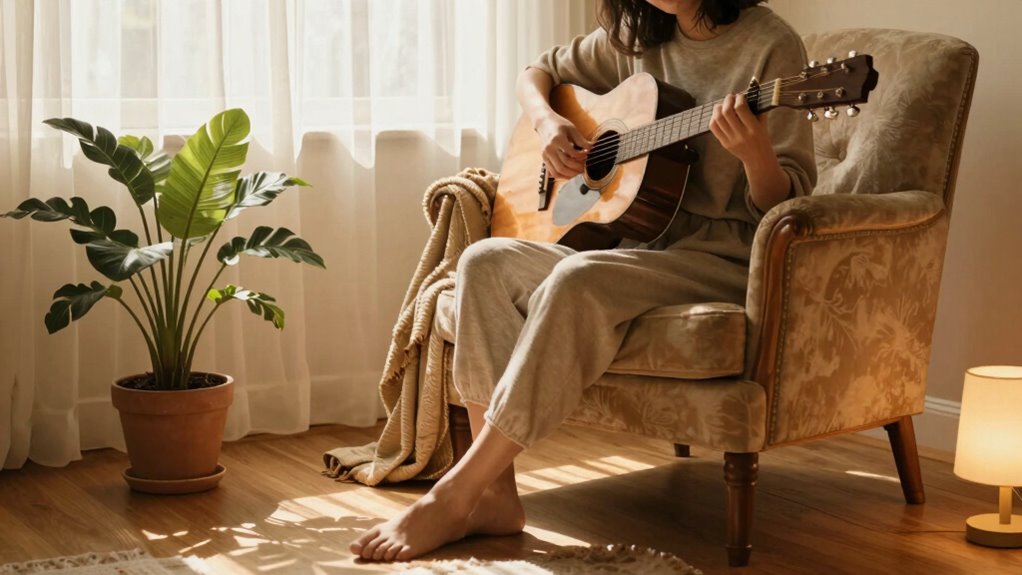
Playing music isn’t just about listening; it can also be a powerful form of active rest that rejuvenates your mind and body. When you pick up an instrument or sing along, you engage in a process that offers more than just entertainment—it promotes mental clarity and emotional balance. This active involvement in music serves as a form of musical therapy, allowing you to channel stress and express feelings in a creative way. This approach aligns with the concept of Free Floating, where leisure activities help release mental tension without structured effort. Unlike passive activities, playing music requires focus and coordination, which helps break the cycle of mental fatigue. It shifts your attention from daily worries to a constructive, immersive experience, giving your mind a well-needed break.
Playing music offers active rest, boosting mental clarity and emotional balance through focused, creative engagement.
The cognitive benefits of playing music are extensive. As you practice, your brain forms new neural connections, enhancing skills like memory, attention, and problem-solving. This mental exercise stimulates areas of your brain responsible for coordination, timing, and auditory processing, leading to sharper cognitive function over time. When you actively play an instrument, you’re not just passively absorbing sound—you’re creating it, which boosts your brain’s plasticity. This process can improve your ability to multitask, adapt to new challenges, and develop greater concentration. Plus, the sense of achievement you gain each time you master a piece or improve your technique fuels your confidence and motivation, reinforcing positive mental habits. Additionally, engaging with musical creativity can inspire innovative thinking and problem-solving skills that extend beyond music. Incorporating music therapy principles into your practice can further enhance its mental health benefits, providing a holistic approach to well-being. Moreover, the physical act of playing an instrument can also contribute to improved hand-eye coordination, which has positive effects on overall motor skills.
Engaging in musical activity also offers an outlet for emotional expression, helping you process feelings that might be difficult to articulate otherwise. Whether you’re improvising, composing, or simply playing familiar tunes, you’re engaging in a form of active rest that reduces stress hormones and elevates your mood. It’s a dynamic way to disconnect from screens or work-related pressures, replacing passive distraction with active creation. Playing an instrument can also stimulate the development of color accuracy, which is essential for producing pleasing and emotionally resonant sound. The physical act of playing—strumming, pressing keys, or blowing into an instrument—further enhances your overall well-being by promoting better hand-eye coordination and fine motor skills. This physical engagement complements the mental benefits, creating a holistic approach to relaxation that energizes rather than drains.
In essence, playing music transforms rest into an active, enriching experience. It sharpens your mind, nurtures emotional health, and provides a joyful escape from the chaos of everyday life. By dedicating time to making music, you give yourself a meaningful break—one that refreshes your cognitive and emotional reserves. So, whether you’re a beginner or an experienced musician, embracing this form of active rest can profoundly impact your mental clarity and overall crucial.
As an affiliate, we earn on qualifying purchases.
Frequently Asked Questions
Can Playing Music Improve Mental Health?
Playing music can profoundly improve your mental health by serving as a form of music therapy. It allows you to express emotions creatively, helping to reduce stress and anxiety. As you engage in making music, you’ll find it easier to process feelings and boost your mood. Regularly playing music provides a therapeutic outlet for emotional expression, promoting mental well-being and resilience over time.
Is Playing Music Suitable for All Age Groups?
Playing music is suitable for all age groups, and research supports this, especially through music therapy. You can tailor instrument selection to fit different ages, from simple percussion for children to more complex instruments for adults. Engaging with music encourages mental stimulation and emotional expression at any age. So, whether you’re young or old, playing music can be a beneficial, enjoyable activity that promotes well-being across the lifespan.
How Does Playing Music Compare to Other Active Rest Activities?
Playing music offers a unique blend of emotional expression and physical engagement that sets it apart from other active rest activities. Unlike walking or yoga, musical therapy involves rhythmic movement and mental focus, which can boost mood and reduce stress. You actively participate, improving coordination and cognitive skills, making it a dynamic way to rest and rejuvenate. Its versatility makes it suitable for all ages, fostering connection and creativity through sound.
What Skills Are Necessary to Start Playing Music for Relaxation?
To start playing music for relaxation, you need to focus on instrument selection and technique development. Choose an instrument that resonates with you and feels comfortable. Practice regularly to improve your skills and develop smooth techniques. Keep your approach simple at first, and gradually build your confidence. Patience and consistency are key, allowing you to enjoy the calming benefits of music while enhancing your ability to play with ease and relaxation.
Can Playing Music Help With Stress Management?
Playing music can definitely help with stress management. It acts as a form of music therapy, allowing you to express emotions and achieve emotional release. When you focus on playing an instrument or singing, your mind shifts away from stressors, promoting relaxation. This active engagement not only reduces anxiety but also boosts your mood, making music a powerful tool for managing stress and enhancing overall emotional well-being.
digital piano with weighted keys
As an affiliate, we earn on qualifying purchases.
As an affiliate, we earn on qualifying purchases.
Conclusion
Playing music transforms rest into a vibrant symphony of renewal. It’s not just a break, but a dance of the mind and soul, turning downtime into a canvas of creativity and joy. Just as a melody lingers, so does the sense of fulfillment you gain. So, pick up that instrument or sing your heart out—because in the harmony of active rest, you find your true rhythm, echoing long after the music stops.
As an affiliate, we earn on qualifying purchases.
As an affiliate, we earn on qualifying purchases.