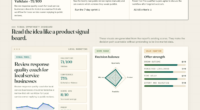
📊 Full opportunity report: The prospectus. Where the AI labs’ singular governance history meets the auditor. on ThorstenMeyerAI.com — validation score, market gap, and execution plan.

Get the latest gadgets delivered free — and shop member deals
- Fast, free delivery on millions of items
- Access to Prime Big Deal Days deals on October 6–7
- Prime Video, Amazon Music and more included
TL;DR
OpenAI plans to file confidentially for its historic IPO, exposing its unique governance history and legal risks. Anthropic is preparing a parallel listing, both facing disclosure challenges that will shape investor understanding.
OpenAI is preparing to file its confidential IPO registration with the SEC this week, marking a significant step in its transition from private to public company. The filing will disclose its complex governance history, including its nonprofit origins, corporate restructuring, and legal disputes, which pose unique challenges for market valuation and investor understanding.
The upcoming S-1 filing will publicly detail OpenAI’s unusual corporate evolution, including its transition from a nonprofit to a capped-profit entity, its foundation-controlled structure, and legal issues such as litigation from a co-founder and disputes over its governance clauses. The document will also reveal Microsoft’s substantial stake and revenue-sharing arrangements tied to its development of artificial general intelligence (AGI).
Similarly, Anthropic is preparing for its own IPO, with a valuation reportedly around $900 billion. Unlike OpenAI, Anthropic’s governance structure is more straightforward, being a public benefit corporation from inception, but it faces its own disclosure challenges, including questions about revenue recognition and governance mechanisms like the Long-Term Benefit Trust, which could influence its market valuation.
The prospectus.
Where the AI labs’ singular
governance history meets
the auditor.
S-1 filing · the largest tech IPO ever
a nonprofit controls the board
Microsoft’s revenue rights
gross-vs-net question could reorder it
law
requires
- Nonprofit-to-PBC conversion with no clean precedent
- Foundation holds ~$130B and controls the board
- The AGI clause — an unquantifiable contingency
- Musk verdict won on a technicality, not the merits
- Dense copyright + chatbot-harm litigation
- PBC from inception — no conversion, no AGI clause, no Musk
- Cleaner enterprise-revenue story (Claude Code)
- BUT the Long-Term Benefit Trust elects a majority of directors
- The Snap / Lyft governance discount on trust control
- The gross-vs-net revenue question (see FIG. 05)
Both labs spent years building mission-protecting structures whose purpose is to subordinate shareholder return to mission — and both must now argue, in the same document, that mission-protection and public-market discipline can coexist. That argument is the real offering. The shares are just the instrument.Thorsten Meyer · The Prospectus · AI Governance 04
Impact of Governance and Legal Disclosures on Market Valuation
The disclosures in the IPO prospectus will force both companies to confront and communicate their complex governance structures and legal risks to investors. For OpenAI, this means revealing mission-protecting mechanisms that could limit shareholder returns, such as its foundation control and AGI clause. For Anthropic, the challenge lies in explaining its governance arrangements and revenue recognition issues. These disclosures will directly influence how the market prices these companies, potentially affecting their valuations and investor confidence.
As an affiliate, we earn on qualifying purchases.
Complex Corporate Histories and Their Disclosure Implications
OpenAI’s corporate history involves multiple transformations: from a nonprofit to a capped-profit, and then to a public benefit corporation, with a foundation still holding significant assets and control. Legal disputes, including litigation from a co-founder, add further complexity. These elements have shaped its governance and are now central to the upcoming IPO disclosure. In contrast, Anthropic’s structure is more straightforward but still presents unique challenges, such as revenue recognition and governance mechanisms like the Long-Term Benefit Trust.
“The IPO prospectus will serve as the ultimate translation of these complex governance histories into market-facing risk disclosures, fundamentally shaping investor perceptions.”
— Thorsten Meyer
corporate governance risk assessment tools
As an affiliate, we earn on qualifying purchases.
As an affiliate, we earn on qualifying purchases.
Unresolved Questions About Governance and Legal Risks
It remains unclear how thoroughly the SEC will scrutinize OpenAI’s legal disclosures, particularly regarding its mission-driven clauses and litigation history. Similarly, the extent to which Anthropic’s revenue recognition issues will impact its valuation is still uncertain. The final impact of these disclosures on market perception will depend on the specifics revealed in the filings and investor interpretation.
As an affiliate, we earn on qualifying purchases.
Next Steps in IPO Disclosure and Market Evaluation
Once filed, the IPO prospectus will undergo SEC review, potentially leading to revisions or additional disclosures. Investors and analysts will scrutinize the governance and legal risk factors, influencing the initial market reception. The companies’ ability to clearly communicate their structures and risks will be critical in shaping their public market performance and valuation.
As an affiliate, we earn on qualifying purchases.
Key Questions
What are the main legal risks disclosed in OpenAI’s IPO prospectus?
The prospectus is expected to disclose legal risks related to litigation from a co-founder, the legal implications of its mission-preserving clauses, and the complexities arising from its corporate restructuring from a nonprofit to a capped-profit entity.
How might OpenAI’s governance structures affect its market valuation?
The foundation control, AGI clauses, and legal disputes could limit shareholder rights or introduce uncertainties, potentially lowering valuation if investors view these structures as risks.
What disclosure challenges does Anthropic face in its IPO?
Anthropic’s main challenges involve explaining its revenue recognition policies, especially regarding gross versus net revenue, and the impact of its governance mechanisms like the Long-Term Benefit Trust on control and decision-making.
When is the IPO filing expected, and what happens after?
The filing is expected this week, after which the SEC will review the document, possibly requesting revisions. The companies will then prepare for the market debut, with investor perception heavily influenced by the disclosures made.
Source: ThorstenMeyerAI.com
Halloween Picks
halloween
As an affiliate, we earn on qualifying purchases.