
TL;DR

Get the latest gadgets delivered free with Prime
- Fast, free delivery on millions of items
- Prime Video, Amazon Music and more included
- Member-only deals all year
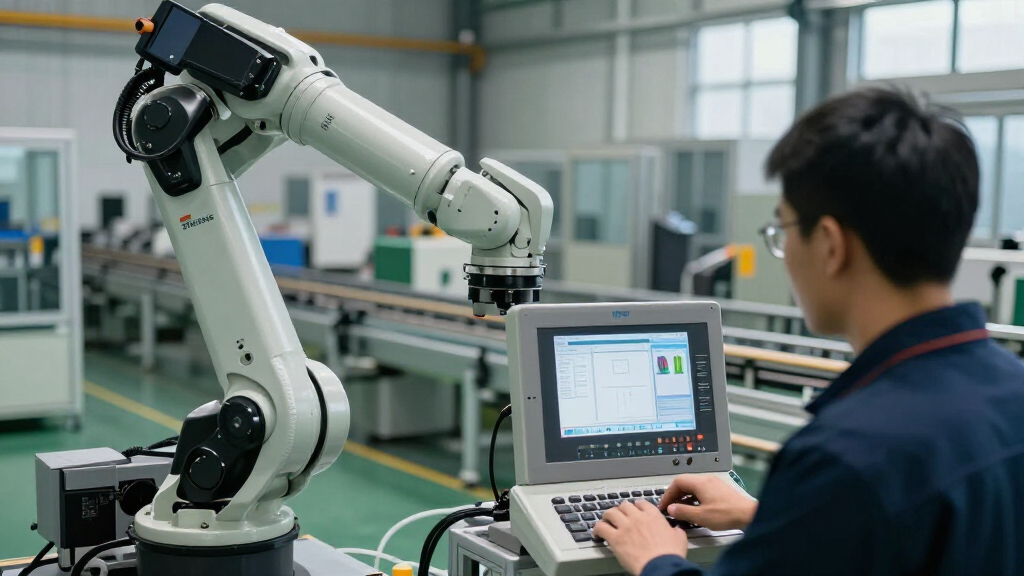
Siemens announced a strategic focus on physical AI for manufacturing, developing the Industrial Foundation Model and partnering with NVIDIA to create an Industrial AI Operating System. The initiative aims to embed AI across the industrial lifecycle, starting with a fully AI-driven factory in 2026.
Siemens has unveiled its strategic focus on physical AI for manufacturing, emphasizing its plans to develop an Industrial Foundation Model and partner with NVIDIA to create an Industrial AI Operating System. This move signifies a shift from traditional automation toward AI-driven manufacturing, aiming to embed intelligence across the entire industrial lifecycle.
At CES 2026, Siemens announced the expansion of its partnership with NVIDIA to build a comprehensive AI platform designed specifically for industrial applications. The platform will support GPU-accelerated simulation, generative digital twins, and real-time process optimization. A key milestone is the launch of a fully AI-driven, adaptive manufacturing site at Siemens’ Electronics Factory in Erlangen, Germany, scheduled for 2026. Siemens also plans to introduce Digital Twin Composer and collaborate with early users like PepsiCo to simulate facility upgrades.
Siemens claims its proprietary industrial data—ranging from engineering models to operational telemetry—gives it a competitive edge in developing domain-specific AI models. The company asserts that its deep industry expertise and existing customer relationships position it uniquely to deploy these advanced AI solutions at scale, targeting sectors like electronics, automotive, and pharmaceuticals.
However, much of the AI infrastructure and core simulation technology are supplied by NVIDIA, with Siemens providing domain knowledge and integration. The partnership indicates a reliance on NVIDIA’s hardware and software stack, raising questions about technological sovereignty and performance validation, as specific hardware configurations and deployment timelines remain undisclosed.
Why Siemens’ Industrial AI Strategy Matters for Manufacturing
This initiative represents a significant shift in how manufacturing companies approach automation and process optimization, moving toward AI systems that actively engineer and improve physical operations in real time. Siemens’ focus on domain-specific models and its existing customer base could accelerate adoption of AI-driven manufacturing solutions, potentially transforming industry standards and competitive dynamics globally. The partnership with NVIDIA underscores the importance of high-performance computing and simulation in realizing these goals, but also highlights dependencies that could influence future technological sovereignty and innovation control.
As an affiliate, we earn on qualifying purchases.
Background of Siemens’ Industrial AI Ambitions
Siemens has long been a leader in industrial automation and digitalization, with decades of experience in automation software, control systems, and engineering data. Its announcement of the Industrial Foundation Model at Hannover Messe 2025 marked its initial step toward specialized AI tailored for manufacturing. The company’s strategy emphasizes leveraging its proprietary data and domain expertise to develop AI models that understand physical processes, contrasting with general-purpose language models focused on text. The recent CES 2026 reveals builds on this foundation, with plans for an integrated platform and a flagship AI-enabled factory.
While other tech firms like Palantir and Qualcomm are entering industrial AI, Siemens’ approach is distinguished by its emphasis on physical data and existing industrial relationships. The company aims to embed AI into manufacturing workflows, supply chains, and product design, seeking to create a new standard for industrial intelligence.
“Industrial AI is no longer a feature; it’s a force that will reshape the next century.”
— Roland Busch, Siemens CEO
As an affiliate, we earn on qualifying purchases.
Unconfirmed Aspects of Siemens’ Industrial AI Roadmap
Details about specific hardware configurations, deployment timelines, and performance metrics for the AI platform remain undisclosed. It is unclear how quickly the fully AI-driven factory in Erlangen will be operational and how the platform will perform at scale. Additionally, the extent of Siemens’ independence from NVIDIA’s infrastructure raises questions about technological sovereignty and long-term viability.
GPU-accelerated manufacturing software
As an affiliate, we earn on qualifying purchases.
As an affiliate, we earn on qualifying purchases.
Next Steps in Siemens’ Industrial AI Deployment
Siemens plans to launch its fully AI-driven factory in Erlangen in 2026, serving as a blueprint for global expansion. The company will also roll out Digital Twin Composer and collaborate with early adopters like PepsiCo for simulation projects. Monitoring performance outcomes, hardware deployment, and customer adoption over the coming months will be critical to assessing the success of this strategy.
As an affiliate, we earn on qualifying purchases.
Key Questions
What is the Industrial Foundation Model?
The Industrial Foundation Model is Siemens’ specialized AI model designed to process and interpret 3D models, 2D drawings, and industrial data to optimize manufacturing and engineering processes.
How does Siemens’ partnership with NVIDIA influence its AI strategy?
The partnership provides Siemens with GPU-accelerated simulation, physics-based AI models, and the underlying infrastructure for its platform, but also introduces dependencies on NVIDIA’s hardware and software roadmap.
When will the fully AI-driven factory be operational?
Siemens aims to launch the factory in Erlangen in 2026, but specific performance metrics and deployment details have not yet been disclosed.
What industries will benefit most from Siemens’ industrial AI?
Industries such as electronics, automotive, pharmaceuticals, and other manufacturing sectors that rely heavily on complex engineering and automation are expected to benefit most.
Are there concerns about technological sovereignty?
Yes, as the AI infrastructure relies heavily on NVIDIA’s hardware and software, European buyers and others concerned with sovereignty may question long-term independence.
Source: ThorstenMeyerAI.com
Fall Picks
fall essentials
As an affiliate, we earn on qualifying purchases.