

To build a 15-minute music habit you’ll keep, pick a specific time each day, like during lunch or before bed, to keep it consistent. Keep your activities simple—listening, singing, or playing—and focus on enjoyment rather than perfection. Use mindfulness to deepen your connection and choose music that resonates with you. Making it a natural part of your routine helps it become a lasting habit. Stick with it, and you’ll discover more tips to strengthen your routine.

Get the latest gadgets delivered free with Prime
- Fast, free delivery on millions of items
- Prime Video, Amazon Music and more included
- Member-only deals all year
Key Takeaways
- Schedule consistent, dedicated times daily, like mornings or lunch breaks, to establish routine and reinforce habit formation.
- Keep practice sessions simple and enjoyable by focusing on activities you love, such as listening or playing your favorite instrument.
- Incorporate mindfulness or sound healing techniques to deepen emotional connection and enhance the calming benefits of your practice.
- Use accessible instruments and curated playlists to make practice effortless and engaging, reducing barriers to consistency.
- Focus on quality and enjoyment over perfection, viewing practice as a pleasurable, integral part of your daily life.
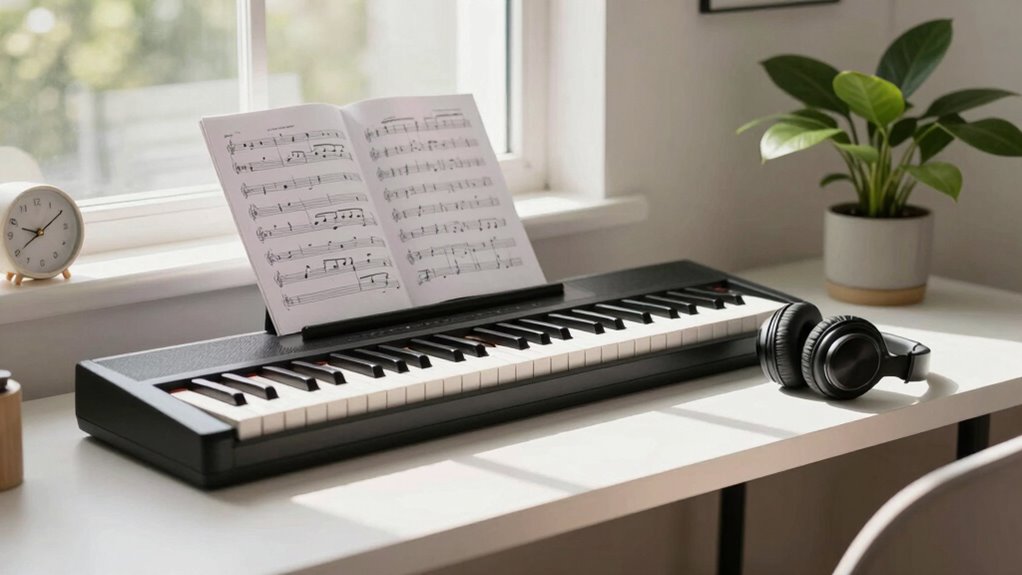
If you’ve ever felt too busy to enjoy music, it’s time to rethink your routine. Dedicating just 15 minutes each day to music can transform your mental well-being and overall mood. The key is making it simple and achievable, so it becomes a natural part of your day rather than an extra task. Start by carving out a specific time—perhaps during your lunch break, right after waking up, or before bed. Consistency is what builds a habit, and even short, daily encounters with music can have profound effects.
Music therapy isn’t just for hospitals or therapists; it’s a powerful tool you can incorporate into your daily life. In those 15 minutes, focus on activities that promote relaxation, focus, or emotional release. Whether it’s listening to calming melodies, singing along, or playing an instrument, this time becomes your personal sanctuary. If you choose instrument practice, select an instrument you enjoy and keep it accessible. Even a basic guitar, keyboard, or ukulele can be enough. The idea isn’t to master complex pieces every day but to engage with your instrument regularly, building familiarity, comfort, and joy in the process. Regular exposure to music and mindfulness can amplify the benefits of your practice.
Music can be your daily sanctuary—relax, focus, or express emotions with simple, enjoyable activities.
You don’t need hours of practice to see benefits. In fact, short, focused sessions often lead to greater progress than long, infrequent ones. When you practice regularly for just 15 minutes, you develop discipline and make music a natural part of your routine. This consistency boosts your confidence and makes the activity feel less like a chore and more like a vital part of your day. As you become more accustomed to daily instrument practice, you’ll notice your skills improve, and your relationship with music deepens. Additionally, incorporating elements of sound healing science can enhance the calming effects and support your emotional well-being during these sessions. Practicing with intention and mindfulness can amplify the therapeutic benefits of your music sessions. Incorporating mindful listening or playing can deepen your emotional connection and promote healing through mind-body healing.
To keep your habit sustainable, make it enjoyable. Choose music that resonates with you, whether it’s your favorite genre, calming sounds, or energetic tunes that motivate you. If you prefer listening over playing, curate playlists that match your mood or goals. The key is to stay engaged and look forward to this dedicated time. Remember, it’s not about perfection or productivity; it’s about connection. Over time, those 15-minute sessions become a cherished part of your daily rhythm, enriching your life in simple yet meaningful ways. Recognizing the benefits of regular practice can motivate you to maintain consistency and deepen your engagement with music.
beginner acoustic guitar for adults
As an affiliate, we earn on qualifying purchases.
As an affiliate, we earn on qualifying purchases.
Frequently Asked Questions
Can I Customize My 15-Minute Music Sessions?
Yes, you can definitely customize your 15-minute music sessions. Choose your favorite music selection that resonates with your mood or goals, making the experience more personal and engaging. Adjust your session environment to suit your preferences—maybe add headphones, change the lighting, or sit in a comfortable space. Personalizing both your music choice and environment helps you stay motivated and makes your sessions more enjoyable and sustainable.
What Types of Music Are Best for Habit Formation?
You might think only certain music types work, but genre variety and instrumental focus are best for habit formation. Instrumental music minimizes distractions and helps you focus, making it easier to stick to your routine. Mixing genres keeps things fresh and engaging, preventing boredom. Choose music that resonates with you and supports your goals, whether calming melodies or upbeat tunes, to guarantee your 15-minute habit becomes a lasting part of your day.
How Do I Stay Motivated to Practice Daily?
To stay motivated, focus on your progress and set achievable goals within your practice routines. Remind yourself how learning music theory enhances your skills and keeps practice interesting. Mix up your routines to prevent boredom and celebrate small wins. Keep your favorite music close and visualize your growth. By connecting daily practice to your passion and seeing steady improvement, you’ll find it easier to stay committed and motivated every day.
Is It Better to Practice at the Same Time Each Day?
Yes, practicing at the same time each day is better because consistent scheduling helps turn music practice into a habit. Incorporate it into your morning routines so it becomes a natural part of your day. When you practice at a set time, you reduce decision fatigue, stay motivated, and create a routine that sticks. Over time, this consistency makes your music practice feel effortless and more enjoyable.
How Do I Track My Progress Over Time?
Ever wonder how to see your progress clearly? You should start with progress journaling and habit visualization. Track your daily practice, noting what you played and your feelings about it. Use a journal or app to visualize your growth over time, creating a visual chart or checklist. This makes your progress tangible, keeps you motivated, and helps you adjust your practice as needed to stay on track.
compact keyboard piano for beginners
As an affiliate, we earn on qualifying purchases.
As an affiliate, we earn on qualifying purchases.
Conclusion
Building a 15-minute music habit is like planting a seed that grows into a vibrant tree—small daily efforts lead to lasting change. Stick with it, and before you know it, music becomes your daily refuge and inspiration. Remember, consistency turns tiny drops into a mighty stream. So, carve out those 15 minutes, and watch your musical journey flourish—because even the smallest note can compose a symphony of transformation.
As an affiliate, we earn on qualifying purchases.
curated relaxing music playlists
As an affiliate, we earn on qualifying purchases.
As an affiliate, we earn on qualifying purchases.
Halloween Picks
halloween
As an affiliate, we earn on qualifying purchases.