
📊 Full opportunity report: The Evolution Of Workforce Training: VR Factory Trainers Lead The Way on IdeaNavigator AI — validation score, market gap, and execution plan.

Get the latest gadgets delivered free with Prime
- Fast, free delivery on millions of items
- Prime Video, Amazon Music and more included
- Member-only deals all year
TL;DR
Manufacturers are adopting virtual reality training modules to address labor shortages and safety concerns. Early pilots show promising improvements in onboarding efficiency and hazard recognition, signaling a shift in industrial workforce development.
Virtual reality factory trainers are being tested as a scalable solution to accelerate onboarding and improve safety in manufacturing plants. These immersive modules target mid-to-large manufacturers facing labor shortages and skills gaps, offering a promising alternative to traditional training methods. Early pilot programs indicate potential for faster competency development and higher hazard recognition accuracy, making this a significant development in industrial workforce training.
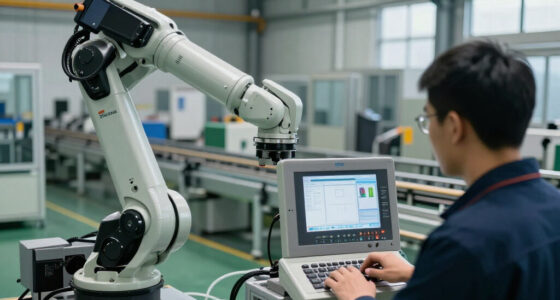
Manufacturers are increasingly turning to VR-based training modules to address the dual challenges of a labor shortage and a skills gap. The U.S. manufacturing sector reported approximately 409,000 unfilled positions in August 2025, with projections suggesting the need for 3.8 million new workers by 2033. Traditional training approaches, such as classroom instruction and on-the-floor demonstrations, are slow, costly, and pose safety risks when used on live machinery. VR training offers a solution by enabling standardized, risk-free, and rapid onboarding.
IdeaNavigator AI reports that the initial focus is on modules for high-risk procedures like lockout/tagout and forklift safety. These modules are delivered via standalone Meta Quest headsets, with a cloud dashboard tracking completion rates, hazard recognition accuracy, and quiz scores. The goal is to run pilot programs lasting 60-90 days, comparing VR-trained cohorts with those receiving traditional classroom instruction. Early results aim to demonstrate improvements in time-to-competency and hazard detection, which could lead to broader adoption across manufacturing plants.
Implications for Manufacturing Workforce Development
The adoption of VR factory trainers could revolutionize how manufacturing companies onboard and upskill workers, reducing training time and enhancing safety outcomes. By providing consistent, engaging, and risk-free training experiences, these modules can help close the skills gap more efficiently than traditional methods. This shift is especially critical given the ongoing labor shortages and the need for rapid scaling of skilled workers. If pilot programs confirm the benefits, widespread implementation could significantly lower training costs, reduce safety incidents, and improve overall productivity in the manufacturing sector.
As an affiliate, we earn on qualifying purchases.
Rising Need for Scalable Manufacturing Training Solutions
The manufacturing industry faces a pressing challenge: a significant skills gap compounded by a shrinking labor pool. In August 2025, the sector reported nearly 410,000 unfilled jobs, with projections indicating a need for millions of new workers over the next decade. Traditional training methods are increasingly inadequate, as they are slow, inconsistent, and pose safety risks on live equipment. Meanwhile, advances in cloud-native XR streaming and affordable standalone headsets like Meta Quest and Pico have lowered the hardware barrier, enabling scalable VR training deployment. The immersive enterprise training market is estimated to grow at around 20% CAGR, reflecting rising industry interest in digital solutions.
Early efforts focus on high-value, high-risk procedures such as lockout/tagout and forklift safety, which are critical to preventing accidents and ensuring compliance. Pilot programs are testing the effectiveness of these modules in real-world settings, aiming to demonstrate measurable improvements over traditional approaches.
standalone VR training modules for manufacturing
As an affiliate, we earn on qualifying purchases.
As an affiliate, we earn on qualifying purchases.
Uncertainties in Pilot Program Outcomes
While early pilot results are promising, it is not yet clear whether VR training will consistently outperform traditional methods across different procedures and plant environments. The long-term impact on safety, retention, and overall productivity remains to be validated through broader testing and extended deployment. Additionally, questions about integration with existing training systems and worker acceptance are still being explored.
As an affiliate, we earn on qualifying purchases.
Next Steps for VR Factory Training Adoption
Manufacturers planning pilot programs will collect data over the next 60-90 days, focusing on metrics like time-to-competency, hazard recognition scores, and supervisor assessments. Successful pilots could lead to expanded deployment across multiple procedures and plants, with SaaS providers refining content libraries and dashboard features. Industry-wide adoption may accelerate as more case studies demonstrate tangible benefits, and hardware costs continue to decline.
As an affiliate, we earn on qualifying purchases.
Key Questions
How effective is VR training compared to traditional methods?
Early pilot programs suggest VR can reduce onboarding time and improve hazard recognition accuracy, but broader validation is ongoing.
What procedures are most suitable for VR training modules?
High-risk, high-impact procedures like lockout/tagout, forklift safety, and equipment shutdown are primary targets.
What hardware is used for VR factory training?
Standalone headsets like Meta Quest and Pico are the main devices, offering affordability and ease of deployment.
Will VR replace all traditional training methods?
It is unlikely to replace all methods but will serve as a complementary, scalable solution for critical procedures.
When might VR training become standard in manufacturing?
If pilot results are positive, broader adoption could occur within the next 2-3 years, especially as costs decline and proven effectiveness emerges.
Source: IdeaNavigator AI
Halloween Picks
halloween
As an affiliate, we earn on qualifying purchases.